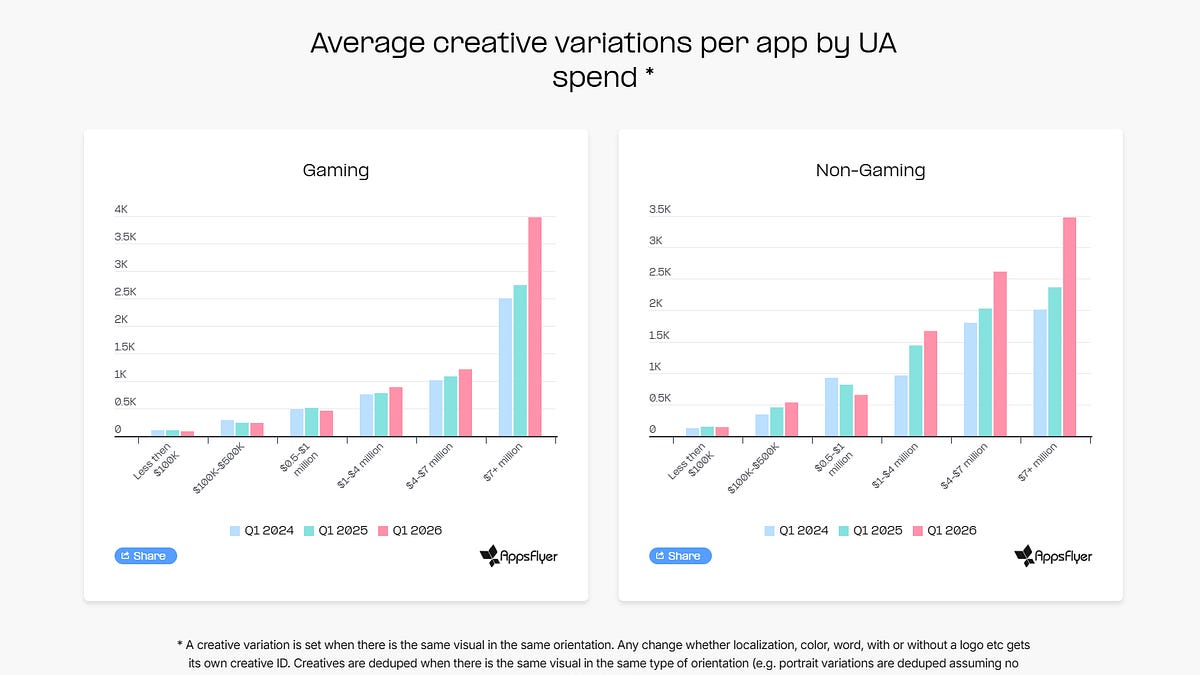
The 2026 landscape of creative optimization in mobile gaming is defined by a widening gap between high-spending "whale" advertisers and smaller market participants. While top-tier gaming apps—those spending over $7 million per quarter—increased their creative output by 45% year-over-year to an average of 3,977 variations, smaller advertisers saw their output remain flat or decline. This surge in volume is largely driven by AI-assisted micro-iterations, such as localization, resizing, and copy swaps, rather than a proportional increase in unique creative concepts.
Data indicates that the market is becoming increasingly winner-take-all. In gaming video, the top 2% of creatives now command 60.7% of total spend, up from 53.5% in the previous year. This concentration suggests that algorithmic ad networks are identifying and scaling winners with greater speed and efficiency, rendering "average" creative assets increasingly obsolete. Consequently, the primary challenge for marketers has shifted from simply increasing production volume to accelerating the speed at which they can test, identify, and scale high-performing concepts.
The analysis further highlights a critical divergence between video and static creative strategies. Attributes that drive performance in video, such as social proof in puzzle games, often fail to translate to static formats, which require distinct creative briefs and testing loops. Effective static strategies prioritize immediate, single-glance impact—focusing on urgency, adrenaline, or specific promotional offers—whereas video remains the primary vehicle for storytelling and gameplay demonstration. Ultimately, the industry is moving toward a model where success depends on robust infrastructure for automated testing and a clear separation between concept development and high-volume, AI-driven asset production.

SocialPeta · 2026

SocialPeta · 2026

SocialPeta · 2025

SocialPeta · 2021
SocialPeta · 2026

SocialPeta · 2025

SocialPeta & Reforged Labs · 2025

Liftoff · 2024

Adjust · 2024

SocialPeta · 2024
Tenjin · 2023

SocialPeta · 2022