1 free read left. Create a free account for unlimited reading + AI research.
Create free accountWhitepaperSpringer International Publishing
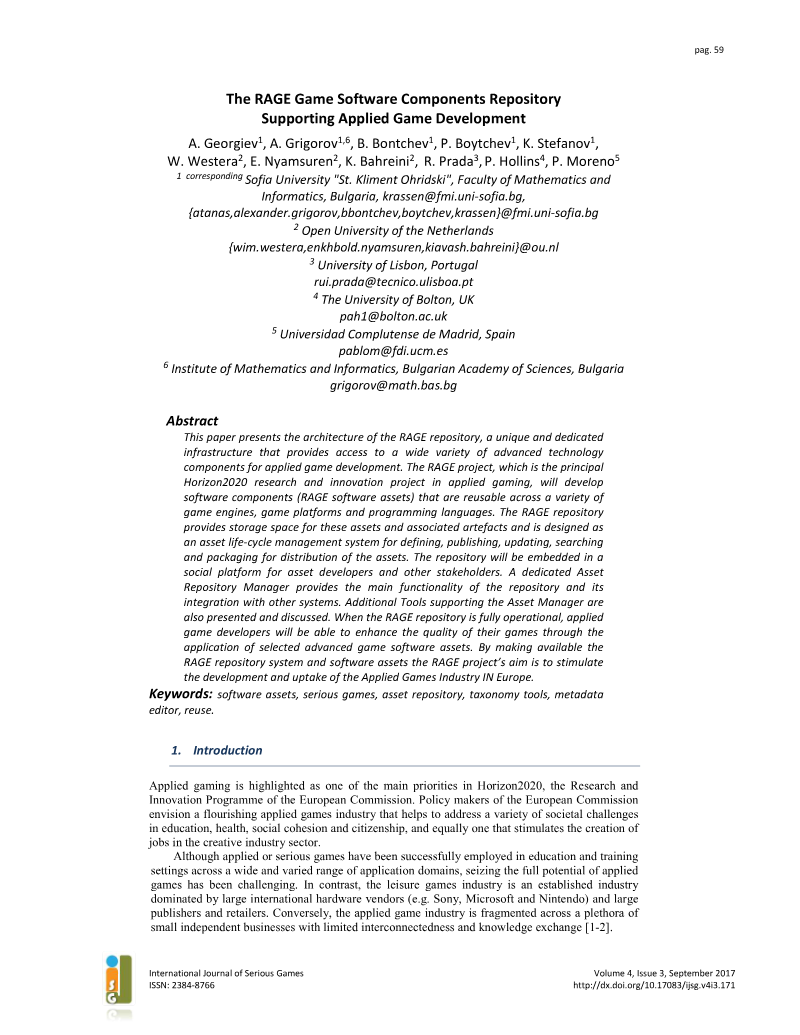
The RAGE repository serves as a specialized infrastructure designed to support the applied games industry by facilitating the discovery, storage, and reuse of advanced software components. By providing a centralized platform for game studios to access state-of-the-art technologies—such as game analytics, emotion recognition, and procedural animation—the repository aims to reduce development costs and accelerate the integration of complex pedagogical functionality. The primary thesis is that an asset-based development model, supported by a robust lifecycle management system, can overcome the fragmentation currently hindering the applied games sector.
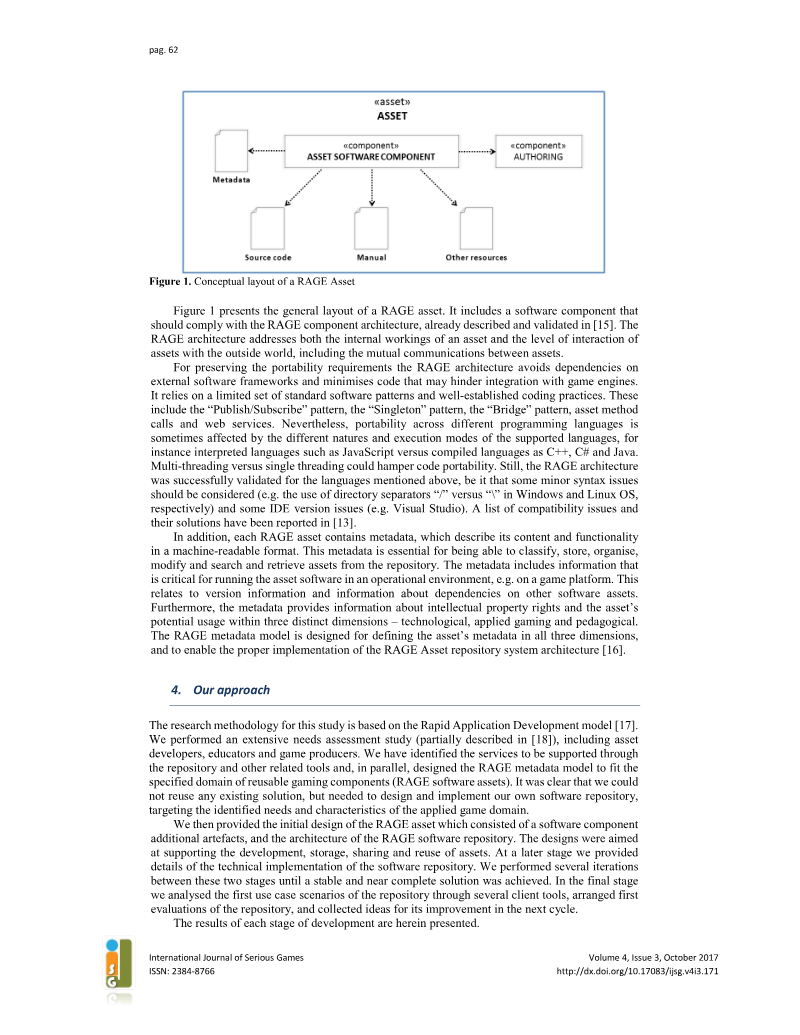
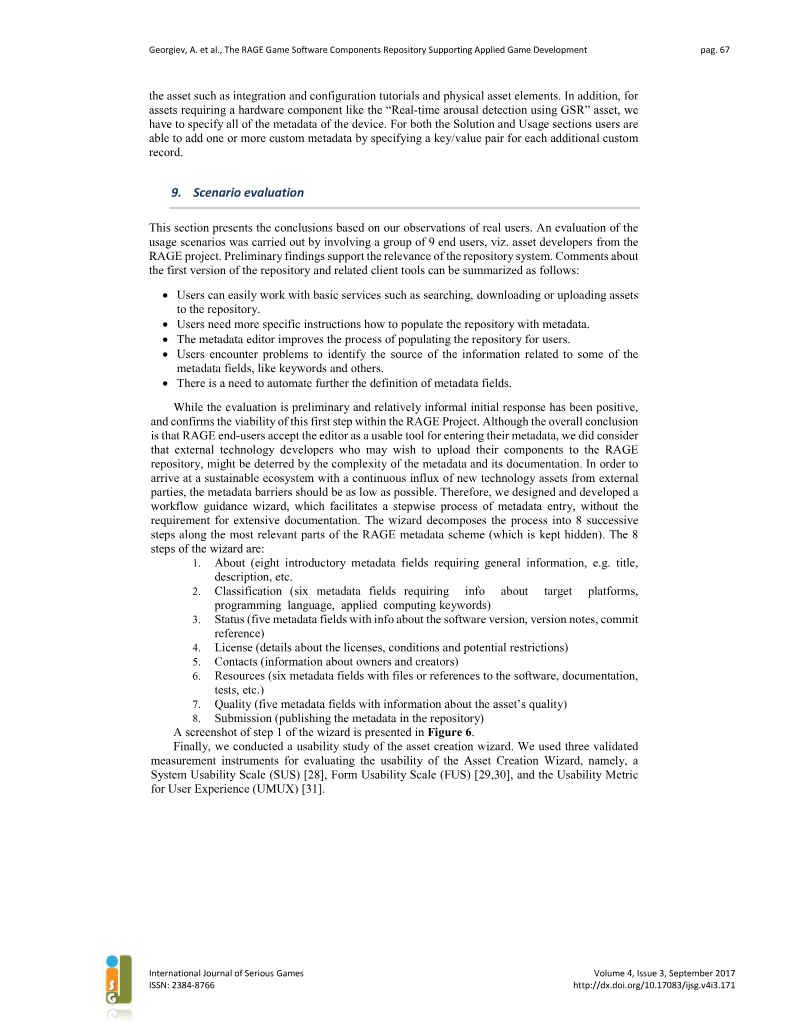
The repository architecture is built on a three-tier system comprising client, service, and data store layers. It utilizes Fedora for asset storage, Sesame for RDF-based metadata management, and Solr for faceted search capabilities. The system supports various workflows, including asset publishing via web interfaces, GitHub integration, and IDE plugins. The methodology employed follows a Rapid Application Development model, incorporating an extensive needs assessment involving educators, game producers, and developers. Initial testing involved a panel of nine users evaluating 12 pilot assets, confirming the system's viability while highlighting the need for further automation in metadata definition.
Geographically focused on the European applied gaming sector, the initiative operates under the Horizon 2020 framework. The repository is designed to be interoperable across diverse game engines and programming languages, ensuring scalability and durability through standardized metadata models. Future development efforts are directed toward enhancing quality assurance, integrating social networking features for the developer community, and expanding the repository's harvesting capabilities from external systems. This infrastructure represents a strategic effort to professionalize the applied games industry by fostering a culture of knowledge exchange and technical reuse.

The Game Business · 2026