Springer International Publishing
3 reports, presentations and talks by Springer International Publishing in the Game Industry Library, the newest “The RAGE Software Asset Model and Metadata Model” (2016).
Documents
The RAGE Software Asset Model and Metadata Model
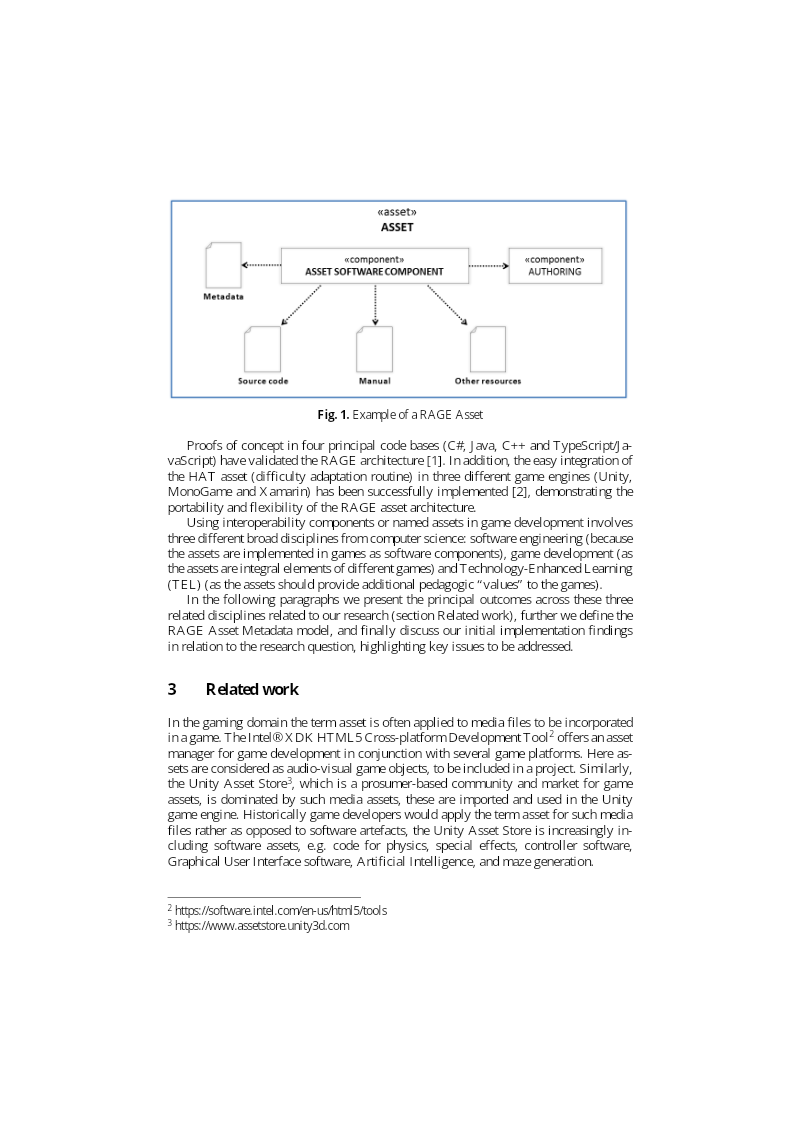
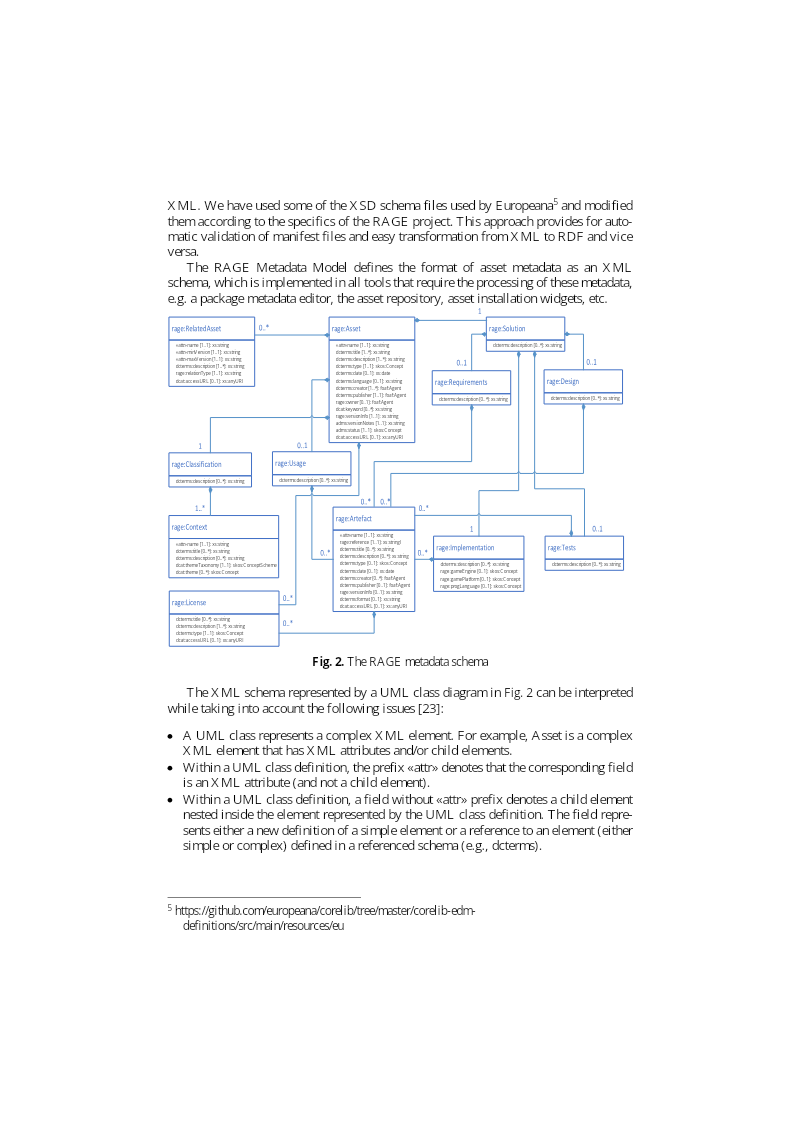
The RAGE software asset and metadata model establishes a standardized framework designed to enhance the development, interoperability, and reuse of pedagogical game components.
- The RAGE software asset model provides a standardized framework to improve the interoperability and reuse of pedagogical components in applied games.
- The framework integrates technical specifications with pedagogical objectives by extending existing industry standards, including RAS, ADMS, and IEEE LOM.
- An XML schema-driven architecture enables automatic validation and dynamic interface generation, allowing for structural metadata updates without manual editor modifications.

The RAGE Advanced Game Technologies Repository for Supporting Applied Game Development
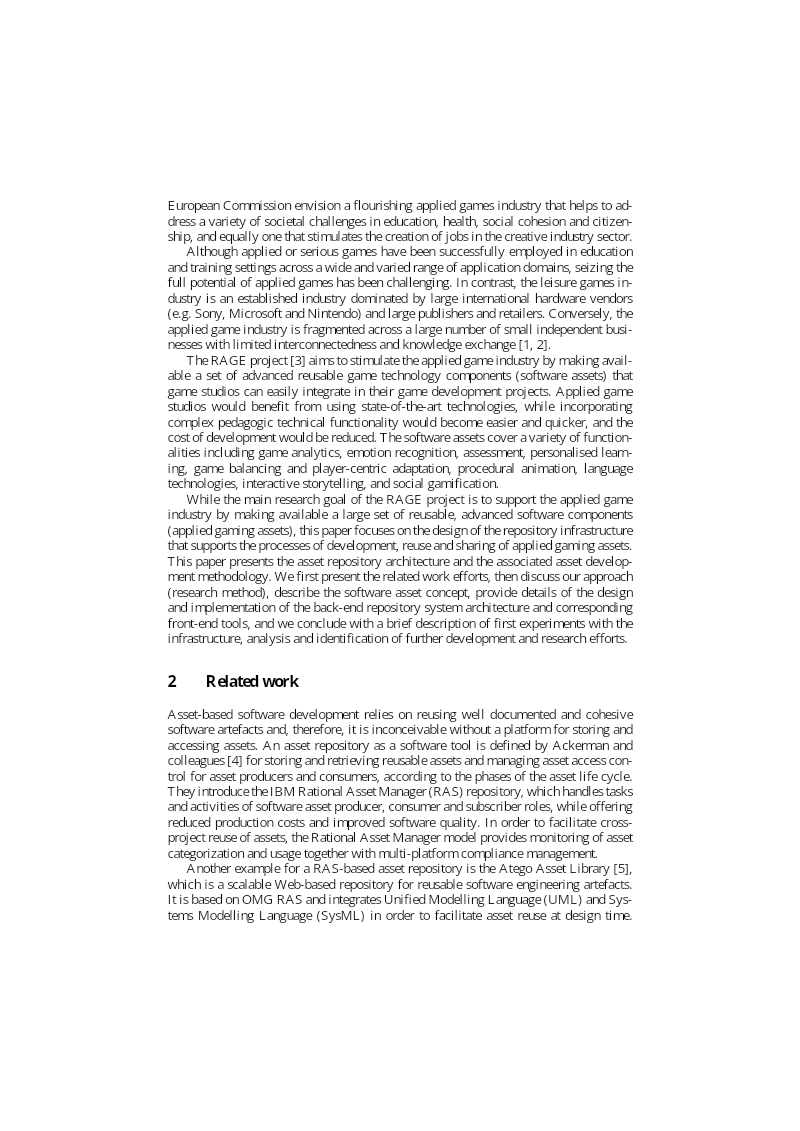
The RAGE repository serves as a specialized infrastructure designed to support the applied games industry by facilitating the discovery, storage, and reuse of advanced software components.
- The RAGE repository provides a centralized infrastructure for the applied games industry to store and reuse advanced software components like game analytics, emotion recognition, and procedural animation.
- The platform aims to reduce development costs and accelerate the integration of complex pedagogical features by shifting the sector toward an asset-based development model.
- The system architecture utilizes a three-tier design incorporating Fedora for storage, Sesame for RDF-based metadata management, and Solr for faceted search.

Combining the Virtual and Physical Interaction Environment
The research investigates the technical and design requirements for creating a cohesive mixed-reality interface, termed the Xuni Augmented Reality (AR) system.
- The Xuni AR system demonstrates that integrating depth-sensing hardware, head-mounted displays (HMDs), and EMG-based gesture sensors is a technically viable method for creating immersive mixed-reality environments.
- Researchers at the University of Huddersfield successfully synthesized Microsoft Kinect depth-data, Skanect 3D meshes, and Oculus Rift DK2 hardware to enable real-time environmental data to influence the lighting and behavior of virtual interface elements.
- While hardware integration is achievable, the study identifies a lack of standardized gestural taxonomies as a primary barrier to creating intuitive and seamless user experiences.
Do you work at Springer International Publishing? Get a free report of how these documents are read and cited here.