1 free read left. Create a free account for unlimited reading + AI research.
Create free account
The mobile game development commandments
Key insights
6 takeaways- 01Mobile game development requires a 'mobile-first' philosophy that prioritizes one-handed tactile UX and offline functionality to accommodate the global smartphone audience, which was projected to reach six billion users by 2020.
- 02Long-term financial viability in the mobile sector relies on the free-to-play business model, utilizing high lifetime value (LTV) strategies and monetization mechanics such as gacha systems and live events.
- 03Market success is driven by data-informed analysis, specifically monitoring revenue-to-download ratios to identify trends and align game mechanics with player preferences.
- 04To maintain long-term engagement, games must balance accessibility for new users with sufficient depth, utilizing continuous iteration across all visual and mechanical elements.
- 05Successful market entry typically requires a capital investment ranging from £500,000 to £1 million to effectively compete in a saturated landscape.
- 06Developers should employ a methodology of rapid prototyping and 'failing fast' to minimize resource waste, adapting these strategies to fit the specific financial constraints of their studio.
Ask AI about this video
Transcript
[Music] so yeah I wanna start with an apology as you always should the title called the commandments of mobile it wasn't my title it was given to me by pocket gamer and I don't want to come across as kind of you know littering from on high about about how you do this stuff because my initial impression was there aren't any commandments of mobile it's really quite a varied and difficult business and so they made me do it but I think the first commandment in my mind has always been just make a hit game and then stop making games that's the best way to make money in the back in the game business but that's probably not that useful and actually I've changed my view on this I've been banging on about this for a long time so I changed my view on it since mobile happened and we've got things like analytics and you know the amount of data that we can we can mine now does allow you to so I think create
at least a set of rules that you're going to abide by when you're developing a game that can at least help you to to maximize your chances of succeeding and there are companies now that are succeeding time and time and time again whereas historically it was always you know someone thought they had the formula of how to make a successful game they pretty much went bust the year after so the first rule is thou shalt be sued to sell and the reason that I think you know it's super said is the company you have to look at it is because they are legit astonishingly successful and the first thing they do it is they hire great people and iron great people is the best way to make gains and then the way that supercell do it you know if you look at the great developers that are out there that people like supercell a super like valve that just create these environments where we're good people are and what people want to carry on being I took flame that I run a company called the secret police or a new game developer or any eight people in central London I've been in games about 25 years and what we're doing is is creating a
game called dragons watch which is just been announced last week it's in beta stage at the minute and and we think we hire good people and the key to that really was testing you know we have extensive testing that we do on programmers some people don't like being tested that is in our experience for people that don't like being tested up people who don't want to hire so yeah it's a real icicle hi good people and fail fast what we've ourselves approaches as everyone knows that they're pretty famous for this they prototype a lot less a test early they canceled start very quickly if it's not working they learn from that and they move on and that's work incredibly well they've got you know three or four titles in the top 10 grossing constantly but as a company we couldn't do that you know we didn't raise the kind of money that supercell have we couldn't fail and fail and fail again and eventually have a huge amount of success so so for the rest of that's what really i want to talk about what is it that we're doing that tries to trust to give us the best chances of success with our game and to learn some lessons from great companies
like supercell without necessarily having to play off after and move on constantly so the second less than i would say because it's incredibly expensive to take a supercell approach it does not want to make a mobile game an awful lot of people in mobile don't really want to be making mobile games an awful lot of developers that I talked who are kind of reluctantly doing this because they'd rather be making an indie game to steam or a console game and mobile games aren't real games and I think I think that these are they shouldn't be making mobile games making the mobile game especially a free-to-play mobile game is a very different practice to making any other kind of game and you got to want to do it and I love making my wagon don't to me mobile the most exciting thing to do because mobile it's just really exciting mobiles amazing you know you can play mobile games anywhere if you can play them on the train you can buy them in the bath you can play anywhere and and it it's personal you know that the touchscreen is an incredibly tactile experience and there's game experiences we can create with mobile that you can't create anywhere else they're socially
the fact that a mobile game is is able to be played whether it's on your own with other people you know next to you or a thousand miles away is incredibly exciting but the most exciting thing to me about mobile is reach I've been in games a long time and when we were really excited when we wait console games that you know there was a potential audience maybe 100 million people that might buy a playstation console but it already 2.5 billion smartphones in the world and Ericsson are predicting that in 2020 there's going to be six billion smartphone users in the world is such an astonishingly large number and as a game creator there's nothing more exciting than meeting someone who's played and enjoyed your game and you know the trance is about happening when seventy percent of the world's population could play your game it's just an incredibly exciting thing so with that in mind you know the next commandment feel like it is thou shalt designed for mobile the best thing to Taylor's for their platform in a clash of clans I think this was arguably the first great tablet game and did a lot of things you it wasn't a console game trying to be on a
different format and and it's the same is true of mobile phones you're a mobile game is not a court tablets not console so designing for a mobile phone user experience is really important so this is our game we announced it last week driving rock and put in our case what this meant is one handed control you know the great thing about mobile is you can use it anywhere so you know the game is designed so that you hold it in one hand you never need to interact with anything that isn't at the bottom of the screen all of your controls are are on this thing here and that's incredibly important because it means there's never a situation where someone has to change their grip if they're on the phone if they're holding their coffee they never have to you know all alter the way that they're holding holding it sort of stress better if you're interested in mobile UX I think the best thing you can possibly locate the app I use most often on my phone which is facebook its retention is measured in what will also be measured in decades and people use this many times a day and it's always
something new to do but one of the great things at the facebook mobile app did that took twitter a long time to cotton on to is that you can swipe from here to here to here to here just by swiping your thumb at the bottom of the screen Twitter added this to their at last year but Facebook did it about two years before that and what that means is again you can interact with almost every part of that app without changing your grip on the phone without needing to get to the top of the screen without needing a second finger so the more that you can think in terms of those things just think in terms of how the user is holding the phone how they're going to be interacting with it the better think about the players situations where I'm not just how they're touching it in which Aereo Ron got incredibly right in this astonishingly good game it does that one hand in tap thing but you know you look at the user reviews on it and they're awful which is mission is a crime because it's a fantastic game a lot of the criticism that they've had their is around the business model where they were charging people eight dollars and people don't want to pay for games but another part of it was the fact that the game requires an always-on internet connection which works great in Japan
because there is always fantastic 4G coverage equals you're on the tube wherever you are but we don't have that here you know there's an awful lot of parts of London including the tube where you can't play mario run and you can't play a lot of games so that that's another thing that we did we built in text that allows a server based game to be played offline but then to sync up as soon as you are online so you can play our game for 24 or 48 hours offline but then when you do finally have an internet connection it will connect back up so think about that all the times when someone will play a mobile game they want to play them on the train they want to play them out and about and certainly in the western markets right now situations where people want to play console games that kind of interaction they'll probably got to play them on a console so always think about mobile first in terms of your design now should I have a business model and it is very important huge numbers of developers have said to me over the years and they showed me a game or a game pitch they don't know if it's free to play yet and which is a crazy thing to say a free-to-play game is so enormously different in structure in everything
then at then a done a premium game but if someone says that they have made that decision they've already decided it's not free to play they just haven't realized it yet it's incredibly important if you want to learn about free-to-play wheel lutens book is extremely good and it's not to say that for you to play is the only model isn't fantastically successful and really great games that are available on mobile that aren't free to play however it's an incredibly difficult business model to get right there is a business model on free to play that says okay I can get someone to download my gain I have a lifetime value LTV from a player that is the amount of revenue that they give me and assuming through my game mechanics I can make more money per player than it cost me to advertise to that player then that's a business model I can I can advertise I can get you played and I have a sustainable game there is no business model like that for premium games it costs several dollars to get someone to play a free game on mobile so there is no number of dollars that you can pet spend to get someone to play a premium game on mobile so your
entire business model is based on basically making the best mobile game out there and hoping that you get some feature support and some heights and the thing does really well studies the risk so our business portal has been based around free to play but that's not to denigrate the other but you know it's pretty difficult both of them are pretty difficult so our business model is based around collection gas fusions which I'm not going to get into a huge amount of detail on here but it's it's a Japanese system primarily based around collecting stuff based around using games of chance to to give you cool new characters fusing them together so that you can upgrade them and it's hugely appealing to a lot of people there it's a great thing I think about getcha is that kind of like collecting Magic the Gathering cards or that kind of thing huge amounts of people just enjoy playing the game but a lot of people also get a lot just out of collection so do people collect stuff in the real world but there it's stamps or you know train numbers or whatever so that that's kind of our monetization mechanic and make sure you have a monetization mechanic built into the game from the start don't you can think about that later this one is our
shot learns from others there's 300 games a day coming out there's an awful lot of stuff out there and does offer a lot of great games out there so we wanted to learn about what kind of game we should be building in order to best you know be sure that we had a viable game with a viable business model so my co-founder Rick built a system that that data mines the App Store and what we did is we we went back several years comparing the grossing ranks all around the world to the the download ranks and what that allows us to do is to spot games that weren't necessarily the top of the grossing charts but that had a high revenue relative to the number of downloads so what that allows us to do is say okay well on a per-user basis these are these are the games that whenever it was that this is from August last year these are the games that were performing best and what we notice was there are an awful lot of Asian RPGs were in this captive
so you know obvious candidates like a puzzle and Dragons in Japan at Marvel Puzzle Quest games that have these kind of gotcha collection mechanics so one of the thing you know that this is really what led us to that and we spent a lot of time playing those games and understanding them which is pretty hard work some of the some of the game different puzzle & Dragons can take you quite a long time to get into and what we found is we kind of had to force ourselves to play those games to begin with and once we once we played in for a couple of days we were hooked and we love them but we felt that there were some problems from from a Western market perspective with the accessibility of those games early on so we kind of our goals to be able to build a game that they're kind of smoothes off the edges improves a day one retention didn't confuse people but still had all of the features of these Asian RPGs so if you're interested in this kind of stuff well worth playing it's like someone has walls and Korea puzzle & Dragons from Japan brave frontier another one from goomy in Japan this is probably the closest game to our game in terms of
this sort of overall genre and structure of it think about live events is kind of the last point on on looking at Japanese games live event is basically you you switch on your phone the phone tells you you know if you summon now or if you play now you're going to get access to this certain thing that's not going to be available in the future and it's a great reason to to to bring players back at a certain time to allow them access to a certain rare item at a certain time and they're the biggest driver of monetization in getcha collection games so that's lesson inventing dragons watch you've got to improve chance of getting one of these rare characters if you if you do a summon now and that is a graph showing showing a monetization over time for a famous Japanese game and these are spikes when live events are running is about ten to one improvement in monetization on day two and live events to run and that is why Japanese games make so much money thou shalt be
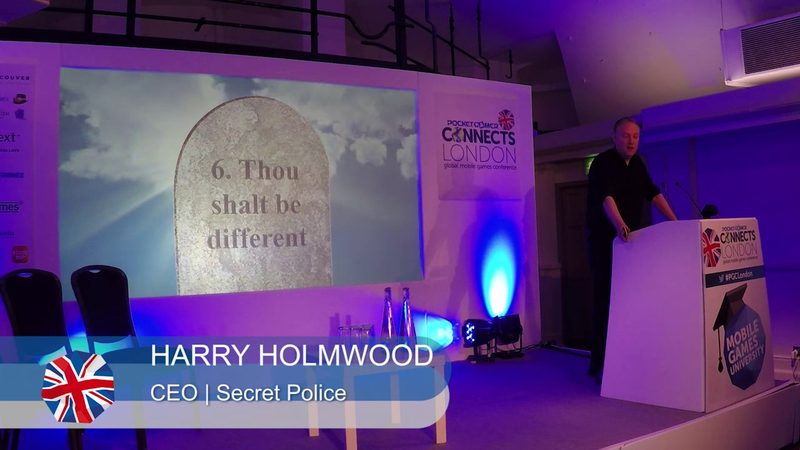
different as I said it's 300 game today coming out it's crazy and you know a lot of them look the same the iphones are the same and I've said it tickle a lot over the years if you're making a game that's going to be delivered digitally whether it's console or whatever you've got about you know if you saw it on a shelf in the biggest game shop in the world how would you stand out what is it about your game is going to make me walk over to the shelf and pick your game up because if you know if you're one of that many and you haven't got that right it might be the look of the game it might be a brand that you've licensed in there's got to be something that means these people are going to go and get it you know making a nice game is not enough there has to be a reason why your game is the most exciting thing that I can press on at this moment in time on my phone so really think about that and think about it from the point of view of partners that you want to help from as well you know you want the press to talk about this game input you're trying to put yourself in mind of the person that's writing the article that they're probably going to want to sell to a magazine you know what is the also headline of that article what's the reason why someone's going to click on that article it might be that you want to get some features for from Apple and
Google and think about their motivation why does Apple want to promote your game is your game making someone want an iPhone above other devices is it graphically amazing it is supporting sporting features that are unique to our you always try and put yourself in the point of view of the person who you want a favor from to promote your game we give them something interesting to talk about if you haven't built that stuff into your game is going to be very unlikely you'll stand out desha its rate I'm sorry if I'm going far I'm seeing a clamping down very quickly here thou shalt it's a rate this is really important you know just because you mainly don't have the money to follow a kind of you know make again fail fast cancel it sing it doesn't mean you can't kind of have micro failures along the way it doesn't mean that you can't test a small part of your game with friends with family just with the team and understand what does and what doesn't work and we went through this in a couple of ways and resins watch first thing we did with this rate the graphic style you know originally we interview is based around collection we started off with a with a fairly cute pokemon
kind of look then we found that that was working really well with kids but actually kids with not our target audience so we we looked at a more kind of Ingary look but this kind of fell down on our standing out point in that there are too many games we felt that look like this then we kind of started looking at some Chinese games and some Korean games and under thinking that this potentially we what did those being appealed to audience that we wanted to appeal to but at the same time we want it to be a little bit more Western and where we ended up we think is kind of an amalgam of all of those different things in very artists and you know a combination of some characters being quite quite asian install fun characters being quite Western in style and a style that we found is appealing in Korea and China as well as the Western market so you know we had a few false starts on the way to get to that and similarly with gameplay iteration the fundamental mechanic of dragons watch is basically stolen from the original ipod we love the idea of
being taxed by we like the room you know amazing game you get that kind of tactile feeling touching the screen touching the machine turning dials and we wanted to replicate that so you're kind of moving your thumb and rotating this dial and we so we started out with this idea on top of that we wanted to take a game like brave frontier where you're taking a squad of characters into a battle but make it a little bit more tactile it's not just about tackling we wanted to have this kind of idea of a dial and we ended up here which was a kind of weekly kind of built a system where you can rotate and the characters rotate around here and you know depending on whom you want to be attacking at an enemy you rotate and then you attack and built a kind of tower defense II game based around that but it was a bit too intense you know it didn't feel that it was the right game although this mechanic was great so then we kind of took a step back and move to the the rotating thing down to here had a squad of characters here and I had a kind of battle game where the characters come at you in waves I mean you rotate here and he worked brilliantly but you without those first couple of failures
but recognizing that we had success with making a nice tactile touchy-feely thing there we would never have got to hear and so maybe we wasted a couple of months going down the wrong path but it's not like we made a whole game so you're already straight on every tiny bit of your game and try to make sure that your you've got people that are enjoying it every step of the way try to be accessible it I think some some of these these guys are amazing thin air they were both hugely successful 2048 and agario because one of the reasons I think they're obviously great games but they were also available in the browser you know straight from playing an appt seeing an ad or seeing a friend to this games are playing it without having any kind of download and a lot of the time people then went on to download these games onto their phones but you know being quick to start with a huge part of their success I think we completely failed in this you know we are not again that you can play in a browser we do we've done as much work as we can to try and get you started as quickly as possible have a smaller download as possible but I can certainly
see for the four or five years and the future it would be great for people just to be able to have a phone press a button be playing instantly I think this is the direction of the industry will move in so you want to be as well as simple to start simple to start playing understand all these are you know through the biggest games in the world wants to strike puzzle & Dragons clash Royale one thing they've all got in common is incredibly easy to start playing in their tactile do they feel nice to touch it's very easy to start playing but it's a massive amount of complexity in those games once you get beneath the surface and that's point nine it's don't dumb down the game we've seen some people taking taking kind of asian looking asian style game mechanics copying games like puzzle & Dragons but actually split taking away all of the kind of meta game that in what makes people play for the long term and makes the game make money so we haven't you know if you if you dig into dragons watch there's a huge amount of complexity there there's a lot of stuff about selecting teams the characters all have different abilities and stuff and you collect loads of heroes and involve
them and fuse them and none of it's done down but what we wear we are at the moment she's trying to get to the point where the game is easy to understand at the beginning we're slowly exposing this complexity to users and that's something we're still working on we're getting there and the last point is that thou shalt need money it's expensive doing this and you're in the UK there's a few great ways of getting money the UK game tom was very helpful to us when we started they very kindly gave us a grant we've got some great angel investors and the scif scheme that some of you may have heard of that she rode 150,000 pounds on very good terms for investors but 150,000 pounds is not enough to make a commercially viable game in in nearly all 13 senses I would say so our approach was we raise that kind of money it got us to the stage where we had a team where we had some product and some tech ready and then we had to raise more money through the is which is a less advantageous approach for the investors are still doable but don't lose sight of the fact it's going to cost you a lot of money i think if you
want to make a mobile game you're talking about half a million to a million pounds over the life cycle of start to when that thing will be on the market globally other sources of publishers and vc funds there's a bunch of those here and yeah good luck I think to summarize you know mobile is amazing obviously our game mobile kind of amazing it's I think it's the most exciting place to be in gaming I really do I think the fact that in a few years time there's going to be five or six billion smartphones out there is just crazily exciting and I think we're you know we're not there yet but i'm pretty sure that one day there's going to be a game out there that has a billion players a billion players and i'm sure it's going to be on mobile thank you [Applause] [Music] you
Summary
The mobile gaming industry presents a unique, high-stakes environment characterized by massive global reach and intense competition. With an estimated six billion smartphone users projected by 2020, the platform offers an unparalleled audience compared to traditional console markets. Success in this sector requires a disciplined, data-informed approach to development, moving away from the "hit-or-miss" mentality of the past toward a model of continuous iteration and strategic design.
Key findings emphasize that mobile development is a distinct discipline that demands a "mobile-first" philosophy. Developers must prioritize user experience (UX) by designing for one-handed, tactile interaction and ensuring games function effectively in offline environments. A critical component of long-term viability is the adoption of a robust business model, specifically free-to-play, which relies on high lifetime value (LTV) and sophisticated monetization mechanics like "gacha" systems and live events. Data-driven analysis of app store performance—specifically identifying games with high revenue-to-download ratios—serves as a vital tool for understanding market trends and player preferences.
Methodologically, the industry favors rapid prototyping and "failing fast" to minimize wasted resources, though smaller studios must adapt these high-budget strategies to their own financial constraints. Iteration should extend to every facet of the game, from visual style to core mechanics, ensuring that the final product is both accessible to new players and deep enough to maintain long-term engagement. Ultimately, the path to success requires significant capital—often ranging from £500,000 to £1 million—and a commitment to standing out in a saturated market through unique branding, strategic partnerships, and a deep understanding of the specific motivations of the global mobile player base.
















Comments