1 free read left. Create a free account for unlimited reading + AI research.
Create free accountArticle DiGRA
1 free read left. Create a free account for unlimited reading + AI research.
Create free accountArticleDiGRA
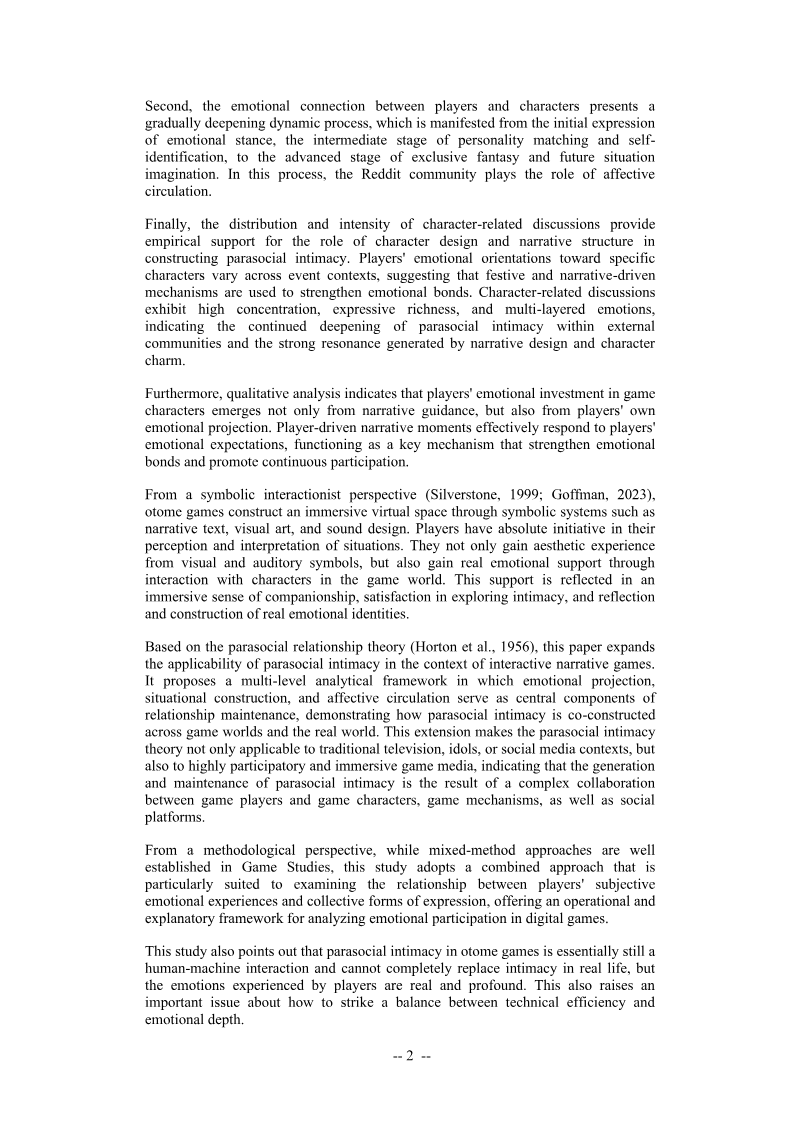
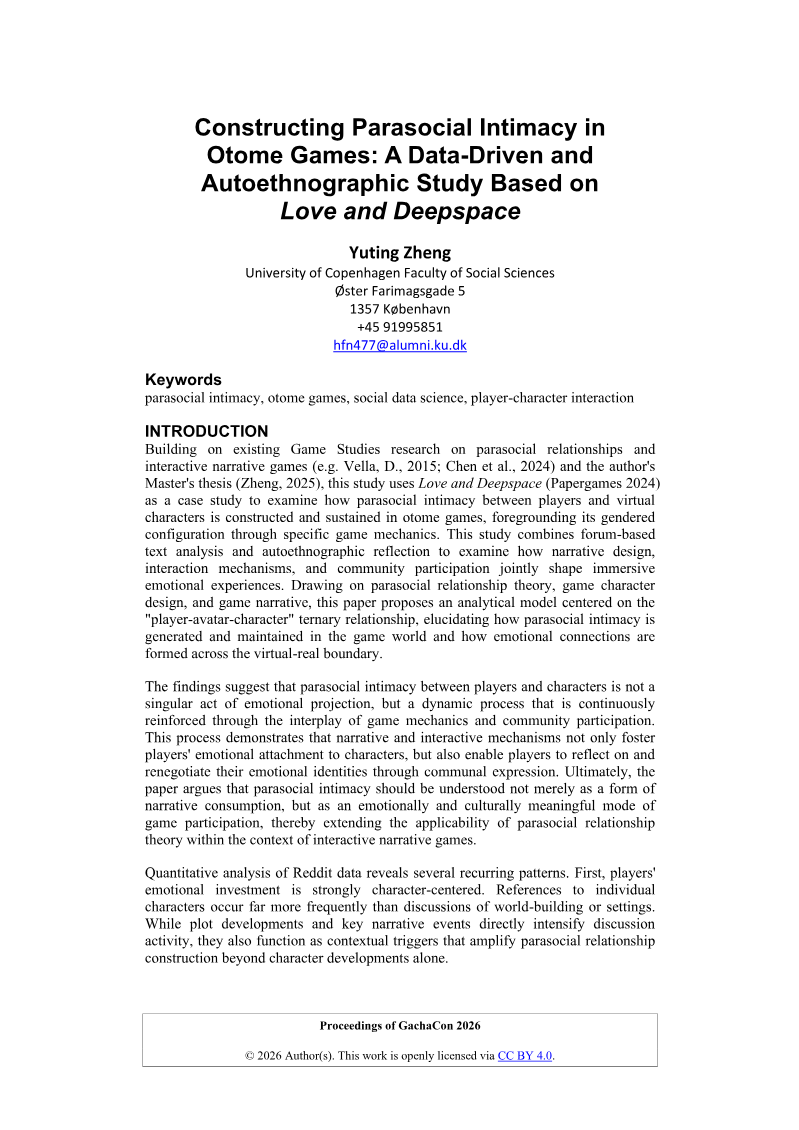
The paper uses Papergames' Love and Deepspace (2024) as a case study of how player investment works.
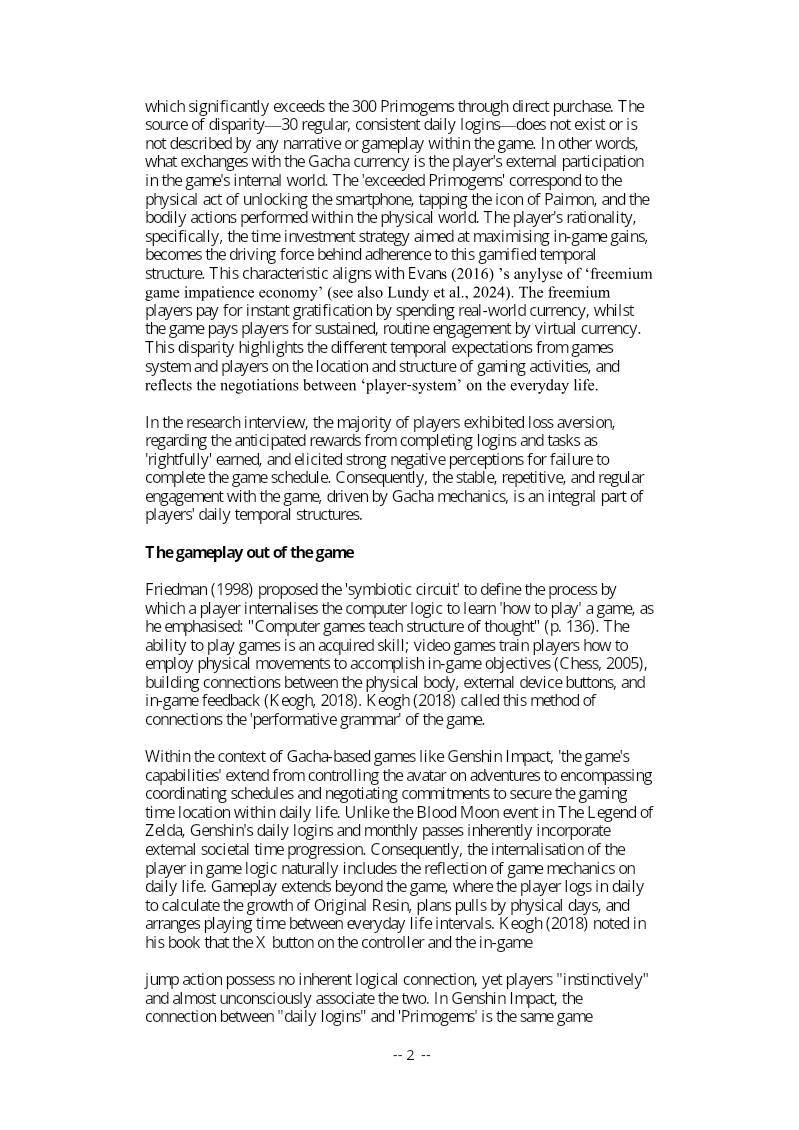
This work-in-progress paper examines how players become invested in Papergames' Love and Deepspace (2024), a free-to-play mobile otome and gacha game, and uses it as a case study for a broader argument about player investment. The authors frame investment as operating both materially and affectively, shaped by and shaping a game's design and community. They propose five non-exhaustive dimensions of investment: monetary, temporal, storage, affective, and fandom. Taken together, these dimensions are presented as a lens for understanding how neoliberal capitalism structures leisure, particularly women's leisure, and the game is positioned as a particularly lucrative and successful example of the free-to-play, otome, and gacha genres.
The monetary dimension is illustrated through the game's use of in-game currencies, notably crystals that can only be acquired through microtransactions and offer the easiest route to otherwise time-limited romantic content. The temporal dimension is examined through an energy system that regenerates at a fixed rate and can be bypassed with payment, alongside mini-games and side stories that cost no energy and encourage longer play sessions. The storage dimension is linked to the shift toward digital purchasing, noting that the game requires upwards of 20GB on mobile devices, which the authors connect to broader ecological and labour concerns in game production.
The affective dimension considers how the game cultivates parasocial, romantic relationships with male characters, framing gacha pulls as collected "memories" gathered through "wishes," and drawing on scholarship about cuteness and comfort. The fandom dimension addresses investment expressed outside the game, including fan creativity and social media sharing encouraged through in-game rewards and a carefully curated official Discord server. The authors conclude that the game combines these forms of investment with multiple app-like functions, including productivity, sleep, and period tracking and journaling, which they interpret as a ludic version of the "super-app" concept, making it significant for research on women's leisure, the quantified self, and neoliberal self-management.
Each row is a game or company this document names, each column a document, oldest first. A mark means that document names it. Select a row to see those documents.

DiGRA · 2026

DiGRA · 2026



DiGRA · 2026
Deconstructor of Fun · 2025