1 free read left. Create a free account for unlimited reading + AI research.
Create free account
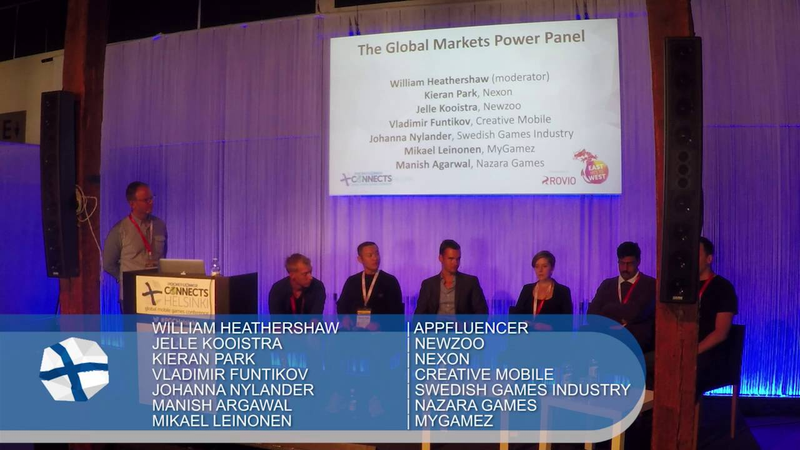
The global games markets power panel 2016
Key insights
6 takeaways- 01Developers must prioritize data-backed decision-making regarding lifetime value and consumer interest to overcome the technical and cultural barriers to cross-border expansion.
- 02Global expansion success depends on data-driven, localized strategies that account for regional variations in consumer behavior, technical infrastructure, and cultural preferences rather than broad, universal releases.
- 03Asian firms expanding into Western markets must move beyond stereotypes and engage local partners to navigate specific business practices and communication styles.
- 04Market entry in China is most effective through casual, standalone titles that prioritize in-app purchases over advertising revenue models.
- 05Sustainable global growth requires balancing market scale with high-retention content that accounts for varying levels of digital maturity and device quality.
- 06Strategies for emerging markets like India require a bifurcated approach, offering low-friction subscription models for new mobile users alongside freemium structures for experienced gamers.
Ask AI about this video
Transcript
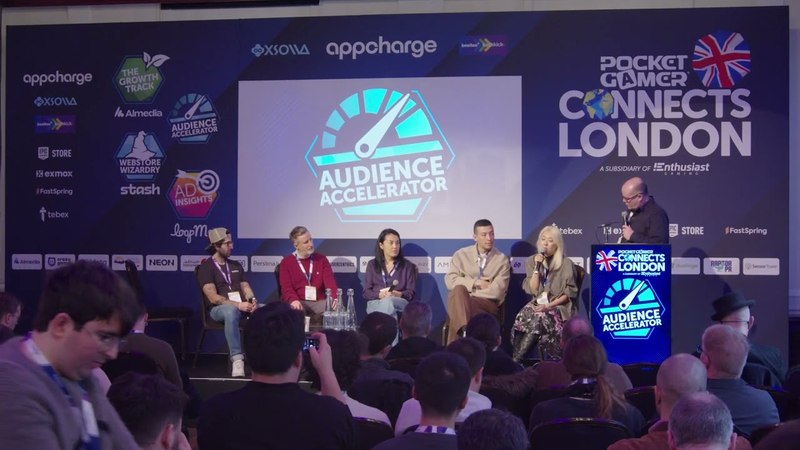
[Music] okay good afternoon my name is William Heather Shaw and i am from the the US I think soon to be AK Trump land I'm very excited for that and at which point I'll probably never be able to come back to your fine country so i will enjoy this right now I lead business development 4shared to you and we just released a new product called app flew in sir and so if haven't met you about AB fluence ur which gives you a 360-degree view of your their users which you can make more informed marketing and user acquisition and product development decisions let's chat after the panel and so this is the global markets power
panel and i'm going to introduce i'm gonna have everybody introduce themselves in a second but I've been very fortunate to come to pgc Helsinki the last couple years and I feel like every year the discussion on the global markets is always a little bit different so maybe three years ago we talked a lot about Western studios and games entering asian markets and it really seems like the last one or two years there's more more Asian game companies looking to go overseas whether that's through M&A and there's actually some huge activity this year like net marbles 150 million dollar investment in sgn or ten cent with supercell of course or opening offices in San Francisco or London so there's a lot going on all around the world okay so it's very interesting to take a look at how game companies are responding to the market changes so I'm glad to have such a steamed panel here and each has a very unique perspective of this topic and so I'm going to have
everybody introduced themselves and just to have some fun and also i like to make this panel as memorable as possible not just in your minds but I want the marketing department at steel media to make sure they have a photo of each of us so they can use in all the promotional activities in the future and so because this is the power panel I want everybody after they introduce themselves to make like a power like pose and so let me do one right now so this is the great power panel all right so that should be the front page of the next brochure okay yellow right is this mic working yet any well if you stand up as well be more powerful so the photographer could get you that'd be fantastic yeah great i'll do the power pose in a second I just reduce myself I'm yellow coy sir I am the head of product development at new zoo mobile chess news mobile division and we help
companies in making strategic decisions and by providing them with market intelligence and power point is let's do that's to the bathroom right over there tada yeah oh hi I'm Kiran I'm business development director land nexon I'm leading the copper investment division I'm a unit at in London working alone but uh we have a different I mean we are small but we have a kind of different subsidiaries in Europe and and us and obviously in Korea and I'm supposed to relocate from London two subscales very soon next week power pose I better like you not do the power pose okay I'm afraid I need inspiration like this oh that perfect I think my mic is working
yeah it is working hi guys my name is Vlad i'm a co-founder of a company called crave mobile we're based right across the gulf in tallinn estonia it's a fun town next time we visit helsinki do the boat trip one day you won't regret it just let me know in advance so i can leave the town while you're pouring anyway we perhaps best known for our exploits in the racing game genre we made quite an impact they're building one of the biggest franchises in the segment but we also operate a publishing business where we most help develop a smooth westwards weather from eastern europe where we are best connected or from asia have some partners and clients in Southeast Asia as well and yeah basically is what we do and my purpose would be I know this [Applause] yes my name is Johanna I work with policy affairs for the Swedish games
industry association we are a national trade association working with all the Swedish development companies yeah very self-explanatory in a way but the I think it's this panel especially it's very interesting because it's that even if the Swedish industry is its strong in in the world I think when it comes to going east we are maybe not the strongest card and in this panel but it's still like growing in and also also for us to request and I will strip out both [Applause] options options are becoming scarce and scares the poses are gone yep hi you up some of you just heard this is manish i'm CEO for azada games I headquartered in Mumbai and we had a mobile game
publisher across emerging markets Indian subcontinent Southeast Asia Africa and Middle East and we are looking for developers to come and join us in those exciting markets and my purpose [Applause] right hi everyone my name is Meghan layin on and I'm the CEO and co-founder of my games my games is publisher of foreign mobile games in Chinese market so we focus on mainly casual games at the moment biggest hits of our Hill Climb racing and cut rope magic we have over 15 million monthly active users in China connected to our platform and accumulate that 150 million users in the past two and a half years
I haven't trained my biceps for a while so I need to remember my good old Chinese Gong for moves that was awesome and so I gave everybody a heads up as far as the questions that we will discuss but I do not give you a heads up for the Power Move so thanks for being a lot of fun with that ok so we have 20 minutes to cover a lot and so I'm gonna ask everybody a specific question and then ideally we'll have some time left to answer some questions from the audience but let's start with yellow since you have the best idea of the overall global market and then what kind of dig your little dig a little deeper into it and so you helped your clients understand you know different markets are in the world and so over the past six months what has been kind of the most interesting case that you have helped your clients encounter or that they've
come to you with well what is going to change in last six months yeah I I'll stand up because otherwise have to do islands can't see me so it's been a couple of things that clients have been you know interested in last couple of months I think one of them would definitely be something that we've talked about earlier which is China and other Asian countries you know I'm really seeing the potential there and looking how to get into into the action and China in particular is of course a very steep learning curve and something that we're working on right now is profiling all the different app stores of China and scoring them based on how many people do they reach how I was usability how's the shirt shrunk since all that kind of stuff and that's something that will launch in the coming weeks that's cool and other things that people have been bugging us website speak is eSports a lot of brands outside of games are looking at eSport seeing a potential but not really understanding the market seeing and asking asking what is it about and who is watching it but what do
these consumers look like and what are they doing what are they spending and I think finally won one last thing that we've got a lot of questions about of course is Pokemon go and what does it mean for the industry and is everything going to be Pokemon go now and of course we we don't think it will be but we do think that pokémon go is video first commercial success for AR and I think more similar games using those kinds of innovation will come ok great thank you um so it's a great kind of high level perspective of what i believe is well a lot of developers are really interested in last several months here and now specifically vlad and so like you mentioned you have a lot of games hundreds of millions of users and so you guys are always think of your strategically about what markets do you next address and invest more resources into so kind of what are you looking at now for a new focus if at all of course we are yeah and we enjoy the
benefits of being based in the tiny country as a result the company was designed from day one to look outwards and look at the overseas market 64 because you know if you making beer and stone you can make a living if you make in video games it's just 1 million people and the two markets we are actively engaging with or looking to engage with recently our India and the Middle East and don't get me wrong I'm very aware of the fact that the Middle East includes some very different countries in different cultures but for the purpose of discussion let's just put them in the same basket so these are the two like recent high priority directions for us but despite the obvious differences they all fit within the same decision making framework which we apply when looking at potential new markets looks for and there's three or four conditions that we expect to be fulfilled the first condition is obviously the consumer
interest if a certain game is being received well by the audience of a specific country or region and ideally that interest is expressed in LTV because no people pay a lot of money in the game is the ultimate confirmation of consumer interest I find example is in middle eastern region again not being very accurate by grouping together all the countries but if you look at the adult flagship racing game and we take a look at the top pairs thats it guys paid more than three thousand dollars in that game we're going to see guys from Saudi Arabia Kuwait Bahrain and that communicates very clearly that there are people genuinely interested in this game if they are capable and willing to invest that much money and if you look at the revenue per paying user we see in numbers that exceed the US average by a factor of two or three so that's a very good confirmation that we should do something about that market
India on the other hand obviously does not demonstrate revenue per user which exceeds the American numbers but with one of our games we seen strong interest which is again a normally we can easily observe specifically as a bike racing game and you know it you don't have to be brilliant to figure out why x games are being well received so that's another sort of confirmation that comes in the form of high review scores more downloads than usual and that leads us to try and do something there they are the condition that needs to be fulfilled is obviously the market size the potential market size will have great metrics in Switzerland we have great metrics in Norway on the per user basis but obviously there isn't that much my that much people living there for a potential joint project or a licensing deal to really make an impact for us and we're very aware of the fact that the
most valuable resource we have is the focus of our people we're not large companies well not 500 people a thousand people we kind of just you know hi three guys and have them work in a specific country so instead we have to prioritize and obviously want to prioritize the markets that are larger so we can extract the maximum benefit and the final condition that has to be met is some problem that prevents us from achieving scale either a cultural problem or an economical problem because again if you look at Switzerland there are not many barriers that prevent entry it's a European country the languages are easy to translate into we have people in the team who speak those languages the platforms are well represented if we look at India for example obviously the whole bunch of hotels we need to overcome the payment providers the local distribution platforms the ad networks that work specifically in that region the cultural differences the language
yet again so there has to be some fundamental problem that is kind of blocking the deal but there has to be a solution to that problem and this is the reason why we are not actively working on in South Korea for example because we don't really see a solution to the problems we face in there that this competition the cultural differences would I have like a recipe for success but with the Middle East and with India we found partners who you think can solve those problems for us and we basically do licensing deals over co-publishing lives there so without Jeanette was to explore the whole depth of the market without losing focus of the main company great thank you and he did mention some obstacles and barriers to entry and of course by having a partner in that region helps a lot with that but a lot
of times we're not able to do that for several different reasons maybe we can't find a partner that necessarily thinks our game is that that's fit or maybe we just want to go at it alone and so sometimes we'll have to take a look at maybe some of the regulatory concerns and so you wanna Joe on it if you're able to maybe discuss a little bit things that game developer you should consider when looking at new markets whether it is Sweden or whether Swedish or other Western developers hit up other markets think of the children and yeah usually that's just that's usually used as an argument against games that think of the children but I think about as a game developer especially when it comes to to new markets games are usually regulated as a child product or a child toy or sometimes it is like anticipated for with different types of regulations because you want to protect the children
and it's always take a look at like how our children them yeah how do you treat children in the country's you're going to but I think Sweden for example we were actually a really a export country when it comes to games i think we're apparently we're with the 20th largest market for games in the world but but for the swedish company exports 99% of all all the games and I think it's also because you need me as as game developers good partners are great but things to the digital market you can also do publish yourself directly on the platforms and the platforms do handle a lot of the trick the tricky questions and I think most people or most companies actually have the games out on on almost all the markets if you're on App Store or Google Play for example or at least this is arrested Lee impossible
maybe you don't sell so much in all the countries but but it's still theoretically possible and as you said before like or earlier when it comes to like english-speaking countries it's easier to reach out and to have a test market without doing too much for localization but but to wrap it up for for the things about about regulatory issues I think sometimes you need to hire a good lawyer if you don't want a publisher and sometimes it's also good to to like copy paste and see what other people do I think sometimes it's also there is a bit of a difference because in I think it's in Scandinavian countries you kind of as a company you're expected to go to be kind or to be a little nice or two to do things in in like a proper way but I
think there is other culture culture are the cultures where where it's more more as acceptable to do like anything you'd like as long as you don't get caught so that's also like a bit of a difference that you might need to think about how you are perceived as a company if you're the nice guy or you're the guy is trying to do everything you can that's a great point because you have theirs if a lot of markets out there where it's like well it costs a lot of money a lot of time to do things the right way but so it's definitely a decision your company has to make so some great points um ok so now Kieran I mentioned earlier about these Asian companies looking for the best way to expand whether it's ma or a
myriad of other options and so it sounds like next on your part of the London office and then so what are you up to in London well actually as I mentioned earlier that I'm working alone even though we have a office in Berlin which is next in Europe but they are pretty much like PC centric live in ops the thing is I that the thing is what the thing why I'm working working solo solo I me alone at nexen London office is I am very customized to chase the opportunity popped out from Europe because it's a very scattered I mean very like you know scatter market there are a lot of difference but the thing is we usually have a Miss concept which is a sort of hypothesis that usually Western market is just you know there are a lot of similarity but truth is not so if I may I mean so that's why I'm what the role and responsibility of mine is kind of to
help our all these subsidiaries from you know nexon America next mobile from San Francisco or an X in Korea even from Asia or next in Europe even next in Europe I just help them to know about there are a lot of difference from country to country so if I may may give us some advice to the non-western based kind of company I'm a publisher to look for a kind of great opportunity here from Europe it's going to be they just make sure that they have to understand the market each market and then amongst the opportunity they have to prioritize for example and also they need to understand kind of the difference difference between the countries like for example way of working way to communicate and also way to respond for example like in Finland usually they are very shy at first time but after levanto or completely drunken
they're easily to speak out more transparently help transparently so which is uh if I don't know about it I cannot proceed the discussion more productive way so that's a really key issue for I mean for especially like Eastern companies because they have a kind of wrong sort of stereotype about the Western market so break the kind of stereotype and prioritize the kind of opportunity upon the upon the what they are looking for and then they probably just just meet the the guys in the in the real world so then probably it's going to be very beneficial if they have a chance to kind of drink a beer and then they speak honestly then they probably they are able to catch up some like great point from the developers and then maybe they can take from there great and then uh cacao finish developers use cookout to
chat well cacao is used to be a very strong and influential kind of platform for the game developers but the thing is um gaming it's like very universal even though as like Vladimir said said that korean market is very kind of unusual because google is like you know just five percent in terms of market share for the portal so neighbor is like very strongest like you know market share they are kind of parent company of line but interest I mean I used to work for neighbor before next on but the thing is um they are very very powerful platform but nowaday like considering the nature of the game it's universal obviously so Apple and Google are getting like powerful and cow a little bit faded faded out and there are more focused on like you know messenger service and also adjacent market which is a kind of cacao taxi which is a very over like but they are dominant so cacao is not that powerful
as it was thanks for the update you haven't really heard much about cacao last a couple years yeah that's great and so that's asian the company is going west and then mikill you're helping Western developers go to China and so of course we always discuss different interests different characteristics of what a game should be different tastes and so I'm not sure how many games you're publishing per month but what are you looking for when you're looking to publish a game that has the great potential to be successful in China right that's popular question so at my games we've developed this single sdk model that we can basically make the android publishing in china very fast and easy so we have built this own super sdk that we can then just with one sdk integration we can publish currently at
60 different Android stores covering all the all the big ones so that our sort of sales pitches that hey if you work with us you only need to integrate one sdk only maintain one build of the game instead of integrating you know all the different stories decays oh right that currently that offering we currently only have four standalone games so for like massive multiplayer online games it's not that simple so basically we are currently staying very much on the casual space because we can make it easier we can make it really fast and afford less so another reason is that why we are more focused on on the casual games is that for the hardcore games although they are making great money typically but in China there's a long history of
RPG genre which is very heavily built on the Chinese culture of things like devasya the martial arts stories and so on so bring it bringing the that chandre of of games from west to china is very difficult because you have to localize the content a lot but on the casual games however the if it's if it's easy to play standalone games often there is not much story story line on the game so it most of most of most of the standalone casual games don't realize that Matson on the story story line or the cultural background of the game so they are very often they don't need to be localized at all in sense of changing the items on the game changing the character
so changing the graphics or so on so so Chinese players they they do have a lot of appetite for for Western culture like pop culture's Hollywood all goes very well in China so as long as the game is not relying the gameplay is not relying on a story then most of the casual casual games are just fine in China so so for us we we want to focus on games that we can get quickly to the market we work on a revenue share with with the studio so we want to keep the workload small so that the studio can they understand the risk and they are willing to do the work load necessary changes on localization so that basically limits us to smaller projects we don't want to spend one year and hundreds of thousands of euros on
modifying the game that the Chinese market so things like Hill Climb racing or now now we are going to publish the flare games non-stop night those are very good examples of of games that you basically don't have to localize at all just change the language and at the billing and it's pretty good to go the most important thing that we are looking at is is the mana ization metrics so at the moment on the chinese android store the advertisement funded model doesn't work very well is very very hard to if you want to publish in all this all the major stores it's very hard to do the advertisement model there we are working on on solo our own solution for that there are also a lot of other companies working solution hopefully hopefully after three or six months we would be able to start to look at ad funded games but at the moment no
we have to get our money only from the in-app purchases so that then limits us two games that are you know no need for localization oh yeah then there's the file size thing the file size needs to be small and then has to make has to have a strong inner purchase monetization matrix and then if we want to be risk very then we would look at games that have already been published in other markets and can provide the proof with those metrics because then the user acquisition in Chinese Android stores you still heavily reliant on the stores giving us featuring so the better track record the game has in other markets the easier conversation it is for us to get featuring from the stores so I think those are those are sort of the of course the game has to be good
and we have to love it and we have to believe in but those are sort of the heart requirements that the game has to take on every boxes in order for us to publish great thank you yeah I feel like China has been super popular last few years and a lot of Chinese publishers have now even been coming overseas to help western game developers and so I've heard this pitch a couple times and including myself I used to work with Sky movie and doing this and so what I love now um in addition to the Chinese market we have mish and you're focused not only on India but like you mentioned before the Middle East Africa other developing markets um that's a lot to focus on a lot of cultures languages distribution distribution channels so how can you recommend give developers do it themselves and of course then give a pitch about how you're able to help cover all those markets as well I
think them a that's a lot of markets and they are not homogeneous markets each market is very different so I do not suggest or say that AV know all those markets and what really so what we done there as nazara is most important thing is we have identified a consumer segment which is really first time mobile gamer which is a first time mobile Internet user and like Michael was making a point that's the user which is not really a gamer that guy is coming and maybe playing the game for the first time in his life or her life and to that user if you give him a complex narrative backstory fitori in-app purchases metagame he's one run away he's gonna just run away like there's he has seen a ghost so what we do is we have segmented the market and found that there's a common theme of
this first time a while gamer who has whose outlook is that I should be able to pick up and play the game immediately I should not be able to not be spending too much amount of money in downloading the game because the file size really matters and then I just want the curation of us choice that if I download this game and I don't like can i play some other game yeah and more importantly this guy is not seeking a game like Google Play when you go you already are into the mind frame that I want to play some games this user is a very instant gratification user who is impulse buyer and when he sees an ad valley surfing of a good racing game or a good action game or for all let's say shooting game clicks and that's what the subscription service for us really works because these are very very simple you may call it five years back six years back games and we kind of really look at these catalog of games curate them for
different different countries and we run the subscription service and that's how we are able to run this scale this at a homogenous level now the second part of growth which we are looking at is where you are talking to a slightly more evolved user here which is coming to Google Play which is coming to iTunes which is seeking to play a game and has been a gamer now your job is to either monetize it through ads or monetize it through in-app purchases that's where it becomes very important for us to really have a game which is having high retention which is high monetization and there we cannot say that all the markets are same because the user behavior is very very different now as I spoke of a few an hour back on my talk on India India itself has maybe three countries one countries like Canada which you have 20 30 million people which are global travelers premium devices effluent guys great cards and those could be sitting
anywhere in the world and maybe an Exxon game it would really work for them yeah then there is next 60 million users which are casual users which may be grinders which may never pay you through in-app purchase but when they see that say a big Hollywood star of all sorry Bollywood star and like blood nice bike racing game you kind of really create that combination great game great depth plus a Bollywood star they will they will play play play and hopefully we will monetize it through real reward videos or IEPs in some cases and then the third audience is what I described are in subscription service so within India have three countries because the size of user base is so large right so for us when we are looking at the category one and two in an India we are looking at exactly the same parameters which Mikkel spoke about size of the game whether the game has really worked in terms of retention and monetization whether the game is really potential for the Indian users
to like it minimum alterations or minimum localizations what could be needed to do because the market is small and one needs to be cognizant that if developers spends lot of money we are responsible for recovery of that money and if we can't then it really spoils our name yeah so these are the some of the factors which we look at we am honestly not done on the freemium side much of efforts right now in the Indonesia market or a Malaysia market Africa our opinion is still three years behind India so when I'm saying India six seven years behind China you are talking about Africa being in 79 years behind so right now our focus is to really attack the explosion which we are witnessing in terms of gameplay in India and how do we really create a tues to sprung strategy in one is a subscription service another is a freemium market and within that you can look at games which are a lot of depth which can give your
attention and the second is games which can give you monetization and the consumer segments are very different for both these games great that's that's a lot but it's fantastic and I think everybody will be available to meet and greet outside here and I'm looking forward to the dinner tonight so thanks for sponsoring the dinner today my pleasure all right let's give everybody a round of applause [Applause] [Music] you
Summary
The global games industry is undergoing a significant transformation characterized by the aggressive expansion of Asian firms into Western territories and a simultaneous push by developers to capture high-growth emerging markets. This shift is driven by a strategic imperative to diversify revenue streams and scale operations beyond saturated domestic environments. Success in these international ventures depends less on broad, universal releases and more on data-driven, localized strategies that account for regional variations in consumer behavior, technical infrastructure, and cultural preferences.
Market entry requires a sophisticated approach to regional nuances, particularly when navigating the distinct regulatory and monetization landscapes of China, India, and the Middle East. In China, developers find the most success with casual, standalone titles that prioritize in-app purchases over advertising. Conversely, entering Western markets demands that Asian firms move beyond broad stereotypes, instead engaging local partners to navigate specific business practices and communication styles. For emerging regions like India, the strategy must be bifurcated: developers should offer low-friction subscription models for first-time mobile users while maintaining freemium structures for more experienced gamers.
Ultimately, the viability of global expansion rests on the ability to balance market scale with high-retention, localized content. Companies must account for varying levels of digital maturity and device quality to ensure financial sustainability. By leveraging regional expertise and prioritizing data-backed decision-making regarding lifetime value and consumer interest, developers can overcome the technical and cultural barriers that historically hindered cross-border growth. This analytical approach to market segmentation and partnership-led expansion remains the primary driver for sustainable development in the modern, interconnected gaming ecosystem.






















Comments