1 free read left. Create a free account for unlimited reading + AI research.
Create free accountWhitepaper Ludic Language Pedagogy
1 free read left. Create a free account for unlimited reading + AI research.
Create free accountWhitepaperLudic Language Pedagogy
The Games and Education Iceberg framework establishes a transformative model for integrating gaming into formal education, arguing that the true potential of this medium lies in deep, pedagogy-driven engagement rather than superficial gamification. By moving past extrinsic motivators like points and leaderboards, educators can transition toward a more holistic approach that treats games as complex cultural texts. This shift requires viewing the classroom as a playground where teachers function as designers of agency-driven experiences, bridging the gap between students' informal gaming interests and rigorous academic inquiry.
Effective implementation of this model relies on deliberate teacher mediation, which encompasses structured preparation, active facilitation, and reflective debriefing. When logistical or financial barriers prevent direct gameplay, educators can still leverage gaming culture by integrating game-themed content or facilitating critical discussions about gaming communities. This approach fosters ludoliteracy and constructionist design, allowing students to engage in identity work and critical analysis. By situating games within broader social contexts, teachers can cultivate a pedagogy of multiliteracies that connects classroom learning to authentic, real-world audiences.
Published in 2025 within the journal Ludic Language Pedagogy, this framework provides a macro-level tool for educators seeking to navigate the full spectrum of game-based learning. The analysis emphasizes that the most profound educational value emerges when students move beyond passive consumption to become active designers and critics of their own ludic experiences. By grounding these practices in established academic literature and specific titles such as The Walking Dead and Pokémon Unite, the framework offers a scalable, evidence-based strategy for enhancing student engagement and critical thinking across diverse educational settings.
Each row is a game or company this document names, each column a document, oldest first. A mark means that document names it. Select a row to see those documents.
Ludic Language Pedagogy · 2026
Ludic Language Pedagogy · 2026
Ludic Language Pedagogy · 2026
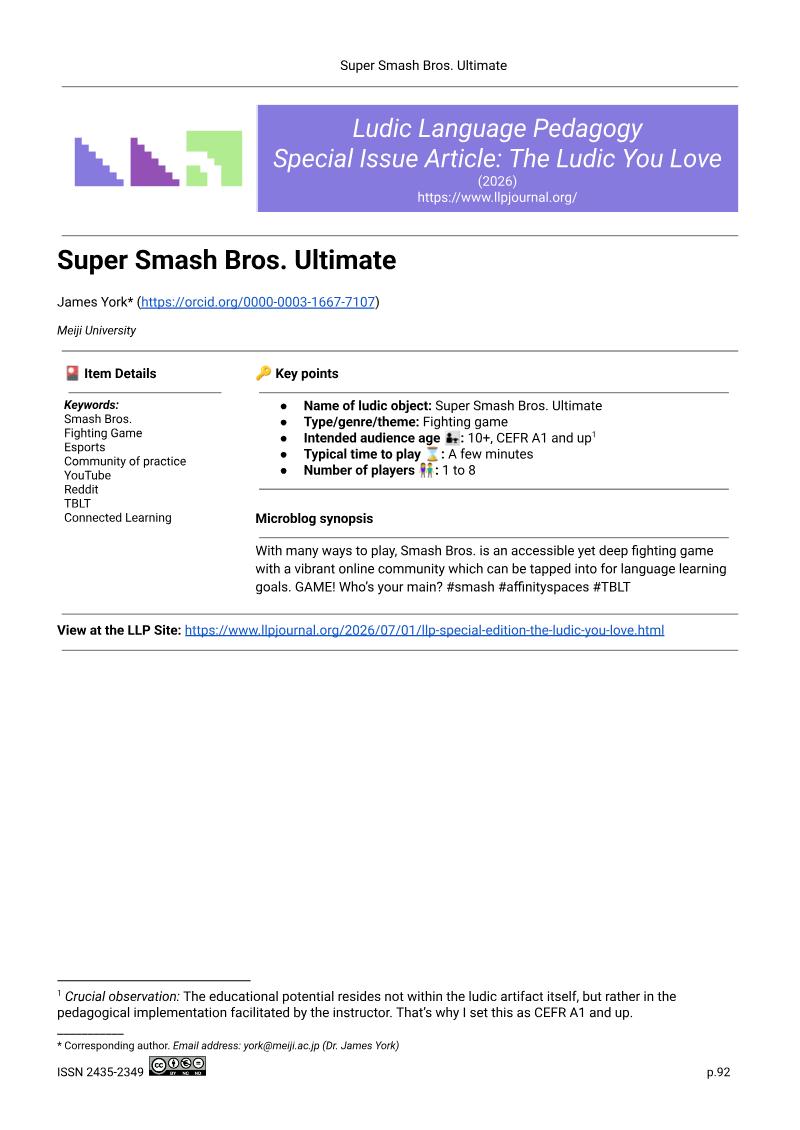
Ludic Language Pedagogy · 2026
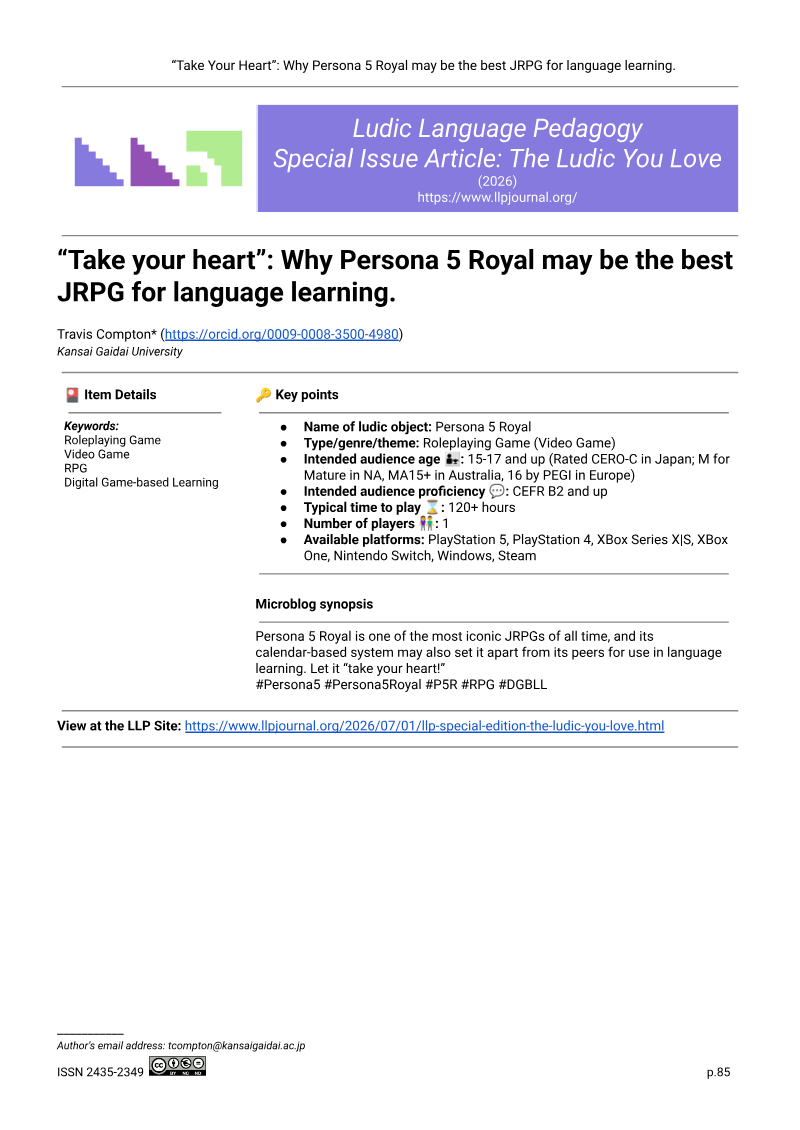
Ludic Language Pedagogy · 2026
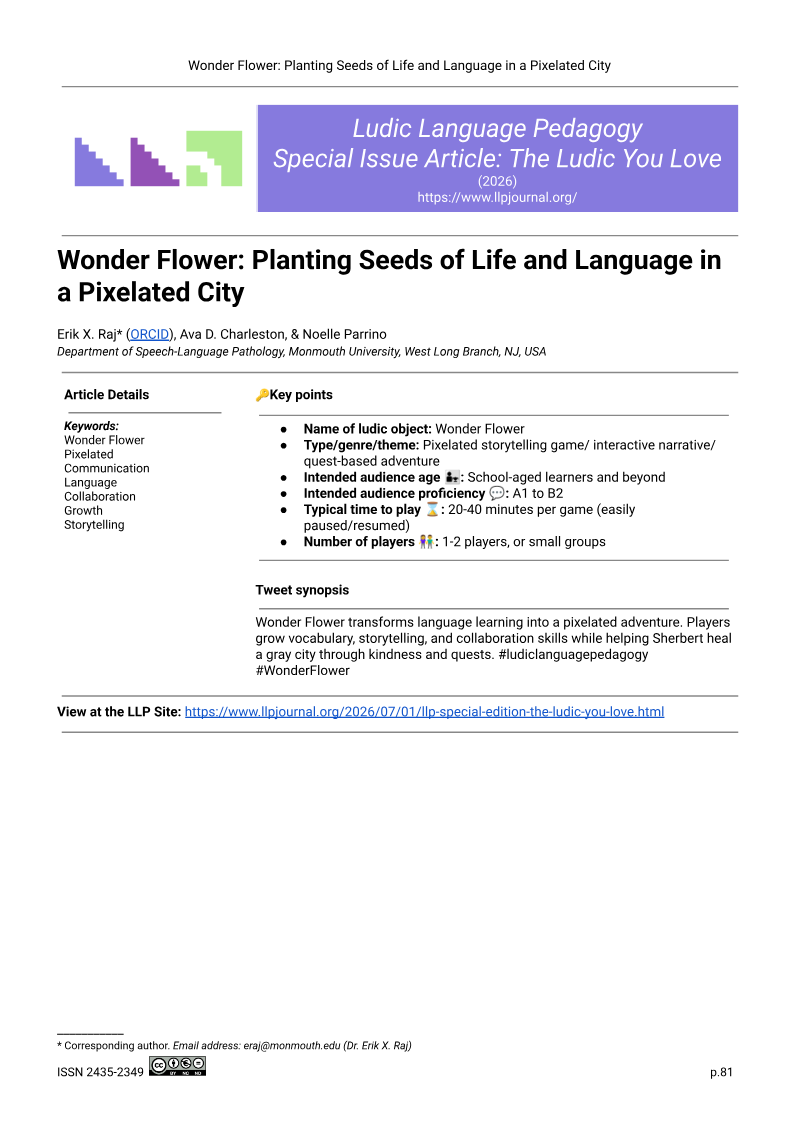
Ludic Language Pedagogy · 2026
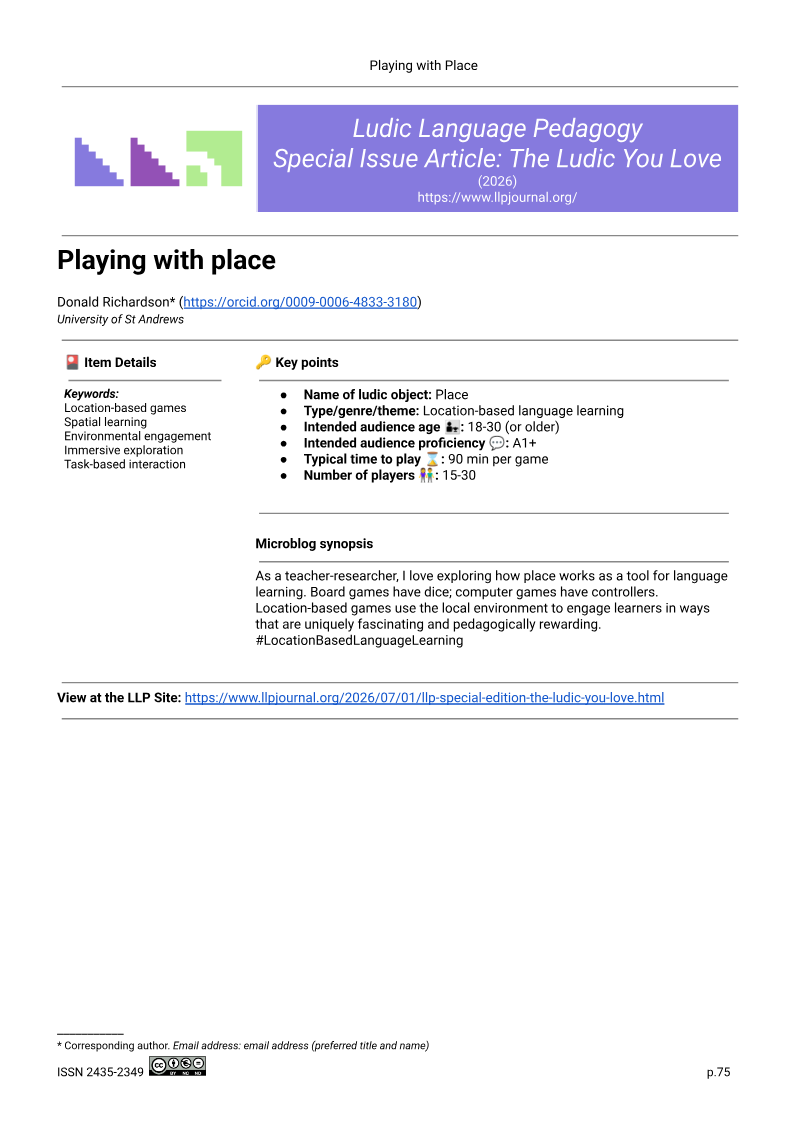
Ludic Language Pedagogy · 2026
Ludic Language Pedagogy · 2026
Ludic Language Pedagogy · 2026
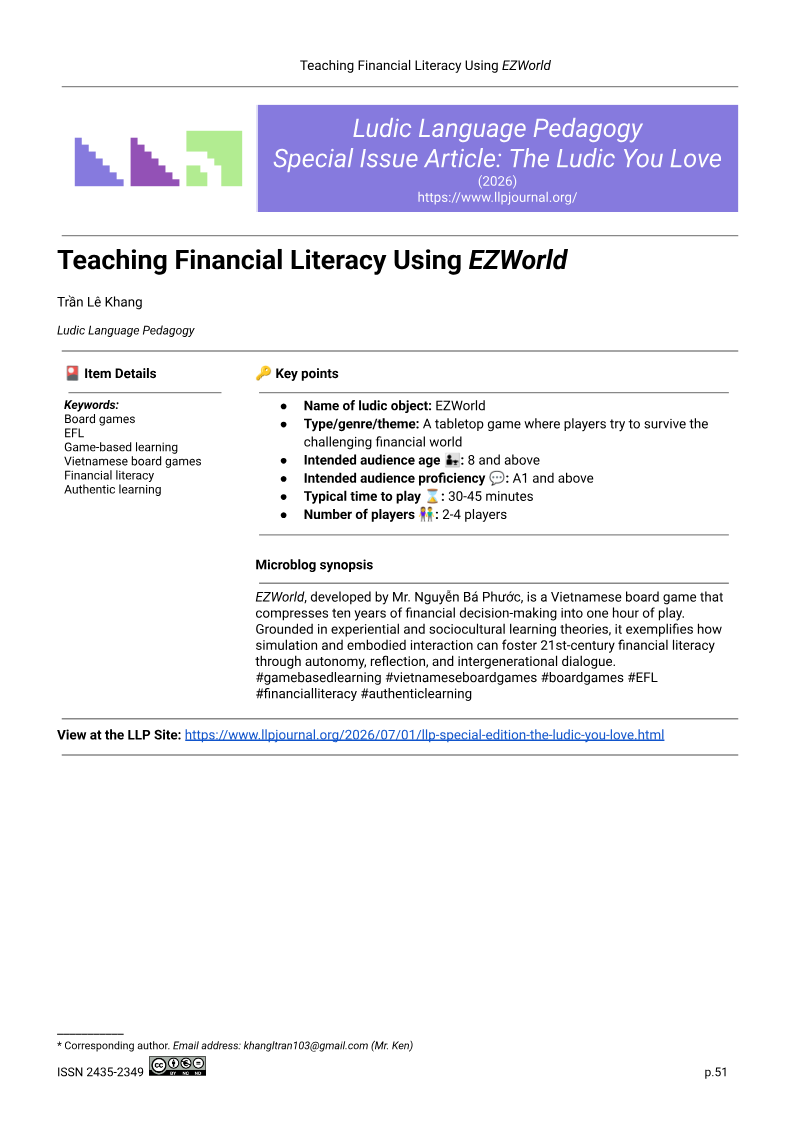
Ludic Language Pedagogy · 2026
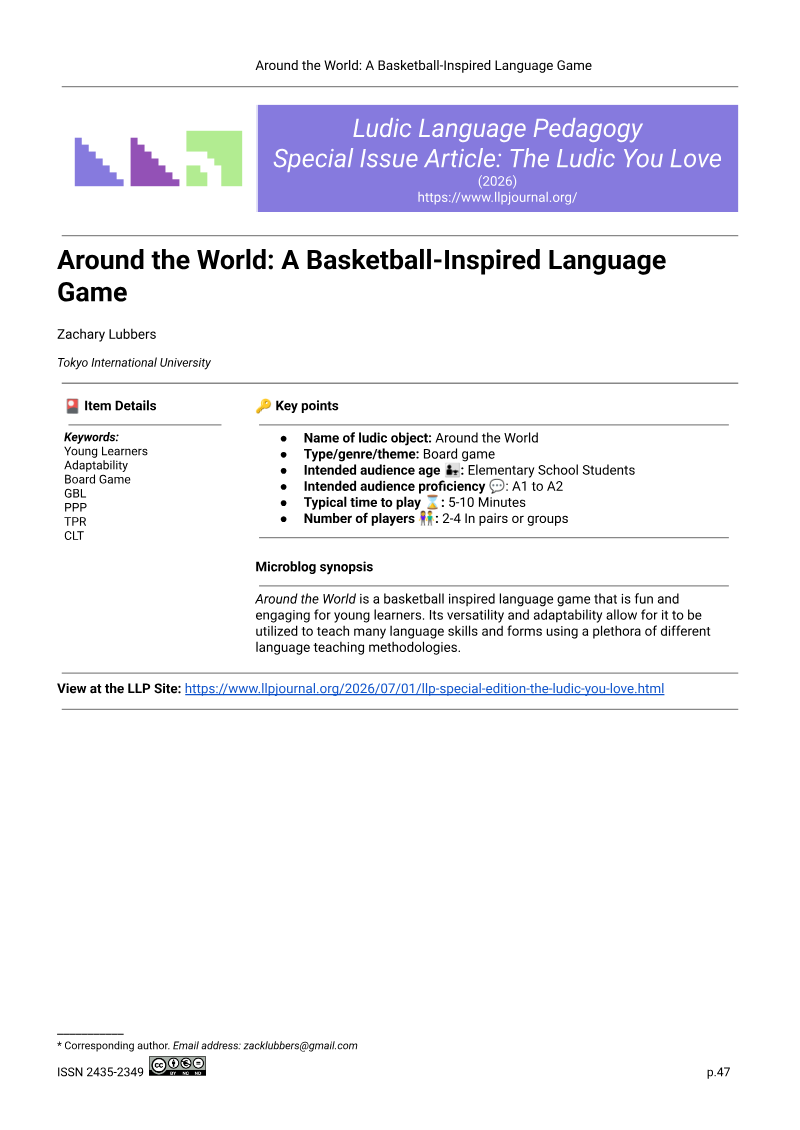
Ludic Language Pedagogy · 2026



Ludic Language Pedagogy · 2026
Serious Games Society · 2026