1 free read left. Create a free account for unlimited reading + AI research.
Create free accountWhitepaper Ludic Language Pedagogy
1 free read left. Create a free account for unlimited reading + AI research.
Create free accountWhitepaperLudic Language Pedagogy
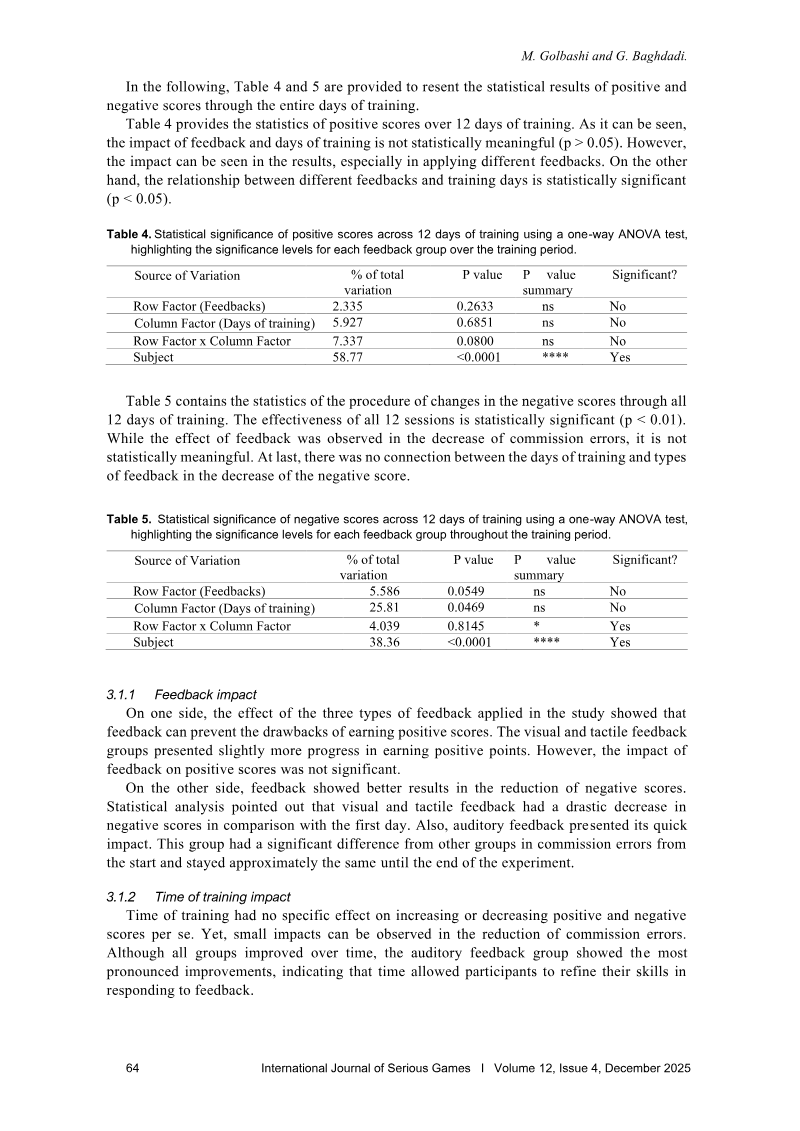
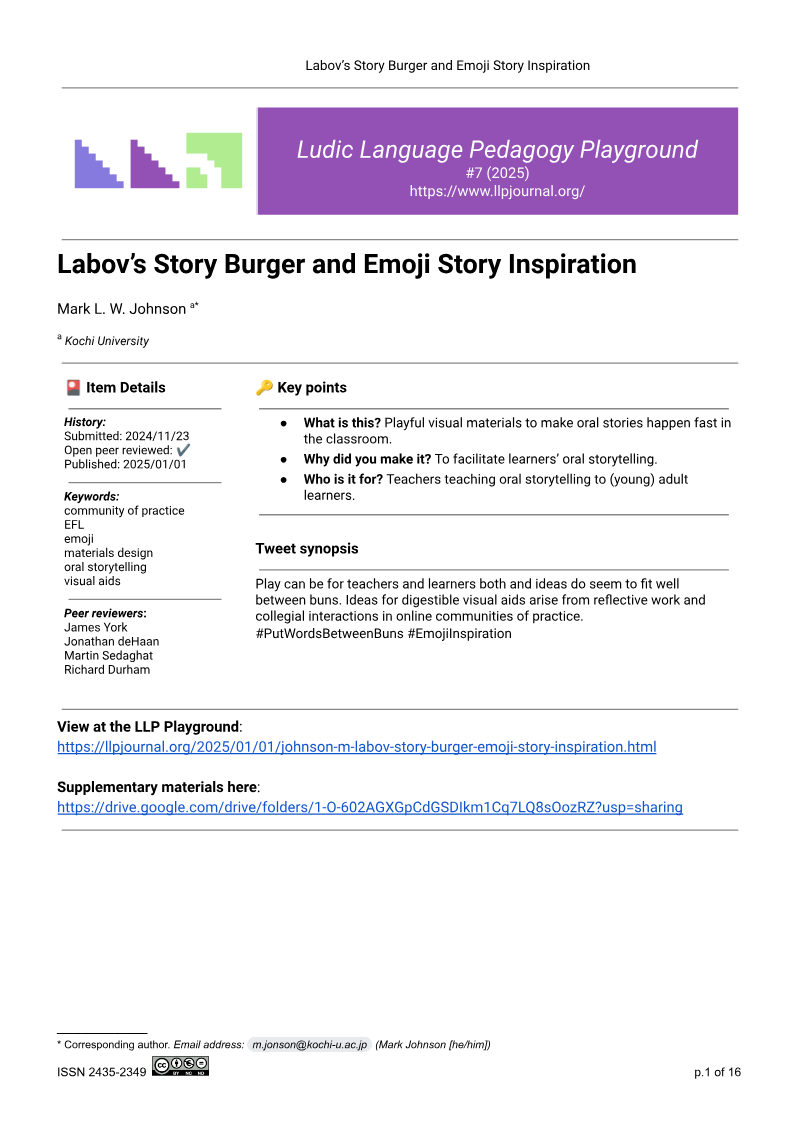
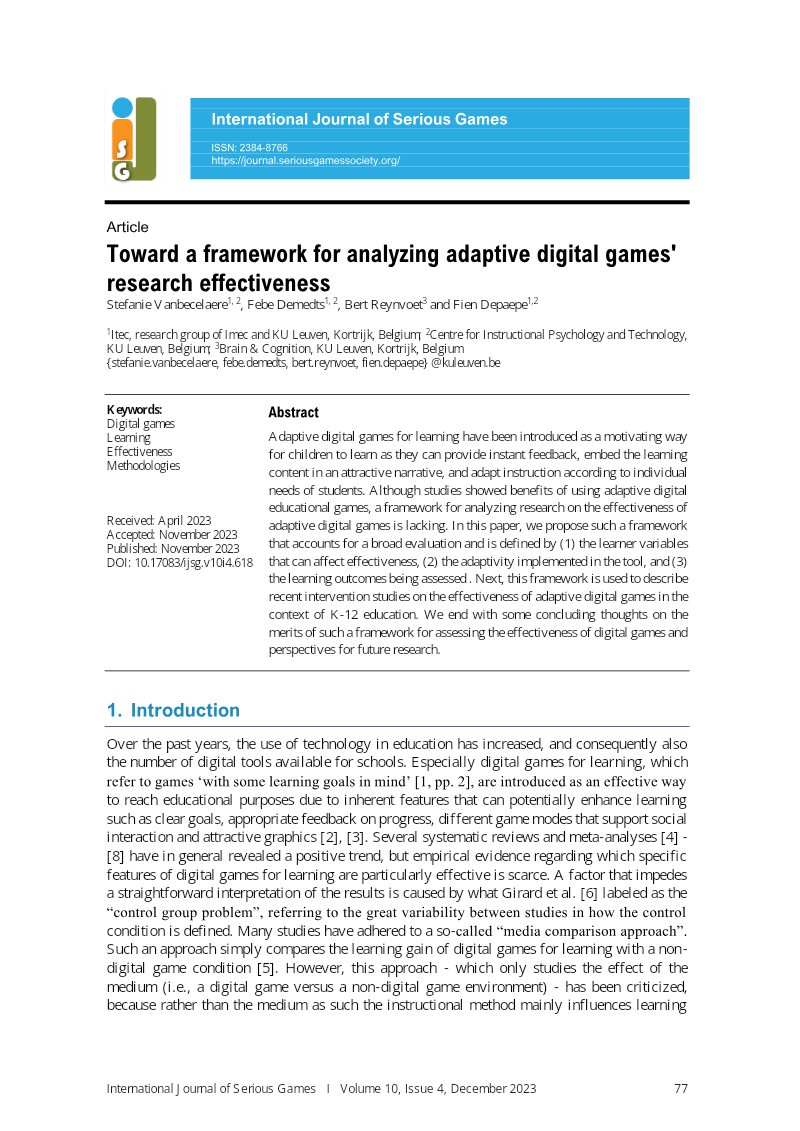
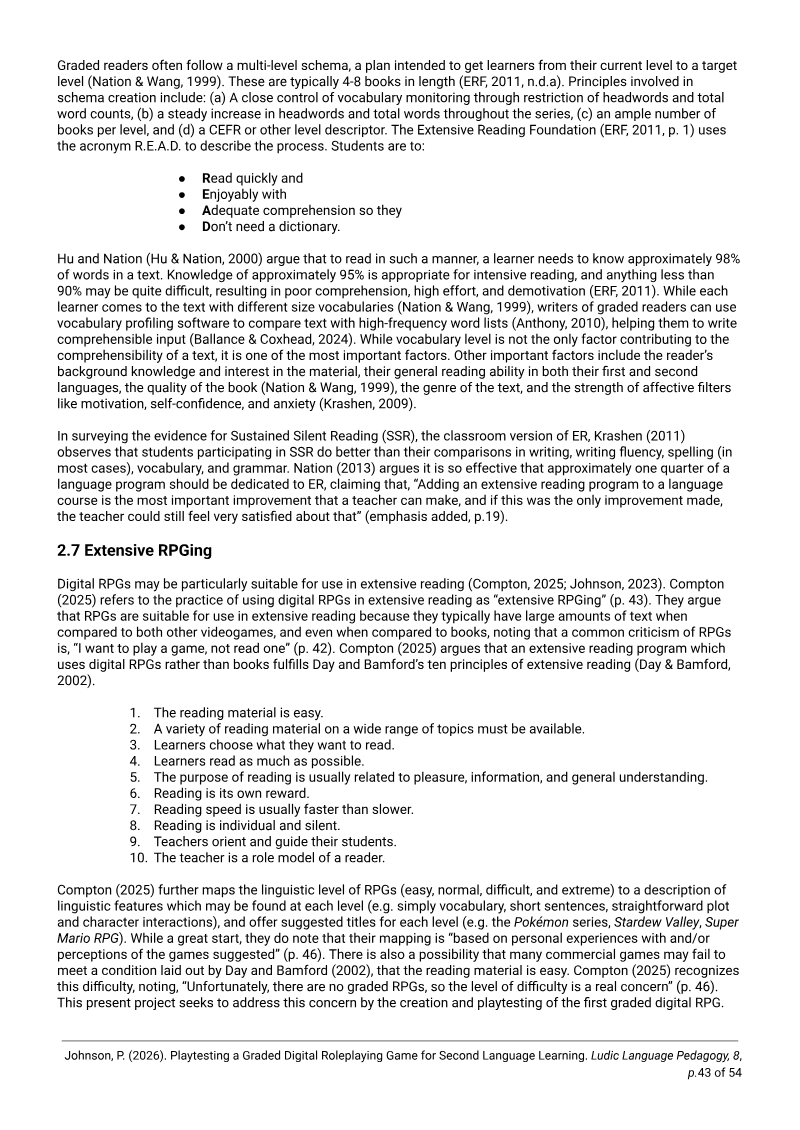
The publication provides a practical framework for educators to integrate play into their classrooms, emphasizing the creation of "gratifying experiences" for students. The core thesis posits that teachers can foster a more effective learning environment by adopting the SPACE mnemonic—Safe, Participation, Agency, Critical, and Experiences—which synthesizes principles from playful pedagogy, progressive education, and second language acquisition theory. By viewing the classroom as a constrained system, the author argues that teachers can exercise professional agency to manipulate these constraints, thereby transforming standard curricula into more engaging, ludic environments.
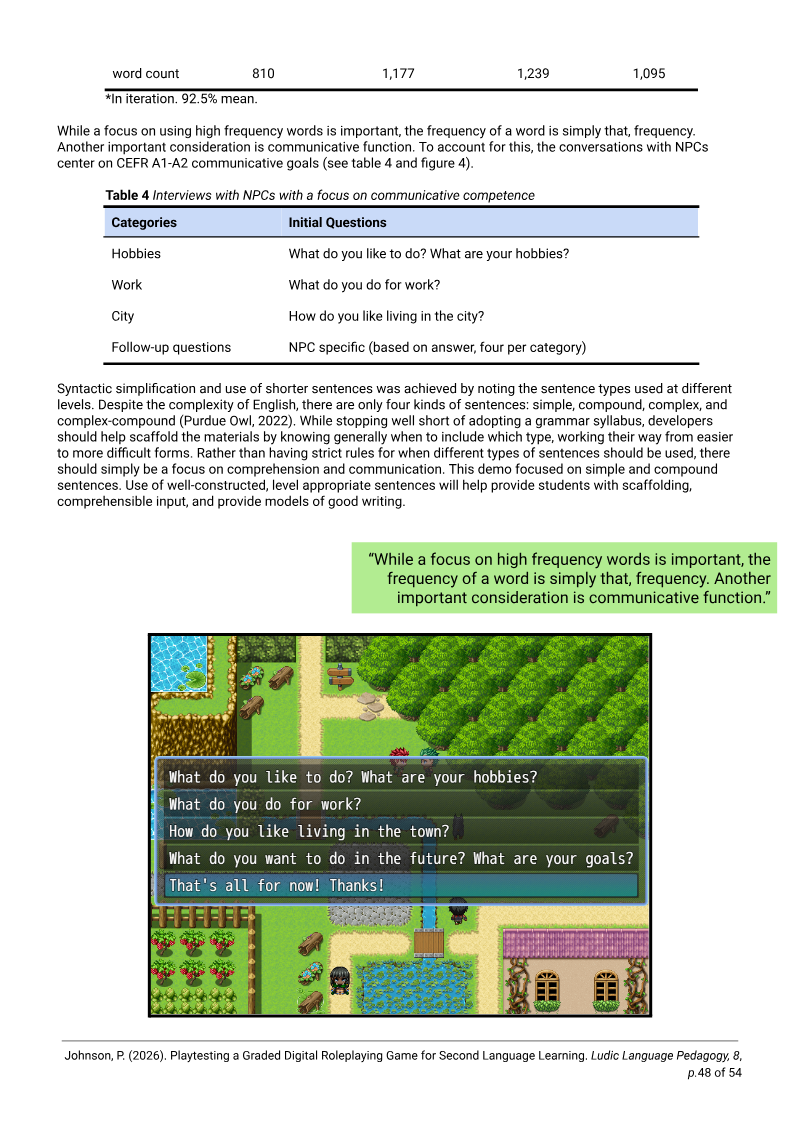
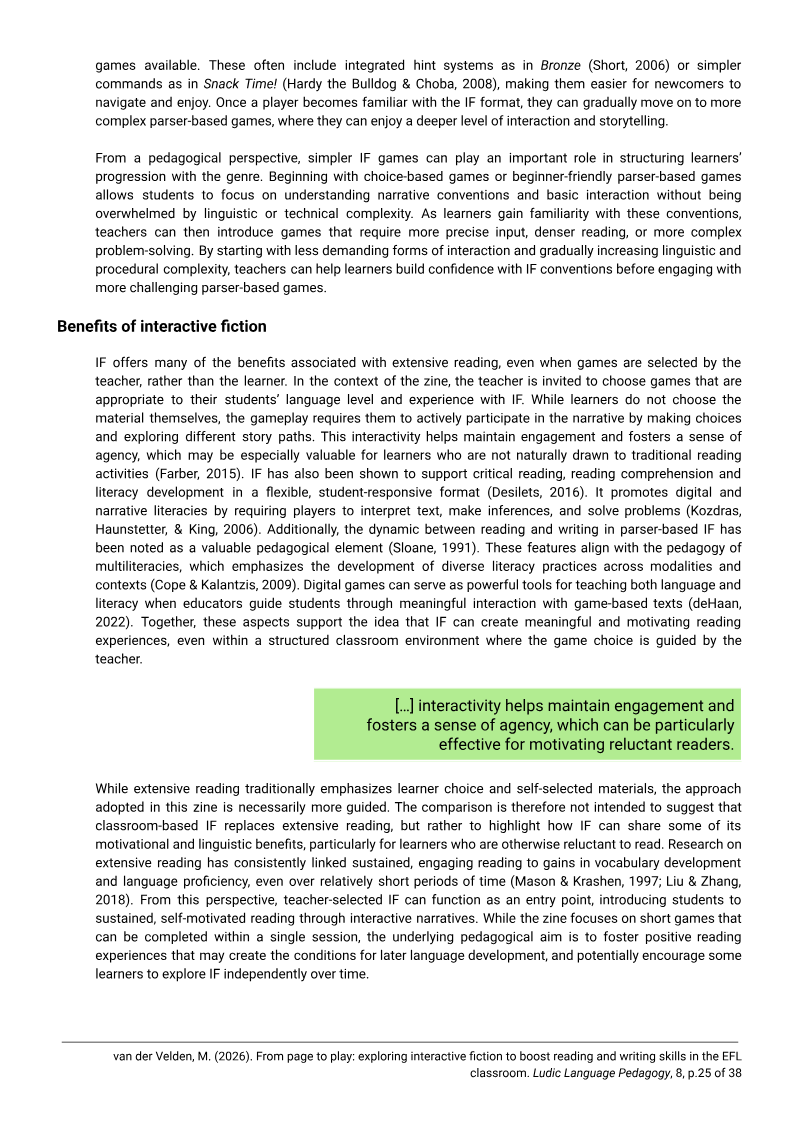
The methodology centers on a printable, eight-page zine designed as a reflective tool for practitioners. The zine guides teachers through a five-step process: identifying existing constraints, understanding the ways to play, building a "playground" environment, facilitating student play, and reflecting on the outcomes. The framework is supported by a review of existing literature and case studies from the Ludic Language Pedagogy journal, which demonstrate how various educators have successfully implemented these elements—such as allowing retests to foster a "Safe" environment or using tabletop roleplaying games to enhance student "Agency."
Intended primarily for teachers and academics, the work serves as a concise, accessible guide for those seeking to move beyond traditional instruction. It encourages educators to move away from viewing games as the sole definition of "ludic" and instead adopt a broader approach that incorporates playful methods, materials, and mediation techniques. By providing a structured, interactive format, the resource aims to help teachers navigate the tension between institutional requirements and the desire to create meaningful, student-centered learning opportunities.
Ludic Language Pedagogy · 2026
Ludic Language Pedagogy · 2026
Ludic Language Pedagogy · 2026
Ludic Language Pedagogy · 2026
Ludic Language Pedagogy · 2026
Ludic Language Pedagogy · 2026
Ludic Language Pedagogy · 2026
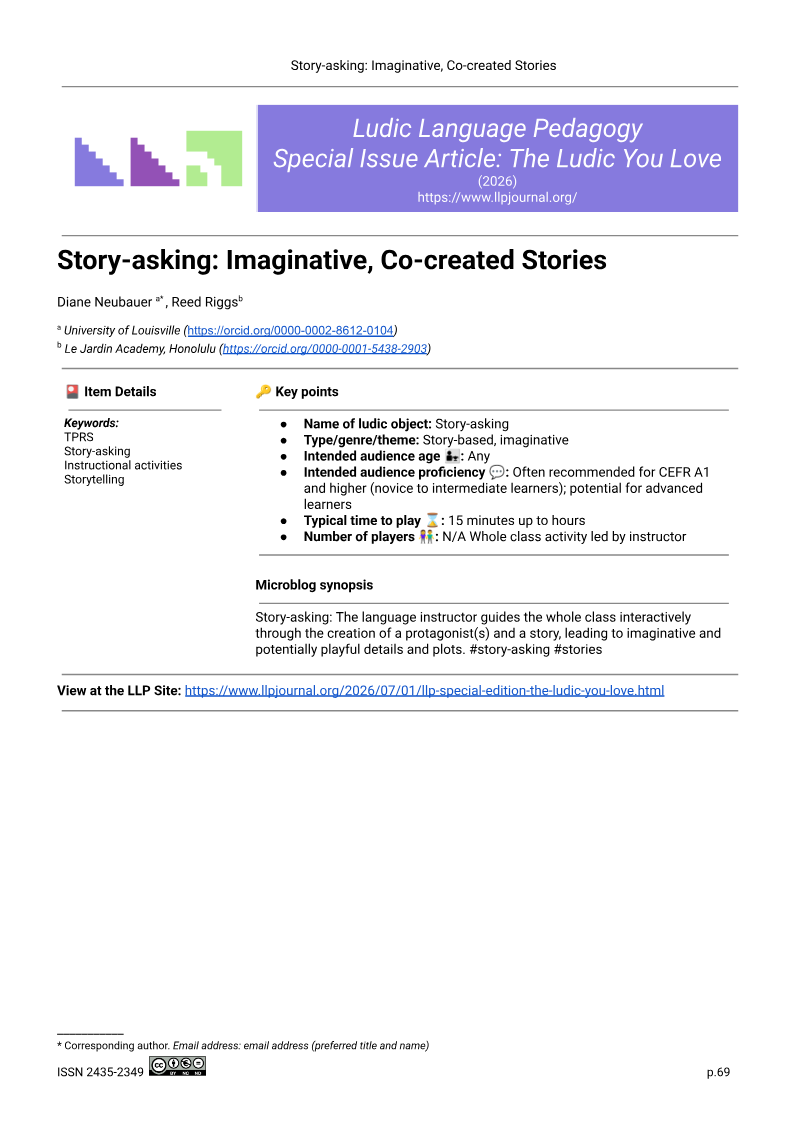
Ludic Language Pedagogy · 2026
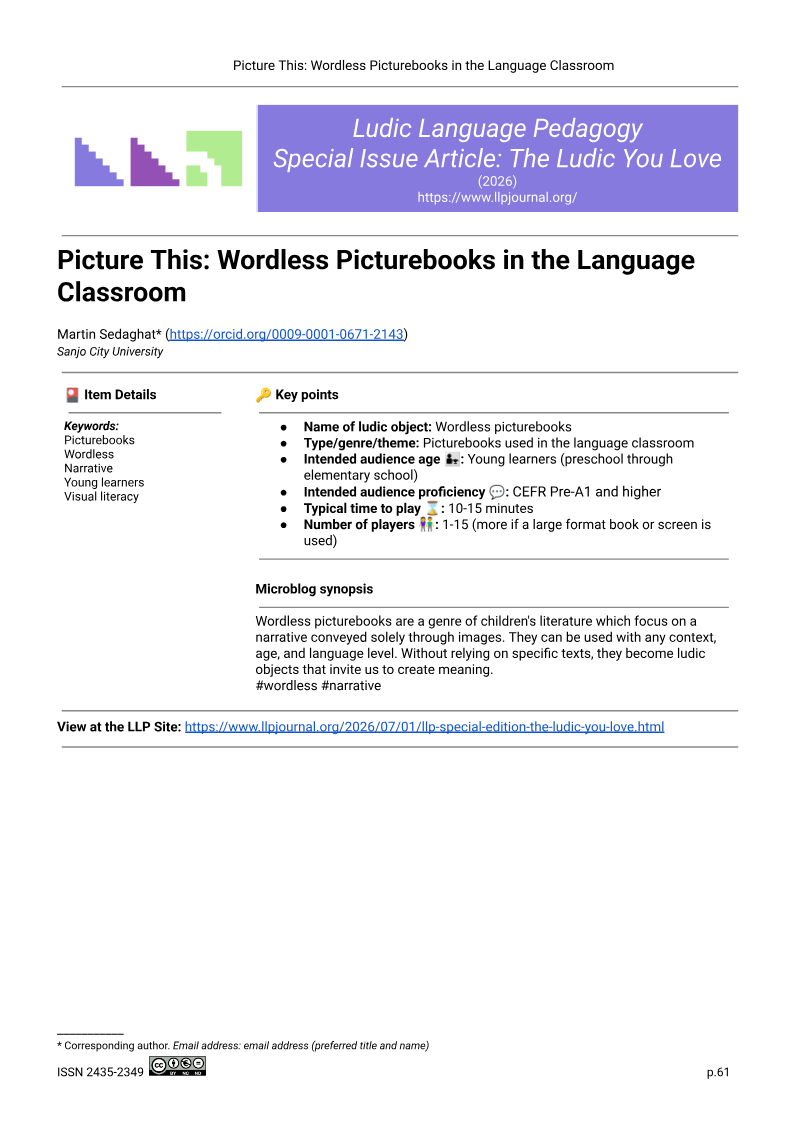
Ludic Language Pedagogy · 2026
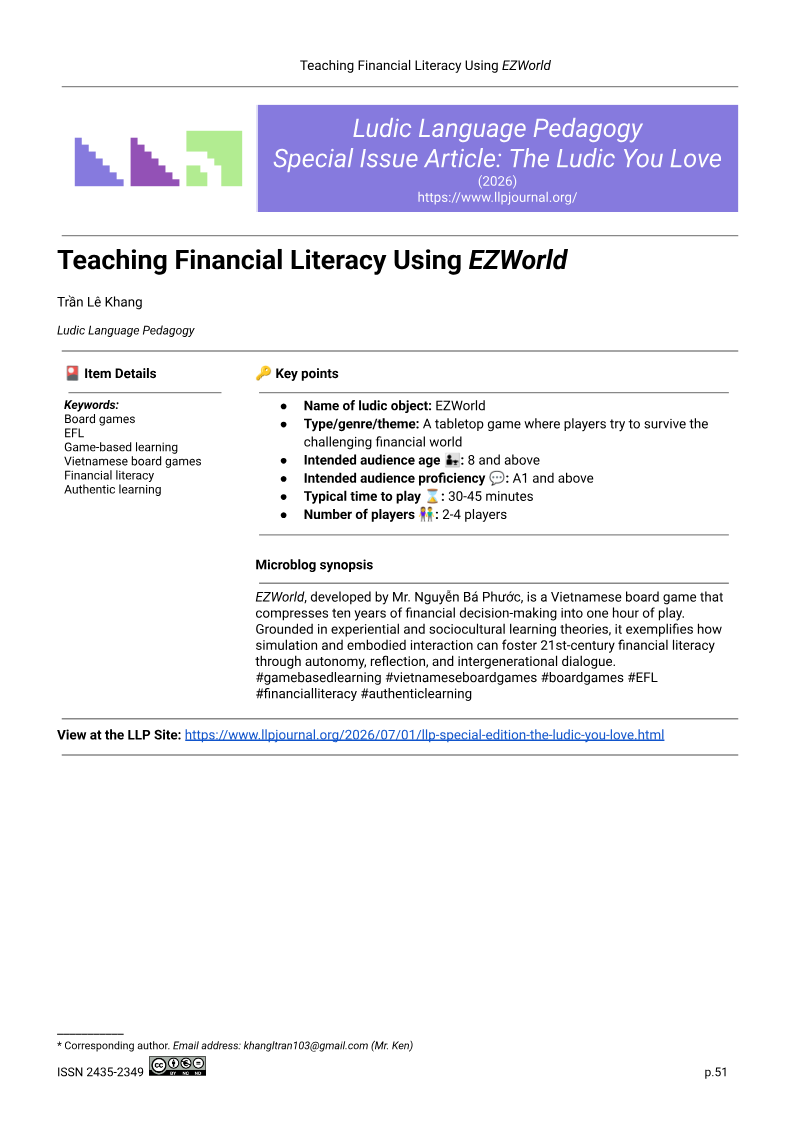
Ludic Language Pedagogy · 2026
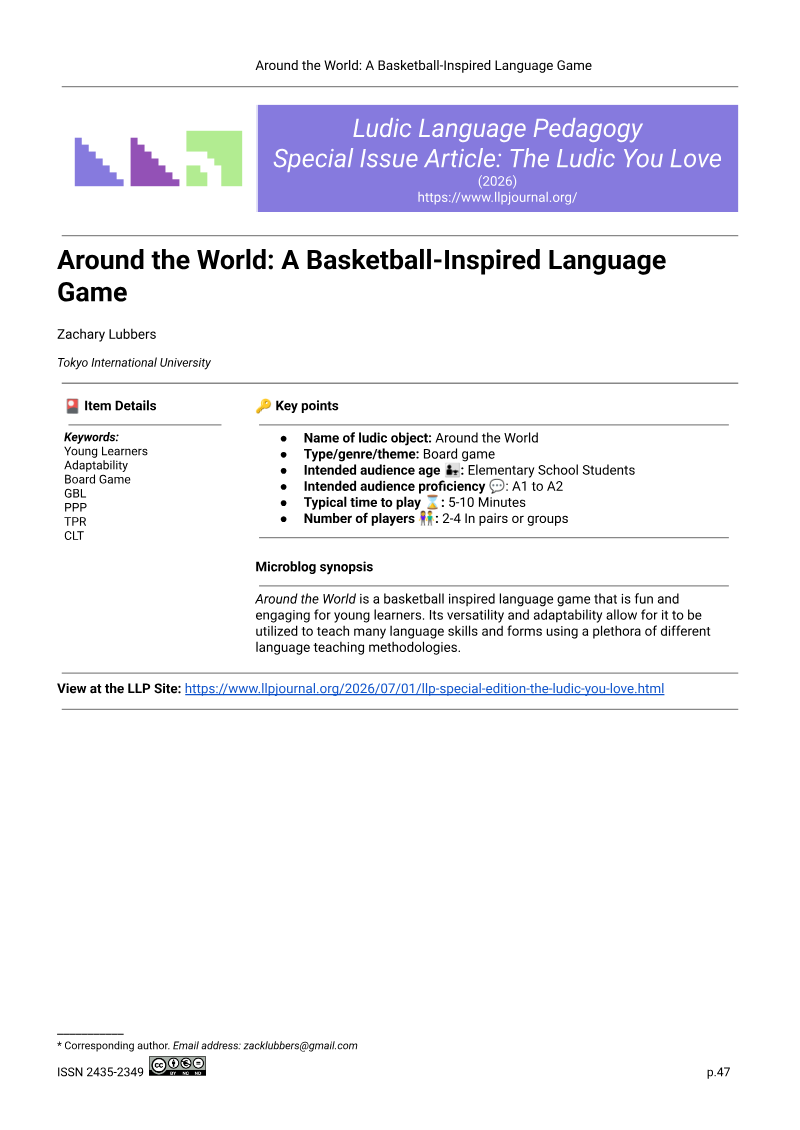
Ludic Language Pedagogy · 2026



Ludic Language Pedagogy · 2026
Serious Games Society · 2026