1 free read left. Create a free account for unlimited reading + AI research.
Create free account
The future of gaming is empathy: The key to retaining players
Key insights
6 takeaways- 01Player retention often fails because developers rely on behavioral metrics that overlook the underlying emotional and psychological motivations driving user engagement.
- 02The game Dungeon Boss serves as a primary example of how optimizing for surface-level visceral appeal can lead to long-term retention failure when core mechanics do not align with actual player needs.
- 03Effective product development requires validating psychological hypotheses through clinical research and testing for segment stability over periods of several months.
- 04Developers should shift focus from transient behavioral data to identifying and designing for enduring psychological traits, such as a player's need for security versus competition.
- 05Traditional segmentation models like the Bartle taxonomy are often ineffective because they fail to account for the fact that player behaviors fluctuate significantly over time.
- 06Studios can avoid the 'local maximum' trap of A/B testing by using machine learning and deep learning to identify stable user traits rather than just optimizing minor variations of ineffective mechanics.
Ask AI about this video
Transcript
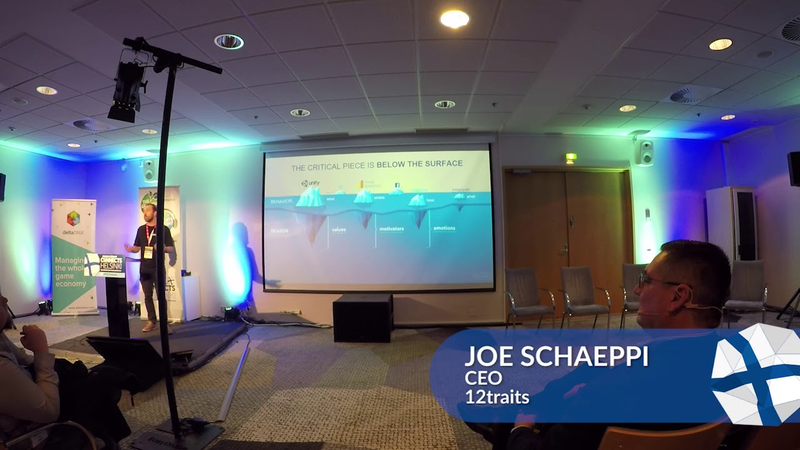
[Music] so yeah my name is Joe Chevy I'm the CEO and co-founder at 12 traits so today I'm gonna talk a little bit about why empathy is so important and how most companies are gonna be competing on that now and in the future as well as a lot of the data that you leverage right now and why that data is not necessarily as relevant as you might think so in a former life I used to be the head of UX at a company called Big Fish games I'm not sure if many of you guys know dungeon boss or if you played it before but out of the gates this game was doing really well we were getting like 8 million organic installs a month I was doing 2 to 3 million in revenue per month and so as a data-driven company we looked at all the metrics started optimizing around that typical story you have your whales you have people spending money of your engaged user a lot of these individuals you know there is a boss battle or type game so we're optimizing around that environment and a lot of the feature sets that got deployed as a result basically fit these
users that were highly engaged one of the problems though as the game progressed and more people and more people floated in the game revenue started going down and everyone started freaking out like we followed this data-driven economy and metrics why is it not succeeding and so we hired a bunch of qualitative researchers went out in the field try to really understand what was going on and it turns out that the majority of people were coming to dungeon boss were there because they were there for the cute characters not for the dungeons or the competition or the PvP or all these sorts of things so it was like whoa we just designed this game over the last two years for the wrong audience and optimized all of our metrics around people who are spending and basically that's why you guys don't really hear about dungeon boss anymore so the thing that we were missing is people make emotional decisions we completely didn't understand why people were actually coming to that game and there's a fact of being human right we all make emotional decisions every day we like to
think we're rational you know practitioners and that we see things clearly but I mean everyone here has bought something before where their husband or wife or boyfriend or girlfriend looks at them like why did you do that and you're like well it felt good and then if you look at you know from a data perspective when you're actually taking in data and someone's like this is good stuff you have to think of I mean these are just a short list of biases that we all have as human beings we have to think of your internal biases as well so we actually know research that shows that people who like as they like set from a scientific perspective when people are having more scientific knowledge and more data they're actually less likely to see things clearly and more likely to skew towards their in-group or the population that they're most friends with so we don't know we've street data naturally and I don't you guys remember this blue and black white and gold how many people see the dresses being blue and black how about white and gold so like it's kind of like 5050
right and so why is it that other people see this you know dressed differently well the context of where we see the light coming from or if you're gonna read this sentence over here I might have just asked you to read so each one of these letters you can think of as a data point some people might say what are you reading now or what are you wearing now or you're thinking about lunch so what are you eating now the reality is every time we view and look at data we're looking at it through our lens and users are doing the same thing when we're trying to measure their actions within a game there's always missing data no matter how much we have and the robustness of our data is always tricky too so this guy Lord Kelvin said if you cannot measure it you can't improve it I'm not sure if you guys are familiar with this problem but the goal of this is you have to get the candle onto the wall and then light it on fire so that the wax doesn't melt onto the table so I'll give you a second to try and figure this out does anybody have it you have to use the materials that are
on the screen anybody find a solution you have to mount it to the wall with the materials on the screen did you they are from Ted she's supposed to use them what I think is bad right now the tax to put the box onto the wall and then Buddha walks in to where you place them so yeah but yeah so you know it's it's really hard to come up with I could tell you what size the box is it's ten by four centimeters how many tax or what color I can give you all the information you want all the data you want and that's not actually going to help you solve the problem or create the right decision for your user and in this in this specific case I think what's really interesting however is people who have more positive emotions who try to solve this problem are more likely to solve it
than people with neutral or negative emotions going into the data set so here's a quote from Mike Capps he said if I think if I were to pick the 20 best developers I've ever worked with in my life and sub get someone gave me 30 million or whatever it would take to build an amazing game and said go I couldn't guarantee you a hit I couldn't even guarantee you a 10% chance of a hit anymore it's so hard it's so luck based at this point no one can look at Crossy road and say they seriously knew that was going to be a hit and so if you don't have that kind of predictability in the market it's really bad investment of your time so I'm scared as game developer to think about making a game and the reality is that you know the App Store right now has about 800,000 games and that's constantly growing so when we're looking at creating games like that's your competition market and if we're all driving data off the same metrics the same people giving us data what are your chance of actually succeeding and I think the reality is Matt who created crossroads might have actually been onto something he said a common mistake developers make is
looking to their friends or local development community and using that as their benchmark the first question is developers is who is this for if they give me some sort of fuzzy answer well your your game might not be worth playing so what's the thing that you know we lacked with dungeon boss what's the thing that a lot of games design around that they lack it's that feeling of empathy understanding how does my user feel and how do I create resonance with them so you have to think of your product when a user comes into game what's your optimal user who's gonna resonate with your product they have a feeling or need and if you don't know what the feeling or need is of your users when they're coming into your game or when they're playing your game you've already missed the bucket and somebody else who's figuring this stuff out is already ahead of you in terms of a competition perspective so they're gonna praise that and if you're able to match that feeling or need that the person has things go well if you're not able to match you know you basically have apathy which is worse than a negative emotion on the other end of the spectrum if you're
really able to understand what emotional need your product is answering for these people and you can match that and resonate with that you're able to create a positive emotion from that experience so the three main ways to resonate with with users and most games compete on the bottom two so there's this visceral sense of I want it because it looks amazing and so it feels like me so if you're trying to understand what feels amazing and looks amazing to your users if you're thinking of like you're out like on how you present your you a your marketing these are the things that are gonna pull people in but like with the dungeon boss case that was really good at pulling people in we did an amazing job at creating visceral resonance we did a terrible terrible job at the the middle thing and especially the top one so the middle on behavioral resonance this is where like everybody in gaming competes on trying to give people a sense of mastery and purpose so if you're good at this you just focus on like tuning mechanics you're not really doing anything different than any other game so think about what you're spending your time but when it comes to emotional
resonance this is where things get really important so you have to ask yourself am i designing to delight or my actually designing to memory you know if someone's using this are they remembering my experience can they put themselves in the story can they actually remember and tell other people how they're a part of what I created and if you can do that you know that's where you're able to start to think about how we're creating a hits and if you're not measuring or observing those sorts of things it's really something you should consider so a lot of the the analytic tools that we use you think of like Unity Analytics or Google Analytics we take all this behavior stuff on the surface and then we use algorithms which algorithms it's just a tool what's important is the integrity and quality of the actual data itself so things don't don't get better you know I've seen people create first-time user experiences should I look at all their data completely change it they get the same metrics again and I think that's pretty common and however if you look at things like values motivators or emotions especially values
or you know cultural Styles these things last longer and are they endure more over time so how do you actually start to predict emotional states it's it's not as tricky as you might think but what you can look at is different enduring psychological traits for example people's level of resilience which is your ability to bounce back from a negative situation that doesn't really change throughout your entire life so we're able to measure that pretty accurately for people in games and then we can look at event load so how intense is this environment for people and you can see here if you have a really high event load for somebody who's very resilient they're in a challenged state so the emotional output of that is a flow state it's positive they're happy they're engaged where someone with that same game environment that same load who has low level of resilience they're in a high-stress state that's anxiety they're worried so that same you know environmental state depending on the personality attribute can output different emotions so this
some of this might look familiar to you guys the gaming industry as a whole how we've kind of evolved in design games you know a long time ago it was kind of like oh I invented this new mechanic and it was usually people who made games for themselves which that's okay it worked a lot better back then because you're like oh there's there's not this base builder game I just made this mechanic and now your novel you're unique and then all these mechanics started getting used up and out and then we move more to this like competitive analysis based economy like ooh like everybody's doing you know match threes now we need to make a match three or everyone's you know building some sort of like version of fortnight's so we need to have a battle rail and you're just entering saturated markets over and over and over again and then you know these other two I think are are variations of if you look at like larger companies like King four and look at their user research spend like it's in the millions it's it's a lot but they have the resources to do that but they're saying okay who's our
customer who's coming to candy crush and then let's really figure out how we can create different nurture tracks different segments based you know situations within the game that resonate with this people on different levels there's a lot of rules it's kind of like building out a house of cards and it's complex so the question becomes how do you actually create emotional resonance with your users an answer is through machine learning but it's not as simple as we might think right because algorithms in and of themselves like they're kind of useless it's kind of like aha I just got this new amazing drill and I really need to hammer something in a wall like you're not going to use the drill as a hammer right and so many people are trying to apply like the machine learning to that so what's important is back for the slide where you saw like the resilience and the event load so if you start to understand on a machine learnt from a machine learning perspective what actual data points are endurable over time in terms of a person and they're able to create environments within your game that resonate with that
person over time you're actually able to start to create psychological resonance and then you can start to create experiences whether they're on the advertising end or within the game that start to resonate with those individuals in a unique way so if you're going through this sort of like machine learning hierarchy five and six are really important exercises to go through through just to validate your data and to understand how good it is or not good it is so in these sort of concepts you know we're spinning out hypotheses that are human based so a lot of companies like yeah we do we do audience segmentation and then we have like this great algorithm that segments and my biggest question is always well check your reliability if you check that same segment in eight months from now how many of those players are still on that segment I bet you that the reliability is pretty bad because you're not really you're measuring behavior measuring like what they did not necessarily who they are and how they last over a period of time so the nice thing about once you kind of get to a point where you're like aha we found some things that are more
enduring within specific groups of people like if you're thinking in the in the dungeon boss use case you had people who are collecting characters which collection based behavior is basically seeking emotional security and then you had competition based people which they're looking at the chance of a positive psychological state at the cost of a negative one really different emotional needs that those two people are having so then if you think of your game and you're using a machine learning model you can start to create signals with the game to realize okay this is a you know more competition based player because they're seeking a positive psychological state what are the things in that game for example you can measure the time it takes for somebody to click something the propensity and intention to do something related to that and then the algorithm can start to understand a hot like this is this type of person and then from a design perspective which is really cool so how we operate is more on an adaptive learning level where we use deep learning and machine learning to start to aggregate this data and then we
have experts like people who are clinical psychologists go and give the thumbs up or thumbs down based on is this really somebody who's seeking a positive psychological state or this is someone who's seeking emotional security and then you can start to understand these broader trends and get to a place where the game is actually able to empathetically resonate with your user so at the end of the day I think what's important to realize is no matter how somebody is coming into your experience or coming into your ad think about where they're coming from so if they're they have anxiety if they're seeking emotional security and they want to collect characters you know coming to them and being like yeah this is the best thing ever we're amazing they're gonna look at you like oh my gosh this is too much and they're not gonna want to like interact with that but if you become view and and you come to them in a way that's like aha I understand you you know it's everything's gonna be okay and you resonate with them the output at the end of the day is people just want to feel understood and feel heard and if you're able to do that better than your competitors or anyone else out there
you're gonna be able to have create games that are far more superior and you're gonna be able to own your audiences and have them be existing within your system for a lot longer Wow oh that's that's a lot to digest I have no idea where to even start measuring for some of these indicators I have no idea how to tell the difference we what is 2/10 of a second before to click and one of the tenth second before click mean how do you figure that out yes so there's actually quite a bit of research out of Harvard on propensity to buy so all this data is out there and available especially in like the marketing research world so that can be taken and and leveraged and that on the algorithmic side is a lot easier to to calculate so there's specific numbers that you can see based on if someone actually has an intent to do something versus if they're like they click but they didn't actually want to do it or as
a miss click and then you can detect usability issues and things like that I mean you worked for a big fish I mean how many people here write code to actually write write games ok do you guys seriously you're busy trying to figure out how to fit in the next feature how do we and we're not I'm not gonna go and research Harvard stuff I mean I may be teeing you up on this but how am I supposed to make love how am I supposed to leverage this yeah it's it's hard well you can talk to me or more realistically you know a great if you're going back to I'm gonna flip back a couple slides so like a lot of game companies would like to be here getting really good user research which it's time-consuming it costs a lot of money but understand what is the emotional state that different users are going into your game and segment that based on what types of users you see and then try to start connecting the dots so depending on if you have a data science team or not or a research team leverage them and then focus more on endurable
traits rather than if you think of emotions they're pretty much on the surface like we have lots of different emotions throughout the day so if they feel like oh I come to your game because it's relaxing it relieves stress or I come to your game because it's exciting try to dig into where that came from and then start to design around that do we have any questions for Joe question here yeah it is a small question when you mentioned segmentation because doing my during my research for my thesis I came up with the main four different players segmentation killers achievers socializers and explorers like when you made segmentation do you mean it in a similar way or yeah no so that's like well you're referring to the Bartle types so the when like basically Bartle did was look at you know what they do within a game and when I am referring to
segmentation I'm referring to more to what are the actual things that who that person is they're gonna be endurable throughout their entire life so segment on personality based traits that actually you know for example if somebody's like always an angry person and that's just who they are and you find that out like segment based on something that is lasting versus something that's not we're in with the Bartle types for example and the reason a lot of segmentation hasn't worked in the past is people tend to move through those different levels so if you actually look at all there's killers socializers this sort of thing you'll see people can be all of those things or different things throughout their player experience so focus and even on the behavior respective if you just throw all the psych stuff aside look at the things that are endurable that you can track one month retest it in five months if you start to get similar points of data or you're like aha this user definitely held up behaviorally on this level now you can think about how to create resonance with that person so you're talking about I might explore a
lot because I'm getting external praise or I might go out and kill a lot of bad guys because I'm getting external praise so wherever I'm getting external praise from the game I might gravitate to that player type because it's giving me my emotional fulfillment yeah so there's there's a lot of like people could be a killer for so many different reasons so when you have your users and you ask them well why are you you know this type of sniper or this type of you know user or you know what does it give you and then ask a lot of different questions around that and then start to get at why they're actually there and likely they don't know that we saw they be test that right so once and once you get yo so that's the cool thing once you get that data then you can start to create solutions and a/b test around so a lot of people just go into a be testing right away and it's like that's called the local maximum problem so you go carrot stick carrot stick they really just want to chocolate but like YouTube just decided that the carrot and stick for what you're going to a be test so what we want to find out is what are all the things that are there and then create scientifically based hypotheses
and then a/b test [Music]
Summary
The gaming industry faces a significant challenge in player retention, often caused by an over-reliance on behavioral metrics that fail to capture the underlying emotional motivations of users. Many developers fall into the trap of optimizing games for a specific audience based on surface-level data, only to discover that the actual player base is driven by different psychological needs. This misalignment often leads to declining engagement and revenue, as seen in the case of the game Dungeon Boss, which initially succeeded through visceral appeal but failed to retain players because its core mechanics did not resonate with the emotional reasons users were actually playing.
To improve retention, developers must shift from purely behavioral analysis to understanding the emotional and psychological drivers of their audience. Human decision-making is inherently emotional, and data-driven approaches are often skewed by internal biases and the limitations of observational metrics. Instead of focusing on transient behaviors, developers should identify and design for enduring psychological traits, such as resilience or specific emotional needs like security versus competition. By leveraging machine learning to identify these stable traits, studios can create adaptive experiences that resonate with players on a deeper level.
The methodology for achieving this involves moving beyond traditional player segmentation, such as the Bartle taxonomy, which often fails because player behaviors fluctuate over time. Instead, the focus should be on validating hypotheses through clinical research and testing for stability in user segments over several months. By combining deep learning with expert psychological oversight, developers can move away from the local maximum problem—where A/B testing only optimizes for minor variations of the same ineffective mechanics—and toward creating products that provide genuine emotional resonance, ultimately fostering long-term player loyalty.














Comments