1 free read left. Create a free account for unlimited reading + AI research.
Create free account
The Hidden Price of Changing a Game
Key insights
6 takeaways- 01Design changes inherently trigger user resistance, requiring developers to ensure the value of any modification outweighs the friction caused by disrupting established systems.
- 02Developers should demonstrate the value of gameplay changes through immediate, contextual testing opportunities rather than relying on verbal explanations to gain player acceptance.
- 03Changes targeting specific subsets like professional e-sports players require transparent communication to prevent frustration and alienation among the broader casual player base.
- 04When implementing changes mandated by corporate interests, such as pricing adjustments or brand crossovers, the primary design objective must be to minimize negative impact through organic integration.
- 05Internal studio inertia, driven by the high costs of retraining staff and migrating legacy technology, frequently leads to the perpetuation of technical debt and outdated workflows.
- 06Prioritizing short-term momentum over modernizing legacy game engines creates a cycle where the cost of future transition consistently outweighs the benefits of modernization.
Ask AI about this video
Transcript
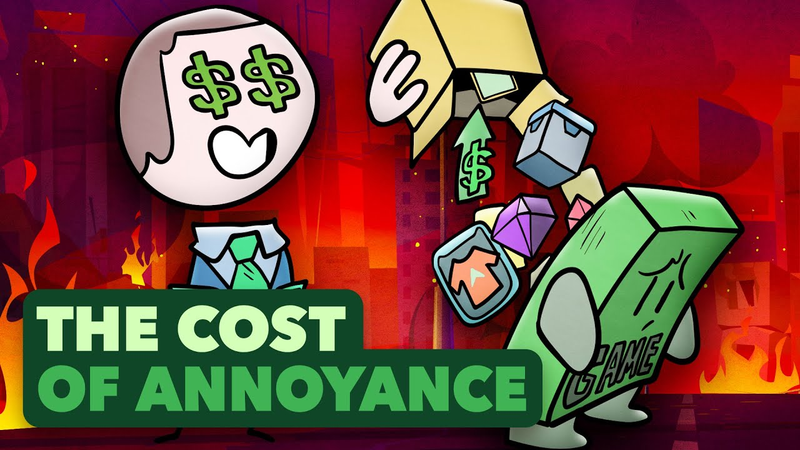
Ever play a game after an update, and something's just different? Maybe they changed a tiny thing like a font or where the back button is on one of the menus, and it just feels wrong to you. Or have you ever played a sequel to a game, and they've changed the name on an ability or reworked how damage is calculated, and it seemed off? Well, that's because there's a cost to change. Thanks so much to World Anvil for helping to make planning our games an absolute breeze. You've probably heard the story of why we have the QWERTY keyboard, right? About how way back in the day we had a rational keyboard layout lined up like the alphabet or laid out for optimal typing speed, but it actually caused typists to type so fast that it jammed up their typewriters. And then once keyboard technology caught up, we never switched over because people didn't want to relearn a new type of keyboard despite its benefits. Now, while that story may be apocryphal, it still illustrates a good point very well. It's hard to get people to accept change. This is a key lesson for a designer. Every change you make from what people
are used to comes with a cost. It's not as simple as looking at your design and asking, "Is this better?" You have to ask, "Is this better enough to justify people switching over to it? Does its value exceed the annoyance it'll cause?" I'm looking at you, Windows 11. Stop asking me to upgrade during my Gungeon runs. Of course, when designing anything, the temptation to leave a mark on a thing is high. And sometimes when you've just joined a new project or a new team has been created at work, there's a real feeling that if you leave things alone, people won't think you're adding value. Maybe they'll be slow to promote you, or perhaps let you go entirely. So, the pressure to change things is a very real one. But the blowback from a change is very real, too. For those of you who use Google's suite of products, I'm sure you sat scratching your head at least once at some change and just wished you could set it back to the way things used to be. I'll confess, this was my first thought when Wikipedia changed their layout, and it's a natural reaction, even if it feels {quote} {unquote} wrong, because what you're now looking at is different from what you remember, and you knew that system. Plus, most times on initial viewing of an updated
format, layout, or game, you won't notice the marginally better in some way changes that the update was made for, because the loudest thing your brain is screaming is, "This is different!" And the truth is, as a designer, you have to know that some small percentage of people are going to walk away because of that frustration and not come back. So, how do you minimize this, and how do you make sure that the change is worth it for your audience as a whole? Well, first, make sure that it's not just change for change's sake. That should pretty much be a given. But then, when you're sure that there's real value there, demonstrate that value to the user. If the point of your change isn't obvious, or if it's a change you made for a small subset of your player base, but everyone's going to have to deal with it, explain to everyone why you made that change. But where is the best place for that explanation, you ask? Well, demonstrating the value of a change to your players is best done through actions rather than words. If you can set up an interaction that will make it clear to most of your players why you did something, whether it's a UI change or buffing a weapon, they'll feel like they get it, like they want to
embrace it because they understand and possibly even agree with your rationale. So, for example, if you improve the fire rate on a weapon, and simultaneously patch in an area where you face hordes of enemies with only that weapon available, players will be able to experience the effect your change had. Now, of course, this is challenging. A lot of the time you won't be able to put in a quest or a monster or a moment that make it abundantly clear why you changed that thing that they were used to. But if you can, chances are you'll be getting some evangelists amongst your player base that can further spread that message to your other players. Though, the even more intractable problem is when you have to make a change that affects almost all of your players, but is only meaningful to a small percentage of them. The most obvious example I can think of are changes made for pro play. You might have a character or a weapon in your game that feels just fine to most of your players, but you've decided that you're committed to having an e-sports scene, and the top 1% of your players have found a way to totally exploit, or at least get too much value from that weapon or character, or
whatever, so you have to nerf it. Now, a lot of your players are going to be, I would argue, rightfully upset. You made a change that is clearly negative to them. They enjoyed how the thing played before, and now it's basically unplayable at their level of play. So, if you're in that situation, you or your team needs to find a way to communicate this to your community clearly. Then, even if they don't agree with you that the e-sports balance is more important than their enjoyment, and spoiler alert, they're probably not going to, they'll at least understand what you were trying to do, and your forthrightness will hopefully make them a little less irate. Also, in those cases, it's probably best practice to also telegraph any changes you have in the works that would benefit regular players to soften the blow you made for the pros. However, the most difficult problem is the change that is bad for all of your customers. And I think, as we all know by now, these get knowingly made all the time in the games industry because it is, you guessed it, an industry. Corporate decisions to increase price or add microtransactions, or do a crossover with a brand, will all come down from on
high, and any designer who's been in this industry for long enough will have a story of having to implement at least one. Look, here it's just your job to try and minimize harm, right? What's the closest you can come to meeting your corporate needs while also not burdening your players too much. For instance, what if you're told to put a Nier crossover in your Final Fantasy MMO? Well, in that case, let's get Yoko Taro on it and give the players some massive awesome raids that add to the narrative of both games. That seems like a win-win. Though, of course, not all of us are given the resources to do that. So, to all of you who are currently facing such a task, I just want to say I am not envious of your position, and I wish you all of the best. That is a tough place to be in. Lastly, I want to talk for a moment about the resistance to change and the cost of change internally for a studio. Okay, remember the story about the keyboards at the start of the episode? Well, one could say that the real problem there is that so many people are trained on QWERTY that there is never a time when the marginal value of switching to another system exceeds the cost incurred by humanity for having to relearn how to
type. So, therefore, we never make the change. Which, of course, then means the next generation is trained on QWERTY as they grow up and now it's expensive for them to change and so the cycle continues. And this happens with tools in studios all the time. Look at Bethesda. Now, I love their games, but they are trapped in this perpetual cycle. Years and years and years ago, they used an engine called Gamebryo and they got really good at using it. So, they basically took it and used it as the core for their Creation Engine. After all, they couldn't lose momentum by retraining all their experienced people in a whole new environment. And so, as they expanded and brought in new people and those people learned the engine and got good at it. Each time they went to a new game, it just seemed easier to build it with the thing that they knew rather than having to pay the cost of everyone learning something else. Now, the problem, as most of you are probably aware, the Creation Engine is full of jank. It makes it hard to get games as bug-free or optimized as some of the commercial engines out there, but the price of change is just too damn
high. Of course, we'll see with Starfield and their new Creation Engine 2 if they can vault ahead of some of the more industry standard problems, but if not, it's the cost of change that was behind it. So, whether you're a designer creating for the future or someone running a studio that has to get games out on the regular, please remember that there's a cost to change. One you have to plan for and design around. So, please be careful and tactical about how you implement your changes and what methods you use to communicate them to your players. Because making something different alone really isn't ever going to be good enough, right? Case in point, when I'm running my home Curse of Strahd tabletop game, I'm always needing to explain the changes to the game's world or its NPCs to my players as they fight their way through Barovia and try not to be turned into the next Dark Lord, which is why I love using tools like World Anvil to clearly plan and communicate my RPG campaign to all of my players wherever they are with ease. World Anvil is a beautifully crafted and award-winning tool set used by millions of world builders, writers, and gamers that can help you create, store, and
organize all your ideas. And honestly, we just can't say enough good things about this tool set. I legit love it so much. You could use it to craft and run entire RPG campaigns while tracking things like timelines, family trees, and diplomatic relationships. Use awesome interactive maps to help bring your story to life, collaborate with other writers to flesh out your world's lore and backstories, and then once everything is forged, you can easily share what you've built with your readers, your patrons, your players, or whoever you want. In other words, it's the exact tool set that lets me focus on the fun parts of world building, which is why I'm doing all this work in the first place. But in truth, it's not only for game masters. Players can actually use World Anvil to manage their characters across more than 45 supported RPG systems complete with interactive character sheets, inventory management, linked adventure journals, and even the ability to receive private messages from the GM sharing information that only your character gets to know. Sorry. World Anvil is also super popular with writers and novelists who use its proprietary software to not only pen
their stories, right, but also develop world bibles, craft easily searchable categories to group characters, locations, or chapters, work with editors across multiple documents, and even export their final work to a variety of industry standard formats for legit publishing. I mean, this thing really kind of does it all. So, if you want to be able to create, store, and organize all of your awesome ideas, and honestly have a great time doing it, you can actually try World Anvil absolutely free. But you can also, for a limited time, receive 40% off any annual membership that unlocks a ton of cool perks by using the code Extra Credits. Then not only will you be able to create and share all of your awesome worlds, but you'll also be directly helping out us in the world of EC in the process, which is very sweet. And you know what? You get a point of inspiration for that. Once again, that is code extra credits for 40% off any annual membership, and we can't wait to see what worlds you build. A million big old thanks to Skyler Homes, Kuyakoy, Joseph Blaine, Dominic Valenciana, Casey Musgraves, Arclight Games, Angela Valenciana, and Amartya Turk for being fantastic legendary patrons.
Summary
The core thesis of this analysis is that every design change in the gaming industry carries an inherent cost, as users naturally resist deviations from established systems. Designers must therefore evaluate whether the value of a proposed change is significant enough to justify the inevitable friction and potential loss of the existing player base. This resistance is not merely a user-side phenomenon; it also manifests internally within studios, where the high cost of retraining staff or migrating legacy technology often leads to the perpetuation of outdated workflows and technical debt.
Key findings emphasize that change for the sake of novelty is rarely sufficient. When updates are necessary, developers should prioritize demonstrating value through gameplay experiences rather than relying solely on verbal explanations. For instance, if a weapon is rebalanced, providing players with immediate, contextual opportunities to test the new mechanics can foster acceptance. When changes are targeted at a small subset of users, such as professional e-sports players, developers must communicate transparently to mitigate frustration among the broader, casual audience. In cases where changes are mandated by corporate interests—such as pricing adjustments or brand crossovers—the primary objective for designers should be to minimize negative impact while integrating the requirements as organically as possible.
The analysis highlights that the reluctance to abandon familiar systems, such as legacy game engines, creates a cycle where the cost of transition consistently outweighs the perceived benefits of modernization. This inertia can result in long-term technical limitations, as seen in studios that prioritize momentum over adopting industry-standard tools. Ultimately, successful design requires a tactical approach to implementation and communication, ensuring that any departure from the status quo provides tangible, demonstrable value to the end user.














Comments