VideoDeconstructor of Fun
The Brutal Truth About Gaming Consulting Nobody Talks About
25 May 202665 min video
Transcript
when I when I lost the contract or a contract came to an end and there was no future of it, I felt really low like I'd lost a game like I'd you know I've done everything I could and I' and I failed you know and it was much more highs and lows than I've ever felt in my you know I think being an exec or being an employee is so like much more consistent you know emotionally like there's certain parts of your career where you know you you're pushing for promotion or maybe you've done a six-month review and your boss has told you you've not delivered and you've not hit your goal and it's sad but it's sad in an individual moment right like it's it's much more condensed whereas being a consultant it's like a continual roller coaster month over month over week and um I don't think it's for the faint-hearted Mishka I think you need to you need to be a certain person to to do consultants
there are more consultants in gaming right Now that at any point in the
industry's history, some of them chose it, some of them didn't. John, how much of the consulting boom in gaming is voluntary versus an industry that has stopped hiring senior people? Oh man, it's a great question. But look, if you if you look at the amount of layoffs in the industry over the last couple of years, like if you look at the the the Matthew B report, there was 24,000 layoffs in 2024 and 2025, of which 60% were in the US and of the 60% 70% was West Coast. So think how many senior execs in big companies in that region were, you know, had their 500k salaries just cut as part of an opex trimming exercise. There was and Mishka, you and I know dozens of people that have fell to the sword, you know, in in Nordics, in LA, in Europe. And look, I think there's a lot of consultants out there. And you've got some fair weather
consultants as well, right? people who are trying to bridge the gap between senior roles because that's one of the toughest things, man, when you get to like a VP level and you're governing a six figure salary, right? Like those roles don't pop up very often, bro. You know, and
look, if you if you're if you're living kind of check to check, right, and you can't get yourself into a new position, the only thing you can do to survive, right, is tread water. And I think a lot of consultants out there are treading water right now. So, some people choose it because they generally love it and it's it's an amazing role if you're if you're good at the the business development side of thing and you can bring new business in and and can work with cool people. But, you know, the the difference in working with on a good gig versus working on a bad gig that is just putting money over the table versus something you're passionate about. That's that's where I think a lot of people are kind of fell into this, you know, this consultant life right now. And but to answer your question, I would
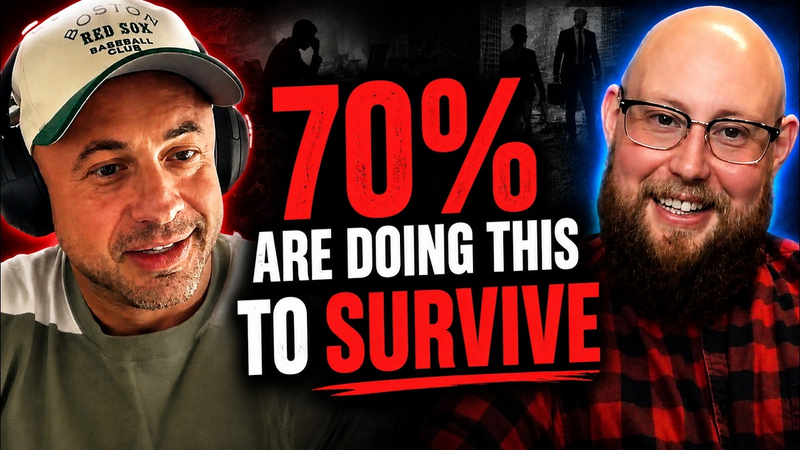
say 70% of people are doing this out of survival and maybe 30% are doing this out of choice.
How did you get that percentage?
That I mean that's just a general number based on my personal experience of going through it as well as speaking to not not people like yourself who have done it for a long time, but I would say more of the the new entries, you know, the people who have been consulting over the last year or two. The general vibe I get is that again this is like a survival instinct, you know, that most of them are looking to find a new exec role in the next 12 months. And because these jobs are not opening up very often anymore because remember hiring is nowhere near at the velocity as it was 5 years ago, right? So, and and and look, man, even if say for example, um a VP slot does open up, a lot of the time it's going to be filled by internal people stepping up to the plate or through recommendation, right? Someone
you've worked with before, someone who the upper management know, like, you know, a fixer. Hey, we worked together five years ago at Fund Plus. Give me a call, baby. I've got something for you. So like the you know the likelihood of you coming in D like you know out of nowhere is very tough bro very very tough.
Yeah I mean that works that's that's it's derisking you bringing somebody you know but talking about somebody you know or talking to somebody who I know uh John Wright. So I remember clearly uh because you know we've been friends for a long time. You went from a VP at Quali. You had 180 people reporting or in your organization. Quali ran like billions of downloads. You went to consulting advising and investing from that position pretty much overnight. And the way I feel or I felt in my own position is that that's a massive both status as well as the identity shift. I feel like the psychology of that is brutal. So what I want to ask is
what were you actually feeling about a week after you left that position?
Man, that I probably like bit off more than I can chew, you know, like uh it's one of those things where I've been doing this now for the best part of 15 years. So I feel like I I've been through some stuff, you know? I've built companies, I've exited companies, I've worked network side, product side, studio side, like I've done I've done quite a variety of things and I feel like my experience over that time has solidified and grown and I see a lot of different aspects of things and that's why why my initial thought was like okay I'm leaving Quali because of of of personal reasons I want to and I didn't know what I wanted to do next but equally man I knew that like just taking like 3 to 6 months off isn't me, you know, like I know in myself I don't want to sit still. If you take 6 months off, you're going to be like two years behind
other people, you know, and you can't afford that, Mishka. That that's that's that's bad news, bro. You're bringing old information to a to a table. People will find you out. So my whole thing was like, okay, so I've gone from being the exec and I don't really know what I'm going to do next, but these positions don't come up every day. It's going to take me potentially a year to find like a new exec position in a in a studio or a startup or found like found something myself. I didn't know what I wanted to do. And so, you know, through friends like you and and other people who have done the consultancy thing, I was like, "Okay, cool. let's let's let's give it a go, you know, let's see what happens. I did get inbound, you know, people because of my reputation and stuff, people were reaching out and I did get off the bat after I I think I was like, I'm going to have one month off and then I'm going to do the consultancy thing and then I'll see what happens. And um within the first like two weeks, I got, you know, five or six proper validated
inbounds. And this is the other thing about consultancy, the amount of people that contact you to try and get free information whilst trying to pre pretend that they're going to pay you, you know. Um, and you you have to start like weeding these out, Mishka, you know, like the real the real potential versus just the shyers. And trust me, there's plenty of them out there, bro. Um, but no. Yeah. So, so for me, man, that you're right about the psychological shift, though. It's it's a very different mindset to being like managing something that you've been part of or created or working with people you know. So um yeah very different mindset very different kind of uh approach um very different strategy of how you conduct yourself um you know for the for the bulk of it you're working with founders right or the upper echelon sea level of the business and in my experience the reason they get in touch is because they're unhappy with
something okay there's there's a particular part of the organization that they feel is underperforming or there's a particular or the business isn't doing well in a certain way or area or they feel that it's unefficient or something that they are looking to you to get real world advice from someone who's done it to apply to their business to improve their business, right? And the ROI of your time needs to be in a multiple. So, but yeah, like the the mindset is I think it's a bit more cutthroat than being an exec if I'm honest. like and what I mean by that is don't go into the to these companies as a consultant and try and be everyone's friend. You know, your job is not to be liked. Your job is to go in and give actionable information and action items and follow up and all of this stuff that will improve the business. And uh yeah, my experience was that the founders appreciate this cuz
they're the one bringing you on, but then you you you can rub people up the wrong way, dude. because you're going in and kind of telling people that have maybe been at the company for 10 years, really sorry, but maybe you're not doing that the exact way that you should do that or you could do it better. You know, you're you're you're kind of reviewing and and changing and doing stuff that maybe someone 5 years ago put that in place and they're really proud of that.
Sure. You you talked a lot about like how the work is, but how were you feeling when you made that transition? I had a quite a bit of anxiety like personal and and I'm not an anxious person by nature, dude. Um, and it wasn't like it was the uh financial impact, you know, it's not like I'm living check to check. So, it wasn't like, you know, I needed this to survive or feed my family, but I I I definitely felt an area
and and my personality was affected a little bit. You know, like I said, I did find myself a little bit anxious and
nervous because one is like just because you you've done this in in a studio or you've done you've got 15 years experience does not mean that you can you know step into a new company right and and perform at the same level. So there's an element of like to to do you doubt yourself like applying what you've learned and will you see the results that the the company require but equally it's the uncertainty dude. It's the, you know, you could be speaking to four different people at once and you get to the point of sending over a contract and all of them ghost you and then you're like, I've just spent a month preparing, learning about this business and the and the rug gets pulled out from underneath you, bro. I I also had it at times where I was earning, you know, you know, big money that 50 grand, let's say, for example, 50k a month and
good money, not
Yeah, good good money. like you know outstanding money you know I mean these are slightly arbitrary numbers all right I'm not going to give the real numbers away but let's say you know I was
earning 50k and then you know you get to the point where you you've completed the project or you've delivered a lot of value and the founders are super happy and then they stop working with you because because you've achieved what you you set out to achieve and it's very different than an internal exec role because normally if you're an internal exec and you have a goal and you achieve that goal you're going to get rewarded right you'll get a bonus or team secure and the numbers are up to the right. that as a consultant sometimes uh succeeding to a high level does you out of a job and then the next month what you find is you've gone from 50k to 10k because two of the projects you're working on are like thank you so much John you've you did great impact we'll see you in a year and you're like but what man I want to continue come on like let's do let's keep going you know we've we've found our float and you can do yourself out of a job and that level of um that that level of just the unknown, dude. Like, you don't know what next month is going to bring. And even if
you've got a signed contract that says you're going to be working with someone for 6 months, there's not like a there's normally like a 30-day get out of jail free card type thing, you know, and so you you could be three months in and they go, "Okay, here's the 30-day terms, you know, we're going to finish this up early." And and yeah, the the new biz flow like the I have to go to conferences. I have to do as many networking things as possible. I need to do as many podcasts as possible. I need to get the brand out there, you know, cuz you are your brand. And you can't be quiet, man. You You got to be loud. You got to get people to know you. And that takes a lot of energy, man. You know, like I wasn't even working 5 days a week when I was a consultant. I was probably doing three days a week, four days a week. I was probably, you know, working 30 hours. And, you know, my work life balance was was in the more of the life side. You know, I was doing more stuff with my kids. I was earning much more but doing less hours. Um, but then you have to add on all of the the media
stuff and the events and travel and yeah, look, out of sight, out of mind, dude. You you can't be like in the shadows, you know? You can't you need to be where the people are if you're going to get that business. And and look, if you haven't got a strong pipeline, you might look at three you might in three months, you might be like, all my contracts are going to be finished in the next two months. I've got nothing starting in 3 months time. Panic sets in, you know, and you're like, okay, because as you said, you know, the the the longer you are not hands-on tools, the the longer you are not operational, your value in your knowledge goes down. So, the same being if you have not got any live if you've not got any live um sort of contracts at a period of time, then you you know, you're going to get rusty. you're gonna, you know, the the blade is going to blunt.
So,
we we've always talked, so I I remember I talk you through some of the things where you're spending way too much time
on chasing projects or uh preparing because it's like in this business, you have to kind of get into a closing and really quickly or walk away rather than stay in the loop and and continue uh spending time on on a on a lead that is not going to turn. And the the element that you said do out of yourself out of a job is very true potentially. Uh you have to kind of like zoom out and think about it because as you're doing a project you have to be in a way upselling or not upselling but but putting in other projects that you want to solve within the company. So always like justifying your means.
So this is something you taught me actually. This is you know in the first month or so I found myself just thinking about what the was set and then I spoke to you about this and you were like no you need to set up the next thing you know you need to see how you can move into other parts of the or and do and work there and this was some of the best advice you gave me was about setting up that next project and eventually
I found how to do that but to begin with
it wasn't in my mind dude you know and but you have to you have to make your own work essentially
I try to think about it from the perspective of a founder or the leader of the company uh if I have a person like John Wright is doing something on my I don't know growth side and he's helping me and he's doing a good job in that project after the project is done I could say goodbye but John comes to me he's like hey you know what here are the things that I found that we could also fix and this is the result that would come out of it I'm like yeah let's let's do that so you're taking away from me the need for me to figure out what to fix next you're pointing it out. I trust you can do that. So, it's mutually beneficial rather than than than you know what upselling sounds like. But the other part is like these engagements do end and it's a good thing that they end because the thing you have to go from there is just an advice to others than yourself. You know this is getting references. So reference are always helpful when you go to the next project, but also asking the person or the
company you work with to connect with others because if you did a good job and you essentially did yourself out of a job, they're most likely reference you to another company and say, "Hey, we got this fixed. Go fix the uh the other company." And that's also how we've gotten a lot of work is through the venture capitalist because you're working with multiple companies that are are in their portfolio. uh they're sharing the information and we're fixing that through through the uh the portfolio and it's beneficial for everybody for the VCs to point out to the person who can fix it but also for these different different companies to share sort of a fixers.
Yeah. Look, dude, I think one of the best bits of advice you ever gave me, and it's I know it's a book, but you know, your network is your net worth, and it's something you told me many, many years ago, and it's something that I I took very like personally, and I've kept that that that phrase, and I say it to a lot of other people. But the VC thing is exactly right. Or same as you would work with the conglomerates, you know, you look at the parent companies, your aristocrats, you know, and maybe
doing a gig, you know, with one of these companies allows them to then put you into another company in their portfolio, right? And then you slowly become like, you know, moving in between these different companies, adding value, and you become this, you know, trusted advisor, right? You become someone that they can call at this point where they need someone. And and yeah, look, I think you know, doing it for in the VC example, doing it for one company should yield results in other companies if you do it well. So, uh, so yeah, befriend the VCs. That's another thing that you told me and something I've done the last couple of years as well.
Yeah, friend of the founders, friend of the investors. That's the important part. Um, Kickass Live Ops named Kickass Tools. That's where Heroic Labs comes in. They just released a massive update to their Satori live ops platform and having done my research I can say with confidence that it's second to none in a single product you get everything you need including event capture player
segmentation feature flags remote configuration AB testing experimentation live events calendar messaging retention graphing analytics and so much more. If you're serious about running live services in a game, get serious about the tools you use. Connect with Roy Labs and make some serious cheese with your live ops. I wanted to touch upon one thing that you kind of glanced over, but you know, I I know the full story. Uh, you did not choose consulting. Consulting chose you because there was a stage where you were supposed to go back to being a VP of publishing, unnamed company. Can you walk me through not essentially what happened by I mean a little bit because we can't name the companies and there's no point in naming them but how did that make you feel where the consulting wasn't just something that you were doing but suddenly became what you essentially have to do because that opportunity went away.
Yeah. So so I was one of those um people that kind of Yeah. Like I left Kali uh and was like okay I'll do consultancy for a few months. I'll line up a new gig and and then I'll go back into the the exec world. Um I think I there there were some things I liked about consultancy in terms of flexibility and and working for myself and you know all of that stuff was great especially where I was
on paper. Great.
On paper. Yeah. Yeah. Yeah. But but then the then so like my opinion of it um once being thrusted into it was the baptism of fire dude you know. I was like, okay, you know, it was all intense one month and then it was down the next month and then it was all intense one month. It was never never it was never even. It was up and down, up and down. And I and I personally, yeah, within the first month of doing this or the first six weeks of doing this, I had those those high emotions both sides, you know, the the losing business and the signing business and the short-term
stuff and the long-term stuff. But ultimately I think within the first month I realized that you know being a career consultant you know working doing this for years to come was probably not for me you know like it just wasn't it didn't I think there there is going to be different times in my career where I do it but I don't think I would want to be a consultant for the next 10 years. Okay. Mhm.
Um, so during that time, you know, I was I was putting myself out there and I got a couple of uh all all around the same time, I had a few phone calls from very senior people in big studios who were like, "We've heard you left Quali. We understand your consulting, but would you think about rejoining like a company?" And obviously at that point in time I was like look I want to join a company because I obviously you know I don't think it's going to be for me but I need to I need to find the right home right and I need to you know I was going through some personal stuff. I've just adopted my children and you know I
didn't want to be working 70 hours a week Mishka. didn't want to be I got I got an opportunity to join a company in the Nordics surpris like a different one to I did join and the one of the commitments was I needed to be there you know like seven to eight days a month right and I was like damn I'm going to be away from the kids going to be away from my wife the stress that's going to put on my marriage d so you know I had that and then and then um again another company came out of the woodwork very very reputable company um yeah big UK big company with a UK base and they were like hey like VP of publishing we we've never you know never had this role this doesn't exist we we want you to kind of build this out for us and and and I you know I went through you know weeks of interviews and like putting together like presentations and doing the market research and why you know with my
background I could you know bring on the team quickly and we could execute and and you know and it got to the point where I actually got like an initial kind of offer. Um and then it just it just stopped, you know. It was it was uh it was I got a phone call one day. They were very very apologetic. There was they decided to make a you know a pivot into the business and and publishing wasn't something that they wanted to double down on. And then I I found myself like, "Oh shit," you know, like I thought, "Okay, so I've been consulting for a couple of months, but I'm probably gonna start this new company in in, you know,
yeah,
and and then, you know, it was it was gone, man." And and so that was that was a point where I was like I was like, "Damn, okay, so I'm going to have to You've got to remember as well, I kind of naively stopped doing a lot of the bisdev stuff, right, for my pipeline because I was like, I'm going to get this." Yeah, you were negotiating a contract.
So, but this is the nature of the industry at the moment, dude. Do you know like this isn't just happening to to me and this isn't happening to just one company. This is happening out throughout the industry. Um, we are in a mature industry now. There is massive changes. There has been huge layoffs. There is been an injection of consultants into the market. And and look, that's one of the other things that people don't like talking about, especially employers, is the the cost of employees, right? So say for example you're paying 100% of a 100k salary you're paying 40 to 50 points on top of that in terms of additional costs. So this is also why I think these companies looking for more consultants and and and that's why they become more popular as well from from the uh from the business side of things. But but yeah, that was that was a high and low moment, man. You know, going to think I was going to get this new position, some build out my own division within a very successful company to to then being like, okay, no, that's not going to happen. Um, and then it was back to back on the consultancy
side and and like I said, this this is not just happening to me, this is happening to a lot of people in the industry.
I I remember that. and you're very much happy go-lucky guy, but that was the moment where you kind of went silent because the uh the initial part of consulting, so this is really good for people to understand is that when you're kicking off the consulting work, if you haven't kind of set things up beforehand, if you're not sort of making a smooth calculated transition, but sort of abrupt, hey, I'm open for business, that can take a while, up to a year until you sort of reach a stable income and understand how the game plays and before that it is a lot what you describe in like that emotional roller coaster of where where does the next deal come from uh and how how you know how I'm going to basically survive from one deal to another. Yeah. Look, look man, like I said, I I had super high like it was super emotional like not not emotional in terms of sad, but like high
emotions, high feelings, high
and like you said, man, it was like it was like, you know, um if if I can relate it to when I played rugby and and was, you know, you know, in sports, it was like, you know, when I when I won a contract, I felt like the big highs of winning, you know, like the endorphins were released and then like when I when I lost the contract or a contract came to an end and there was future of it. I felt really low, like I'd lost a game, like I'd you know, I've done everything I could and I' and I failed, you know, and it was much more highs and lows than I've ever felt in my, you know, I think being an exec or being an employee is so like much more consistent, you know, emotionally. Like there's certain parts of your career where, you know, you you're pushing for promotion or maybe you've done a six-month review and your boss has told you you've not delivered and you've not hit your goal. And it's sad, but it's sad in an individual moment, right? Like it's it's much more condensed. Whereas being a consultant, it's like a continual roller coaster
month over month, week over week. And um I don't think it's for the faint-hearted. Mishka. I think you need to you need to be a certain person to to do consulting.
I disagree. I think that it just takes time. It's same as saying like like you need to be born to be a good speaker, a good leader. It's like I don't believe in that. I think it's just about the reps. First time you're speaking in front of the audience is going to be super scary. The hundth time some people are more comfortable, others are less, but never the nevertheless like you're significantly better than when you did the first time. Same thing goes into consulting. Those highs and lows will be smaller and smaller with with with time.
Yeah, that's fair enough. But but there's not a book for this, Mishka. There isn't
there is not a manual to say how to be a there's not a manual to say how to be a consultant in our industry. There hasn't been a book written that you can read to tell you this stuff.
Well, hopefully there's this podcast.
Yeah. I mean, luckily now there but no
dude, like I said, I think you can only learn this stuff through experience because it's not something that people talk about, but I said there has been this kind of shift in the industry like what we said at the beginning and this influx of people that have been now being made to do this.
Yeah. And you know, and the and the most obvious thing is, you know, just because you're available does not mean people are going to come to you, right? And and this was the the real toughest thing for me was I was very fortunate. I I announced that I was doing consultancy and a bunch of people reached out to me, okay? But again, I've been in the industry a long time. I made a lot of connections.
Well, well, hold on. How many of those conversations turn into a paid work
just for people to get references?
This is a great question. Okay. So let let's talk about the pipeline and the conversion. Okay. So when so I left Quali 2 weeks after I did the announcement I am going to now be a consultant. I got approximately 10 to 12 inbound messages right I would say 70 to
80% of those right. So seven let's say seven to eight out of the 10 or 12 were from people I knew i.e. people that I was a client of or they were I I was a provider like as a service provider for someone I had I had worked with in a one-to-one capacity for longer than a couple of weeks. Okay. So, this is someone you build out a relationship with. Four of them were people that I'd never met before and I would say the the inbound cold three out of four if not four out of four were grifters. They were people trying to to get time from me and you know people asking could I do some sort of uh analysis as part of like an interview to get a gig.
Wow.
But the but yeah out of the 12 say seven seven or eight were people I knew. Out of those seven or eight I had probably two or three conversations with each of
them. Um, and I would say three became actual uh, no, sorry, four went to contract and three of them actually went live.
Okay. So, so about 30%.
You heard that?
Yeah. Yeah, I would say. Yeah. 20 20 to 30%. Um but that that again if if we look at the the pipeline and the funnel again it's like if if you're working with people you know then there's a higher propensity of of likelihood of going into a contract but even if you know them really well it doesn't mean that it's going to happen Mishka you know there's there's falloff at every part of the pipeline.
Another question regarding the pipeline is that was your initial announcement that was the big one and so forth. How long did the pipeline kind of trickle down? Because that was out of the big one with hundreds of people liking your post, you got 12. Out of the 12, three
went into a contract. Then came the live op stage. So tell me about like
Yeah.
What was it afterwards? So this this is the real difficult period because like you said when you do the big the big announcement you know everyone is interested everyone is intrigued you the hype.
Yeah. Every like like like but man it's it's like you know when you're at that six weeks after that that 6 to 8 week after period when all of those conversations have either come to come to a crux you know either you're working together or you're not. Um and what what I found was a bunch of the people um that I did have conversations with were like let's talk again in 3 months and they everyone's trying to kick the can down the road. But to ask your question directly, after that 6 to 8 week period, the inbound went down to maybe like one a week. And I was doing every event under the sun to kind of uh and and every speaking engagement I could to try
and build a rapport with an audience which might result in a conversation that would yield a contract. Um but yeah, look that that six to eight weeks after the announcement, bro, it was it was cold out in that dead of the night, you know, very very limited. Look, I and remember I had people like you helping me out. I had people like Matte helping me out, saying, "Hey, you should speak to John." Like, so I had friends in the industry, you know, passing on recommendations. So if if I didn't have that, I could have been rocking, you know, big zeros week over week, dude. So, I mean, I would hope not, but you could have.
In the game of Growth, everyone is looking for that power up. Vibes is exactly that. It's built by industry people, so they actually get the challenges you're dealing with. As a result, they become the fastest growing gamified rewards platform out there. And the results are kind of nuts. With their AI powered targeting, you're not just buying installs, you're bringing in the
right players. And now they've got this new rorowass optimization engine. So your campaigns basically level up automatically. Vibes is built different. It's designed for growth. And I guess you could say it's powered by good vibes. Check out their doof exclusive case studies by following the link in the description and go to vbs.co. That's vybs.co. CEO, share your email and join the weightless list. Let me ask another thing is like when do you know a conversation with a lead has hit a dead end? Because this is also something that you learn through time and something that I multiple times told you like either it's a like like walk away too long of a time.
Yeah. Look, man, it's something something I learned is to push for the
no, right? And and what I mean by that is like you you should give yourself a certain amount of time and a certain number of calls where you are open to having a conversation, right? But what you don't want to do is have 10 phone calls to find out it's not going ahead, right? So what I found is in the early stages I was super open to having more conversations you know speaking with different people. Oh, that was a great talk, John. I think you speak to so and so in our or that leading to another conversation, another conversation, another conversation, and before you know it, Mishka, you're you're speaking you spoke to six people and you spent six hours of your time and and you still don't know like what's going on? You're like, "Okay, so so who's going to be the the person signing this off?" Like, what am I actually going to be doing? Or are you just kind of like, "This is a nice to have. This is oh, this is a pleasant conversation, you know, like, oh, you're a great guy. I love spending time with you. I don't care about that. This this
is transactional. I need business, you know.
Yeah.
And so what I found is I I worked on this and again I got feedback from you and others and what I found is I didn't want to have more than three phone calls with a founder before I knew it was yes or no. And and I learned in that third phone call to push for the no. And what I mean by that is be direct, be aggressive if you need to be because you know that time spent you can't get back and that time spent could be you used somewhere else which can yield to a conversion to a contract. So yeah, you just you need to you need to learn how to uh ensure that the conversations mature at a at the right pace.
You're a little bit more junior in this consulting game than myself. So I would say it's in it's in already in the first call. So basically in the first call you listen to what are the challenges.
Uh then you follow up the call with your proposal based on everything that you learned in the exploratory call.
If it doesn't if after that people want to do one more call to kind of go through deliverables and the statement of work
perfect. But if it's rounds after that, like no, no, no, no. There's no there's exploratory call after which either we're doing this or we're doing a version of this or we're not doing calls anymore. And I've learned that hard way. There are companies that I would immediately, you know, them, but I say don't even talk to them. Those are just bunch of bullshitters. It's just
No, but look, dude, that's interesting. So for you, it was like two calls or done. For me, I started off at, you know, maybe four or five and I got it down to like three. But even me, it sounds like from this exchange, even I wasn't optimal. And I thought I optimized my process massively.
So, it it comes through time because over time you you have more and more work, more and more clients, which means
you don't have time for people who are stringing you along and using essentially your time, which is converts to money because you're a consultant. And so that that's why you have to give a clear proposal on what you're going to do and then there's a modification and then it's a contract.
Yeah.
Otherwise there's there's no time. But again, it doesn't happen in the beginning because you're trying to close your first deals. But after that, it's it's you don't need you don't need to chase.
Yeah. I I would say though the feeling of closing that first deal was a sensational feel you know like because like I said man I think it's a whole new world compared to being an exec where you have that security and the the relationship and everything around you and to and to know that you are valued enough to to get that contract is an amazing feeling and the same can be said when you don't get the contract you feel okay maybe uh you know am I as good as I
think I am or like do I am I going to provide as much value and that's where again the high
you feel rejected
yeah I dude it was like dating you know I haven't dated anyone for 20 years but I feel like I went on a date and she said yeah look it was nice to meet you I want to meet this prince you know
yeah it was good having coffee with you John see you see you around
have a nice life you know
see you around so John talk to me about uh never heard that uh So talk to talk to me about the uh the realistic ramp up time from uh I'm now a consultant to stable income where you feel confident that you can you don't have to even chase leads.
Oh, do you know what man? I don't actually feel I ever felt like during that that x number of months that I was doing the consultancy thing, I don't think I ever felt fully stable if I'm honest. Um I in in my head I was always looking at like two months in advance and thinking like I need to make sure
that the pipeline for for the 2 three month plus period was solid because all it takes is for you to lose one client and then like the whole shift like you can be making loads of money and literally two months later making like 20% of what you were making and if you don't continue. It's like the leaky bucket analogy. You know, if you're not putting more in the top and stuff's falling out, then eventually the bucket's going to be empty. And I felt the continual pressure to in even when I had like four or five clients and I was bringing in more money than I've ever brought in ever in my life, in my entire career, I still felt that there was an uncertainty and anything could change in 3 to 6 months, you know.
Um
I think I think that's good. By the way, I think it's very good,
not even like not not even stay hungry, but I think if you're a company, you're employing consultants, I think it's very
good that they are considering you that way that they can always lose you. You know, it's like never they never become a husband. They're always a boyfriend. So, they're always bringing in flowers.
And um and that's the difference between oftentimes employees and consultants. The other ones are there for the good time, not for the long time. and they're trying to prolong that good time.
So that that also speaks of like you talked about uh the fact that companies have to pay site costs when they have employees,
but they also get when they have employees, they also sometimes get, you know, a little bit stale
or or comfortable playing the organizational game. With consultants, you don't get that.
Yeah, it's true. You got to be on your best game. your your be you have to be on your best day every day because if you're not, you know, after a week of like not delivering like you could be cut, you know, but this is also why you're getting paid the big money, Mishka, so you should deliver, you know, if you're a professional athlete, you get paid to score goals, right? Or you
get paid to get points on the board. Yeah.
You don't get paid to ride or you do get paid to ride the bench, but you don't get the same sort of money. It's a case of like you know you need to deliver on a regular basis otherwise you're not as valuable and you know this is it's the same as you know yeah if you're a high performance
but why would you what would you put in as a time timeline for people new to consulting what's the what's the ramp up time for them to get to you know relatively stable income like looking back that income was actually stable
looking back
even though it didn't felt like that
yeah look I think my my month let's say end of month two start of month three
I was I I I managed like the again the first two or four weeks I got these three three people come on board and then by the end of month two I I managed to retain those three and then I got it was actually my first cold uh introduction that actually went to
contract and it felt like a massive milestone for me that I was able to convert someone I didn't No. All right.
Beautiful.
And then when I had those four on the books, each one of them was was multiple days per month, right? So I found myself working maybe 12 to 15 days a month
and that was bringing in again very, you know, very big money. Um, and then month three and month four I managed to to retain. And then it got to a point where I lost one and then that's when the kind of panic set in and I was like I need to worry about the pipeline again. I need to do more of this. I need to do more of that. But but even so dude for me it was within like 60 days I was in you know I I was earning two three times my salary at quietly within within.
Um
okay
but it's the but it's the fluctuating and what I found was the closer you got to summer like you know there there's a seasonality to this right. So basically, people don't want to pay consultants
during July and December, right? So you so you have to make sure you're you're praring your salary across 12 months knowing that you're only going to work nine, right? Because there's certain times a year because if look, if say for example you you're working with a Finnish company and they're all going to their lakeouses in July, you know, and saunering and drinking like they ain't going to pay you that month, bro. You're not an employee. They're not giving you that money. So, they're going to be like, "Hey, John, have a nice summer. We'll we'll re-engage in August." And then before you know it, it's like you you actually in August they're catching up from their holiday. So, you don't get the gig until September again, if ever. Okay. And the same with Christmas and January, dude. So, yeah, it it sounds great on paper earning this like 3 4x your potential your salary, but you have to make sure that you understand that that's the highs. And then there'll be times where maybe one month you won't earn anything because no one wants to pay.
So it's Yeah.
Well, walk me through the uh the
payments. So the actual business model like are we talking about retainers? Are we like what are the project fees? Uh is there equity in the mix? Like give me at least some kind of like directional numbers of what people are earning. So, so look man, I think, oh, it's a it's a it's a good question about this as well because what I found, dude, is there is no rate card for being a consultant, at least in my perspective, right? Maybe for you there is because you're at the upper end, you know, you've done this for a long time, but
for for over two years, not not that long of a time, let's be honest.
Yeah. I mean, like I said, maybe I think you maybe are a bit too humble. But, you know, again, with with me, I found myself uh that certain certain people could pay more than others. So, I was charging more pe like I was charging more. And then there was other companies that I knew were smaller, so I would charge them less. And but predominantly at the beginning, I was working on a day rate Mishka, you
know, I didn't want to do be an hourly guy, you know. I wanted consistency. I didn't want to be one of these consultants who's working with like 20 people a month. What my goal was was to work with between three and five businesses and each one of those businesses I would work with for say two to five days per month, right? So my plan was to to negotiate uh a day rate and then there were some economies of scale. So I said to people my financial model was one day would be much more expensive than the cost of 5 days right so again let's use some arbitrary numbers I would charge 1k for one day but then the cost per day if we did five days would be like 750 right so I was uh I was positively incentivizing them to work with me more because I wanted more stability okay I didn't want to work with 20 people. So, so I constructed a financial model that utilized economies
of scale to benefit what my goal was personally as a consultant and give me more stability with more companies I wanted to work with rather than having to like, you know, work with so many and being all over the place. Um, that being said, so that that was the the base financial model. Um, that being said, there were some people where I was able to negotiate kind of goal-based bonuses, right? So it was like if I achieved this then I got an additional kind of uh payment. There was some of them where they were smaller companies and they couldn't afford to pay me the the day rate that I had set for myself and I was able to again maybe put towards um a future goal and then like there would be a rate increase right so if we got to this say for example I was working with their UA and I was like look if we can get to the point where they're spending 100k on UA or 500k on UA and I had grown that then that my rate would increase,
right? Because I had achieved that. Um, and then some of them was was was rate plus equity. And again, I was I was taking, you know, the day rate hit because I thought, you know, one, the company couldn't afford me, but two, I personally like the idea of of equity in businesses. And I' I've got equity in in you know through investment or advisory in probably over 20 businesses now. Okay. And that is something that I believe in from a personal perspective. I know a lot of other people don't agree with me. Right. A lot of other people see it as just you know numbers on a sheet of paper that will never materialize.
Lottery tickets. Lottery.
Lottery tickets. It But to be fair, Mishka, you've got a point. You've got a point. It is lottery tickets. You know it. Unless it's a public company, it doesn't mean anything until either IPOs or it gets acquired. And the likelihood of the these transactions,
there's a there's a there's a third option.
What would what would be the third option for you?
Secondaries.
Secondaries. Yeah. But like secondaries, you need to get to a certain size, right? Like to do secondaries really like you're not going to do that in a small like a preedec seed company.
No, of course. But you if you put in if you get equity in a seed or preede stage, uh secondary options usually come in after series A.
Yeah, exactly. So for me, series A or series B is normally where you get secondaries, right? In in my experience. Um I've had secondaries once in my career and it was a very lucrative time for me and I I hope I get many more opportunities to have.
Yeah. Just for for listeners to understand. So basically what happens is if you get options or stock preferably options have to invest but if you get stock in a company that is an early stage when they raise more money at certain point when they start raising the big rounds what will happen is the investors will ask to buy out existing shareholders some of those shares would
be sold by the founders and the team who has vested and some of those shares are sold by investors who came in very early. So at that point, even though the company is still far away from any kind of an exit, you could be making 5 to 10, typically like 5x your initial investment in just a couple of years.
Yeah, this this is basically what happened to me. I had, you know, stock in the company. They came in, they wrote me a letter saying that they were interested in buying my stock at premium. And look, dude, I was able to make I don't know I I sold 14% of my stock in the company and I was able to make seven or an 8x multiple on that, right?
Yeah.
And that money was very significant, you know, it allowed me to to do a lot. It was, you know, multiple six figures. So um so yeah secondaries are a great way but the secondaries again you have to get to a certain level of uh company maturity company level size ARR blah
blah blah so um but yeah like I said I like rolling the dice Mishka I'm a bit of a gambler like uh I'm I'm look but also dude I'm spread betting right I'm like okay if I take equity in these companies um you know the same as the VC model I I think that in terms of either investing or sweat equity you know balance between the two. But, you know, I think of it as you don't know and it's very hard to predict unless you're Warren Buffett like what companies are going to be doing in 5 years.
Let's be clear, Warren Buffett doesn't invest in early stage. He always invested based on numbers. That was very much counter.
I know. But what I mean by that is
unless you're Mitch Liy,
one of the smartest money men in the world who can predict stuff,
you know, that's what I'm trying to say. Unless you're someone who's like that. So, so let me give you a Warren Buffett advice and everybody who's listening, don't take options. Um, don't work for free because Warren Buffett would say the most important thing in making money is not losing money. And if you're
working for free, that can be considered as losing money. But then again, just like as John said, um I've also done free work and it has been it has luckily returned as through through these advisory gigs, but I would not recommend it to anybody because that would be a wrong recommendation to say work for free and you might get something in 5 years. AI broke user acquisition not in a bad way, in an overwhelming way. Creatives are now infinite. Channels are fragmented. And the team that moves the fastest on clean data wins the quarter. Appslier unifies measurement across mobile, web, CTV, and PC. So you can kill what's dying and scale what's working without waiting for the next Monday's report. They've also just dropped a report with Unity and New Zealu on what's actually moving the needle in user acquisition right now. Go grab it. Go to appslier.com and find your single source of truth.
Stay ahead of the competition with Sensor Tower, the trusted source for mobile marketing intelligence. Whether you're tracking trends, benchmarking performance, or scouting the next big hit, Sensor Tower delivers the data that drives strategy. Dominate the charts with Sensor Tower.
Yeah, it's look the the way I think about it, dude, very simply is I'm giving up time, right? and that that time comes at a cost and 90% of the companies I give that time to are going to yield nothing. Um, and I am betting on uh like I'm spread betting essentially on multiple different companies in different parts of our industry and I'm I'm spread betting on the fact that one of them is going to going to have a significant return. Okay. And if I can negotiate, you know, one to two points of a cap table in an early stage company for supporting them with, you know, a couple of hours a
month for network connections, you know, product advice, support D. And if I can work with that company on that basis for one to two years and I gain again one to two points of the business, then that goes into like, you know, um into the safe, right? that goes into the into my safe with all of this other stuff. And the likelihood is that again nine out of 10 of them are going to do nothing this girl and I'm never going to see a pound note. But if one of them comes off then you know that's significant and I'm willing to bet on that. But it's a gamble.
Let's move away from gambling and let's talk about credibility. So at what point do you feel like an ex operator becomes just another guy with an opinion?
It's a good question. I think it it really depends on a couple of factors, but for the most part, I think in our industry, if you're if you're nonoperational for more than two years, you're you're you're out the loop. Um
that that also depends on, you know, the type of from a consultancy perspective, it depends on the type of gigs you're doing, right? So, if you're doing very embedded or fractional roles, which are very similar to employment, then you are operational in my opinion, dude. Okay. But if you're doing standalone project stuff and it's very niche or or siloed, then you know you're going to lose that sharpness. And I think the the drop off of that sharpness from like 0 to 6 months, 6 months to 12 months and 12 months to 24 months is kind of like a cliff, you know. Um
but so this is why I think fractional work is very important. And of you as a consultant, I think you should find yourself a fractional gig which is maybe 30 to 40% of your work because again it remains it allows you to remain with your finger on the pulse and and you lose that sharpness your value as a consultant goes down dramatically.
Yeah, I couldn't agree more. Uh fractional work has come to me as an
accident and that's what I recommend to most of the executives who are leaving a position not in a hurry to get the next one. uh talking to maybe somebody and I always say go fractional date them a little bit let's see what happens you don't want to jump into another organization but at the same time that allows you to keep very um onpoint information on what's going on again like uh you know my my week today has been leveling an organization in a co role like going through building a level up system so uh option shares all that kind of stuff and and it's it's very valuable so um Yeah, very very good, very good. Um, very good point. So, so let's start landing this plane. Um, what should someone considering consulting in gaming right now hear that nobody's saying?
Oh, I wouldn't do it unless you have the financial runway to to not be able to like survive without 3 months. What I mean by that is like there is a a
heightened level of risk of financial risk if you're living maybe check to check or you know uh you know you're you're really relying on the money to come in. There's the stability isn't there. Um so you need to make sure you can survive without it before you make the decision that this is the right thing for you. I wouldn't just go into it just because you feel like you don't have options because if you feel like the work's going to materialize, it won't. It's very very tough to build out the pipeline. So, you need to have a level of of like comfortability to be able to do that. An X amount of runway to be able to do that. Um, and and ultimately, dude, it's not for everyone. And I think there's going to be, you know, times in my career when I do this, but it won't be consistent.
Let me ask you this. Who is it not for?
Oh, I think it's not for people that are governed by structure or who want a a
very well- regimented regime. Mishka, like everyday consulting is not the same. you do not have the ability to put in maybe your um your your best frameworks. Like you and I at our age, we know how to operate, right? Like we we know we're going to do these things in the morning and then after lunch we're maybe not optimal and then we're going to do stuff later. Like you can't do that when you're a consultant, right? Cuz the the client is governing when they want to speak to you. So, if you're working with a US company and you're based in Europe, best believe you're jumping on a phone call at 9:00 p.m. at night, right? And if you
Yeah. Look, dude, right? You know, like you're taking calls at 10:00 p.m. You're taking calls at 6:00 a.m. Like the CL, you can't tell the client no. Like, client's always right.
Well, hold on. I'm not taking calls at 6 a.m. And yes, you can tell a client no.
Okay. I mean, uh Okay. Okay. Maybe you can, but maybe other people can't. Don't you know?
But uh but yeah, you're absolutely right. Like you when when you're in a client-f facing work, that's really important to remember because people say, "Well, I'm independent." Let's technically yes. And and technically you are responsible for your client. So the client has a lot of say in how you've structured and if you have a US or if US has an European client, you are working at odd hours and you have to construct your day. That might not be optimal, but it has to work if you want to work with the client.
Yeah. And I I think you have to again you have to learn how to operate like at the at the drop of a note, you know, like again, you might be working with different people from different regions and you know me, I'm a morning person, right? Like I wake up at 5:00 a.m. I go to the gym and I do my best work at like 7 a.m., right? That's when my brain is is optimal. Um but then if you're working with a US client, you can't just be like, "Oh, it's 8:00 p.m. I'm tired. I'm not engaged." you know, like you have to learn how to like at at that be
able to be switched on and be your best self. And that in itself, dude, is a skill to learn how to do that. Um, and it took me a minute, you know, to to to be able to to learn how to do it. And I found myself having to do certain things during the day and shake up my schedule and and do everything else. And uh, but it's not easy. It's not natural. You have to it's a it's a real sort of evolution of yourself. Yeah. Yeah. Yeah. You have to be client facing. Um, last question. Let's think about a year from now. Are you a CEO, a consultant, or something else?
Oh, I would say as of right now, I'm still going to be a CEO. I I really enjoy being uh the head of a business and the head of a game studio. It was always my dream was to be CEO of a game studio. That being said, and one thing I've learned over the last couple of years is you never know what's around the corner and you know the there's ups and downs in our industry and you know
there's very trying times. So if something went south would I would I be become a consultant again? Probably dude. you know, I I would I would do it again, but I would I've learned a lot from that first introduction of it, you know, and my expectations have changed and I'm much more of a realist as to, you know, the difference between what you perceive it to be versus what it actually is, you know. Um, so I would take all of that knowledge from that experience into the next time and I would listen to to this podcast and I I would ask you for more advice and uh and yeah, you know, listen back.
Well, you get a lot of unsolicited advice all the time from me so you don't have to. Um, actually, last question. How can you prepare yourself for a potential that you might end up doing consulting for a while? you have a job now, but that is kind of looming on your back of the head because there's been so many layoffs and so many things
happening like do I need to be active on LinkedIn? Do I need to start a newsletter? Should I be on the blog post? Like like what do I do now so that if that thing happens
I'm not left with like a LinkedIn post to my 800 followers of hey by the way my company did layoffs and I'm open for these five different things where I can help.
Yeah. So I think is this is a very good advice dude like it's a good question but you need to establish your personal brand. You need to elevate where you are within the industry. You need to have like you need to put yourself out there. So you know if you do feel like the axe is looming then this is your kind of time to expand out to be more than just a cog in a wheel of this company. So, you know, I think, you know, get yourself out to to the networking events, you know, go to conferences, you know, connect with people on LinkedIn, you know, reach out to people that
you've maybe had conversations with in the past to other companies where, you know, they've said to you, hey, if you're ever looking for a new job, you know, we would love to work with you, right? Like, utilize all of that kind of network part of the industry. Um but also from from your own perspective like you need to brush up on I think a wider area of things. So if you're like a UA specialist best believe you should be start looking into monetization right and if you're like an exec then you need to also expand that that further. So firstly, utilize every ability you can to get in front of people. Podcasts, writing blog posts, build out all of your your your personal brand and media, but also double down on expanding your knowledge.
Thank you. What I want people to take out of this is that the path is quite hard, especially the beginning part. And oftent times what happens is you're looking at people who have been on this
path for years and they have find the stability and they can take the roller coasters and they are accustomed to getting nos and they're chasing the yes and they have the clientele and you look at them and you are in the beginning of your journey and it's very easy to to compare yourself and say you suck and it's going to be like it's impossible. But you have to understand that they went through that difficult period. And if you want to get there, there will be that difficult period that you just have to endure. And don't give up. Build methodically. Understand that they also had that difficult point. Understand that that you become better over time, that the emotions get more stable. Um, and if this path is for you, go for it. If it's going to be for a while,
enjoy it.
Uh, rather than than dreaded.
It's normal, right? It's an experience. learn from it because I do think
I do think it made me a better exec to be honest with you.
But but it is but it is hard and comparison will be the most difficult part but um yeah just just uh just
preparing people for for what there is if they have to travel a mile in consultant's shoes. On that note, if you want to connect with John Wright, he is on LinkedIn non-stop.
Always hustling, bro. Boys awesome.
Yeah. And if you want to work with Deconstructor of Fun, you know where to find us. We we are happy to work with bunch of you and it's been a true joy. So everybody, thank you for listening. Hope you got something out of it. Reach out. We are happy to give more uh hits hints and tips on how to navigate this this fun journey.
Thank you everyone.
Thank you.
You did it. You made it to the end of the episode. As a fan of the show, it would help us out if you'd subscribe and leave us a review on the podcast service of your choice. Those stars and likes while small action on your part mean a lot to us and help to grow the show. More importantly, are you a member of
the Deconstructor of Fun Slack group? If you have 5 years or more of games industry experience, go to deconstructorofund.com/slack and apply to join. Join the games industry best professional community filled with peers always willing to lend a hand or subscribe to our newsletter to get all the latest insights from the deconstructor of fun content creators. Thanks for listening.
Auto-generated captions from YouTube — names and numbers may be misheard.






















Comments