Loading the document
Key insights
5 slides
New frontier
Team sports simulations offer a superior testbed for AI research.
These simulations prioritize cooperative coordination and human-like behavior.
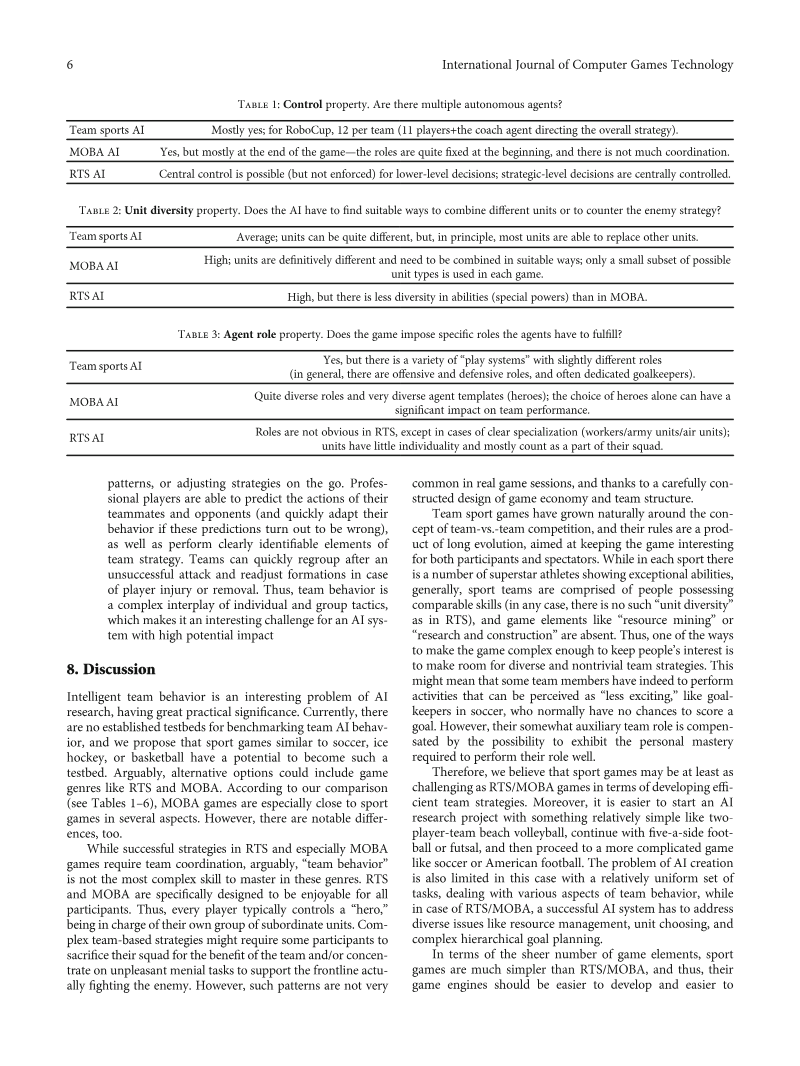
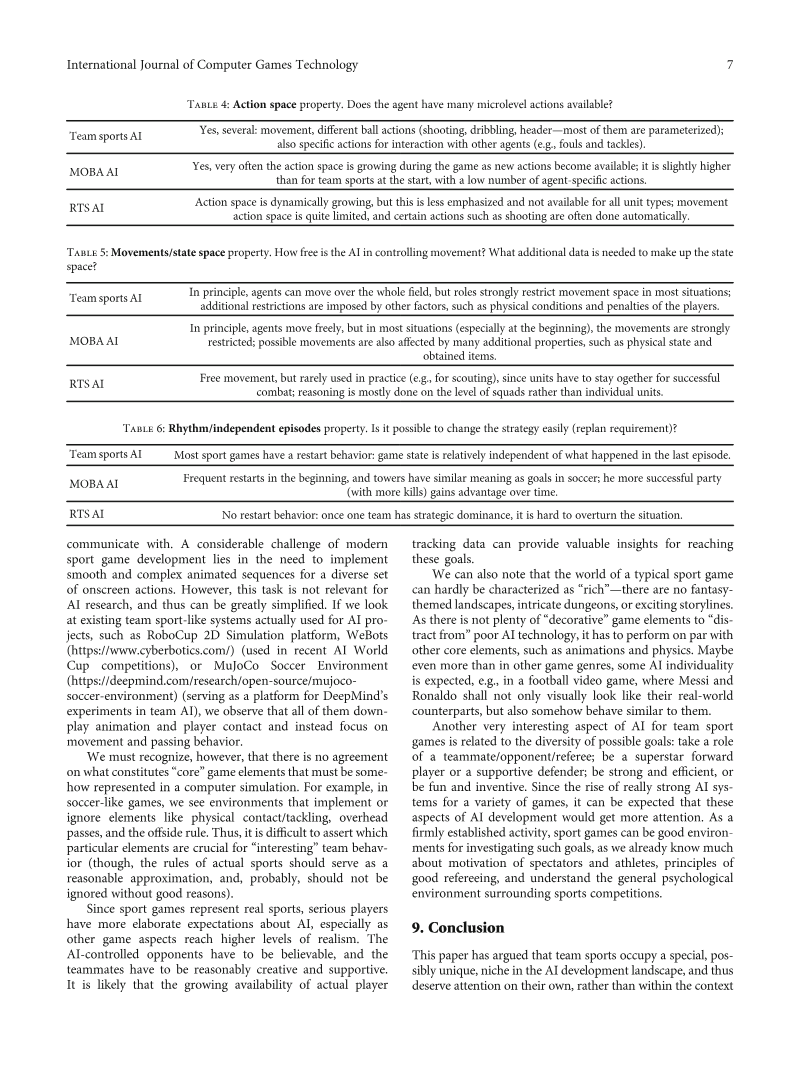
Better testbed. Team sports simulations offer a superior testbed for AI research compared to RTS or MOBA titles.
1 / 5
- 01Team sports simulations offer a superior testbed for AI research compared to RTS or MOBA titles by prioritizing cooperative coordination and human-like behavior over resource-heavy mechanics.See it on page 7
- 02Future AI benchmarking should shift from narrow, win-at-all-costs optimization toward environments that balance rule-based constraints with creative, tactical expression.See it on page 2
- 03Sports games provide unique, parameterized action spaces where AI must manage movement restrictions, specific player roles, and frequent replanning.See it on page 8
- 04AI development in this sector must prioritize entertainment value and spectator enjoyment to meet the high expectations for realism and emotional resonance inherent in sports titles.See it on page 8
- 05Standardizing these environments will allow researchers to rigorously evaluate how agents balance competitive success with the aesthetic and supportive requirements of high-level team play.See it on page 6
- 06Integrating team sports into AI frameworks helps bridge the gap between raw computational power and the nuanced, human-centric performance required for sophisticated collaborative systems.See it on page 2
Ask AI about this report
Summary
Team sports games represent a critical, underutilized frontier for advancing artificial intelligence research, offering a distinct environment that prioritizes cooperative coordination and human-like behavior over the resource-heavy mechanics found in real-time strategy or multiplayer online battle arena titles. While traditional robotics benchmarks like RoboCup emphasize hardware constraints, commercial sports simulations provide a more accessible and sophisticated testbed for studying emergent tactical interaction. By shifting the focus toward these environments, researchers can move beyond narrow, win-at-all-costs optimization metrics to address the nuanced challenges of role distribution, frequent replanning, and the maintenance of believable, supportive team dynamics.
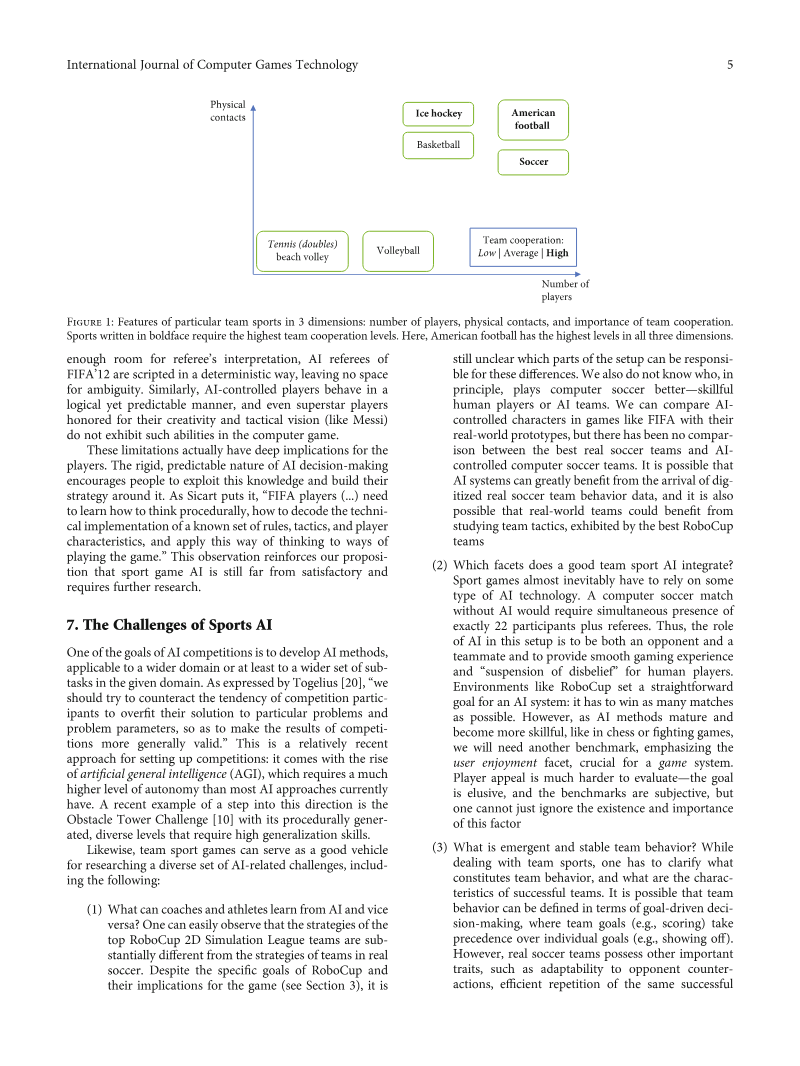
The primary thesis posits that the future of AI benchmarking lies in developing standardized environments that capture the unique intersection of rule-based constraints and creative expression. Unlike other gaming genres, sports simulations require AI to operate within complex, parameterized action spaces where movement is restricted by physical conditions and specific player roles. This necessitates a departure from purely algorithmic efficiency toward systems that emphasize entertainment value and spectator enjoyment. Because these games are designed to meet high expectations for realism and emotional resonance, they serve as an ideal laboratory for training agents that can perform with both tactical intelligence and human-centric fluidity.
Ultimately, the integration of team sports into AI research frameworks will facilitate the development of more sophisticated, collaborative systems. By prioritizing the creation of agents that exhibit creative and supportive behaviors, the field can better align technical progress with the demands of user experience. Establishing standardized benchmarks within this domain will allow for more rigorous evaluation of how AI manages the delicate balance between competitive success and the aesthetic, cooperative requirements of high-level team play, effectively bridging the gap between raw computational power and the nuanced expectations of human-like performance.