Loading the document
Key insights
4 slides
Beyond atmosphere
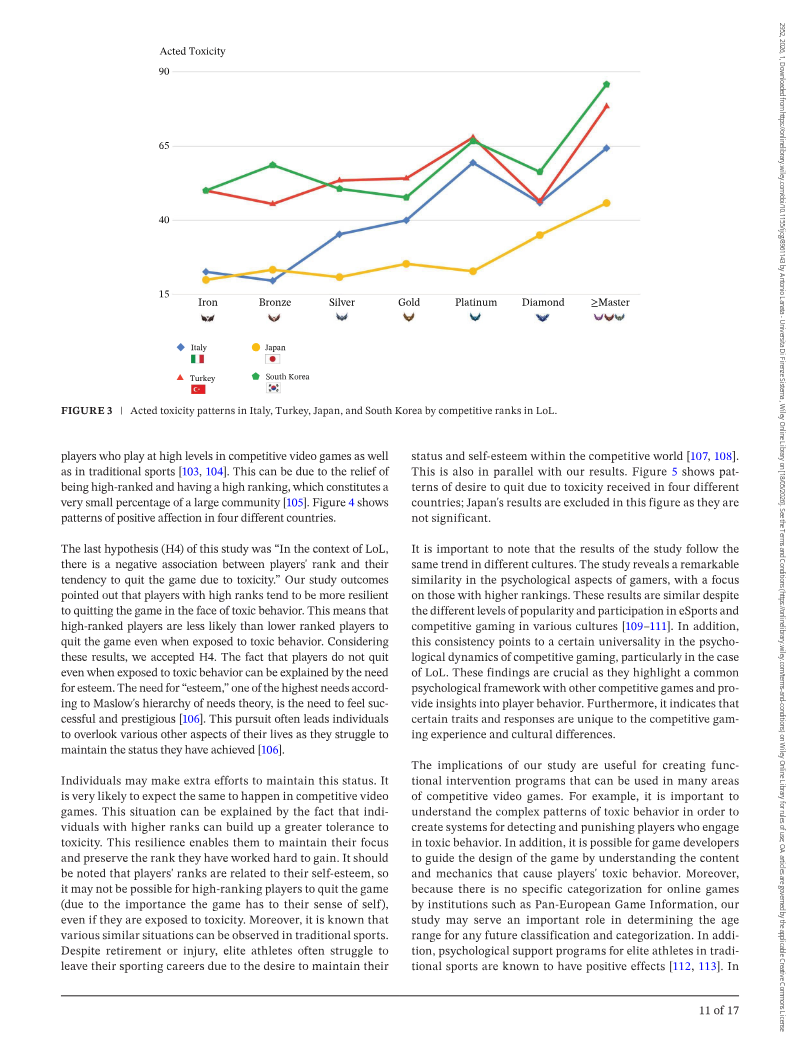
Audio in FPS titles is a critical functional tool for navigation and tactical decision-making.
Sound serves more than just narrative or atmospheric purposes.
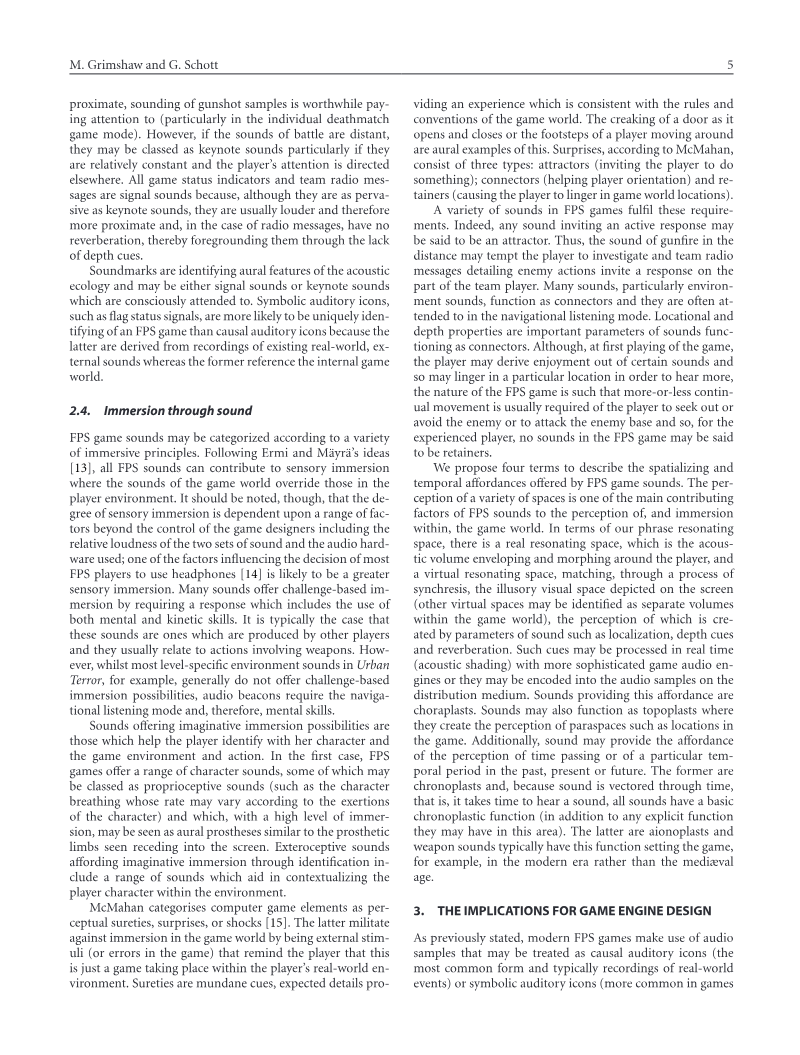
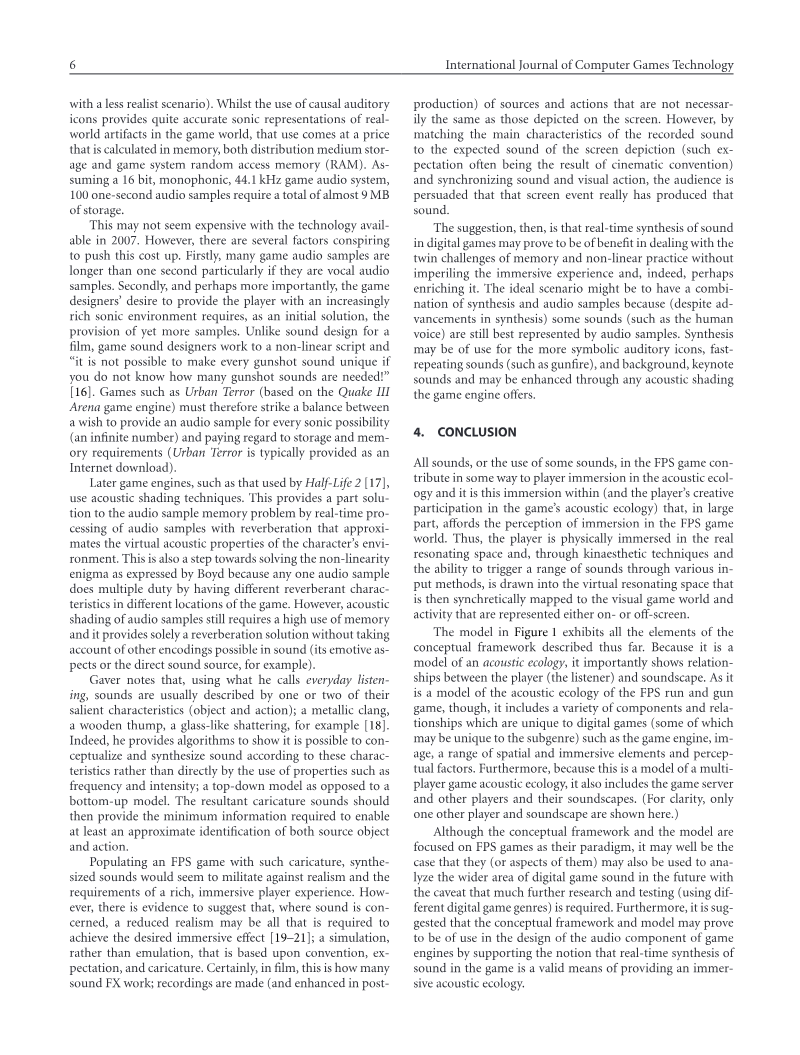
1 / 4
- 01Effective FPS audio design prioritizes 'strategic caricature' over acoustic realism, leveraging established player conventions and psychological cues to enhance gameplay.See it on page 4
- 02Audio in FPS titles functions as a critical functional tool for navigation and tactical decision-making, rather than serving solely as a narrative or atmospheric element.See it on page 7
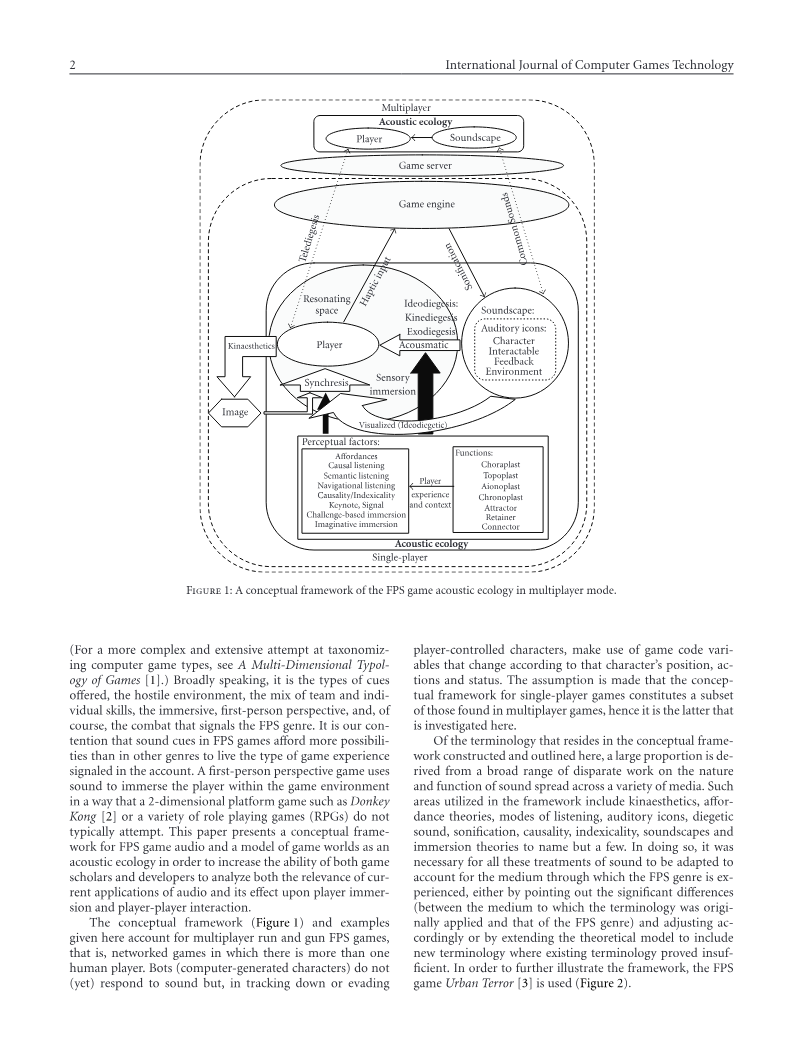
- 03Developers should categorize sound into diegetic, ideodiegetic, and telediegetic modes to better manage the non-linear nature of virtual environments.See it on page 5
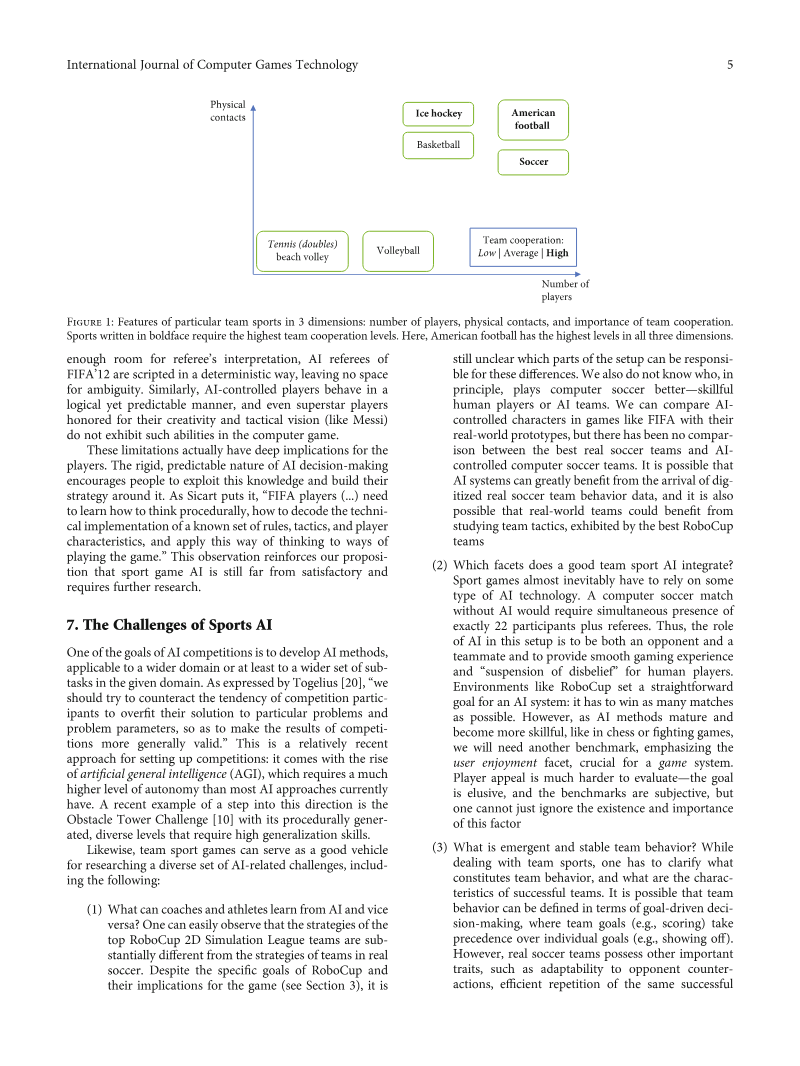
- 04Integrating real-time sound synthesis with traditional audio samples overcomes memory constraints and technical limitations while enabling more dynamic, responsive soundscapes.See it on page 8
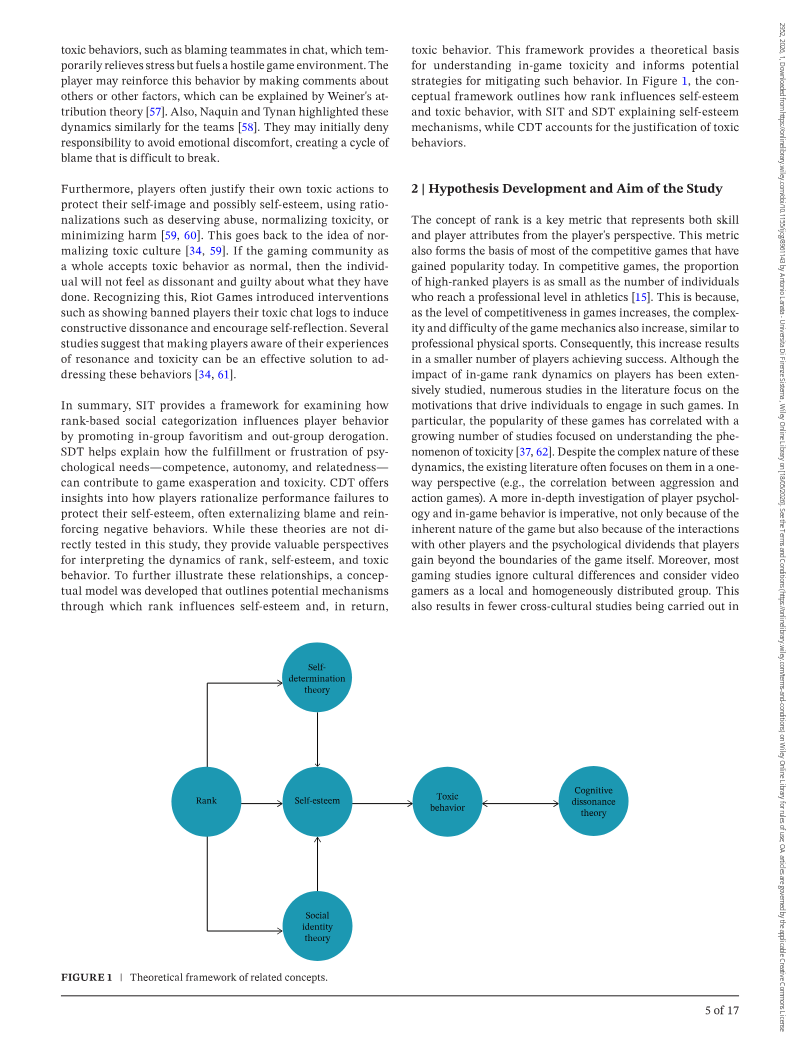
- 05The implementation of a structured framework based on ecological acoustics and auditory perception allows developers to transcend current technical boundaries in game audio design.See it on page 3
Ask AI about this report
Summary
First-person shooter audio functions as a complex acoustic ecology that fundamentally shapes player immersion, spatial awareness, and team coordination. By moving beyond basic acoustic shading, developers can leverage a structured framework that categorizes sound into diegetic, ideodiegetic, and telediegetic modes. This classification system accounts for the non-linear nature of virtual environments, where sound must serve both as a narrative element and a critical functional tool for navigation and tactical decision-making.
The most effective approach to game audio design relies on a strategic caricature of sound rather than a pursuit of perfect acoustic realism. Because players operate based on established conventions and expectations, audio design should prioritize these psychological cues to enhance the gaming experience. Integrating real-time sound synthesis with traditional audio samples offers a robust solution to the memory constraints and technical limitations inherent in modern game engines, allowing for more dynamic and responsive soundscapes that adapt to the player’s actions in real time.
This analytical framework provides a comprehensive methodology for both developers and scholars to evaluate and improve audio implementation within the first-person shooter genre. By grounding sound design in the principles of ecological acoustics and auditory perception, the industry can transcend current technical boundaries. Ultimately, the synthesis of these auditory elements creates a more cohesive and immersive virtual world, ensuring that sound remains a primary driver of player engagement and environmental interaction across all modern gaming platforms.