1 free read left. Create a free account for unlimited reading + AI research.
Create free accountArticle gamevironments
1 free read left. Create a free account for unlimited reading + AI research.
Create free accountArticlegamevironments
Miner argues that culling, level-of-detail management, mesh simplification and draw distance are not neutral technical necessities. They shape what players see.
Joshua D. Miner's article examines how real-time rendering techniques, including frustum and occlusion culling, level-of-detail management, mesh simplification, and draw distance, shape what players see in open-world western games. The central thesis is that these optimization processes are not neutral technical necessities but subjective, culturally embedded practices. Miner argues that rendering algorithms produce an illusion of fully realized, actionable space while quietly encoding a "settler digitality" that can render Indigenous bodies and places marginal or invisible within the player's frame.
Two games serve as the principal case studies: Red Dead Redemption 2 and This Land Is My Land. The analysis finds that Red Dead Redemption 2 largely confines its Wapiti reservation to linear, cutscene-driven interaction, keeping Indigenous spaces at the periphery of open-world exploration. By contrast, This Land Is My Land employs stealth and karma mechanics to offer a decolonial reversal of genre conventions, using occlusion as an operable mechanic that mediates player engagement with Indigenous figures. However, the article notes that this game relies on generic and procedurally generated Indigenous assets, and concludes that even such attempts at Indigenous perspective remain shaped by a settler gaze embedded in the rendering pipeline itself.
The article's broader scope encompasses the open-world western genre and its technical infrastructure, with attention to how design decisions in mainstream and independent titles reflect wider cultural assumptions. It situates these analyses within a small but growing body of Indigenous-authored open-world work, citing He Au Hou, a 2017 design workshop, and Mulaka, a 2018 Nintendo Switch title, as early experiments with fully explorable Indigenous worlds. Assassin's Creed III is identified as the closest mainstream example featuring an Indigenous protagonist. Miner concludes by anticipating that Indigenous-led open-world design will expand the technical and creative vocabulary available to both designers and players.
 NintendoCompany · Japan · founded 1889 · 1,646 documents
 Assassin's CreedGame · Ubisoft Montreal · 2007 · 343 documents
 Red Dead RedemptionGame · Rockstar North · 2010 · 123 documents
 Red Dead Redemption 2Game · Rockstar Games · 2018 · 84 documents
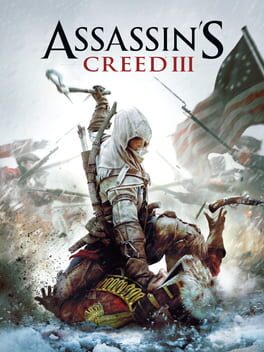 Assassin's Creed IIIGame · Ubisoft Montreal · 2012 · 6 documents
Each row is a game or company this document names, each column a document, oldest first. A mark means that document names it. Select a row to see those documents.
gamevironments · 2026