1 free read left. Create a free account for unlimited reading + AI research.
Create free account
Superstar Session: Giving Your Game the Best Chance of Success in the Cloud
Key insights
6 takeaways- 01Engage with cloud service providers during the earliest stages of development to mitigate the high-pressure risks of launch day, such as server failure and negative player sentiment.
- 02Shift from static, 'ship-and-forget' development models to agile, horizontal architectures that automatically scale to meet unpredictable player demand.
- 03Avoid vertical scaling by utilizing elastic cloud infrastructure that dynamically adjusts server capacity rather than simply increasing individual server size.
- 04Implement managed services for server hosting and database scaling to offload infrastructure maintenance and allow development teams to focus on core game design.
- 05Prioritize security as 'job zero' by integrating robust protections for both cloud infrastructure and internal studio assets like source code.
- 06Define specific objectives for data collection before implementation to ensure analytics provide actionable insights for live operations rather than accumulating unused datasets.
Ask AI about this video
Transcript
[Music] [Music] giving your game the best chance uh for success in the cloud now obviously there's lots of things about clouds we could talk about but we're going to have tristan from amazon who's going to be coming back on stage and he's going to talk to us about uh best success again from their point of view so christian my brain is not working with my mouth today hey go go that's why everyone moves i remember um with the great examples of ux as uh someone did a joke version of doom like yeah imagine doom but with ux annoying ux thing like to shoot yeah to to make a barrel explode shoot it in order yeah exactly and and things those sort of things we
there is an interesting issue though which is like um a lot of those tropes when in mobile weren't understood by a lot of new players and we had because of the mobile device everybody who hadn't played games regularly now had to learn how to play games so i think one of the early stages we've had in the in the mobile area from like 2008 to 2012 was everyone catching up with like hardcore gamers like us yeah anyway so anyway away so i think yeah we're hired one uh welcome welcome welcome hope you're having a good conference so far i know i am this is i'm just fascinating it's so far so welcome to giving your game the best chance for success in the cloud i'm tristan uh i'm a sort of an essay leader within aws um leading a team of architects that helps our customers do this exact thing actually uh get give the game your best success in the cloud here to talk to you on this very subject um so yeah that's me um i'm just about getting away with this photograph now i
think uh 20 plus years of leading uh development and architecture teams old enough that i now put the plus in sort of the actual number um and in fact my first gaming device atari 400 back in the day so that's what that there begun began my love of games um favorite game uh which we revisit later pool of radiance on a commodore 64. um no idea if anyone else remembers that game uh a few people a few flickers of recognition but um i'm trying to revisit and rekindle this so if anyone has any sort of rpg suggestions currently trying out divinity original sin two if nothing else when you come and talk to me later then please help me with that that question i really appreciate it and favorite launch back in the day and i was even discussing this with uh oscar uh dream arena for the sega dreamcast i was part of the team that built that uh thing basically uh yeah internet access for a games console who'd have thought that would then become a thing um but then it was uh before it's time uh unfortunately um so the agenda today i'm
gonna give a quick introduction to aws game tech and what that is then talk about the challenge right the challenge we're here to talk about today about running your game in the cloud successfully or to lead on to some some i guess lessons lessons for advice or lessons from the field on how to build it right how to run it well and it wouldn't really be a presentation without a call to action at the end so i'll have a call to action and some q a as well if there are any questions so so i've been there i know what it's like you come along to where conferences such as this and and um you come to someone who's got quite a click-baity title and then someone just does a sales job on you right so so with that in mind 90 percent of the world's biggest uh public game companies use that infrastructure i'm going to get this out the way early earlier there's one it's cool and two it's actually true of course so sony nintendo riot uh just read them off so yeah so lots of big names there but just to bring it down a bit yes great i'm super happy super
thrilled we've got some huge companies using us but we work with studios of all sizes right from the very biggest so the ones literally just starting out one person with an idea comes to us how do i build this thing how can you help us and everywhere in between um but yes that's that's the kind of the big the big bang slide as it were so a quick overview as to what aws game tech is and we're currently breaking this down into these sort of three columns three pillars call them what you will so starting with building and except when building your games how to build it right in a modern way to be cloud savvy to get the best value out of it and that includes for example uh obviously very popular with covid so with studios all working from home how can you leverage the cloud in terms of building so that's remote workstations that's that's build pipelines to speed things up that's all that part of things and then running it right so congratulations you've launched the game
so how do you launch that how do you have enough servers how do you keep the service running how do you scale the servers how do you do anal analytics and perhaps most importantly how do you keep it all secure right that's the running part and then we come to growing and that's just a real live ops part here in terms of player progression monetization ai and ml community a big subject that we'd like to look into and of course one amazon was amazon is more than just aws uh twitch to obviously name one of the biggest examples in gaming but today i'm kind of tight for time right so um we're gonna look at these two build and run principally going to drill into these dive deep in those but if you have any questions on the grow part so i'm here today look for anyone wearing a hoodie like this uh this sort of jumping material and we'd love to talk to you about it so grab us we've got a booth upstairs as well um but we're going to concentrate on the first to today so what's the challenge right what is the challenge well
so back in the day back in the day don't remember this game everyone looks so young so young so these are these so these are floppy disks right yeah yeah before before the internet there were these right this is what you did the internet on so this is pool of radiance for the commodore 64. that's on four double-sided discs right i think you'd struggle to be able to download any game for a mobile device that would fit on four double-sided floppy disks so what's the point well when this game came out which i bought from my local shop um that was the game that game was done you bought that game right if you developed it if you're the developer and you released it that was it you were done right released never changed what was done it was like it was simple it's a simpler time 1988 but today that's what game launches look like right you're kind of you're literally you're flying the rocket ship and you're still trying to build it it's
so much just to consider so many things that you have to consider you have to launch pre-launch betas alphas and once you've launched making rapid changes all of that stuff it's difficult and bad releases have consequences right so i'm limited by the clip art we have when we build presentations sometimes but that's angry gamer so i think that gets the point across pretty well and we see this all the time right what happens if a release doesn't go well well leads to review bombing and what does what does what does their review bombing lead to well it results in less people buying your game or people leaving your game and then what does that result in results in revenue taking a dive and sometimes never happens but studio failing as a result and review and and i'm sure some of you hopefully know you had this experience but review bombing can happen over like the smallest thing like there was a game launched recently just didn't have i think an italian translation that was
the thing and it's a you know dropped of hugely negative reviews as a result which leads us to the first topic and this topic is how do you then build it right in the first case it's all part of giving you a smooth passage welcome welcome so yeah so i get it right when you're building a game there's a lot to think about so i don't have anyone's workstation ever looked like this at any point but yeah imagine everything you're doing when you're building a game from game design documents to bouncing ideas off of doing alphas doing demos working out climbing mechanics oh god let alone the fact that is your game actually fun right you've got to think about all these things there's a lot to think about but in the immortal words of benjamin franklin you may delay but time will not right so i encourage you strongly that you should be thinking about this stuff if you're not already please i know i'm
biased because i work for the company that's like selling this stuff but i generally care about this right it's from my background in gaming in the sense of uh this is the first lesson from the field engage yesterday right in terms of who you intend to work with in terms of like cloud working be that in terms of game server hosting maybe has to do with analytics right we had a talk a bit earlier in this session about analytics and how important they are please please please engage with however that is and hopefully that's us we'd love it to be us engaged yesterday was where we see the most success with customers and so this is the whole point here is we work with customers that have amazing successes and we love those customers we love the customers where it doesn't always go so well for them but the lessons we learned from that is that those that worked with us right from the beginning and right from the beginning could be when they've got an idea or they're just thinking about how do i do this thing how do i how do i launch this successfully how do i grow this how do i monetize this those are start early and start us
having us those conversations where it's open and honest really opening honest conversations and a partnership as it were leads on to success and so if nothing else have these conversations so so even if that's us then great but all the companies that are upstairs here to help you then please engage them as i hope many of you are it's a key lesson second lesson you don't know what you don't know right so don't ask me about game design please don't if you want success because i probably suck as a game designer being open and honest right and it's so complex i mean i look at and i read obviously a lot of articles a lot of videos about just how much work goes into game design like i don't know like just climbing mechanics and games weeks and months spent on how do you how do you open doors in a game in a way that works doors are hard climbing mechanics are hard you can spend months on this stuff and then you just throw it away because it just isn't fun you just can't measure fun so fine that's what you do right i'm going to leave that to you you do a great job the way you want to talk to us and the team is about how to do this stuff in the cloud right so it's almost
like emitting just come to us with these open questions and we this is where we can help and so you can get this advice on uh on how to build it right things you might not have thought of so sort of working backwards from the problems that you're having in launching games we've got over 200 plus services now which is staggering and i'm glad i don't have to name them in this session and please don't ask that as a question um but it's a staggering number of services so it's almost like i'd be a hump be a yeah be humble that's all right that's how i put that just as we are third this is my favorite one plan for success when you're building your game because i really hope that every one of you just building a game right now or maybe launched or planning to launch it goes phenomenally well and it's let's say let's take the example of a multiplayer game just make sure when you're architecting when you're building you're assuming that you do get millions of players you never know when success is going to come i mean you can you might assume a trajectory where you launch your game and it just sort of starts just sort of meanders along a bit and then maybe gets picked up by a few people and it just
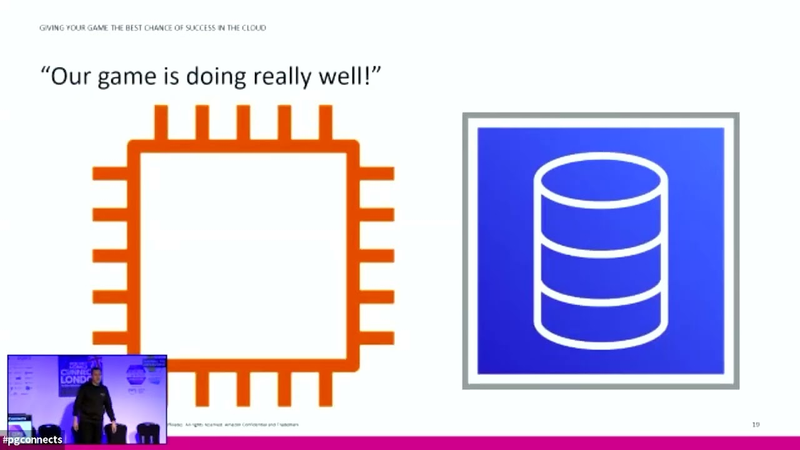
grows and you can handle that and you can build for that and then great doesn't always happen that way what about one of the top streamers on twitch picks up your game on like day one advertises it and suddenly you've got millions of players can you are you ready for that have you built for that have you assumed success in mind that they can just absolutely go off the charts and we've seen sleeper hits as well among us as a classic one where that game came out played by like sub 100 people then suddenly got picked up and just went bang and look at that game going out so here's an example of this sort of anti-pattern so um so yeah you may build your game architecture and you may just think you know what this is launch day tomorrow i've left it to the last minute and spent loads of time designing and building my game um and about a week before launch someone says we need to we just have some architecture to run this in the cloud i guess we'll run it somewhere so let's just throw up one server and let's throw up a database that'll do us it's normal say tomorrow that's fine fine what can go wrong what can go wrong
and then it goes really well which is great so let's just make the server bigger and let's make the database a bit bigger um the thing is if you scale vertically it only goes so far and then kind of this happens yes it all goes a bit wrong and believe me we have servers like individual servers with terabytes of uh just ram and more cpus than you can count but in terms of architecture patterns that's not the way to do it right being open and honest that's just not how you do it but we can help here's here's one i prepared earlier so we're to start talking about architecture and building things right and that's exactly where sort of my team helps along with the wider aws here on the left this is really simple on the left mobile phones you're happy gamers with their mobile phones whatever devices you're on you've got some security services at the front amazon cloud front so if you're serving like media to your game you need a way to do that sort of quickly and cost-effectively and performant across the world then brilliant and it's elastic load balancing so what
does this mean well great so if you have this one player playing your game boom we don't want that but then yeah just spin up just one server that's all you need millions of players across the world and we spin up even more brilliant we have a service database at the end you don't even have to worry about how big that is that would just scale we'll handle that out of skill happy days so that's really simple and uh and again started with conversations early on in the process to help get this built okay you can make it even simpler than that what about if you don't care about servers you don't want servers at all you just want to manage service and that's that's a very popular conversation with customers right they've got enough you've got enough to worry about building the game when it's running you just want to throw it somewhere have it run so amazon game lift that's how i manage sort of game hosting solution that will handle the servers around the world spin them up spin them down just give us the code just give us a code we'll sort it out and again just make dynamodb bigger it's just bigger to look better on the slide to be fair it's not bigger for any other reason on this one so that's making your life nice and easy
and then smooth launching another reason to engage early i guess in that launching is a tense time it's a real it's a real sort of war room situation where a lot can happen um and therefore it's also a service where i guess we give white glove support there's ways that we can give support so at that launch time you have dedicated support to make sure everything's going fine servers are nicely warmed up everything's there uh if in the event of anything going wrong you can have real live actionable support um to make things go well so again launch support is uh hugely important everything has come to this it's an incredibly important time so on to the second topic uh running it well so you're launched congratulations so you're up there um so lessons from here security's super important right i haven't heard not sure i've heard security uh too much today this is super well we consider it job zero that's how important it is right and there's two parts to this
which i advise you to consider really strongly the first one is obviously um security of your provider so for us obviously that's aws so we we take this very simply we make sure that the cloud itself is secure that's everything from how we secure the premises where this stuff lives right where where all the kit lives to data security to how our staff do things our policies all our security credentials all these things so we do that right that's what we do and there's a reason that not obviously the largest games and banks use our infrastructure and so on but it's also really important from the game studio point of view like for example your game your code how you're storing data how you're handling that that's also done in a secure way and i'm sure there's been numerous sort of game breaches where game code has been leaked due to these sorts of breaches again uh we can give architectural support in how you build that things to consider um both in terms of how you develop that how you secure your systems and also security in terms of replication and
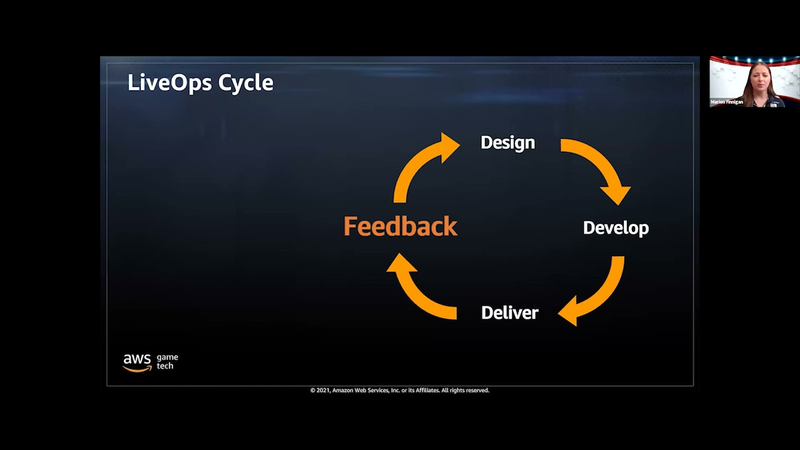
avoiding data loss so how do you make it so that you don't lose your data which is really important for making your game a success secondly this is the best clipper i guess i could find for happy people celebrating so apologies it's just generic people in an office but make your releases flawless what i mean by this so i mean and this really ties into live lot so yeah you can you can get a release out there congratulations what about the next release what about the next 10 releases how quickly can you iterate each time you need to get new content up new releases so again architect for this do you have the ability to have your game up there and run a sort of a separate parallel game just for a set of testers maybe just to verify it's okay and then switch between that and maybe switch back again if it's not working right again this is where the cloud is really powerful you can easily spin up a different type of your game and spin it down again if you don't need it uh fail fast is what we use in this sort of agile development so if you put up a version of your game it doesn't work out like it could literally be broken it
might just be bad player feedback how quickly can you swap back so a key lesson again customers who are having the best success can do this really quickly they can really go around the flywheel really fast making new releases making adjustments all sorts really quick all the time third can you gather the right data to really understand your players and again we touched on data in one of the previous sessions but make sure it's the right data because sometimes i guess the anti-pattern here is we see uh customers gather lots of data right they gather the data they definitely have the data and then they're asking the question what do we do with it what do we need to find out think about that first start with why what is it you want to gather the data on to understand obviously maybe to investors and publishers they may have certain things that they need to hear from you fine we can start with that but in terms of live ops and making sure the game's success you're engaging players all of these things gather the right data and again we have lots of analytics services machine learning and so on
where we can help with this and help process it but as a starting point hope you design it right for your needs based on the questions that you need to answer and here's one we prepared earlier so uh sometimes i get advised against using complicated architecture diagrams but this one's really simple for principals right in terms of on the left that's everything coming from your game or things around your game so game clients streaming in data maybe your website there's community stuff you're bringing in whatever that looks like for you but the key thing here is from left to right it's been streamed in with scales so the idea is you have one event a second if you have 10 you have a million whatever it is and this is based on what epic used by the way just just to just demonstrate it does scale all the way to the right goes to analytics gets transformed gets stored obviously but right at the end like bottom right is where queries can be run on it so we're talking about dashboards single panes of glass give you the insights on the data so cope with like all that data coming in at
speed at scale all the way to the end to people that need it so all the way to game designers whatever they need so the call to action being conscious of time as i said i said there'd be a call to action and this is the call to action and it's important and it's in bold and red and it's the first item on the page engaged yesterday right so please talk early engage early talk to us about what you want to do how you want your game to work please build with success in mind for your game so think big really assume you're gonna it is gonna be a massive success how do you build it how do you architect it so that it can scale appropriately protect yourself and your players that's the security angle to make sure it's built right really think about security um to make sure that it's being built in the right way to do that and then gather and then execute on the right data to support your game thank you [Applause] thank you so much for that i mean it's great and i think um what always reminds me is that back in the old days where we had to actually have so much
architecture in place already for launch day because launch day was always you couldn't afford for the game to fall over so you had to over architect everything thankfully we now can do the cloud so we don't have to over architect everything anyway thank you so much for that that's fantastic [Music] [Music] you
Summary
The presentation outlines strategies for game studios to achieve success by leveraging cloud infrastructure throughout the development and live operations lifecycle. The core thesis emphasizes that modern game development requires a shift from static, "ship-and-forget" models to agile, scalable architectures that can handle unpredictable player demand. By engaging with cloud service providers early in the development process, studios can better prepare for the technical and operational challenges of launching and maintaining a live service game.
Key findings highlight that successful scaling is not achieved through vertical growth—simply increasing server size—but through elastic, horizontal architectures that automatically adjust to player volume. The presentation identifies "launch day" as a critical, high-pressure period where inadequate planning often leads to server failures, negative reviews, and potential studio instability. To mitigate these risks, studios are encouraged to adopt managed services that automate server hosting and database scaling, allowing developers to focus on game design rather than infrastructure management.
Security is categorized as "job zero," encompassing both the physical and digital security of the cloud provider and the internal practices of the studio, such as protecting source code and preventing data loss. Furthermore, the analysis stresses the importance of data-driven decision-making. Studios are advised to define clear objectives for data collection before implementation to ensure that analytics provide actionable insights for live operations, rather than simply accumulating vast, unused datasets.
The scope of this guidance spans the entire game industry, from independent developers to large-scale studios. The methodology relies on lessons learned from supporting diverse global clients, ranging from small startups to major publishers. The primary call to action is for studios to engage with cloud partners at the earliest possible stage of development, plan for massive success by building scalable systems, and prioritize iterative, secure, and data-informed live operations to maintain long-term player engagement.