
ArticleSuperJoost
The Metaverse and How It Will Revolutionize Everything: A Treatise on the Next Internet
14 Jul 2022~21 min full read
This analysis examines Matthew Ball’s exploration of the Metaverse, positioning it as the next major iteration of the internet while scrutinizing the significant technological and economic hurdles to its realization. The work serves as a comprehensive roadmap for tech investors and entertainment executives, moving beyond the idealism often found in Silicon Valley to provide a grounded, cynical, and historically informed perspective. It defines the Metaverse as a three-dimensional, persistent, and synchronous virtual universe that will eventually account for a significant portion of the digital economy.
The core thesis identifies six critical pillars required for this evolution: networking, computational power, interoperability, payment systems, hardware, and blockchain. Data points suggest that while financial institutions forecast a market value between $5 trillion and $13 trillion over the next decade, current infrastructure is severely lacking. Specifically, the computational power necessary to support a true Metaverse is estimated to be 1,000 times greater than what is currently available. Furthermore, the hardware sector faces persistent supply chain disruptions and semiconductor shortages that threaten to delay widespread adoption.
The scope of the analysis is global, covering the activities of major tech conglomerates like Meta, Microsoft, and Epic Games, while also addressing the demographic shift toward Gen Z and Millennials as primary users. Methodologically, the findings are based on a synthesis of industry essays, financial modeling of the digital economy, and direct interviews with key stakeholders. The conclusion emphasizes that while the transition to a Metaverse is likely inevitable, it will exacerbate existing societal issues regarding data privacy, toxicity, and digital equity unless the underlying protocols of the internet are fundamentally rewritten.
SuperJoost · 2026

SuperJoost · 2026
SuperJoost · 2026
SuperJoost · 2026
SuperJoost · 2026

SuperJoost · 2026
SuperJoost · 2026

SuperJoost · 2026
SuperJoost · 2026
SuperJoost · 2026

SuperJoost · 2026
SuperJoost · 2026
Newzoo · 2025
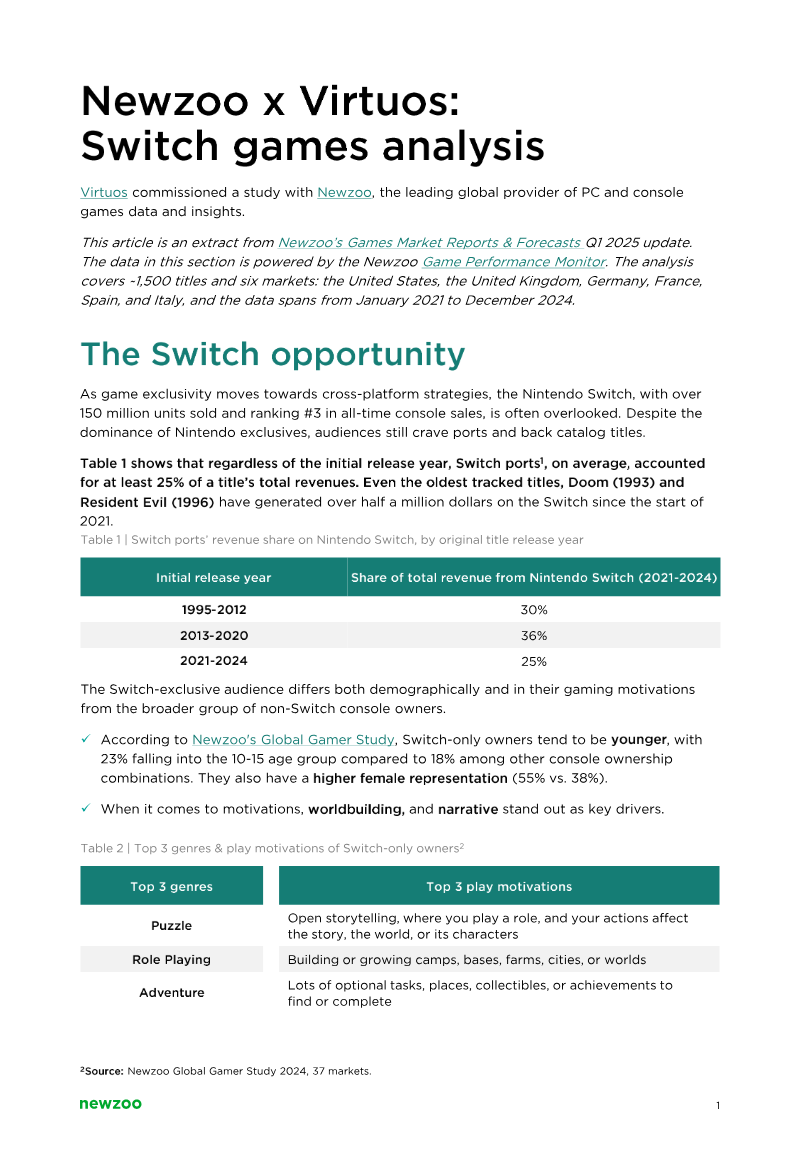
Newzoo · 2025
Ampere Analysis · 2025
Epyllion · 2025

MiDiA Research · 2025
Newzoo · 2024

Sensor Tower · 2022

Sensor Tower · 2022

Newzoo · 2021

Niko Partners · 2026
GEEIQ · 2026
Roblox Corporation · 2026