1 free read left. Create a free account for unlimited reading + AI research.
Create free account
Space Ape on lean live ops for mobile games
Key insights
6 takeaways- 01Space Ape Games shifted its staffing model after 2016 to reduce developer involvement in live titles, moving from 70% of staff dedicated to live games to a lean model that prioritizes engineering resources for new intellectual property.
- 02By utilizing restricted, foolproof web tools, the studio ensures that small, non-technical teams can safely manage live environments while maintaining consistent player engagement and revenue streams.
- 03The 'treadmill' content strategy relies on structured, recurring cycles of new characters, events, and limited-time bundles, with difficulty and pricing dictated by data-driven spreadsheet modeling.
- 04The studio maintains legacy game profitability through a 'toy box' framework of proprietary web tools, allowing non-developer staff to manage events, monetization, and assets without requiring client-side code pushes or app store updates.
- 05Operational efficiency is achieved by transitioning the art pipeline to a fully outsourced model, enabling the studio to reduce full-time artist headcount on specific titles from five to zero.
- 06Live operations teams are typically composed of a small, junior-level cohort—including a product manager, designer, community manager, and QA specialist—who are trained as T-shaped professionals to manage complex environments.
Ask AI about this video
Transcript
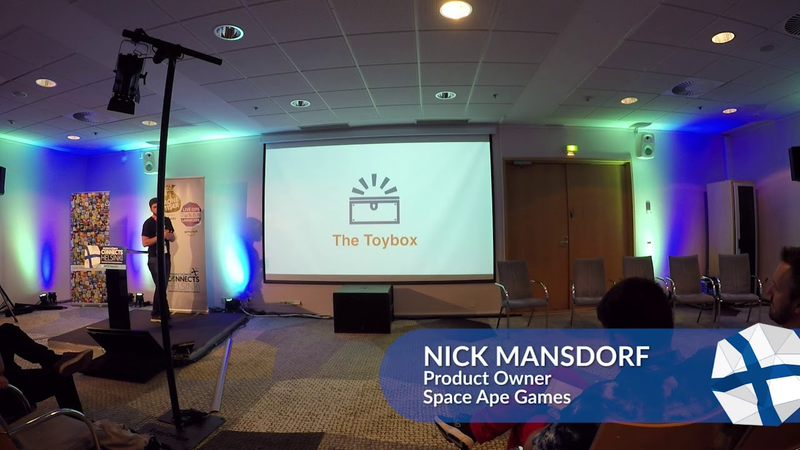
[Music] alright guys welcome this is lien LiveOps it's going to be a bit of a story about space ape and how we've run our live ops and what we've learned along the way so in terms of well no no clicker just a second yeah too fast all right well we'll wait I guess I can do my intro so I know that by heart I'm Nick man store if I'm a product manager at space ape I've been at space ape for about four years as a product manager on two of our live games at launch rival kingdoms and transformers I've seen sort of the
development of the space save live ops system been a part of some of it watch some of it happened from the sidelines and it'll be it'll be an interesting journey we go on together oops all right cool nope yes all right here we go so a bit about space ape space ape is a london-based mobile game studio it was founded in 2012 it's about 118 people now 30 plus nationalities and around 60 million dollars in revenue of all of this is is from our live ops one of the things that's important about space ape and probably a lot of your companies is our goal is a company it's very simple we want to build a top grossing mobile game we want to be one of those companies that has talked about this the top 10 charts and we have not done so yet and our live op system is basically meant to allow the company to go after this goal
so what happened to both space ape is sort of a tale of two companies there was our pre 2016 company and our post 2016 company in the pre 2016 world we were a company that was mostly focused on on live games we had 70% of our staff and developers working on those live games 30% on new projects and then something happened we decided that our current games were not the vehicle by which we were going to make a top grossing game and so we needed to put all that effort on to in development games and what this meant is that the live ops teams on those live games had to do a lot more with a lot less so they had to make the company profitable keep us running keep the revenue coming in but they were gonna have their their team slashed and the way we did this was our live op system so just to take a look at how this works first base Abe we've releasing games almost annually sometimes faster sometimes slower and as
we release games we've maintained an increasing amount of revenue by keeping the longtail going on these games so it's about the live ops keeping these games relevant for years on end delivering to players what they're looking for with smaller and smaller teams and doing it consistently and for years on end so what is lean live ops I think the the clearest explanation is is running a game that's live with very few people and hopefully no developers so the way we think about it at space ape is sort of these three areas we call it the treadmill the toy box and the team the treadmill is what you're delivering to your players on an ongoing basis what they do year-on-year what the experience is what the content is the toy box is how you do it how you get that that content and that experience to players on a consistent basis and the team is
obviously the people doing it and what it takes to get a lean live ops team going so starting with the treadmill the the thing that we have to do to even begin the process of the treadmill is to learn about our game we need to know what players want in most of our games there's a chase item there's something that the content that drives player behavior and for every game it's different and so the first step of the treadmill during production during the early days of LiveOps is figuring out what those things are and figuring out what we need to get those players get into their hands on a regular basis in the game I'll be talking most about which is transformers it's it's very clear the thing that players want is transformers you play a Transformers game because you want to collect all the Transformers and that is the sort of end goal of the game itself and what the live ops system is built around delivering to players so what does that look like for
transformers it's a cycle for us so what we need to do is we need to give a player some content that content is that bought that bought is a 3d model with animations with game and that bot takes time to build so to deliver that and have it last for a month or more we have a cycle of how we deal with our content and the cycle goes a lot like this we have a new piece of content it goes into the game it's completely off no one can see it no one can use it at some point it gets turned on and there's an event and the event happens over a weekend and there's some gameplay associated with the event and the reward for the event is the new bots and some players get it and some players don't and it's based on your performance in the event and then the bot disappears after it disappears it's gone for a couple weeks and we don't see it and no one can play with it except the people who earned it during the event then at a certain point it comes into these live ops bundles which are ie PS only IIP with a number of crystals and a chance
to earn the bot and then it disappears again finally it comes into the shop for premium currency and then disappears again and then eventually it comes into the greater pool it becomes one of the God pulls across everything it's available to free players that's available in general and one of the things to note is that at the event time it's available for free players and at the end it's available for free players but in the middle it's monetized so we have our content we know what we're delivering to players we have a plan for delivering it and a way in which to stretch that content and make sure that it's it's lasting as long as the players interact with it and then what we need is a way of delivering that content and that is the toy box so the goal of the toy box and the goal of all live operations at space ape is to stop having devs working on projects we want those devs to be on new games to create new IP to create new experiences for players and having them on the live game supporting old games that aren't that
top-grossing game is not as as useful as having them try out new things but to get there you need some things you need tools you need something that the the people who are working on the game long term can support it in a way that doesn't require a code push doesn't require a code updates and that requires a set of tools that are easy to use that can push live without a developer being there and you also need the content cycle to be allowed to happen so you need a pipeline a content pipeline that is also independent hopefully of artists so what do our tools look like I think the the easiest thing about our tools is that we need to do certain things we need to have these events we don't want to push new content we don't want I store updates so what do we do I think one of the things that is nice is I just follow the Amazon talk streaming images in text we constantly need these events
to have specialized text they have to have specialized images to theme them and have their their ability to be interesting and new and we don't want to push that in a new build so we have it streamed in from the web and then the events themselves they need to be configurable all right we have all these different gameplay systems but how do you have an event that's fresh week on a week in week out without having a developer turning on or bringing new features into the game and the way we do that is these configural buttons that have sort of a number of different features so what you do is you have an event and it's a total Iser so you you you compete with people to fill up earn points basically and when you earn points you get rewards all right that's one type of event well then we we have a total Iser with a leaderboard and now there are two types of events and then we have a leaderboard event with your alliance and now there are six types of events there's personal leaderboard Alliance leaderboard personal totalizer
alliance totalizer etc etc etc so we build these features so that when we have a multiplicative effect where you have one feature that can be turned switches on and off and on and off and on and off and you have much more variety in the gameplay week on and week out so that a player who comes in one week it might be a similar sort of event but there are enough differences that it keeps them coming back day in and day out and then monetization so how do you make money on this and the way we do it is these time limited bundles and the bundles are all configurable from the web so all the content in the game can be added and removed from these bundles can have new images put in have special prices and different price points and all of that happens through this web tooling that allows us to do all this with no developers and then there's the design side so what do you do you have these tools you can put these events out you can put these bundles out but what do you actually what are you doing so we've made a bunch of spreadsheets and the spreadsheets are value proposition so if you're making a
bundle how do you model whether this this is a good value or not good value so everything in the game has a price in IEP and all the bundles are then balanced on that price and events what is the the average number of battles that a player does during a game so how can we use that information to then feed it back into these models to tell us what the next event should it be a hardcore event where people are grinding all weekend or it should be easy and they only spend a day or two on it and so we use all these things to sort of create our toolset where we have web tools that we can put out images and text into the game we have features that can be turned on and off from these web tools we have bundles that go along with it to sell items that are relevant to those events and then we have models that tell us what to sell and at what price so then it comes to something like the art pipeline and the the way we handle that art pipeline which for a bought was you know four weeks for a
single bought required five artists at first we created an outsourcing pipeline and it took time so what we did was at first we did everything we did the concept thing we did the modeling we did the animating and with five artists doing it we could do two BOTS a month and that's that was our cadence and then we decided okay well let's try outsourcing the animation so the animation went out for walking and and running and fighting but the special animations for transformers like transforming we kept in-house and then when we were satisfied with the the progress on animation then we moved on and said okay well how about you guys try modeling and texturing will still provide all the mood boards all the concepts we'll give you which BOTS to make but at this point all the the actual modeling and texturing is being done all the animation is being done out sort and then at some point we said okay now we'll give you an idea for a bot maybe a mood board and from there on it's Yukon cepting you approving and as we did this
we were able to take five artists then four then two and now there's no full-time artists on transformers and what happens is we have one person managing the outsourcing pipeline and the outsourcers have leveled up over time and this was a year-long process to get this pipeline completely moved to the outsourcing so then we come finally to the team and I think this is an important thing at space ape is that a lot of our live ops teams now are run by more junior people than you would expect and the reason is that we built these tools that are that are foolproof in some ways that restrict the design space to certain places where you can design an event but you can only have these values you can't have negative values it's not the content management system which is open-ended and you could put anything in and actually crash the game the tools have limited scope and so what we put on those teams are essentially a product manager a designer a community live office manager and a QA person and
they tend to be quite junior and over time they become t-shaped so we want someone on these teams to sort of become a master of all things to have their specialty but then move across and have some some ability to do some design some ability to do QA and they really work together with that aspect and then from time to time if we need it we'll bring a developer back onto the project and upgrade unity or fix some bugs or or move something on but it's it's these people who then know what they're doing so the product manager is responsible for the business the designer is looking for new experiences that can do how can they push the toolset how can they make an event that seems like it was the same as last week more interesting more fun better but a better story better images the community live office manager what does the community want like how you're responding to it's a given take from the community how can we make an event how can we learn from our last events and how can we integrate that into the team and the QA to make sure the quality is there overall so basically in summary
when you get to space ape live ops we have this treadmill where we know what we're gonna deliver over time we have the toolbox which is a set of web tools that allow us to push new content new experiences to the game in a controlled manner and we have a team that starts quite junior but by the end of a year or two years of working on these live games can then move on to our new live projects with a lot of real-life experience with a lot of really good T shaping and make the company a better company so I seem to have some time for questions I believe and now we have a packed room so I'm sure there will be some questions and we'll have a microphone going around so please feel free to ask questions also I will be around afterwards if someone wants more specific things this is very generalized it's a very interested question do you hear me yes okay how'd you come from Excel spreadsheet whatever to data in game technically speaking
sure so there are two ways one we use Google Docs for everything because it's collaborative so we can we can move sort of two people can work on the same document you can have all your formulas set up and then what we do is we have an internal sort of spreadsheet parser I guess or we take the spreadsheet data and can ingest it into the CMS and then on the LiveOps tool side it's more of a data entry thing so the the spreadsheets output the levels and values and the rewards and point values and then the designers then use those values to input them into the web tools you don't over there okay thanks for that um for your web based tools and that's something you developed in-house or as a third party system so it is developed in-house and it's developed in-house over a very long period of time so on our first game
samurai stage there were no web tools it was mainly CMS so it was a spreadsheet that was then put in and we had to do content updates and our system allows us to do a CMS push without a new client so you can push new content to the game eventually we moved away that where we wanted to have the because we were asking more and more junior people to be on these live ops and have a lot of responsibility we wanted to create a toolset that was sort of more robust and and foolproof in some ways so what we do is we add content to the game in n CMS and then it's activated through the web tool so we've built these web tools and initially it was just the ability to turn on and off an event and then it was the scheduling of the event so that you could have multiple events scheduled at the same time and then it was the ability to do turn on and off a bundle and then there was the ability to create the contents of the bundle which exists in the game and then put them into into the bundle itself and all these have sort of built up over time [Music]
Summary
Space Ape Games, a London-based mobile studio founded in 2012, utilizes a lean live operations strategy to maintain long-term revenue for its portfolio of mobile titles while shifting development resources toward new projects. Following a strategic pivot in 2016, the studio transitioned from having 70% of its staff dedicated to live games to a model that minimizes developer involvement in ongoing titles. This approach enables the company to pursue top-grossing status by focusing engineering talent on new intellectual property while keeping legacy games profitable and relevant through automated, low-headcount management.
The operational framework relies on three pillars: the treadmill, the toy box, and the team. The treadmill represents the recurring content cycle, such as the introduction of new characters, which are released through a structured cadence of events, limited-time bundles, and eventual integration into the general game pool. The toy box consists of proprietary, in-house web tools that allow non-developer staff to configure events, update images, and adjust monetization bundles without requiring client-side code pushes or app store updates. This system is supported by data-driven modeling in spreadsheets that dictate event difficulty and item pricing.
To sustain this model, the studio transitioned its art pipeline from in-house production to a fully outsourced process, allowing the company to scale down from five full-time artists to zero on specific titles. The live operations teams are typically composed of junior staff—including a product manager, designer, community manager, and QA specialist—who are trained to become T-shaped professionals. By utilizing foolproof, restricted web tools, these teams can manage complex live environments safely. This methodology allows Space Ape to maintain consistent, high-quality player engagement and revenue streams while fostering internal talent for future game development.













Comments