ArticleThe Game Business
Southeast Asia, Friendslop and $30m Video Games: Industry Trends
7 Sept 20261 pages~3 min full read
Key insights
4 slides
Market Reality
The video game industry is highly volatile.
Even high-quality AAA and indie titles struggle to achieve financial success. This occurs despite following established marketing and development trends.
Volatility. The video game industry is increasingly characterized by a high degree of volatility.
Investor Behavior
Investors prioritize businesses that align with emerging industry trends.
They view trend alignment as a necessary mechanism to mitigate the inherent risks of game development.
Future Speculation
The industry is navigating intense speculation regarding future shifts.
This includes the viability of console gaming, the role of live services, and the geographic migration of jobs to regions like India.
Market Skepticism
There is skepticism toward prevailing industry narratives.
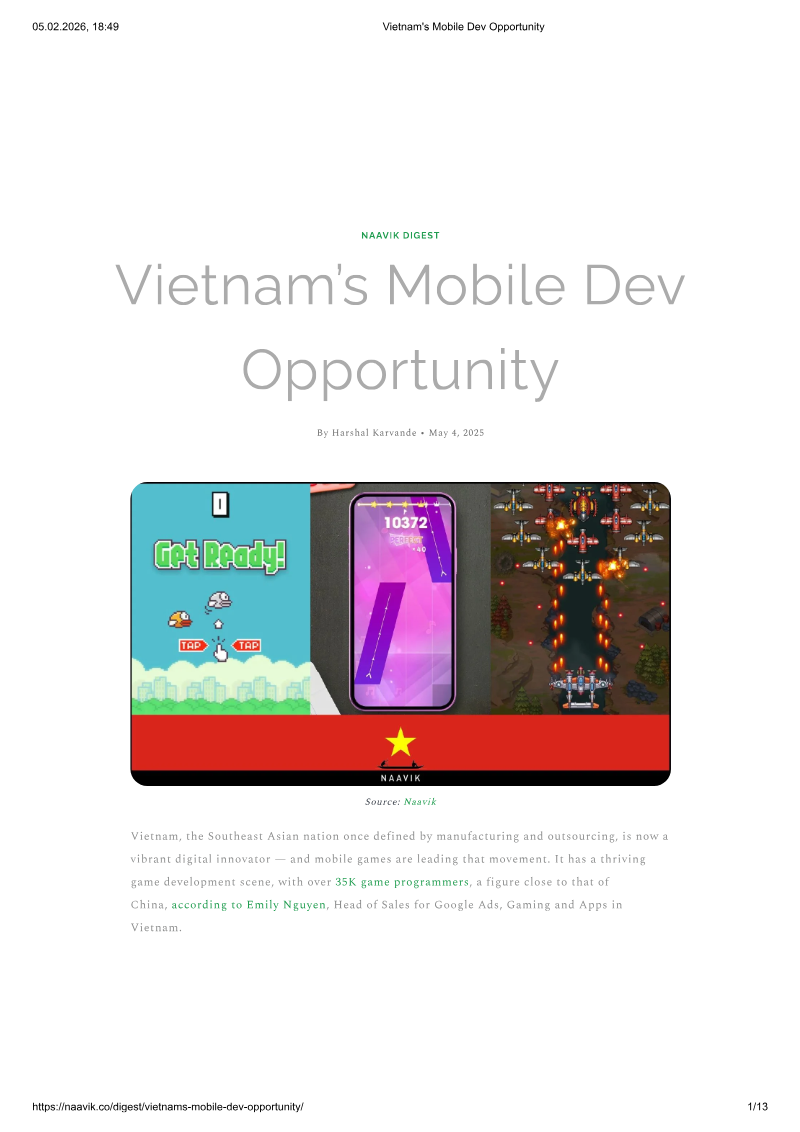
Analysts question the long-term impact of trends like the rise of Southeast Asian markets. They also question shifting preferences of younger players regarding game length and graphical fidelity.
Narrative Doubt. The current market landscape is marked by a skepticism toward prevailing industry narratives.
1 / 4
Ask AI about this report