1 free read left. Create a free account for unlimited reading + AI research.
Create free accountWhitepaper DiGRA
1 free read left. Create a free account for unlimited reading + AI research.
Create free accountWhitepaperDiGRA
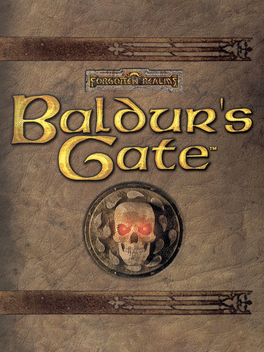
Save-scumming means reloading a previous game checkpoint to undo an unwanted decision outcome. Players debate whether it is an acceptable way to play RPGs such as Baldur's Gate 3 and Disco Elysium.
This extended abstract presents an exploratory qualitative study of save-scumming, the practice of reloading a previous game checkpoint to undo an unwanted outcome of a player's decision. The authors argue that save-scumming is an under-researched media-psychological phenomenon, despite popular debate over whether it is an acceptable way to play role-playing games (RPGs) such as Baldur's Gate 3 and Disco Elysium. The work frames the behaviour through self-determination theory, asking why players engage in it and whether motivations shift with motivational type, game genre, or cultural context.
The study's central theoretical proposition is that save-scumming blends intrinsic and extrinsic motivation. Players may reload saves to pursue enjoyable narrative outcomes, such as a romantic storyline, which reflects intrinsic motivation, or to earn achievements, which reflects extrinsic motivation. The authors contend that this makes save-scumming a context-specific case of the broader relationship between motivation and gaming. They also note that existing academic work on save-scumming is inconclusive, with findings suggesting links to altered flow and immersion and a common perception within gaming communities of the practice as cheating.
The preliminary data come from online semi-structured interviews with 20 gamers across the UK and the US who play a range of genres. The interviews examined how save-scumming is used for progression, challenge, and managing gameplay consequences, and how it is perceived in specialist communities, particularly US speed-running. The authors explicitly present these results as preliminary and as groundwork for future quantitative research, so the study offers themes and research questions rather than generalisable findings.
DiGRA · 2026
DiGRA · 2026