1 free read left. Create a free account for unlimited reading + AI research.
Create free accountWhitepaper DiGRA
1 free read left. Create a free account for unlimited reading + AI research.
Create free accountWhitepaperDiGRA
Ludo-narrative dissonance, the clash between a game's story and its mechanics, has mainly been studied from the designer's side. The player's experience has largely gone unexamined.
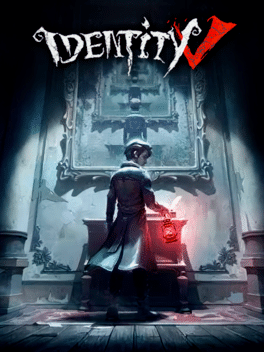
This paper examines how players cope with ludo-narrative dissonance, the contradiction between a game's storytelling and its mechanics, using the mobile game Identity V (NetEase, 2018) as its case. It argues that existing scholarship on ludo-narrative dissonance has concentrated on how designers should avoid or exploit the problem, leaving the player's perspective largely unexamined. To address this gap, the study combines character attachment, drawn from Bopp et al.'s framework of six attachment forms, with procedural rhetoric to explain why players act in ways that favor narrative logic over competitive objectives.
The focal case is the relationship between two characters, Emma Woods and Rio Baker, who are biologically related father and daughter but are placed on opposing teams, so that the competitive mechanics push Rio to hunt Emma while the background story frames them as loving family members. The methodology is a mixed-method design that gathers gameplay videos, viewer comments, and player interview responses from the NetEase God community platform, analyzed through discourse analysis of intertextuality among these sources. The authors describe the work as ongoing and the sample as limited, and the findings are presented as preliminary.
The central preliminary finding is that stronger character attachment heightens players' sensitivity to narrative-mechanical contradiction and encourages them to act in line with background storylines, even at the cost of competitive performance. Players attached to these characters through concern for a protégé or sympathetic identification, for instance, were more likely to enact the father-daughter relationship in play. The authors conclude that character attachment is a significant factor shaping how players experience and resolve dissonance, and they note that further analysis of the individual attachment types is still needed.
Each row is a game or company this document names, each column a document, oldest first. A mark means that document names it. Select a row to see those documents.

DiGRA · 2026

DiGRA · 2026



DiGRA · 2026



DiGRA · 2026



DiGRA · 2026



DiGRA · 2026



DiGRA · 2026



DiGRA · 2026

DiGRA · 2026



DiGRA · 2026



DiGRA · 2026

DiGRA · 2026
DiGRA · 2026