1 free read left. Create a free account for unlimited reading + AI research.
Create free accountWhitepaper DiGRA
1 free read left. Create a free account for unlimited reading + AI research.
Create free accountWhitepaperDiGRA
Distilling the key insights…
Woodford's DiGRA 2013 paper, "Regulating Virtual Worlds: Considering Participant-Driven Approaches," contends that virtual worlds are facing a growing number of disputes that will likely invite external regulation, and that the available governance options each fall short. Industry self-governance, top-down state regulation, and emergent community models such as EVE Online's Council of Stellar Management all carry significant weaknesses. The author argues that premature government intervention could constrain developers' design freedom before community norms have had time to mature, while acknowledging that existing legal frameworks might eventually be adapted to fit the sector.
The paper's central claim is that participant-driven self-regulation offers a viable intermediate model. Drawing on the offshore gambling industry, where forums and third-party raters such as Sportsbook Review enforced norms through reputational pressure after formal arbitration had failed, the author observes that community mediation has resolved disputes within a week, in contrast to the years often required through courts. Four conditions are identified as favoring successful emergent governance: participant demand for remedy, concentration of the participant base, ambiguity in rules around matters such as automation, and the capacity to deliver faster outcomes than alternatives. EVE Council's consultative-only authority and criticisms of block voting are noted as limitations of formal participant bodies.
The empirical core of the paper is EVE Online's 2010–2012 botting and real-money-trading controversy, in which players rather than the publisher investigated and exposed automated characters that distort the in-game economy. Through systematic census snapshots, Riverini estimated that roughly 18% of players in the drone regions (82 characters) were likely bots, identified via shared corporations, recent creation dates, and consistently uniform NPC kill counts. The community's enforcement of an anti-botting norm subsequently pressured CCP toward more active sanctions. The author concludes that Ostrom's commons theory and offshore gambling governance models apply to commercial virtual worlds, though the representativeness of vocal participants remains an acknowledged limitation.
Each row is a game or company this document names, each column a document, oldest first. A mark means that document names it. Select a row to see those documents.
DiGRA · 2016
DiGRA · 2016
DiGRA · 2016
DiGRA · 2016
DiGRA · 2016
DiGRA · 2016
DiGRA · 2016
DiGRA · 2016
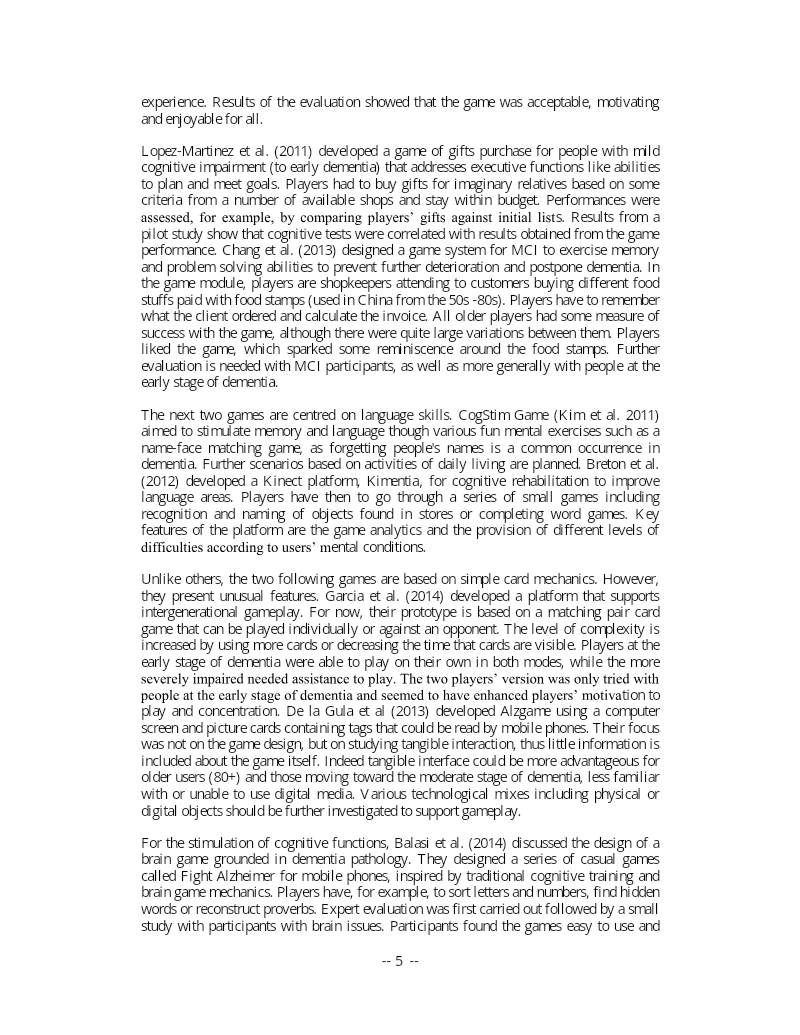
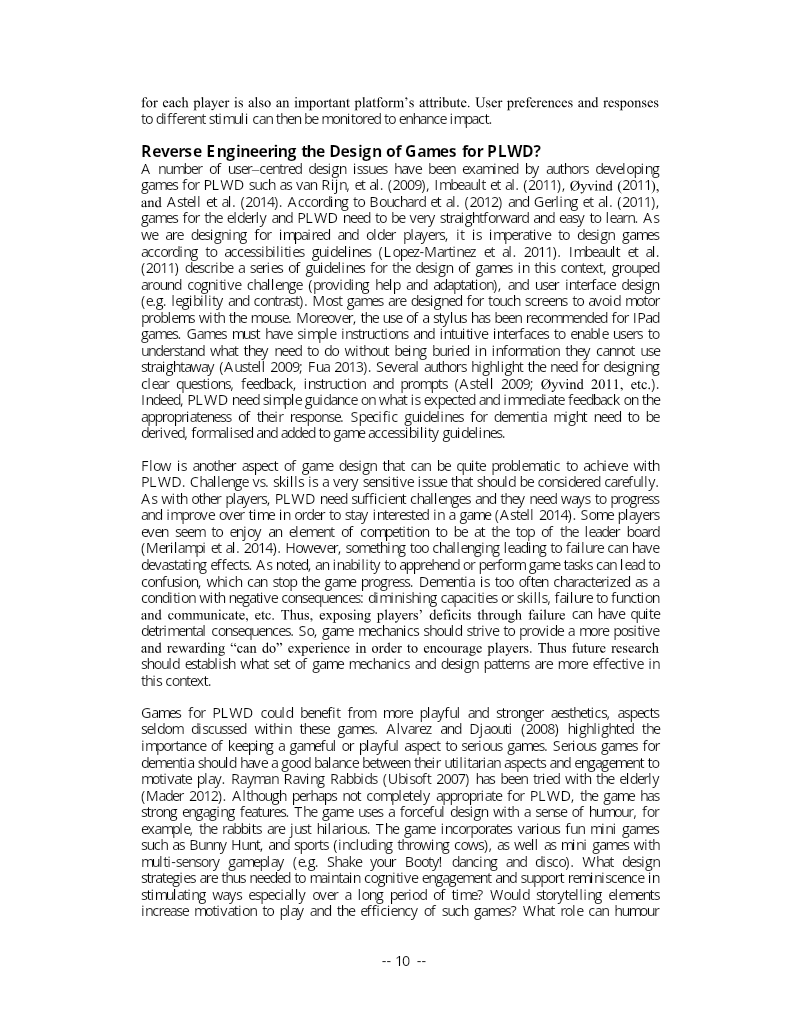
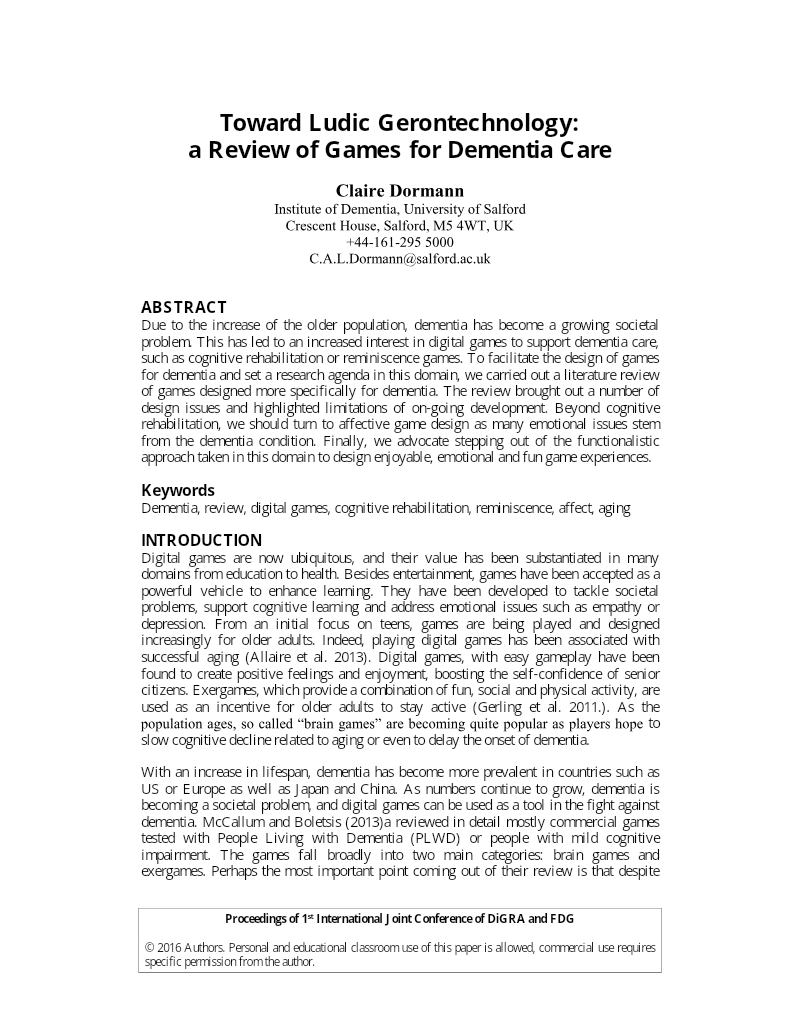
DiGRA · 2016
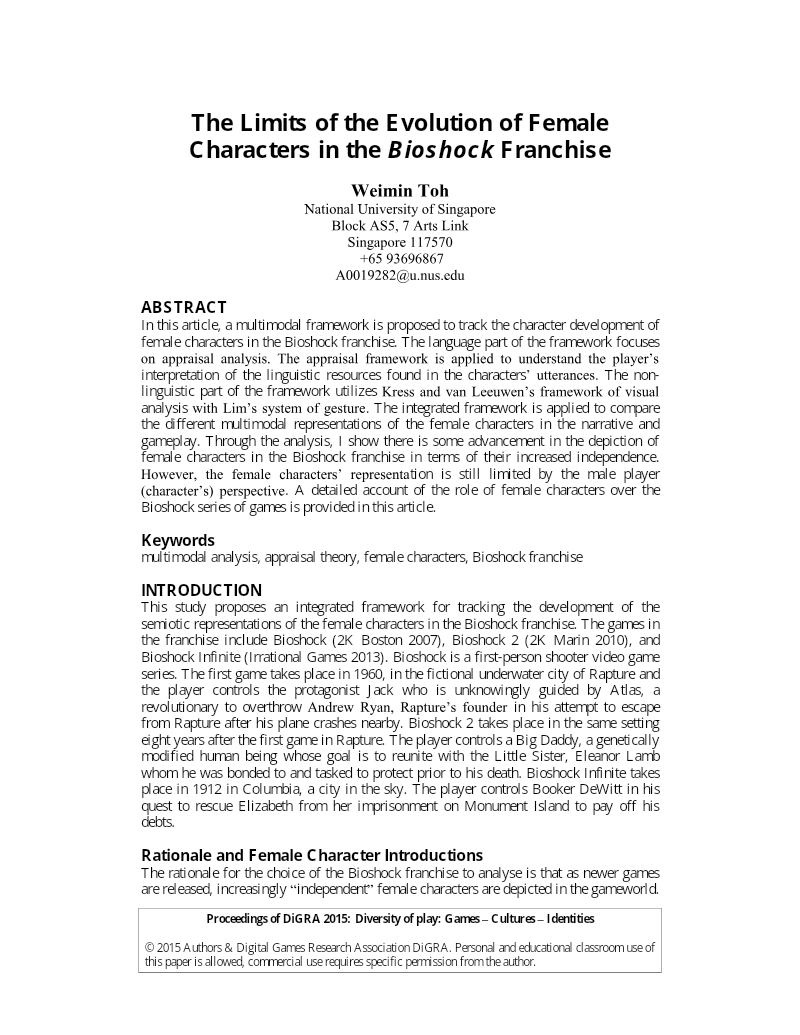
DiGRA · 2015
DiGRA · 2015
DiGRA · 2015
Extra Credits · 2026