1 free read left. Create a free account for unlimited reading + AI research.
Create free accountWhitepaper DiGRA
1 free read left. Create a free account for unlimited reading + AI research.
Create free accountWhitepaperDiGRA
The paper focuses on production decision-making at Ubisoft Montréal rather than on player reception or political-economic analysis.
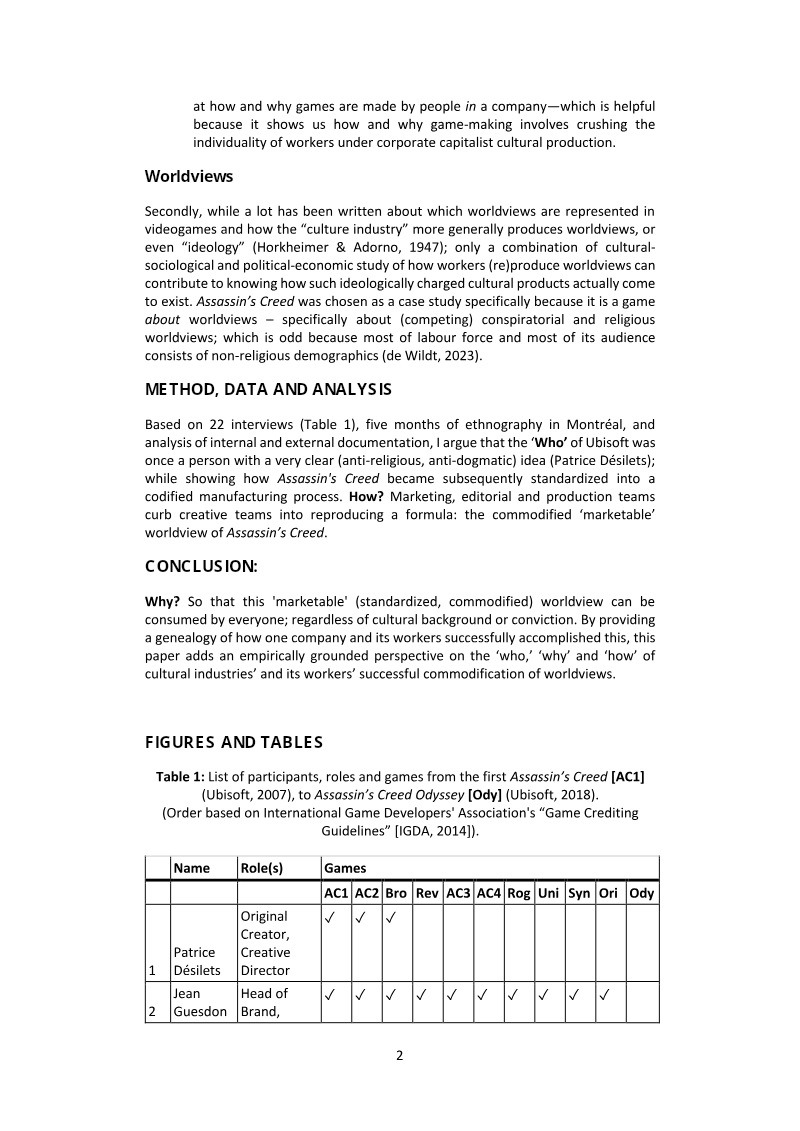
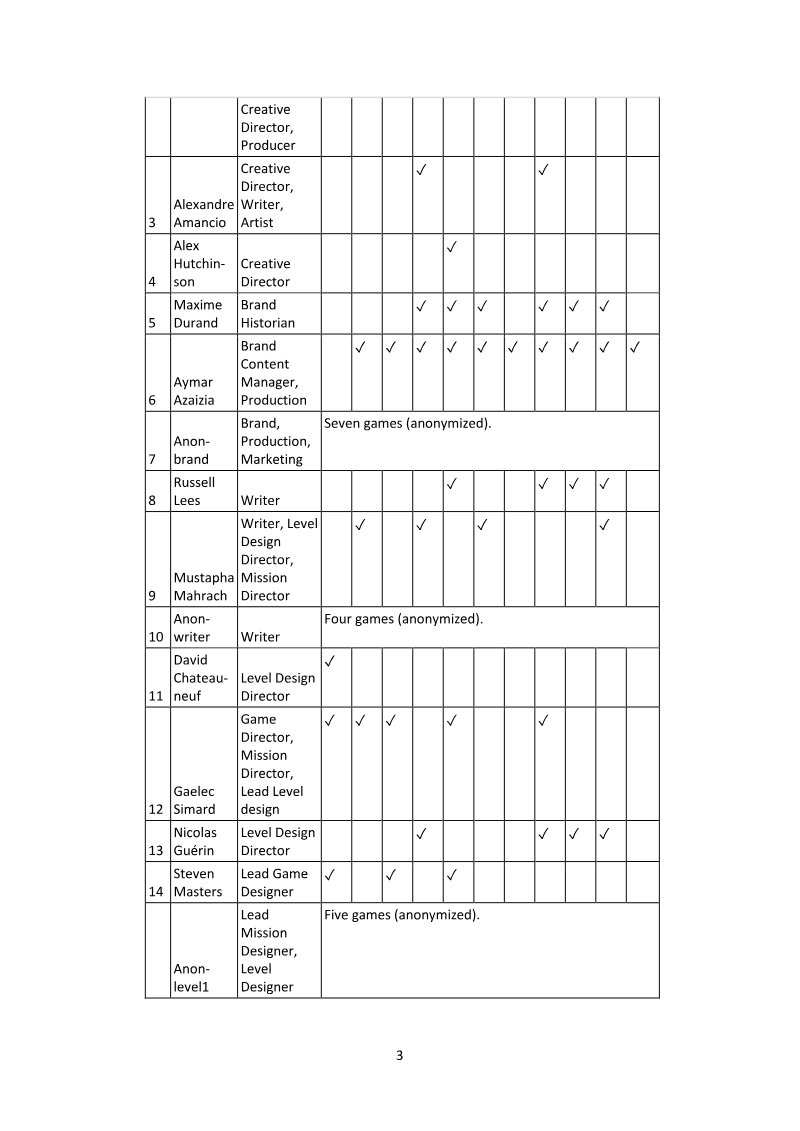
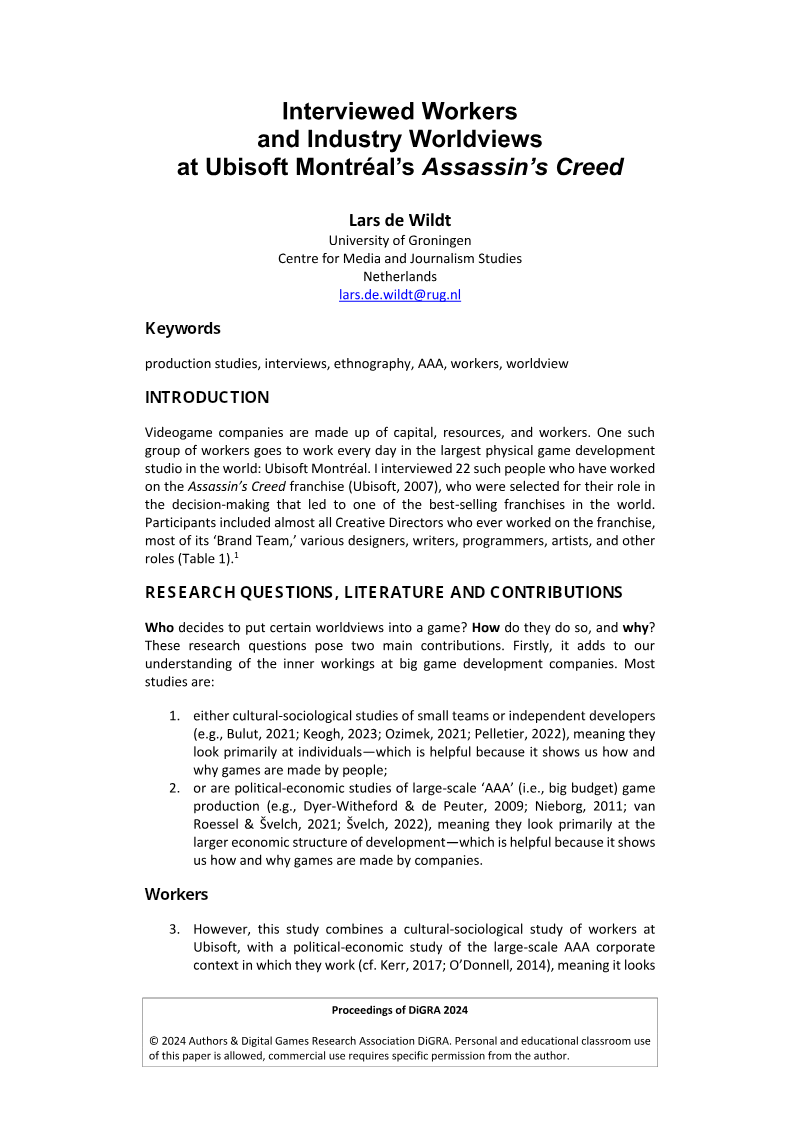
This study examines why a major commercial game studio chooses to embed religious themes in its best-selling products, and how those creative decisions are made. Drawing on 21 expert interviews with designers, writers, and creative directors working on the Assassin's Creed franchise at Ubisoft Montréal, the paper focuses on the production side of AAA game development rather than on player reception or political-economic analysis. Its central argument is that religion in the franchise is not the expression of any single creator's convictions but the result of a codified, depersonalized process shaped by a "Brand Bible" and a collaborative branding, marketing, and editorial structure.
The authors identify a specific strategy they call "marketable religion," which is designed to be attractive and uncontroversial across cultures and belief systems. According to the study, this involves three moves: religion is made nostalgic by placing it in historically bounded periods, made perennial by linking traditions to a shared mystical truth, and made present by translating it into the vocabulary of science and technology. Examples include the Turin Shroud reimagined as a nanotech healing device and the Apple of Eden as a neurotransmitting mind-control tool. The paper argues this structure allows the franchise to offer what the authors describe as belonging without believing, appealing to secular and pluralist audiences.
The study's scope is limited to one studio and one franchise, with interviews conducted in Montréal, so its findings speak to the decision-making logic of a single AAA context rather than the industry as a whole. Its strength lies in directly addressing the "who decides and why" question that much prior research on games and religion has left unexamined. The interview-based method offers insight into individual motivations and institutional processes, though the anonymity of many participants and the single-company focus limit generalizability.
Each row is a game or company this document names, each column a document, oldest first. A mark means that document names it. Select a row to see those documents.

DiGRA · 2026

DiGRA · 2026



DiGRA · 2026

The Game Business · 2026