1 free read left. Create a free account for unlimited reading + AI research.
Create free accountWhitepaper International Journal of Serious Games
1 free read left. Create a free account for unlimited reading + AI research.
Create free accountWhitepaperInternational Journal of Serious Games
The system aims to bridge the gap between clinical proprioception therapy and engaging serious games.
Goal:. The system is designed to make proprioception therapy more engaging through serious games.
The development of a low-cost, open-source exergaming system seeks to bridge the gap between clinical proprioception therapy and engaging serious games. By integrating a balance board with inertial sensors and a 3D downhill skiing simulation built in Unity3D, the system provides a platform designed to improve equilibrium and balance performance. This approach utilizes accessible hardware, such as Arduino, to create a scalable solution for both home-based training and potential clinical rehabilitation applications.
Experimental data involving 40 healthy participants validates the efficacy of this motion-sensing design. A strong correlation of 0.738 between real-world equilibrium skills and in-game performance confirms that the balance board serves as an accurate proxy for physical training. In contrast, keyboard-based controls failed to demonstrate any correlation with physical balance, underscoring the necessity of specialized hardware for effective proprioceptive feedback. Participants showed statistically significant performance gains across trials, indicating that the system successfully facilitates measurable improvements in user balance capacity.
Beyond technical performance, the system succeeds in delivering an immersive and motivating user experience. While feedback confirms that the gameplay is enjoyable, there remains room for refinement regarding the quality of audio and visual environments. By grounding the development in established research on player experience and serious game design, the project establishes a viable framework for future iterations. Ultimately, the system proves that accessible IoT-based hardware can effectively translate therapeutic exercise into a compelling digital format, offering a promising tool for physical training and rehabilitation.
International Journal of Serious Games · 2023
International Journal of Serious Games · 2022
International Journal of Serious Games · 2020
International Journal of Serious Games · 2020
International Journal of Serious Games · 2020
International Journal of Serious Games · 2020
International Journal of Serious Games · 2020
International Journal of Serious Games · 2020
International Journal of Serious Games · 2020



International Journal of Serious Games · 2020
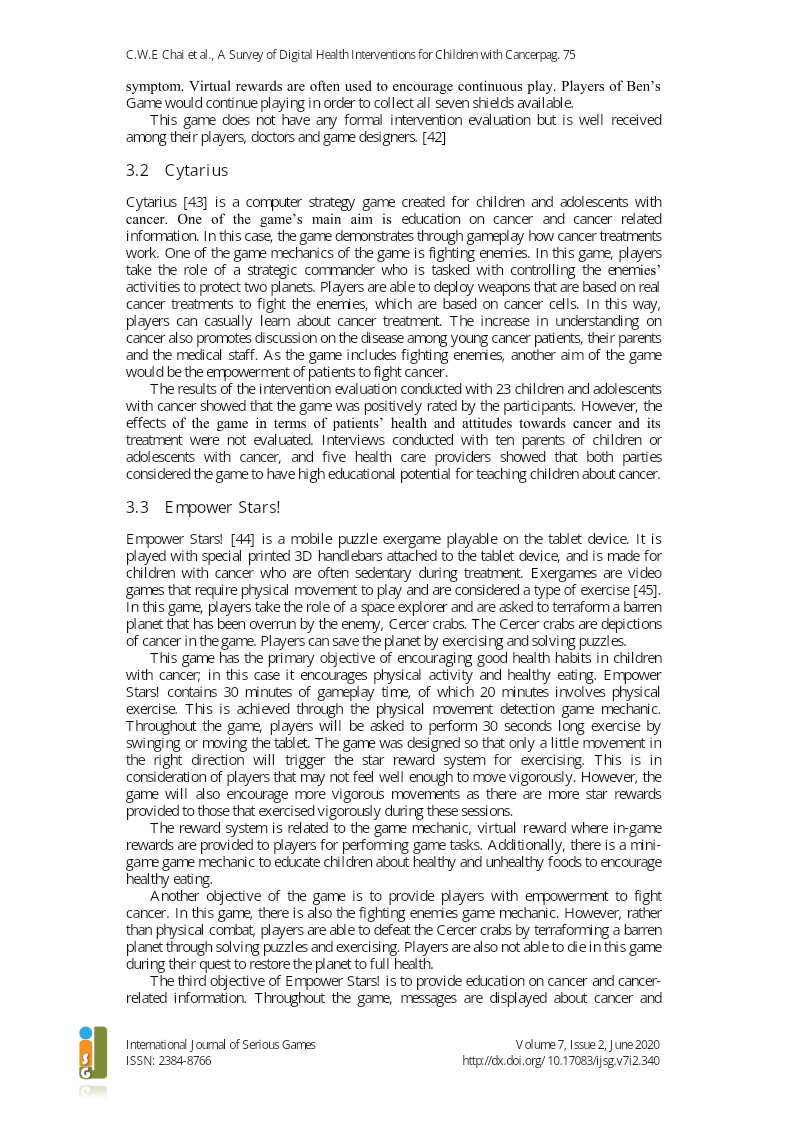
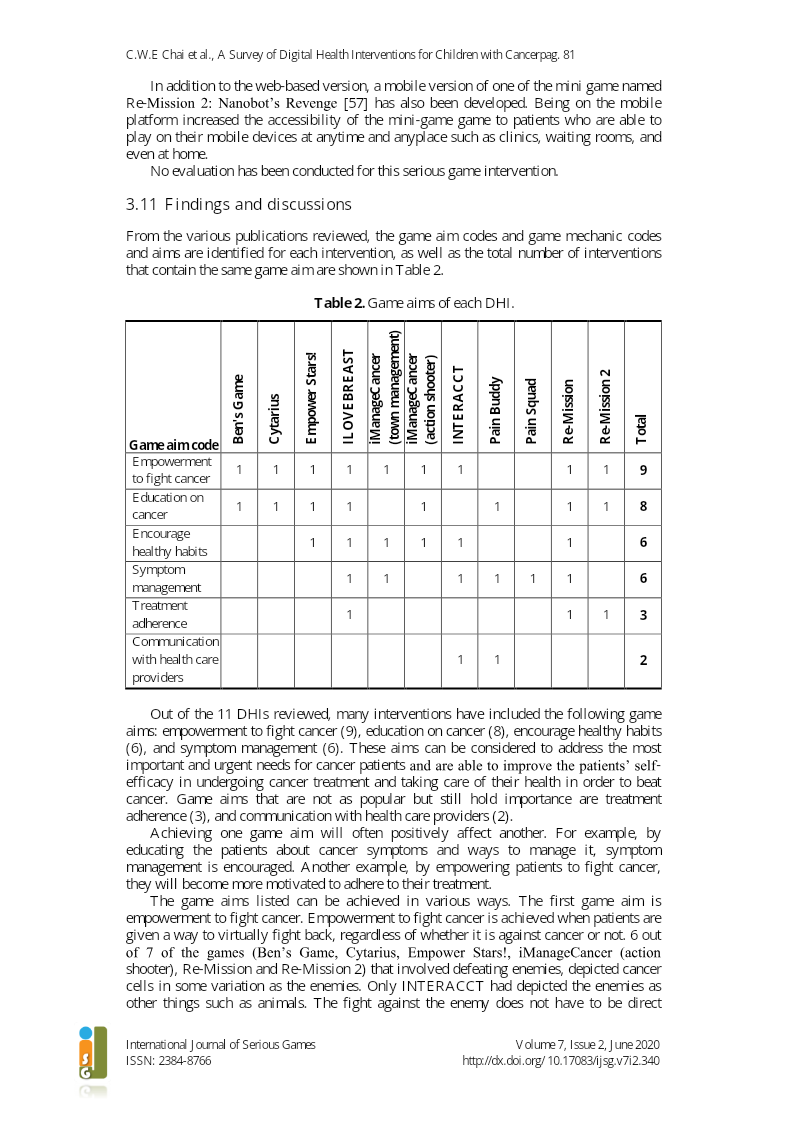

International Journal of Serious Games · 2020
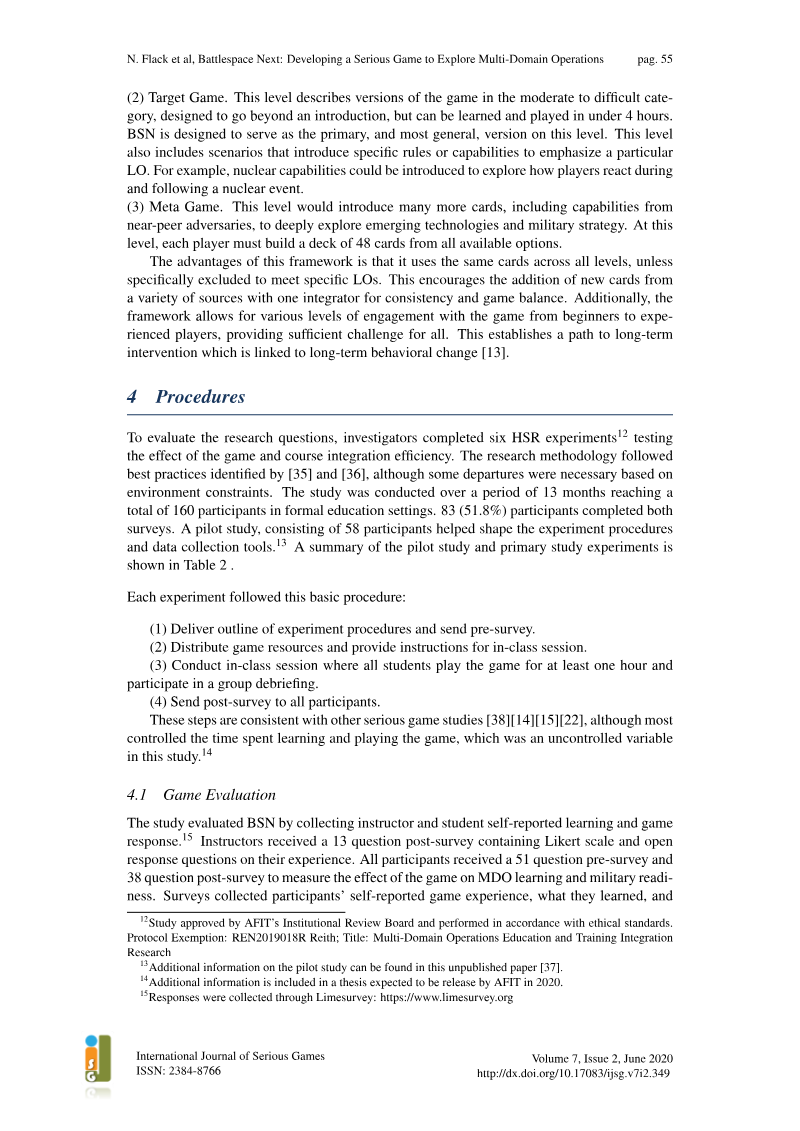
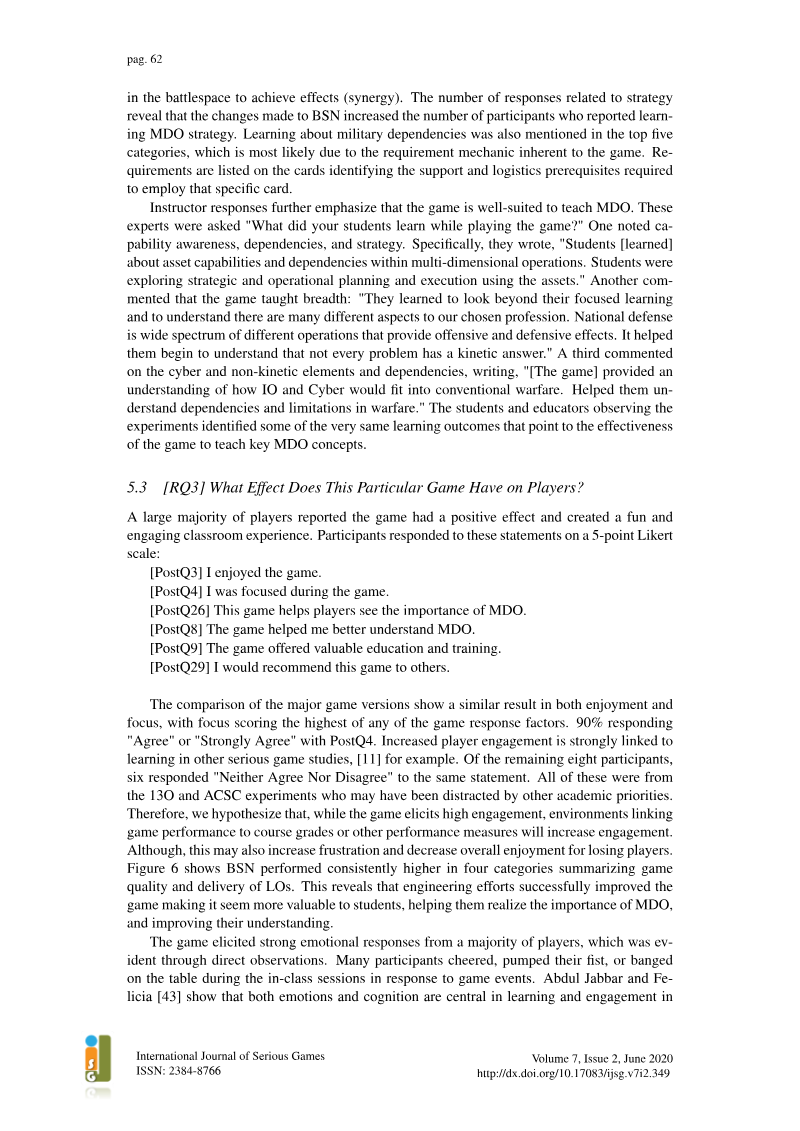
Air Force Institute of Technology · 2020
Naavik · 2026