1 free read left. Create a free account for unlimited reading + AI research.
Create free accountWhitepaper Ludic Language Pedagogy
1 free read left. Create a free account for unlimited reading + AI research.
Create free accountWhitepaperLudic Language Pedagogy
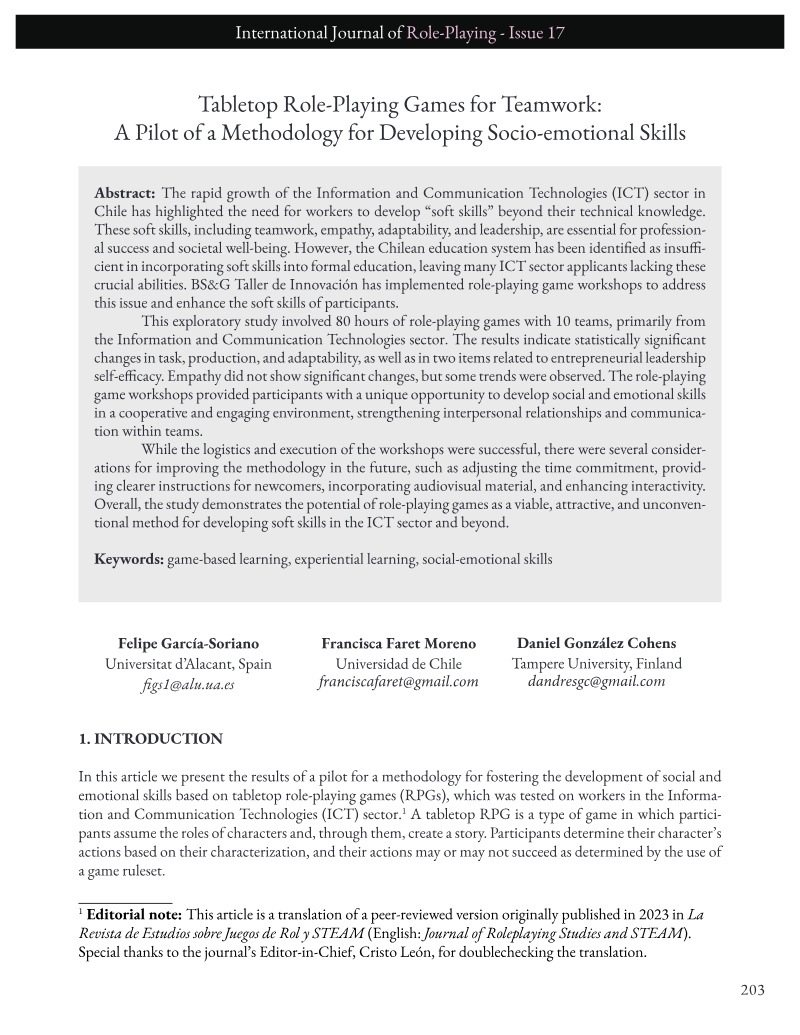
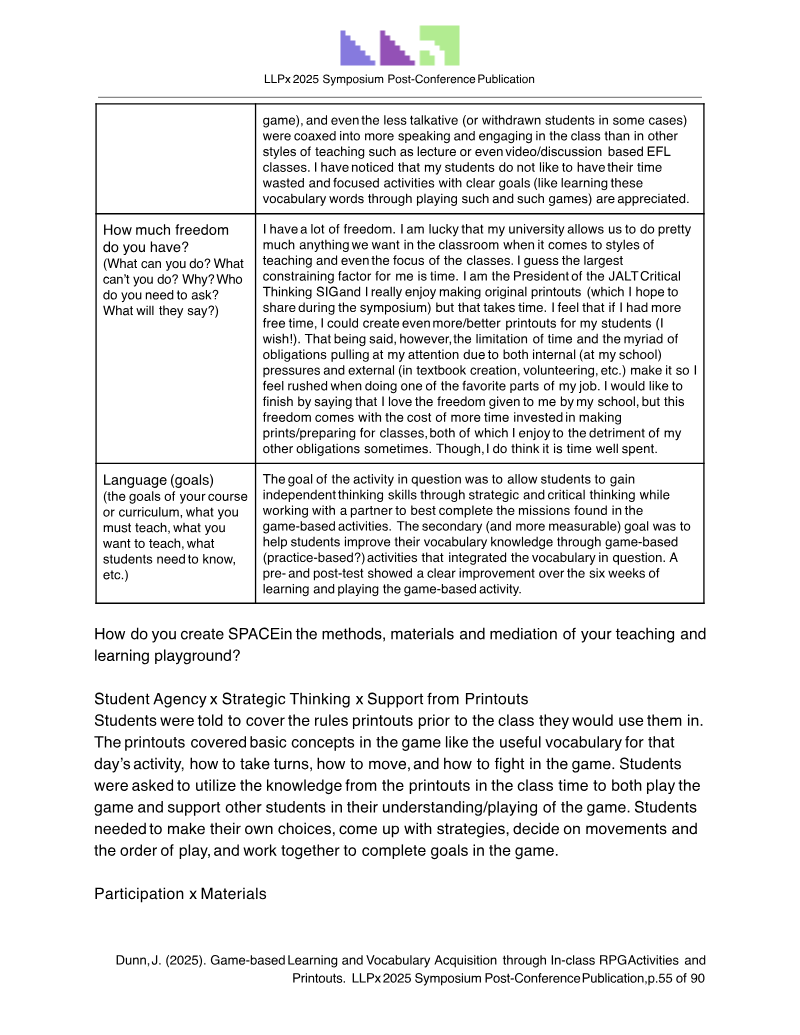
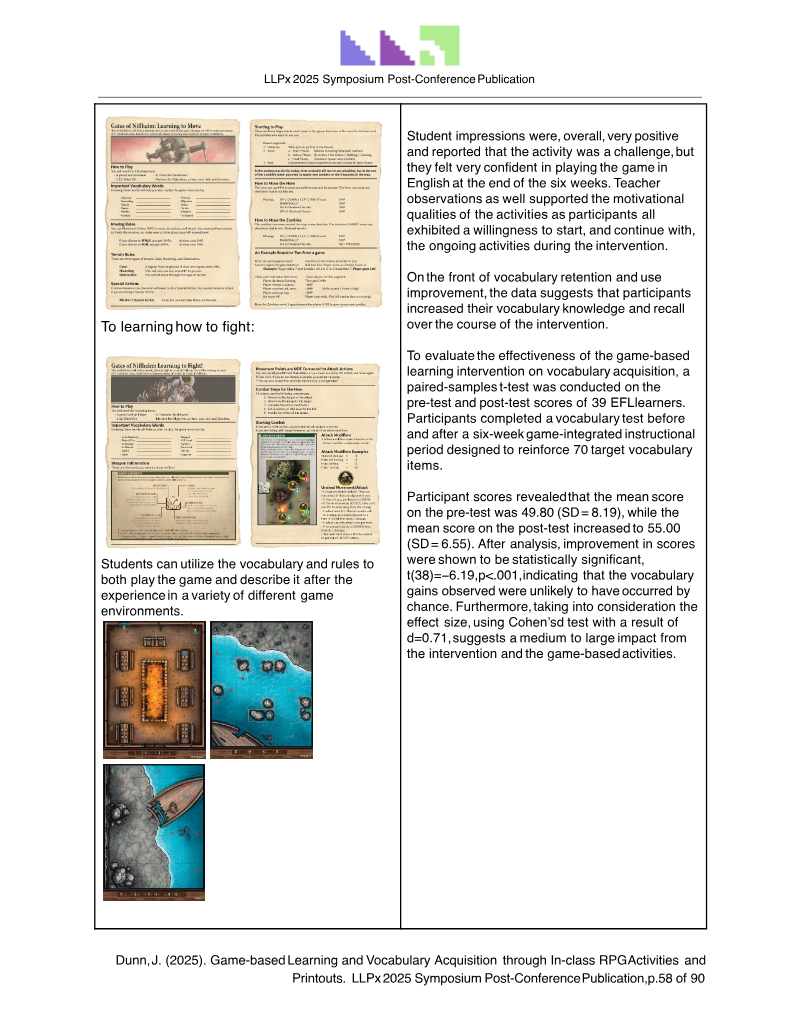
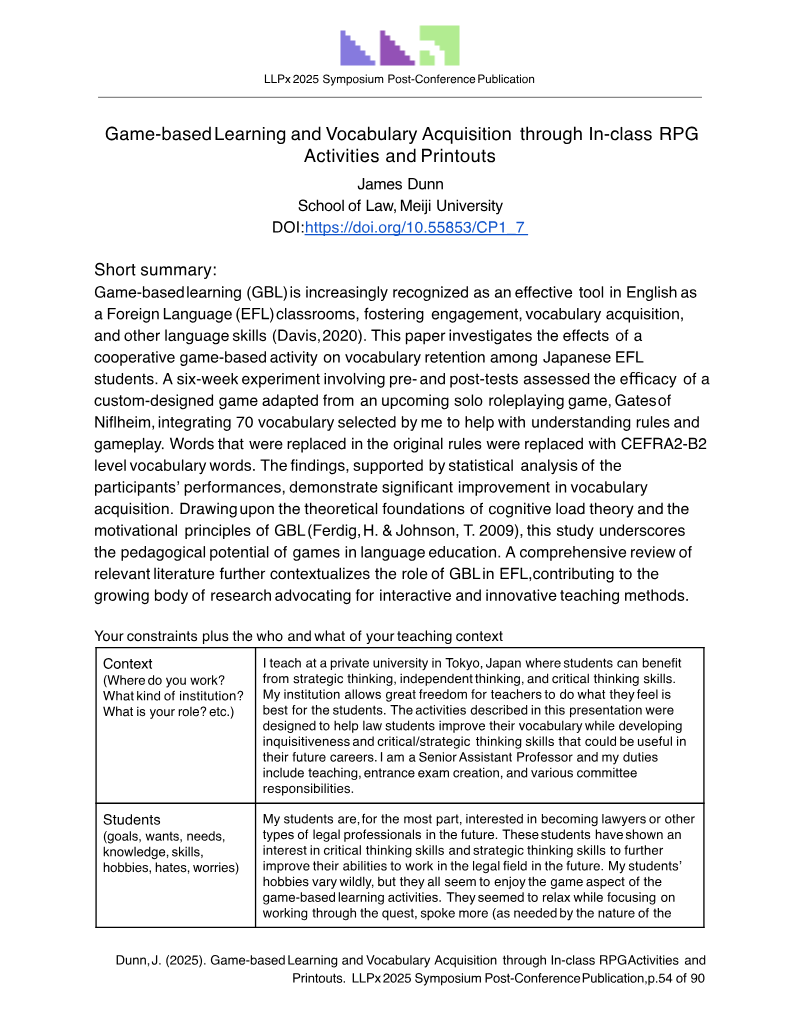
TTRPGs provide a different method for English as a Foreign Language instruction.
Viable alternative. TTRPGs represent a viable alternative to traditional, teacher-centered EFL instruction.
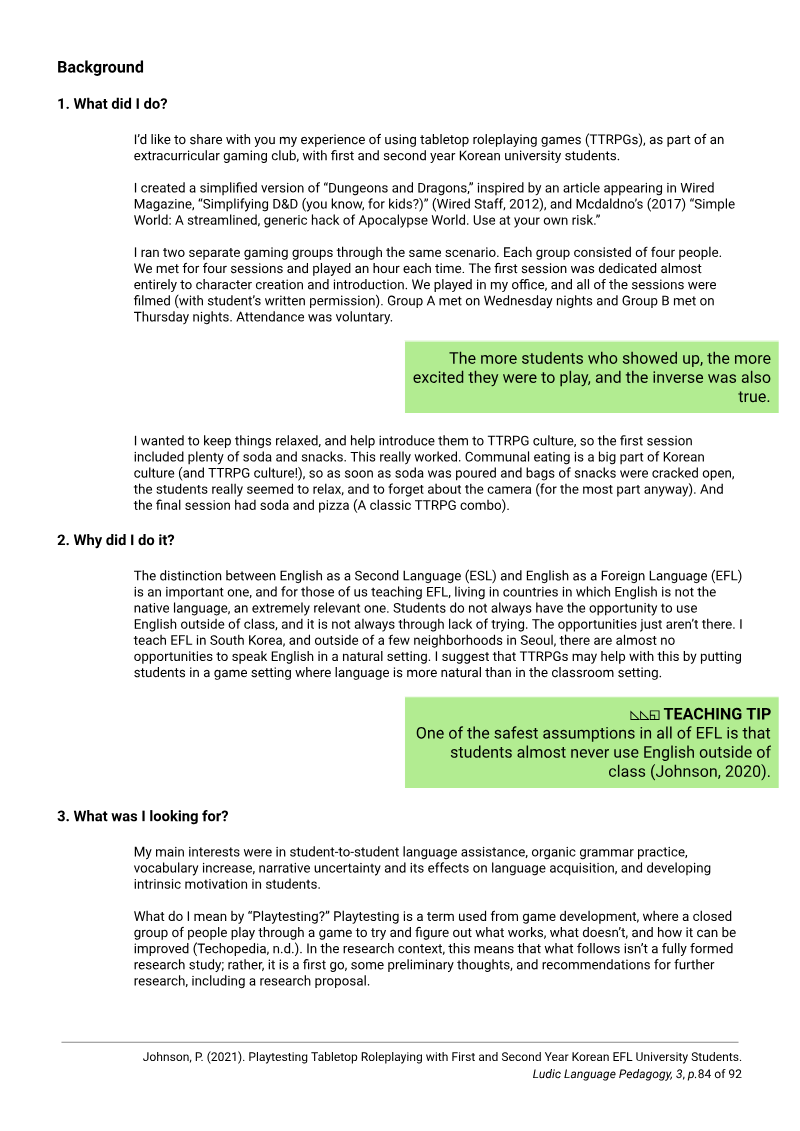
This study explores the pedagogical potential of tabletop roleplaying games (TTRPGs) as a tool for English as a Foreign Language (EFL) instruction among first and second-year university students in South Korea. The primary objective was to determine if TTRPGs could foster organic grammar practice, increase vocabulary, facilitate student-to-student language assistance, introduce narrative uncertainty to language acquisition, and develop intrinsic motivation. The research was conducted through an extracurricular gaming club, involving two groups of four students who participated in four one-hour sessions centered on a simplified version of Dungeons and Dragons.
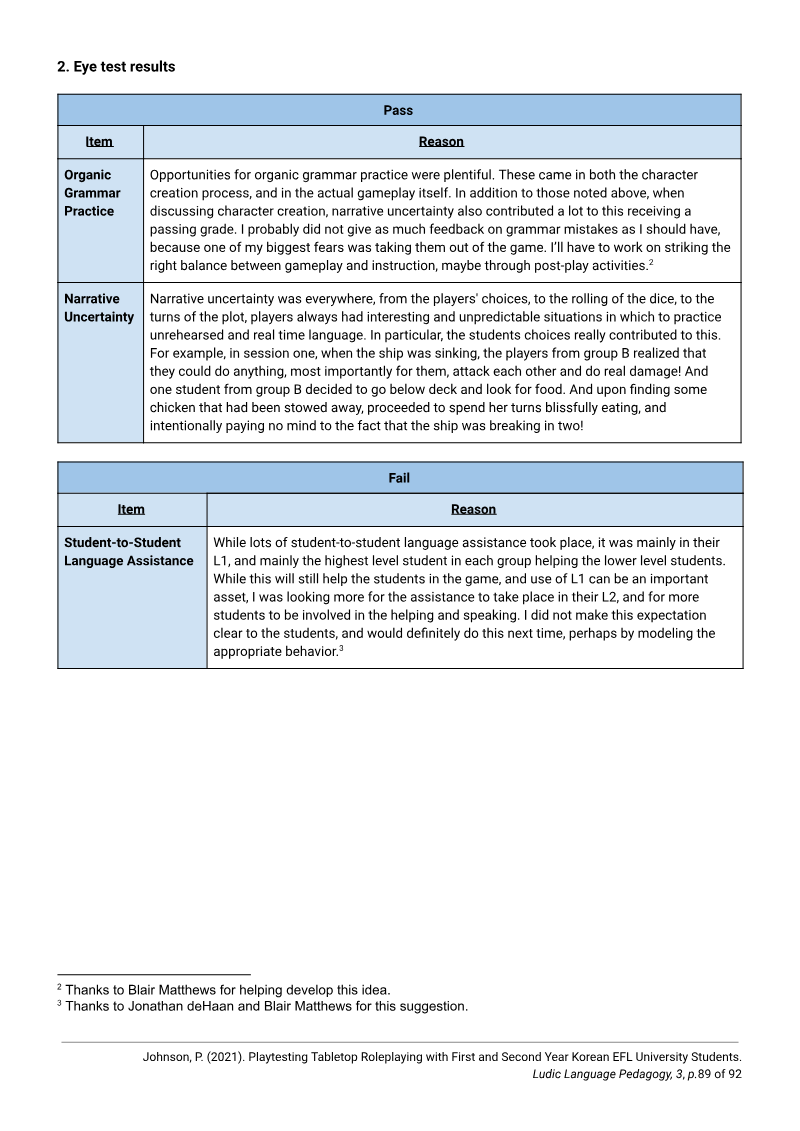
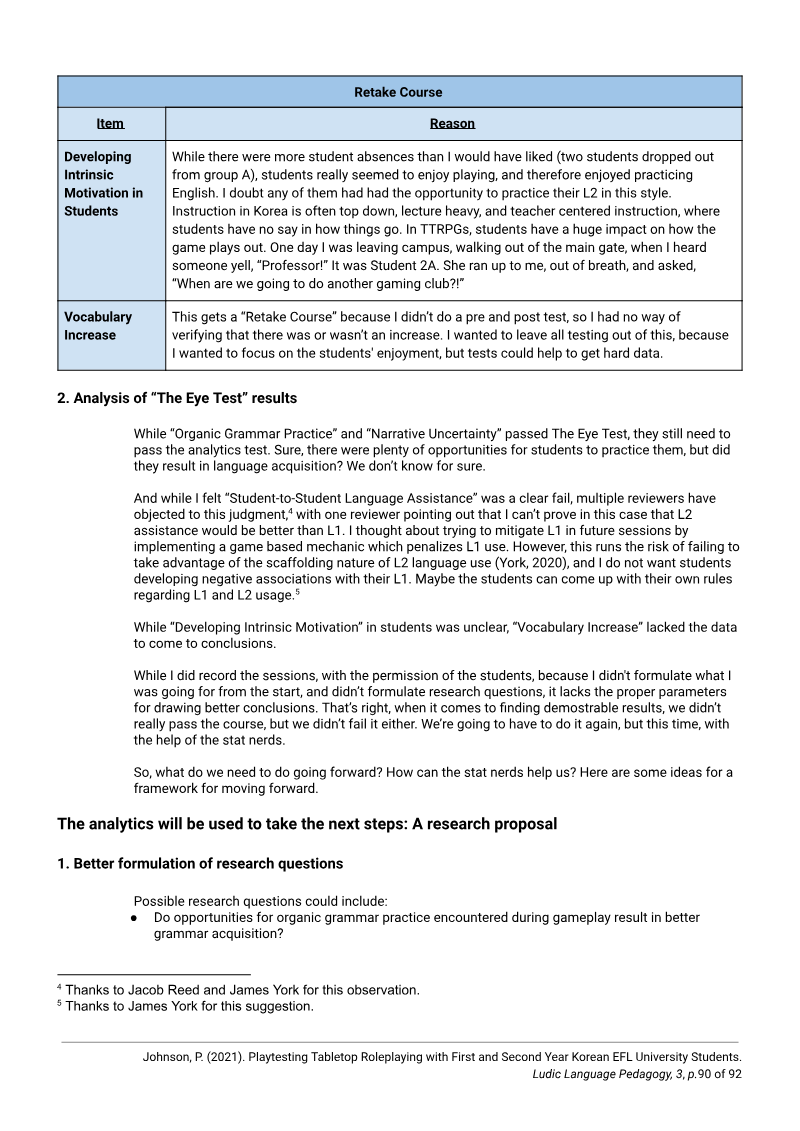
The findings indicate that TTRPGs successfully provided a platform for organic grammar practice and narrative uncertainty, as the unpredictable nature of gameplay forced students to use language in real-time, unrehearsed scenarios. However, the study failed to demonstrate effective student-to-student language assistance in the target language, as participants primarily relied on their first language for peer support. Furthermore, the lack of pre- and post-testing prevented the collection of empirical data regarding vocabulary acquisition, and results regarding intrinsic motivation remained inconclusive.
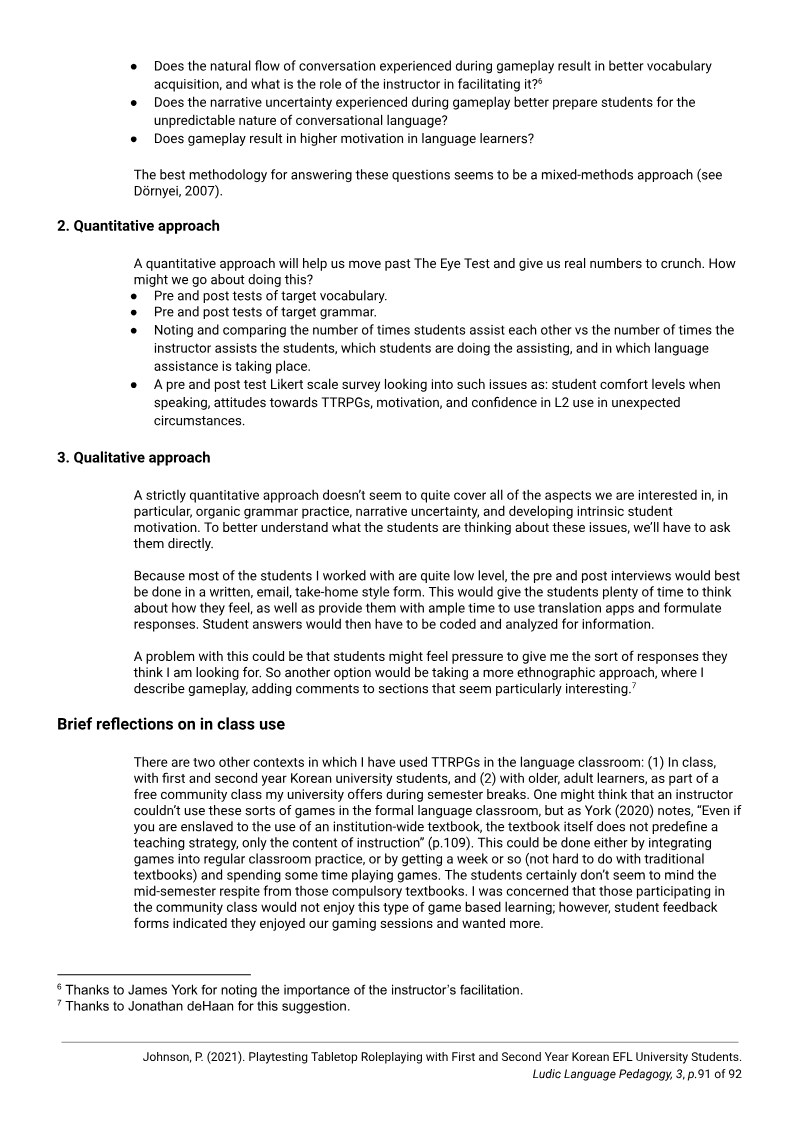
The author concludes that while the initial playtest did not yield definitive quantitative proof of language acquisition, the intervention served as a valuable preliminary exploration. The study emphasizes that curriculum development through gaming requires iterative testing and a more rigorous mixed-methods research framework. Future research proposals include implementing pre- and post-tests for grammar and vocabulary, utilizing Likert scale surveys to measure student confidence, and adopting ethnographic approaches to better understand student engagement. The study ultimately suggests that TTRPGs offer a viable, engaging alternative to traditional, teacher-centered instruction, provided that future iterations incorporate structured data collection to validate the pedagogical benefits.
Ludic Language Pedagogy · 2026
Ludic Language Pedagogy · 2026
Ludic Language Pedagogy · 2026
Ludic Language Pedagogy · 2026
Ludic Language Pedagogy · 2026
Ludic Language Pedagogy · 2026
Ludic Language Pedagogy · 2026
Ludic Language Pedagogy · 2026
Ludic Language Pedagogy · 2026
Ludic Language Pedagogy · 2026
Ludic Language Pedagogy · 2026



Ludic Language Pedagogy · 2026
Japanese Association for Role-Playing Game Studies (JARPS) · 2021
European Conference on Games Based Learning (ECGBL) · 2026



European Conference on Games Based Learning (ECGBL) · 2026