1 free read left. Create a free account for unlimited reading + AI research.
Create free accountWhitepaper DiGRA
1 free read left. Create a free account for unlimited reading + AI research.
Create free accountWhitepaperDiGRA
The paper argues that cardboard, paper, and packaging textures are the game's key reinvention. It treats this aesthetic choice as a conservative production strategy.
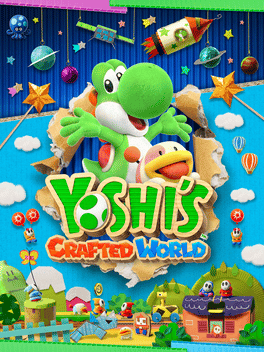
This paper by Josef Tichý, presented at DiGRA 2025, argues that Nintendo's Yoshi's Crafted World (2019) reinvents the platform genre through physical, material-based textures such as cardboard, paper, and packaging, and that this aesthetic choice is best understood as a conservative production strategy. The author uses close reading of two zones, "Many Fish in the Sea" and "Origami Gardens," to examine how the game blends traditional Japanese artistic forms, drawn from mingei folk crafts, shinden-zukuri architecture, and Heian-period imagery, with modern consumer materials. The central claim is that this juxtaposition creates an illusory landscape that reads either as a dreamlike space or as a modern wasteland, reflecting both Japan's ancient cultural codes and its contemporary consumption habits.
The analysis situates the game within a broader critique of Nintendo's design philosophy, which has been described as nostalgia-driven, cautious, and resistant to innovation since the 1983–1984 video game crash. The author positions Yoshi's Crafted World as an example of recycling familiar gameplay paradigms while updating their surface aesthetics. The paper also notes that Japan was the world's second-largest producer of plastic waste per capita as of 2015, which the author links to the game's packaging-based visual language.
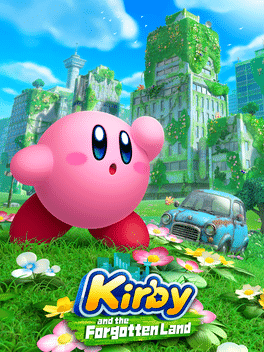
The paper concludes that Nintendo's handling of the game, despite its playful tone, reveals a pattern of prioritizing financial interests and avoiding critical engagement with consumer culture's environmental costs. The author contrasts this with Kirby and the Forgotten Land (2022), which addresses the tension between humanity and nature more explicitly. The work draws on literature in game studies, Japanese cultural studies, and journalistic sources, and its argument rests primarily on interpretive close reading rather than quantitative data or surveys.
Each row is a game or company this document names, each column a document, oldest first. A mark means that document names it. Select a row to see those documents.

DiGRA · 2026

DiGRA · 2026



DiGRA · 2026
DiGRA · 2025