1 free read left. Create a free account for unlimited reading + AI research.
Create free accountArticle DiGRA
1 free read left. Create a free account for unlimited reading + AI research.
Create free accountArticleDiGRA
The paper frames reckless driving in racing simulations and open-world games as enjoyable without the moral backlash that followed firearm violence or sexual content.
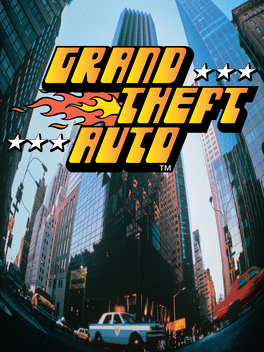
This paper, by Ville Malinen of the University of Jyväskylä, examines reckless driving as a form of player agency in racing simulations and open-world games, framing these titles as virtual spaces where vehicular destruction can be enjoyed without the moral backlash that has followed games featuring firearm violence or sexual content. Drawing on theme analysis of three to five selected games across different genres, the study situates reckless driving within broader discussions of player liberties, simulated realism, transgressive play, and the historical development of driving games from Exidy's 1976 Death Race through the late-1990s Grand Theft Auto and Carmageddon to modern physics-driven sandboxes such as BeamNG.drive.
The author argues that vehicular carnage has attracted comparatively little moral panic and few cause-and-effect claims about real-world behavior, despite evidence that such games can be linked to risky driving in some studies. The paper also considers how games have re-enacted traumatic events, including the 1994 San Marino Grand Prix crash that killed Ayrton Senna, and how such works blend trauma with cultural memory. Connections are drawn to David Cronenberg's film adaptation of J. G. Ballard's Crash, which explored similar themes of technology, alienation, and violent simulation.
The paper positions sim racing as an esports phenomenon that channels destructive driving impulses into controlled virtual environments, suggesting that these games balance realistic physics against hyperreal spectacle. Its scope is primarily conceptual and historical, with the empirical component limited to a planned comparative analysis, and it is presented as a proceedings concept aimed at opening discussion rather than delivering conclusive findings.
Each row is a game or company this document names, each column a document, oldest first. A mark means that document names it. Select a row to see those documents.
European Conference on Games Based Learning (ECGBL) · 2026
DiGRA · 2026
DiGRA · 2026
DiGRA · 2026