Loading the document
1 free read left. Create a free account for unlimited reading + AI research.
Create free account
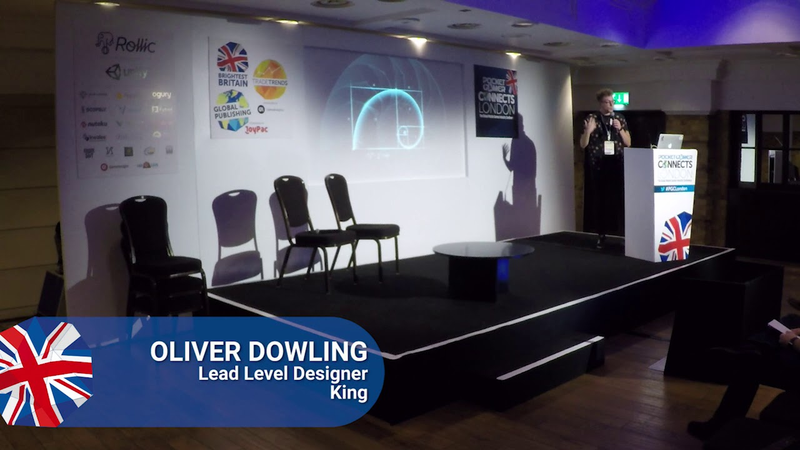
PGC 2020 Sessions @ PGC LONDON - Olivier Dowling
Key insights
7 takeaways- 01Level design should prioritize board geometry that introduces meaningful constraints and combines strategic blockers with explosive elements to ensure variety across thousands of levels.
- 02Designers must balance positive, helpful elements with negative, challenging ones to maintain player engagement while minimizing frustration.
- 03High-volume production requires integrating continuous user research, playtesting, and internal peer review to refine spawning frequencies and color palettes.
- 04Development workflows should favor shorter, more frequent play sessions over long, drawn-out experiences to reduce the negative impact of high time-investment failures.
- 05Player agency is maximized by providing more choices and fewer forced shuffles, fostering a greater sense of accomplishment.
- 06Mechanics that fail to resonate with the audience should be phased out rather than forced, as functionality and clarity take precedence over originality.
- 07Difficulty curves and onboarding must be managed through gradual introduction of mechanics, ensuring that objectives remain transparent to the player at all times.
Ask AI about this video
Transcript
[Music] hi my name is Oliver darling and I'm the lead level designer on farm hue saga King the makers of candy crush I've worked on a few casual games during my time at King and I thought I would share some of the learnings that I learned today so my timings wrong okay there you go so there are so many companies out there that are attempting to release so many games so many games to the market with thousands of levels there since I've gained quite a bit of experience tweaking bouncing and creating Thrones and levels I thought I would share with you some of my some of my lessons on making levels for the Cabell for mobile
casual games but this is just my opinion it doesn't represent King or their best practices these are just some of the my personal learnings that I've experienced while working there whether it be match 3 games bubble shooters linkers I believe that most of these rules or lessons or e can be applied to these games so to make a good level I found that there are two key main areas to focus on one is the specific tools or the board elements that I can use to make a level and secondly is the the process in which you or how you can make levels and both most of the lessons today are gonna gonna go into one of those two areas so my process in the way I make levels would be either one is to look at start with the level layer or the board shape and see what kind of how that provides an interesting constraint or secondly is to look at two board items that synergize well together and
work and build a level around that so lesson number one would be when designing levels for your casual games would be to think about the board shape the way that the the board affects the way that players player and and also then using these synergizing elements that provide an interesting foundation and start from there lesson number two is to think about these board items but the difference between strategic more complex blockers or board elements versus explosive collectible and you want to try and get a mixture of these board elements to add variety when creating episodes or a collection of levels furthermore on these actual game elements you want to try and use positive board elements elements that help the player try and avoid the negative elements that prevent progression and try and like avoid frustration and it's okay if you if you release some sort of board element to the players and they they aren't there aren't fun you can phase them out that's
cool lesson number three is understanding your users and what they want so using player meets session forums before you set off in one direction you should you should try and like ask ask the your audience first and then get that into your workflow early and you're gonna get the most success out of that also when creating levels it's really important to think about bouncing play testing feedback iteration these are all normal things but they really go a long way for the success of creating thousands of levels and not only that is getting feedback from not external parties but also your team as well they should be really tuned into giving and receiving feedback lesson number four is is lots of choices so we want to look at spawning frequencies the amount of colors you can use custom spawn errs these are all leavers and and I get game elements you can use to sort of provide a lot of choice for for your levels and also when when creating
levels you you wanna you want levels that shuffle less you want to give more agency you want to provide more choices so that players can make as many moves that they can and then let players do more that do more things that are cool so they feel smart you want them to feel still smart lesson number five is gameplay we want to look at how does the level how does level flow what's the progression like are there are there multiple phases what about the player journey we what about the the feelings and the emotions that the players are experiencing well while playing these levels and the objectives and then there's the the level length so there's a difference between long levels and short levels I originally learned longer levels created a higher need for for players wanting to pass due to the the time for investment and that's that's frustrating we we want to push players through multiple levels that are shorter and more engaging experiences the next lesson number six would be
difficulty and clarity so when we're making levels they they want the difficulty to be appropriate for where they are in the game and thinking about tutorials and onboarding and is really important to to phase in different mechanics and features within to your game and saga clarity so clear goals make it easy for for players to understand what to do and how to do it and if you have a discovery mechanic within your level that that's fine but make sure once it's fully clear you that the player knows exactly how to complete the level lesson number seven is aesthetics so the level should should look nice it should be different you want to use like preset colors patterns on the board think about symmetry like the level can be symmetrical or asymmetrical you want to provide all these things tie in to providing a much nicer player experience in it which is engaging and
then there's the events so you you want to tie all together with with with events for the most success for example Valentine's Day you want to create a board shape that has a love heart you want to use red candies and they all just concise it ties in really nicely and it's connected to the other other events and external features lesson number eight is uniqueness so it's nice but it's not essential don't lose your mind about being original there's thousands of levels and the the best level is a usable level making a level that works is enough we have to work to so many deadlines and sometimes you don't have to create the the you don't have time to create them also second thing candy crush has over 5,000 levels and they all can't be completely unique but that's okay so yeah these are some of my lessons if you want to catch up after yeah that would be great thanks
[Applause] you [Music]
Summary
Effective level design for mobile casual games relies on a structured approach to board geometry, element synergy, and iterative player feedback. Designers should prioritize board shapes that introduce meaningful constraints and combine board elements—such as strategic blockers and explosive collectibles—to ensure variety across thousands of levels. Balancing positive elements that assist the player with negative elements that challenge them is essential to maintaining engagement while minimizing user frustration. If specific mechanics fail to resonate with the audience, they should be phased out rather than forced.
The development process must be deeply rooted in user research and continuous playtesting. By integrating player feedback early in the workflow and fostering a culture of internal peer review, designers can refine spawning frequencies and color palettes to maximize player agency. Providing players with more choices and fewer forced shuffles empowers them, creating a sense of accomplishment. Furthermore, the overall level flow should favor shorter, more frequent experiences over long, drawn-out sessions, as shorter levels reduce the frustration associated with high time-investment failures.
Clarity and accessibility remain paramount, particularly regarding difficulty curves and onboarding. Tutorials should introduce new mechanics gradually, ensuring that objectives are always transparent to the player. While aesthetic choices like symmetry and thematic event-based designs enhance the player experience, originality is secondary to functionality. Given the high-volume production requirements of modern mobile titles, the primary goal is to create usable, engaging content that meets deadlines. Ultimately, success in casual gaming is defined by consistent, high-quality level design that respects the player’s journey and emotional state throughout the game.























Comments