1 free read left. Create a free account for unlimited reading + AI research.
Create free account
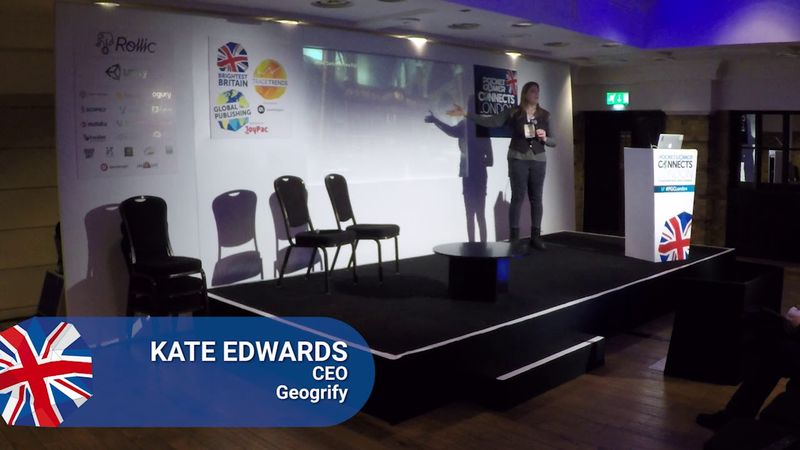
PGC 2020 Sessions @ PGC LONDON - Kate Edwards
Key insights
6 takeaways- 01Culturalization is a strategic necessity for global expansion, as developers must align creative content with the specific legal and value-based requirements of international markets to avoid bans or government sanctions.
- 02China currently stands as the world’s largest gaming market, necessitating that developers navigate its complex regulatory environment and specific cultural expectations to ensure product viability.
- 03The inclusion of religious figures or digital recreations of sacred sites requires proactive consultation, such as adhering to the Church of England’s specific guidelines, to prevent community backlash.
- 04Developers face significant risks when depicting sensitive geopolitical boundaries, historical events, or territorial disputes, particularly involving nations like China, India, Japan, and Korea.
- 05To mitigate risks, developers should analyze game worlds through thematic layers—historical, religious, and social—to ensure content is neither over-built nor culturally insensitive.
- 06Modern success in the interconnected gaming industry requires balancing artistic freedom with the reality that creative choices are interpreted differently across diverse global cultures.
Ask AI about this video
Transcript
[Music] okay here we go all right quickly I've never done this before well actually one time a long time ago hey this is Skyrim world's like this when we build game worlds like this there's a lot of that goes into these worlds obviously and I don't mean just from a technical standpoint I mean from the world building standpoint there's a lot of geography that goes into this a lot of things that are built in this world sometimes you could have ultra realistic worlds like Skyrim other times it takes place in the real world like of the Assassin's Creed series but then they overlay a fictional narrative on top of that world and that has its own complications where you using real history real places but then you're adding a certain kind of fiction to it which which complicates the
world-building process and then even casual games games like Angry Birds even though people just see these like yeah they're simple games well there's a whole narrative here there's a world that's been built there's those whole pigs versus birds things going on and of course Rovio has explored this in other transmedia beyond just this game but my point is that there's a lot of complex thinking of that goes into even things like that now the world is as we know the game industry is booming across the world and that's part of the thing we have to keep in mind that you know last year China surpassed the United States the largest gaming market in the world and a lot of the biggest growth that is happening across the the gaming industry is not happening in traditional markets it's happening in other places so my job and when I do culturalization is something like a gene splicing exercise where I'm trying to take the game creators vision and and figure out how is it compatible with the different cultures into which the game is going to be sold and it's not as easy as you may think because there's elements within the game that
may or may not be compatible and it's sort of like a gene splicing exercise for example with like Wolfenstein - you had the fact that in Germany they had to not they could not use the swastika and of course in other markets around the world where it's okay to show the swastika they used the version on the left but then of course the changing you know political cultural climate they just the Usk changed the rules just a couple years ago and it is a serious things because governments are watching this they remember when you screw up they remember when you have they remember when you violate their content rules like in China with all the map issues like showing Taiwan is part of China and the South China Sea and in India they required that the state of Kashmir must be shown as Indian Territory sometimes you could have things like this where this is a logically inconsistent addition to the world of cameo where they actually took wooden crosses and threw them into the world even though Christianity doesn't exist in this world at all and when the artist said well I had to make a grave
marker and I said well why do you use a wooden cross and they said what else would I use another concept that often we use in that comes from geography is this idea of topology so which topology is the connectedness of things it's not necessarily elevation and distance so basically when building worlds to enrich the culture of the game you can actually build relationships between objects in the game and imply relationships without actually building those relationships the other thing I often educate developers on is the fact that you can view your game in a series of layers the matic layers to help you decide how much of a world do we need to build in order to serve the narrative and experience goals of our game sometimes developers way over build their game and and other times they under build for example a historical layer here's an issue from Age of Empires where in the original scenario this is from history Japan invaded the Cho's on Empire and took it over whereas the Korean government said that never happened so we had to make a patch that shows Korea invading Japan
instead that historical layer is a really sensitive thing or religious artifacts like this in resistance fall oh man when they recreated the manchester cathedral here and the Church of England was not amused because you actually destroyed part of the church so now you there is a special sacred digital guidelines that the church has and has implemented for any Church of England facility you have to get approval and/or using religious figures liking the game smite where they have the the the MOBA game which has like the pantheon of Egyptian and Norse gods fighting alongside the Hindu gods well the Hindu gods are still worshipped by about about a billion people or so and so a lot of people from the Hindu faith were really offended by the fact that they would equate those with these other gods more representation as well when a game like resistant with excuse me with Resident Evil 5 where you had this nice Caucasian white guy shooting sub-saharan African villagers this imagery was really stark and considered very offensive but we have to remember the
people who developed this live in Japan where it's 98% ethnic Japanese so they don't really know that concept of diversity or games like pocket God where they have this representation of indigenous people where you can torture them and do all kinds of horrible things to them and they said it's not supposed to be any specific culture but by because they use the moai on the island which only exists in Easter Island they instantly made their game a specific culture and of course gender representation as well is something we have to consider not just gender but also nationality culture all these other forms of representation but it's interesting how Lara Croft has gone from she used to be what I consider to be one of the epitome of a sexist representation too now someone who is actually one of the better representations of a female character and of course map issues to get really complicated like these games hearts of iron were banned in China because Taiwan and Tibet were not being shown as Chinese territory in the government does not like that the interesting thing is that these games take place in world war ii which is four years before the
People's Republic of China even existed so they reinforce their sovereignty before they existed so in this cloud that we are releasing content we have to be extremely careful because the instant we release a game our content is everywhere in the world it has a multicultural audience we have a huge active community that will show you tremendous love through social media or tremendous hatred and there's nowhere for you to hide and so we also have to be mindful when we're creating our games that not everyone shares the same idea of freedom of speech and freedom of creativity and so when we're making our games I'm not saying we have to automatically change our creative vision and and alter it but we do have to be mindful of the fact that if we want our creative vision to be shared across the entire world we have to think about the content elements we're adding into the game because they will not be compatible with everywhere so oftentimes we find ourselves on this fulcrum of compromise to decide am I trying to strive for artistic creative freedom or do I want to actually maximize my revenue and for most of us we are like the goat
we're like right in the middle because you want to do both you want to be free to have creative freedom and yet you want to make money well done well done [Music]
Summary
Effective world-building in the global gaming industry requires a sophisticated approach to culturalization, balancing creative vision with the diverse political, religious, and social sensitivities of international markets. As the gaming industry expands beyond traditional regions, with China now serving as the world’s largest market, developers must navigate complex regulatory environments and cultural expectations. Culturalization functions as a strategic alignment process, ensuring that game content remains compatible with the specific values and legal requirements of the territories in which it is sold.
Key challenges include the representation of historical events, religious artifacts, and geopolitical boundaries. Developers frequently encounter friction when game narratives conflict with nationalistic historical interpretations, such as territorial disputes involving China, India, or historical conflicts between Japan and Korea. Furthermore, the inclusion of religious figures or the depiction of sacred sites—such as the Church of England’s guidelines for digital recreations—requires careful consultation to avoid offense. Missteps in these areas can lead to game bans, government sanctions, and significant backlash from global communities that are increasingly vocal on social media.
Methodologically, developers are encouraged to view their game worlds through thematic layers, such as historical, religious, and social dimensions, to determine the necessary depth of world-building. This approach helps avoid over-building or under-building content while mitigating risks associated with insensitive portrayals of indigenous cultures, gender, or ethnic groups. Ultimately, the industry operates on a fulcrum between maintaining artistic freedom and maximizing global revenue. Success in the modern, interconnected market depends on a developer’s ability to anticipate how content will be perceived by a multicultural audience, acknowledging that creative choices made in one cultural context may be interpreted very differently elsewhere.

















Comments