1 free read left. Create a free account for unlimited reading + AI research.
Create free account
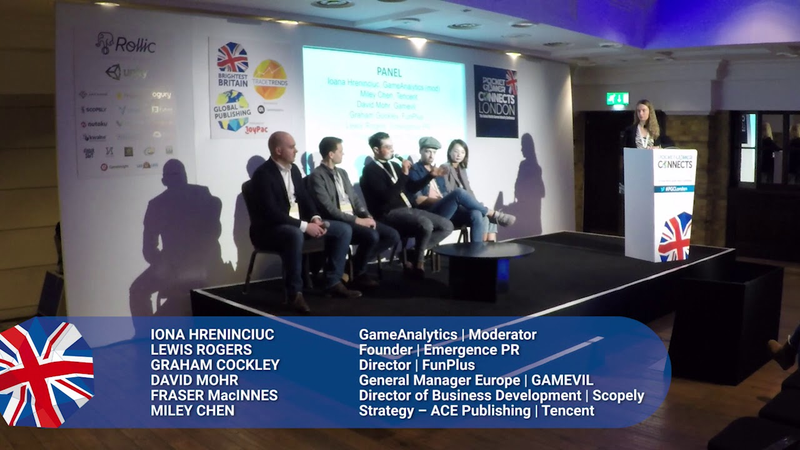
Panel: The Next Big Thing? Global Publishing & Business Trends
Key insights
6 takeaways- 01The Middle East is a significant under-leveraged market that requires deep cultural localization and the utilization of 5G infrastructure to succeed.
- 02A persistent industry-wide talent shortage is hindering scalability, requiring a focus on team validation and diversity to navigate complex global regulatory environments.
- 03India and Southeast Asia are identified as the primary growth regions for future billion-dollar titles due to increasing technological access and monetization maturity.
- 04Firms are increasingly utilizing talent pools in Turkey and Eastern Europe to optimize development budgets while maintaining high production standards.
- 05Publishers and developers are increasingly blurring their traditional roles, necessitating closer collaboration to support fewer, higher-budget titles.
- 06The mobile gaming industry is shifting from volume-based user acquisition to a model focused on long-term player retention and high-quality, sustainable franchises.
Ask AI about this video
Transcript
[Music] thank you everybody for coming I know it's the end of the day so you know like thank you for being troopers and kind of joining us hopefully this will be you know as entertaining as a panel can be but I was thinking to kind of set the stage would you each mind doing an introduction and kind of talking a bit about your company kind of why you're here today and just your your profile in general yeah I'll kick off I'm Louis I am the founder of emergence which is a media communications advisory firm we advise we don't publish but we advise a range of companies on working with the
media policy and regulation and brand reputation and prior to that I was a I spent five years working in the gambling industry um and was also an advisor in the UK Parliament that's great hi my name is Graham Lee I am a director at fun + ventures which is the corporate venture arm of fun + fun + is actually a large developer and publisher of mobile games it's a kind of a hybrid chinese-american company I've been in games for the last eight years a variety of roles from emanated corporate development to now investigate hi my name is David I run the European office for game ville and come to us Korean publishers mobile games publishers our top game is called summoners war it's a top 5 grossing title in Germany France many other countries that's it hi I'm Fraser McKenna's I'm director of
business development for school play we are a multinational developer publisher and focused on mobile free to play games we have offices in la Barcelona Dublin Tokyo just open a London office just open a Boulder Colorado office and yes some of our big games are Looney Tunes and start rightfully command and the dice franchise so yeah that's it hi everyone I'm a leech and I'm working for Tencent doing strategy at the publishing ant and tension is so we know the Chinese market better and we actually started to do is pour in published games in the global market so happy to here today to share you know from the point of view a Chinese company how I see the China and then in a global publishing thanks yeah thanks guys I think it's a really interesting that we have kind of three of the publishers today with kind of based in Asia and it's a good
perspective on global it'll be interesting to see how kind of from the West things have moved to the east but also vice versa what your what you're doing in the Western market and how you're planning to conquer that especially since I think you're all I mean scope Lee is somewhat more casual but I guess you're all very focused on core games a lot so I think you'll be interesting to talk about how that has changed so I'm gonna get started my first question is it's now more competitive and never to stay at the top of the App Store and to get those organic installs so in right now that traffic is getting you know there's more competition for traffic than ever how are you staying competitive and do you find that it's still worth having your game at the top of the App Store or have you found another strategy for to remain competitive so can we hear from Fraser first sure so I have to correct you there we are very
well represented and with some casual games that our portfolio but some of the biggest and fastest growing games on our portfolio are actually from other genres so we're very well represented an RPG and also MMO RTS Star Trek fleet command is a game that is it's been out for just over a year and the game is doing you know anywhere between 17 and 20 million a month right now so I would say that when it could you know and that's that's so I think one of scope these big things is that we're about a diverse array of genres so we've had I think six consecutive games that are kind of a hundred million lifetime games and six different genres today and and the way we've done that and then we've we've managed to mate remain competitive as by investing literally every year tens of millions into our publishing infrastructure so that feels like kind of the base level entry requirement these days and when I speak to you know young studios and they're thinking about hiring are you a guy my heart kind of sinks because the market is now so toxically competitive that without a sort of weapons-grade
infrastructure behind you there isn't really a way of being truly competitive but to answer the question more broadly I think that it's not just about having an amazing ability to kind of drive down CPI and to be able to acquire users and have the highest organic cut with possible and you really have to have game experiences the resonate with people that you know those games experiences you can have you know the best infrastructure in the world but unless you're pairing the right experience with the right audience you're not really gonna get anywhere and for us we've always kind of been very you know diligent about picking a market segment deciding that we're going to go after that whatever it takes and then spending the very significant resources to get there so we don't prospect on the market with okay well we'll build something in three months if it doesn't show any signs of traction we'll kill it we're like that that's not our model at all we we think the competitive advantage in terms of competing at the highest level of US market is you have
to work with the best teams in the business because they build the best games so have your team's that you that you work with but build better products thank you so would you say that outspending is a strategy sorry outspending somebody is a strategy like you were just at some point the maya the market absolutely validates that approach I wouldn't say that it's always that it's necessarily scope please approach if it's about direct spanned on you a certainly like you can see companies have had a very effective strategy of kind of choking all of the inventory of the marketplace for other for other games and so that is our strategy and it's interesting when you look at this kind of in the film this of time lifecycle for our games of pursued that strategy when they turn off you a those games tend to kind of dwindle pretty quickly so we're much more interested in building games that have kind of got more retentive core and have kind of more intrinsic value and it has to be a balance between these things thank you
and David would you like to kind of take the original questions as well how do you stay competitive sure so I think our challenge is to stay at the top grossing charts which i think is definitely a position where you want to be in no question our game is six years old this year and what we've been doing for the past few years is really focused on the community recognize our players have very strong connection to these players have a lot of offline events for these people all across the world we established the summoner's War World Arena championship series as a series of offline events in Japan us Korea we had the last World Final in Paris last year with over 240,000 peak concurrent viewers so we're really trying to make these create this content for our players to consume stay informed about the game learn aspects of the game that you didn't know before because it's a very complex title and just keep people engaged it's very very important for us so you're going good a content approach and has your you way strategies changed
or is it more just like targeting very focused again like in that way yeah but a different situation for different titles so someone as well as a game where we have to sustain so we're both looking for new user users and trying to retain people that we have been trying to get people back that have lapsed so of course we you know keep keep trying and keep spending we keep experimenting with influencer marketing which is very very tricky and difficult and then for new games that we're launching the strategy is a little different so we launched a game called Skylanders Ring of Heroes early last year we went to the top one RPG charts all across Europe and in the US unfortunately that game had problems of its own so unless your game is really really strong the marketing can't fix it so in that sense I would agree with you would you you have to have the top product first and Maile obviously Johnson has many many titles many games some of the largest kind of most successful titles of the past few
years the company has invested in what would you say is different about what Tenzin does compared to the other approaches that we've heard wow I would say so one of the different nations that Tenzin is real like China is ours don't gets market and compared to the Western market while were still just a new baby so for China and that way student have our owners of King as top one grow scene has been launched four or five years ago and still keeping a number one so we know how to maintain again and build a game in two I pee in the lantern and and Tenzin it's different just not just a game company but Tenzin has its own ecosystem in China like for example we have one point 1 billion user base form our way check QQ our nam game and non game applications we have our own
payments we have our own cloud so it's more like the ecosystem and for us is that how to use our ecosystem to be about the community for gaming and how to use like the technology like the user data to attract the suitable users to our games just big like audience network like from Facebook and the second thing is that so we know that we're no Chinese market and we know the free-to-play mechanics we're not monetization we have our own engine and how to replicate the success to the market outside China is now the next thing we're going to learning and while I would say that from Chinese company to do the West it's completely different markets so we have a lot to learn from all the company yeah it's very different for sure and Graham you also invest right and
I wanted to start to ask you a bit about the talent there's obviously the part that you know you do in terms of promoting the game doing the marketing but also the quality of the game and I'm the team you work with matters a lot so where are you looking for talent right now to invest in yeah I think um Francis spoke to this a bit like talent is the is the biggest thing there's a lot of talented people this conference there's a lot of talented developers all around the world and that's becoming even more so as markets like Southeast Asia and India emerge and become even larger so we're pretty agnostic as to where the talent itself is located we believe that a great team can build a game anywhere where that kind of hits the road is kind of the publishing so as Francis also alluded to you can't just kind of plug a you a a you a resource into a team and expect the game to grow successfully there's a lot of inherent specialization around those types of roles now and building also community around games
that ensure that these games last for 10 plus years we're seeing the top mobile titles live that long and therefore when you're really building for these types of games you need to think about that long of a timeline so where where we invest we look mostly in North American Europe just cuz we see the Western market as continuing to grow and we understand that obviously companies like $0.10 know the Chinese market very well we're top 10 publisher there but now obviously not nowhere near $0.10 size and scale nor do we have their platform advantages but we think that there are probably four markets right now they are capable of producing a billion dollar game that's the West China Japan and South Korea but we think over the next two to four years also India and Southeast Asia by themselves are capable of producing games that can produce 1 million dollars per year which is a pretty staggering amount I know that probably sounds pretty crazy but that's very kind of doable in those markets especially as monetization increases as
those gaming populations will have access to the technology do you invest in a team where you see a potential crossover for a game is like this game is doing well but real potential for this game as I can take this game to Japan I can take this game to China I can take this game to Korea do you see do you have those kinds of investments or is it more if you'll work I believe all or globally and I'm gonna have a global strategy yeah they're fairly distinct markets so I think the the best teams are the ones that can localize the game into a very specific extent so I don't think it's easy as like turning on a switch and just turning on the game and shipping it in India and assuming that it scales well you can see teams like the pubsey team do a lot of work to make sure your team game like that skills in India or like free fire in Brazil is very heavily customised towards that audience including the monetization seems that they use are very different than the monetization schemes they use for the Western countries so it's not as easy as a one-to-one transfer but I think there
are opportunities to do that which takes a team that understands that audience in that market very well great thank you and Louis I wanted to ask you because I know you have some insight about the Middle East and it's a market that we talk we don't talk about as much as about let's say like China or North America I want to ask what trends do you see developing over there in terms of publishing do you see people looking for a certain kind of talent or a certain kind of gain certain genres that might work yeah no good question so we have worked with a number of firms in the Middle East I think I would probably agree that the the Middle East as a region has probably been slightly overlooked particularly by Western developers but I think it's generally accepted as a region that it does hold a lot of potential over the coming years I think there's a number of reasons for that the you know the the I mean it currently has an 80% mobile penetration
rate that's about was 7.5 million people with smartphones and so that is significant but also if you look at the kind of rapid advancement of technology that is bringing mobile gaming to the masses and is bringing in new players and I mean 5g is going to be a significant driver in some of these emerging markets I think it's said that by 2024 34 percent of people will be or 34% of traffic will be on the 5g network so and actually if you look at the Middle East in some regions 5g is already deployed so I think there's a real opportunity there and also I think one of the reasons for some of the success that you've seen already in the Middle East is down to you know the success of popular titles but also the ability to as we already alluded to the ability to localize content in those
regions so actually being able to localize games and content in terms of local language in Arabic but also in terms of content so even localizing things like skins that can represent you know local outfits and local colors even can be a significant driver as well you think you that that's that's quite interesting I wanted to ask a bit more on the talent pipeline and I think multiple people are going to take this question how much is your pipeline and I think we can go from like Miley down the line is people is existing companies that you've worked with existing developers versus finding new titles I know it's probably hard to find you know like the exact number but what would you say is a you know existing versus new talent and is that going to change well for Tencent I think that we're doing boats so it depends so I think so for
working with developers or partners or even in hosting of the party studios we actually but we have been doing that for many years and the reason why is that so we believe that top grossing game is romp is not big one day so we believe that only those developers or studios they have experience that they developing as one want one genre for many years and then those experience they could apply to their new project and and we're also actually aggressively looking for new talents because we're expanding our business like for example well we have new in-house development student who making independent gain so actually we have some Indies from China you know from the Western world to joint tension we're expanding global publishing so we knew in our talents who know you know user acquisition who know Middle East market or you know your United States so yeah great thank you so
I don't think there's a straightforward answer to this I think when it comes to scope play we are quite obsessed with studio focus and we're trying to build games that take quite a lot of time and money to build in the first place and we expect those games to have a 5 plus year lifecycle otherwise it feels like we've we've failed and which sounds almost grotesque to say but it is the market is the market that we're in so the way in which we approach this is then of course downstream opportunities if you found a brilliant team that can deliver 100 million a year game then you don't want them to only ever deliver one game I understand that but at the same time it's very easy to compromise the game that you're building and by you know diluting that team's focus on what they're doing when it comes to new teams we're always looking for new teams we're always looking for our next big
franchise partner our key focus in general isn't on games it's on on teams teams that can build great games and yeah I probably killed of skinned alive for four you know one of our PR people heard me saying that our focuses and games of course it's games but but teams make great games and I think that the the big challenge in the market right now the IC and the the I experienced on the business development side is that there are a lot of great teams out there but the vast majority of them still kind of fall short of what is required to build and run a school play sized product so there are very few off the rack studios that are available and because if they're already delivering the kind of level that we need them to deliver that they probably don't need are one a big partner they're probably doing fine on their own and so what we tend to focus on right now are where are the highly competent you know the high pedigree founders that are you know
maybe a quite a small group of people and that are in a highly scalable location and that have the same level of ambition and focus and preferably some kind of specific genre focus as well and that that scope we can build a team around and and I think that's gonna be our bread and butter for the next decade I don't see that changing even you know no matter how many times we find great teams our models always going to be to try and build a consolidation path and to make that team a first-party team and to build the best stable of first party free-to-play games developers in the world and and you don't do that by resting on your laurels and and waiting for a team that's busy in live ups to be available to build the next game you do that by sending people like me on the road constantly to go and find new people challenging David so we do a lot of in-house development in Korea we have a lot of different teams both on game ville and come to our site making our own titles but we're also stepping up our business development and trying to
sign external developers we just acquired two Studios in Korea one is called day seven they do these kind of choices story driven games and others another Studios doing an idle game called dragon sky these are both younger teams in the West we're very open to what kind of team we're working with but as Fraser said it's not that easy to find we're currently working with developers of project cars to make a mobile version of this game so British company will be publishing project cars go hopefully this year aside from that we're looking and very open to junior teams more senior teams but you probably end up with people that have a bit more experience to make the kind of game that we want so it sounds like there's a common theme and finding a team with good pedigree or a good game but that you can also plug into a system and it would right it's not just a matter of either the talent or even the game but can our
infrastructure or the systems that we put behind us really take this to the next level it'll be interesting and Graham you invest I'm guessing you look more towards new teams but it will be good to get some background on you know how exactly that works with the rest of fun plus and yeah yeah so the couple of thoughts there the first one is that yes there are the teams that work best when they do have a publisher or as we're saying some sort of marketing engine connected to them that helps them scale and that's where teams like scope lis are world-class in in developing that sort of experience for developers and the opportunity to scale a game and yeah also give access to two great licenses out there and really help with all that type of business development stuff that a smaller developer might not have experience doing and that's that's that's a fantastic place in the market for for you to seek out publishers and support like that fun plus is a little bit different probably on the other end
of the spectrum in terms of the support that we usually give our investments we usually don't assist much with publishing we trust them to make the best decisions when it comes to how they choose to publish their games and that could be self-publishing that could be choosing a publisher our usual thesis now is that you won't be as close to your audience in your community as possible you just get so many so much more learning from how to interact with them how do you how do we engage them how to retain them how to monetize them by actually publishing the game that you're yourself or by developing the community and figuring out other ways to do to again engage and work with them so we metes walk through it with our portfolio teams usually we have a conversation around that what type of what type of relationship you want to develop your audience and how is that going to create value for the company going forward and that's where we start the discussion fun fun plus itself kind
of started as a startup itself so that's where that DNA comes from we really like to talk to entrepreneurs that want to would dig into the the game development process and really dig into what this audience wants and deliver on that experience so again we're on the other end of the spectrum but there isn't necessarily one right answer for every type of developer out there right and Louis I have a special version of this question for you I assume you see kind of game teams sometimes break away from a large studio maybe want to launch something on their own when is that point where you would advise the team either okay like this title is great but you need more resources go find yourself a publisher or really stick it out and go on your own do you see companies at that inflection point and what would you say is the difference between advising one versus advising the other yeah it's a mixture so I think it depends ultimately on the need of each company so it tends to be done on a case-by-case basis and I think
it would depend on ultimately scale and what they're looking to achieve and also if you're looking at individual teams as well so we we talked already about monetization so one of the things we are seeing now is actually more alignment between user acquisition and ad monetization team studio is actually merging those teams because they view them as very aligned disciplines so I think it depends largely on on each company but I think the other thing is well just to come back to your point about the talent pipeline so I mean in the in the UK at least I think it's no secret that it we have been focusing on the issue of a potential shortfall in in skills for creative industries for quite some time and often I think what you're
seeing is some companies especially in the UK looking elsewhere for that sort of talent and but also I think there are some certain things on the horizon that present additional challenges when it comes to talent and skills so I mean BRICS is a significant one and I know that when we speak to companies they are concerned around whether that would exacerbate existing concerns around skills over a third of gaming positions come from the European Union so I think that does present an issue the other one which is a personal one of minors I think on the issue of diversity perhaps the mobile gaming industry has some way to go in terms of representation you know a over half of mobile gamers are women but that is not represented in the workforce in the UK
at least it's only around 14% of women in the workforce and when you then turn it to look at pame and and ethnic minorities as well it falls to around 4% so I think there's a challenge there as well in terms of when you're looking at the teams and the skills that you want to attract when you don't see yourself represented or underrepresented in these industries I think you are less likely to put yourself forward and apply for those soil positions as well and I mean I think that is also a bigger topic like the topic of diversity and introducing that especially now in Britain and with talent but would you say that there are high potential markets for talent and I'll give you an example like we've seen we work a lot with casual games but we've seen like the turkey market just go through the roof in terms of my Studios Indies coming up in that market do you see other markets like that but maybe companies should go to right now to ensure that they have a foothold in
these areas might be one for you guys perhaps I mean I think you can give an answer and then we can go yeah okay sure yeah it's my fault the again I think it's a mixed bag I mean I think if you're looking at emerging markets in terms of growth so um I mean historically it's been Asia Pacific and North America some of the the key markets in terms of market share and also you know the sort of things that we're seeing coming out of there but I think there is a shift in terms of where people are looking for that sort of talent I know we talked about the Middle East I mean in terms of growth that's expected to grow by about 27% by 2026 I think in terms of looking to attract those skills from elsewhere emerging markets will be key there is a difference but we're like where the money is coming from and where the actual developers are coming from right
and I think especially in the past two years China has grown a lot as you know a Tier one market that is a strong and as the US right now and it'll be interesting to know what you guys think is what is the next China is it India is it you know South America like what is the next super high-growth territory you probably would not develop exactly at the same pace that's generated which was quite impressive but where do you think things are going next Miley do you know well for well for tension where China is our hometown and then you're like and actually the Western market is new market for us because we actually just started to do the global publishing two years ago so and then second it's the Japanese market because before Japanese is very a closed market you know only Japanese gain can do well in Japan but surprisingly actually that recent years that there is
lots of Chinese Games doing very well in Japan and so that the population in Japan is very small but those big whale players they really spend a good money on debt and then the players they're all Asian so a bit more similar in China so I think that you know Western in Japan are really the biggest market for us to take a look in the next four to five years first sure thank you and Graham I think you kind of wanted to say something earlier and I wanted to give you the chance to answer that question see if you have anything else to add yeah I mean I already spoke a bit about our views on Southeast Asia in India just as that's the West we're merging emerging markets that are capable of creating kind of a hit game in and of themselves back to your point around where development town is I think that's very democratized and that's in a lot of places and you'll see investment dollars also kind of pour towards an arbitrage of lower-cost places that's one of the
reasons turkey is looking so well and Eastern Europe in general if development there if your development dollar can go further in those markets you're more willing to kind of spend in those markets as opposed to more developed places like North America especially at California gets very it's very expensive the same is the same dollar can go eight times farther in a market like India or or Turkey and the other other edge of that is we're seeing a lot of success of hybrid teams so you have a small team in one location but a larger development kind of back-office another location we're seeing a lot of Israeli Eastern European teams they're really really highly capable and leveraging that to a great extent I think we're gonna see that more of our time as distributed teams or however you want to say it hybrid teams take advantage of those talent markets over time how much time do we have left oh okay I guess we're almost at just one
thing is there anything that you know out of today what each of you would like everybody to remember like if they could be left with one thing what would you like it to be we can again do like the whole the whole thing you want to start I think that's big thing for publishing it would be the new way of that you know how publisher get more involved in a motor least age and more value that the publisher can bring onboard and and I think the one most interesting thing from my personally work is that you know how to combine the expertise of Chinese companies there either in terms of free-to-play multiplayer and comply with the creation from the Western companies and then to make something really big and you know I'm suitable for the global audience okay thank you sure I would echo some of that I think the
for a long time now in the free-to-play mobile market the the lines for big successful publishers for a lot of them and certainly scope lay the lines between the kind of developer division of labor versus the publisher division of labor has become sort of a revocable blurred and needs to be that way for for people to run successful businesses and that requires a lot of patience I think on the developer site because there's a sort of intuitive understanding that all things concerning development and design happened with the developer but a developer's view on the market at any given time in terms of the data that they can read it in tapri is maybe one or two products wide where as a publisher has got very many more products much more vast resources a lot of the people that work in these companies you know it's good you know scope they wouldn't even call itself an exclusive publisher anymore we're as much a developers we're at a publisher so I think the kind of key thing is that I would love people to understand is that in my mind it's much better for a publisher to say no to a hundred teams
that aren't the right fit for a game than it is for them to take a chance on teams and kill a project after three months I think the you know the the burden of validation should be moved farther up the funnel so that it's not just about validating the product early that's important but I think it's much better to invest a lot of time and effort and validating the team and creating a really legitimate and realistic path to scaling a world-class team because making games is messy things are gonna go wrong the markets gonna be unpredictable and you know you need a great team to be able to navigate those things so I think there's a lot of you know false negatives in this business where games get cancelled needlessly because we're just so focused on all that product doesn't work let's cancel it and move on to the next I think the one takeaway would be it's better to publish fewer games but make them higher it's it's it's not even so much about your frequency about I don't I wouldn't want to kind of I want to get out the forecasting businesses come here and
sloppy are already waiting the next session by like seven minutes oh my David go quickly so I agree and I would add that if you want a game that lasts very long you need to find a way to engage with your audience talk to your players and take their feedback back to your developers and make the developers listen change and talk back to your players I think that's very important and very tricky to get right ditto I think this is never and it's never been a better time to be a games founder I just want to like echo that I think a lot people are kind of not as bullish as they are as they have been on the mobile market bomarc market is still growing at double digits per year it's still doing great there's a lot of opportunities for piscine out different platform shifts and different ways that people are building community and 5g and streaming and cloud like there's just incredible opportunities out there so I won't be able to be a little more optimistic okay yeah for me
I mean briefly I think I think the main challenge for me is the with my media Hassan is the challenge for trying to monetize games and content through you know in-app purchases micro transactions etc without straying over the line into incurring the wrath of regulators and media in the UK and elsewhere okay thank you guys so much you've been absolutely amazing I wish I could talk to you more [Applause] you [Music]
Summary
The mobile gaming industry is undergoing a strategic shift, moving away from aggressive, volume-based user acquisition toward a model defined by weapons-grade publishing infrastructure and long-term player retention. Success in the current landscape requires a synthesis of high-budget marketing, deep product quality, and rigorous community engagement. As the market matures, the traditional distinction between publishers and developers is blurring, necessitating closer collaboration and a focus on fewer, higher-quality titles that can sustain long-term franchises.
Geographically, the industry is pivoting toward emerging hubs to drive future growth. India and Southeast Asia are identified as critical regions poised to produce billion-dollar titles, supported by increasing technological access and monetization maturity. Simultaneously, the Middle East represents a significant, under-leveraged opportunity, provided developers prioritize deep cultural localization and leverage rapid 5G adoption. To optimize development budgets, firms are increasingly tapping into talent pools in Turkey and Eastern Europe, reflecting a broader effort to manage costs while maintaining high production standards.
Despite this optimism, the industry faces a persistent talent shortage that threatens to impede scalability. Addressing this gap requires a commitment to diversity and a proactive search for high-pedigree teams capable of navigating complex global regulatory environments. By prioritizing team validation and localized experiences over generic global releases, publishers can better align their output with the diverse preferences of a global player base. Ultimately, the path to sustainable growth lies in fostering scalable, long-term engagement rather than relying on short-term acquisition cycles.
















Comments