1 free read left. Create a free account for unlimited reading + AI research.
Create free account
How Hyper Hippo built hit game AdVenture Capitalist
Key insights
6 takeaways- 01Hyper Hippo transitioned from high-budget, multi-year projects to a lean development model after a major failure, prioritizing rapid experimentation over safe, derivative titles.
- 02The studio utilizes the UDA Loop (Observe, Orient, Decide, Act) framework to accelerate decision-making and empower small teams to validate concepts with audience feedback before committing significant budgets.
- 03The studio treats player feedback as the ultimate arbiter of value, using active monitoring of behavior to guide development cycles and minimize investment risk.
- 04AdVenture Capitalist achieved market success by focusing on long-term player retention and engagement rather than traditional, aggressive monetization tactics.
- 05Data-driven testing revealed that players were highly receptive to rewarded video ads, a discovery that contradicted initial internal assumptions and became a primary driver of the game's long-term financial viability.
- 06Sustainable growth in a competitive 'red ocean' market is achieved by prioritizing active user bases and player support rather than relying on temporary store features for visibility.
Ask AI about this video
Transcript
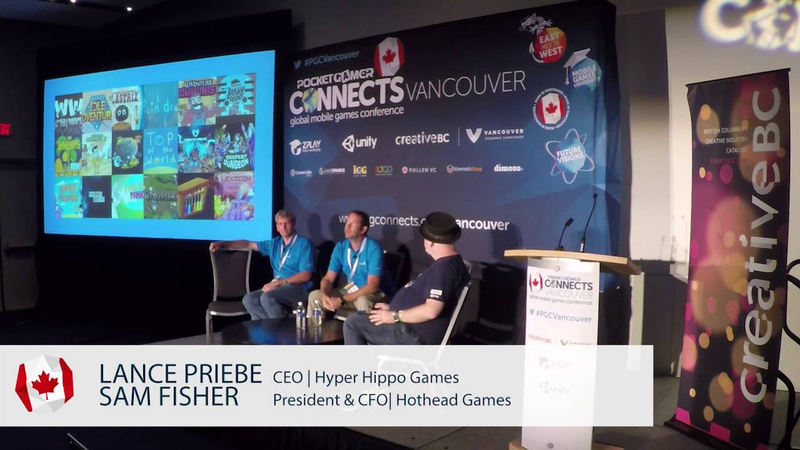
[Music] conation but uh how many of you are still playing Adventure capitalist yeah I mean come on it's you can't not why let's well let's introduce you guys first so you want to just introduce yourself and sort of uh describe what you do at um sure is this actually working everybody hear me all right good um Lance pre uh CEO at hyper hippo um you have the title create the CEO of the creative Catalyst the creative guy Sam Actually runs the whole show he's the the the dreaded pirate captain of the whole I love that title um quick quick little history of the background my background um started off as a web designer got into web-based gaming in 1999 I'm getting old now and uh I was one of those early Developers for those
websites called miniclip.com yahooligans congregate all those guys grew up there and made this little world with these penguins that walk around waddling you know it's called Club Penguin That Grew uh that's where it put clone on the map for video games and after spending some I think you guys all know the history I'm going real fast we sold it to Walt Disney Company in 2007 uh 2010 I was going crazy cuz I'm an entrepreneur so I got to make stuff and uh a creative Catalyst and uh decided to start uh hyper hippo and um left the Walt Disney Company started a new studio had his great Ambitions to create Giant games spent two years many developers probably can understand the same story spent lots of money two years shipped a title nobody cared nobody played nobody nobody did anything so decided to go back to the books and uh say okay so what what we do wrong what are we going
to do right so look back at our own name of our own Studio hyper let's focus on the hyper component and make as many games as we can and find out what the fans really really like and that's where we ask my speed history to get to great speed history now we can get into Venture capus in a moment yeah yeah yeah I like it I'll let Sam do a quick introduction yeah exactly Sam tell us tell us about yourself uh I have the distinct pleasure to be a hippo and thank you for having us here it's great to have PG games here and thanks for the support for it because we are big Believers in BC is a great place to build games um I uh I don't have the creative genes that these guys have so I look at the world through more of a business lens I come from a business background and uh and the video game industry is a fascinating industry it pulled me in in a big way uh not because of the creative which I love absolutely love but because it is one of the most most amazing industries that you can be
a part of right now in in industry and so it it's thrilling it goes at the speed of light you guys know that uh it is growing faster than most Industries can dream of and it is a great place to work it is a challenge it is a joy every day and I get to work with amazing people and um I was excited when I got to see that I was a part of the 1% because the 1% means that I'm over 50 I'm over 40 I'm me 1% there's nobody over 40 not saying a word too old too old but uh there is a lot of opportunity in this industry and uh so very excited to be here today and one things is we kind of we we pulled together a few slides so well you guys pull together the slides I just said yeah I like them um but you one of the things you started off by saying was this idea of being bold being bold and I I think that's I mean particularly this idea you know business guy creative guy making something thing the big
magnumopus of of game development you wanted to make no one wanted you make lots of crazy stuff and this thing that people click turns out to be totally you how do that fitting with this mindset set the stage set the stage so uh we just finished working on this very large project we spent millions of dollars and featured in Wire magazine featured everywhere a great thing uh I think 800,000 people downloaded did it we didn't make any money we didn't learn any lessons let's just have a sad moment there um so we went back to the team and we went well we got a little bit of Runway still we got some cash in the bank uh we can still do something so let's go back to Our Roots back to the good old web web game days you know way back in the the early 2000s stuff and started to just get some ideas together from the team and I told Sam came up with actually be bold we went to the team went what are the craziest ideas
you want to do what are the ideas that are actually going to stand out over the whole audience we don't want to be another Studio that just takes the safe road makes another it's nothing wrong with clones and stuff our industry needs it Hollywood has it everywhere it's good business model but we wanted to be something like if you're going to take the big risk then you're going to have the big reward so the team came up with all these ideas and uh I made a rule to the team that I would provide all the teams they could break up into groups they get budgets they get programming Talent Etc and I couldn't say no they got to go but they only had a short leash they had a little bit of time to prove that the game worked they had to show me that they had an audience that would engage and be interested in that idea and if they did have that if they could validate their idea then we'd put more budget in and they can go further so when we say be bold in our studio we just tell the team just what is the biggest idea so Venture
capist and the birth of that one title we did a whole bunch of titles you can actually switch to the next slide oh um so that first year we came up with a whole bunch of games well idle the RuneScape idle Adventures that's this year so we'll talk about that one too okay the uh Team came up with crazy ideas this one guy Cody and our studio game designer he said I want to make a game where you watch progress bars load wow Sam and I Sam didn't say anything I just sat there going that's the dumbest dumbest idea and the team reminds me every week that I said it was the dumbest idea but I also said I said I would approve every idea and here's a budget go make your idle bar simulator so Cody uh said I'm going to make this idea he's a writer by the way this guy writes he doesn't even code doesn't draw doesn't anything he couldn't convince any of the engineers
in the whole studio to help him cuz they all looked at him going that's a dumb idea so we extended his leash he learned unity in about a week and a half two weeks got his idle bars going high pro he put it up on congregate was a quick quick little web game do you remember the early numbers it was we had about uh 30,000 people that first first the first weekend 30,000 we broke like a million people playing that game in like under a month I believe it was oh yeah and retention rates on a web based game were near 50% on a day one retention and we went my mind we knew there was something wrong with the so the whole team had been working on all these other games some of the games you see here and none of them had compared there was all these charts and there's this one game this idle bar simulator like okay well I guess that's what the Studio's working on you can go to the next slide here
so as a studio we we challenge all our team to validate all their ideas um if you're going to be bold and you're going to be memorable that means you're taking a lot of risk but if you're going to take a lot of risk you got to reduce that risk somehow so um if I'm a big fan of the Lean Startup principles for entrepreneurs Etc and Lean Startup is a little tricky in gaming because we're not actually solving a problem so it's hard to actually measure against right I'd argue we kind of are but it's a it's an entertainment problem ENT and I agreee that's a bit more messy a little bit more messy so we've worked hard we haven't got a perfect formula yet one day we'll speak about you know how do we actually validate games um I'm open to talking to anyone that wants to dive deep into this topic but we're we're trying to just dig into those metrics like how do we find out that someone's actually interested like is session counts is it retention is it playthrough is it puzzle game where they actually progressed or something how do we measure it so we try to validate all our ideas before we unleash the large purse
strings and let the gold flow on the table and the developers are dancing around the studio the ud the udal loop just to speak to the oh which is oh I'm sorry I'm seeing a different slide uh we see we see one ahead here well that's that's my job um uh the reason we use the UDA Loop is because of this whole idea of speed I don't know how many of you are familiar with the udal loop but this was bringing outside business principles into the gaming industry and the udal loop isn't game isn't a business principle it's it's actually comes from the US Air Force and it's the whole idea of their their jet fighter pilots were losing all the uh the uh dog fights in the Korean War and so they did a whole bunch of research as to why that was happening and they found out that it's not that they had worse planes or anything like that but they found out that their pilots weren't thinking quick enough and so they needed to think quicker and so they needed to develop a way of thinking how can we think quicker so that we can win more dog fights because if you lose the dog fight you lose big Big M you're dead and
so in we took that principle and looked at that in how it works Within game design and it's like this is an industry that doesn't you know if if you're if you're playing the guy you're fighting against is is observing uh he's then making orienting himself and then making a decision and then taking an action and it takes him this long to do that you got to go quicker around that Loop or else you lose your dog fight and if you lose if you're not quicker around that Circle you're going to be dead so it's a simple it's a simple binary thing one way or the other you're dead if that's the case so we looked at that and applied that to our studio and said you know what this is what the industry is doing we need to go quicker we need to go quicker and so how can we go quicker and that's where our small team and and being able to have a lean mean fighting machine like as as Lance talks about is is in the lean process parallels with way supercell kind of breaks these structures down but it seems to me like you've you've condensed that down into kind of very simple Lean Startup style
Loop very simple like so UDA Loop if this is a New Concept you guys can Google it it's pretty it's pretty elaborate uh it's well documented on the internet udal Loop goes back to why does Adventure capitalist work okay so udal Loop is simply this idea You observe what's going on in the industry what's going on out there Etc we observe that there's mobile games people don't people enjoy casual games people actually do not enjoy coming back to a casual game this burden of it but they enjoy the the reward of having their little garden that grows but why am I punished to have to show up every 6 hours or something so we observed that orientation the second o is well what are we we're a studio we're capable of doing this we have the resources we have the talent What's your equipment what's your tools what's your ability we went we could definitely go after this and we noticed an opportunity in what's now become either incremental games or idle games which is becoming a
genre uh Apple has gracefully featured us Apple and Google I think it's 18 times just for that topic for games that can constantly play without you playing very fascinating that's a crazy idea in the first it's so crazy but our fans right us back saying they're so rewarded uh we have Pilots which we're all probably grateful they're not playing uh that tell us that they they love our game because when they're at the airport they get things set up they put it away they do their job and they feel like the whole time they're flying that they're playing yeah and then when they land they check in I'm sure they're checking while they're flying but they feel good they have this this this feedback loop that we get from gaming but you don't actually have to be in it it's very strange uh so then d d and Loops decide so we a studio as you as you heard I don't make the decision if they can show me validation it is approved so we've removed that piece of the loop um I've
worked at large corporations stuff where decide takes months so we may have noticed an opportunity in the market we may have noticed that we have the capability of doing it and then 6 months later if PowerPoint presentation in decision-making process we don't execute on it uh and then that opportunity is then missed and of course a is act can you actually do it so I nailed on that bit you just said about you kind of cut the deci side Loop action out that's tiny as I can CU you you've kind of said the default is yes up to this budget up to this budget with these matrics yeah the the side part of the loop comes from the fans yeah that's what happens so you're you're effectively automating that process with the audience which is actually brilliant I mean CU you know we I used to be one of the kind of operator guys back in the day when mobile operators had a role to play and you know so if I didn't like a game it didn't get launched and I was always right because if you didn't get launched you didn't get to make any money therefore I must have been right um you
know I'm joking but you know you get the idea Venture cap would have never been born exactly but the point is this audience realizing the audience is the most important part of it I think it's actually something we we still to this day don't really recognize enough I think partly because we don't put in metric mechanisms like this where we use that early access by an audience to really tell us what's going on and why we find our opinions are wrong most of the time hly yeah I want to say all just always wrong always pretty much uh there's some weird like just to give you a little inside stuff of how we tried we're still experimenting like crazy um I'm sure most of the students here use slack you want to drive your developers insane we actually installed slack into our game so when a user has a problem or feedback it notifies the whole Channel wow after a while at a million user game you're like no Make It
Stop uh it's probably a misuse of Technology but it definitely reinforces how can how can we get as close as we can to that feedback I I genuinely love and I'm terrified by that I wouldn't go to the next slide here uh this is just uh this goes back to business uh it's just something I think a lot of people the back to the oxygen one a lot of people I think miss miss this one it's been a hard lesson for me Sam's actually taught me a lot of this uh Studio guys you make cash you can do whatever you want your Studio's breathing so fundamentally that's that's this whole thing uh that goes back to Adventure capitalist it was great it saved our studio um it started making a lot of money which we still don't quite understand why it's an idle game that you can wait and you progress yet you'll pay to go faster for somebody please do a study um so cash is oxygen it'll give your studio
freedom to get going and then the next slide um just a point though I do want to point the cash cash is a nicer slide but it really means Revenue yeah it it really means Revenue because there's a lot of funding that goes on and and when you get investment or those are important components of building your game but if you have funding you didn't win that's not the winning point you need to have Revenue as a validation and S sustainability of your game that's the biggest metric yeah I mean I think I was going to focus on it I don't know what your your percentages of breakdown of revenues are but I found a really interesting kind of B of your I take on well that's good that's capital but but the thing I find fascinating about me for me is I actually use c as a mechanism to find games because I basically only I don't bother going to App Stores anymore I just watch video ads okay and I know I got a biased on that because of what I do for living but I actually genuinely have got to the stage where Adventure comp is my go-to game when I'm a bit bored and I want to find out what else to play and I press the buttons as you
know work out whether I'm going to restart or not and then I look at an ad okay and if I like the ad I'll end up going to get that game or not okay they wouldn't approve one of our other ideas and that was a game with a button and you got to push the button every 24 hours but if you watched an ad you got to push the button twice that didn't get approved our research actually shows just what you said yeah people actually want to earn the right to watch more ads that was our biggest yeah this is not a game so let's go back on the fantasy of C but I think I think that kind of leads into that to a certain extent doesn't it cuz we find these different behaviors of why people choose a game uh and how how it fits into their daily routines and for me it's like I'm at an airport and I'm board and I'm waiting to go somewhere and and that's my go-to moment everyone has their go-to moment for a game like this MH and that's sort of I think partly why I don't know why but I'm addicted to Boom Beach yeah c alphy one of the one of the
uh startling points for me when I came into the industry and I spent time with other game studios was I found that they did not have any customer support or player support and so that was mindboggling to me because why would you not want to talk and hear and talk be a part of your player engagement in your player player world um play players are not an interruption they're the reason why we do what we do and so when we say fans are your currency it's like we pull out the white gloves we hope that you have a good experience that's what we want we we have people who are dedicated that we made a very Strategic investment when we did that reflip with the the smaller games was uh we're going to make sure we take care of those people and give them good player support and so we published on our website um not that many well actually there's quite a few people that go to our website which surprises me um but we actually published what our rating is for player support not what our game
rating is but what is our rating for player support because we think that that's so important that great man that's part of your experience and so when we say fans are your currency it's just a recognition that uh yeah you you you don't sit around and just frivolously spend your money you take care of your fans and that's slightly different from kind of some other games cuz you're not focusing just on the ones who spend lots of money you're focusing on the base as a whole when we did our ad strategy which was initially the uh you know you get a boost in your game by watching an ad seemed like Common Sense uh it took a lot of people by storm which we appreciated got us on the front page of the Wall Street Journal that was pretty cool um but uh that whole that whole aspect of thing was how many ads do we put up uh when we when we decided we said let's do it four times a day because what would we like as a player never came into our Consciousness to think well what does
that mean from a monetization strategy it was all about what would players enjoy and so that was a decision where it wasn't the money that was driving it it was what do the players expect what would they enjoy six months of support emails that said can I please watch more ads we're like thousands of we see the same thing in other games I mean the the guys that seriously um you know they're actually seeing increase in uh you know player session length by having this ability to reroll the Daily reward just by watching a video and so this is not isolated this is something that's happening across the board but back to the UDA loop as a studio are you listening yeah are you observing it are you making a decision on it are you doing something with it instead of just um like oh that was an interesting fact exactly it's the fact isn't the important bit it's the doing something is but you you also said again leading
into that you know you don't chose features so if you're listening and you're acting how does that how does that correspond with this idea of not chasing this one's a funny statement I keep telling my team we don't chase features they keep reminding me that we've been featured 18 times uh so I keep it's back to the focusing on your audience if you have read Lean Startup and everything you know that it's really that that first customer and you're phoning them and talking to them and getting Eng and find out why they liked it why they even download in the first place and get get that information and grow grow grow grow grow cuz that overwhelming that growth of your audience doesn't matter if Apple features you or Google features you or anyone any feature when you're get to the million user actively over past 30 days 40 60 and while we're passed now into a year of people still playing um the feature doesn't matter you're making your sustainable game with Revenue when you with long term uh as a studio we're
we're I I get scared when I see most of the industries happy with the you know the chart that goes you know day one and then the plummeting thing to like nothing yeah I'm like that's not a business that's that's that's that's let's just throw it out there and see if it works then move on to the next one that's fine but that's not really a business and that kind of takes us to I think the last slide yeah uh this one's tough I'm going to be I'm an entrepreneur so this one's easy for me but walking around a game studio with a bunch of people that are artists developers and engineers and telling them to be entrepreneurial it's actually hard but this industry the game industry is matured um if you're a reader of Blue Ocean strategy or any of those business books we're not in the blue ocean anymore we are in a red ocean and you need to be ready to run fast and fight hard so we need to be entrepreneurs uh I really believe in indie games but Indies
are going to get hard it's going to get hard to compete the Apple Store the the stores are closing there's only so many games that can get featured I like to make an analogy that it's like buying a game is like going to Walmart with the lights turned off and and you have to remember what you're looking for and somebody hands it to you that's how hard it's getting yeah I think that's a good place for us we've also run out of time but thank you very much guys I think that was a really good way to sort of kick us off um I think it's perfect kind of denotes where we are this this whole Space particularly Indie we're going to talk a lot more about tomorrow um you know we're in a we're in a red ocean and we need to be smart and work hard thank you very [Applause] [Music] much
Summary
Hyper Hippo Games, led by CEO Lance Priebe and CFO Sam Fisher, emphasizes a culture of rapid iteration, data-driven validation, and player-centric design as the primary drivers of success in the modern mobile gaming industry. Following the failure of a high-budget, multi-year project, the studio pivoted to a lean development model that prioritizes small, bold experiments over safe, derivative titles. This approach led to the creation of AdVenture Capitalist, an idle game that achieved significant market success by focusing on player engagement and long-term retention rather than traditional monetization tactics.
The studio’s methodology is rooted in the UDA Loop (Observe, Orient, Decide, Act), a framework adapted from military aviation to accelerate decision-making. By empowering small teams to test concepts quickly and requiring them to validate ideas through audience feedback before securing larger budgets, the studio effectively minimizes risk. This process treats the audience as the ultimate arbiter of value, with the studio actively monitoring player behavior and feedback to guide development. Notably, the team discovered that players were highly receptive to rewarded video ads, a finding that contradicted initial assumptions and ultimately helped sustain the game’s long-term viability.
Operating within a competitive "red ocean" market, the studio argues that sustainability depends on revenue-generating games that maintain active user bases rather than relying on temporary store features. By prioritizing player support and treating fans as a core currency, Hyper Hippo maintains high retention rates. The studio concludes that in an increasingly crowded marketplace, developers must adopt an entrepreneurial mindset, focusing on rapid, data-informed cycles that prioritize player enjoyment as the foundation for sustainable business growth.