VideoDevelop:Brighton
Raising Money A Perspective from Both Sides | Develop:Brighton 2024
14 Nov 202545 min video
Transcript
Uh hello everyone. Uh thank you for coming along at 5 o'clock on a Friday when it's sunny outside because frankly the beach is looking great right now. Um what I'm here we're going to talk a little bit and sorry I will wander. That's my personal affectation. I'll be down in the audience and uh I was brought up in the theater so that's my apology. I used to do Panto. Has anyone have been to Panto? Yeah. Okay. Any heckling? Welcome. Sorry, I'm already rambling. This isn't a good start, is it? Um, so I'm gonna talk about funding. Um, and I'm going to talk Well, okay. So, first of all, who am who am I? Um, I've been in gaming for 25 plus years. Uh, I think it's about 27 now. Um, uh, I spent nine years at EA. Some of the people in this room, I worked with you at EA. I then went spent five years with Krytek. Krytek could have been the
next Valve. Didn't quite work out that way, but it really really could have been at the time the next Valve. Uh I then came back to the UK for improbable, which is big tech unicorn. Raised ridiculous amount of money. Boy, I learned a lot. Um I learned a lot about raising money. And that's when I started in my kind of raising money side. Um, after that I helped build Sensible Object, which was a physical digital hybrid toy company, which we sold to Niantic. Um, I helped build Outright Games, uh, makes kids licensed games. Good Solid Business, which we sold to Private Equity. Um, I now sit on the board at UK. Oh, I'm not actually on BAFTA anymore. I just timed out. So, I did 10 years at BAFTA. I'm no longer on the board at BAFTA. Uh I sat on the board for coherence. Uh Petverse uh ochre which is a charity linking research and entertainment and a dimmo. Um I also context of this is I founded a
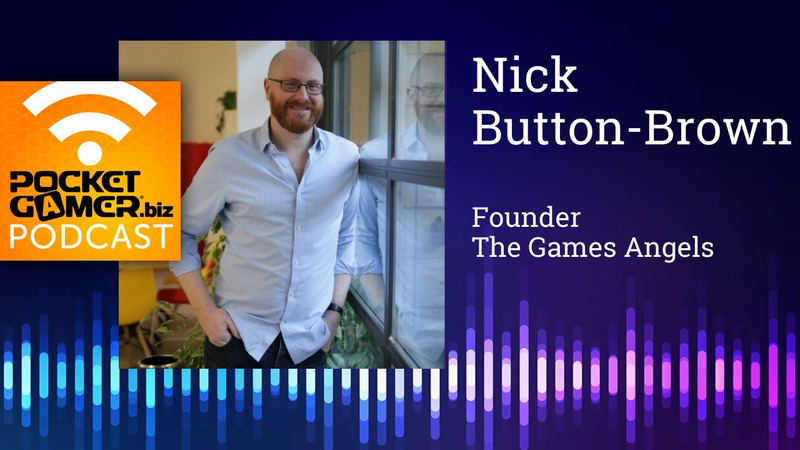
group called the games angels. We have a nice new logo. Somebody was really pissed off with my old logo so they did a much better one. Um uh we have invested in Oh, it's actually 29 now. um as a group. It's a group of games industry veterans who are investing and helping companies together. So, not massive checks, you know, but it's individual per individual investments and hopefully of people who can help and give advantages and give advice and at the very least point out which mistakes we've already made that you shouldn't be making. Um uh Oh, yeah. Yeah. I, as of last week, I am the UK Angel of the Year. Woohoo. Um, yeah, thank you. Thank you. It's really weird talking about a good thing. I'm British. Just that kind of fundamental. No, I'm going to do, but I'm trying to get better at it. Um, what else am I working on at the moment? Uh,
improving the financing pipeline for UK games companies. Um, that's a big grand vision. I will agree that that is a big grand vision. It's a fiveyear plan, six strategic pillars, whole bunch of things going on. I have a scary, in fact, I'm going to talk about this later. I have a scary big Trello board of all the things that can make the financing pipeline better for UK games companies. Uh, and yeah, I'm currently recording an audio book um, which is a friend of mine, Kim Nordstrom, wrote Up Down, Up. It's based on a series of interviews with successful games companies. It's a really good book. Um, I'm not saying the audio book's any good. The actual book is good. The audio book may be a bit iffy. Uh, so there we go. That's that's how I'm here. So, I've been on both sides. I've raised money. Uh, and I've invested money and I've helped out venture capitalists. I work with private equity. I look at kind of grant funding and things like that. Um, I'll share the
deck. So, at the end there'll be a QR code if anybody wants the deck because there's a bunch of links in it and rather than you all frantically write down the links, they'll all be in there. Uh, so just yeah, save yourself the energy. So, uh, you're setting up your company. We have this fancy term called bootstrapping. Has everybody heard bootstrapping before? Yeah. Okay. Um, so it's you're doing work for hire, you're generating income in some other way, you're going to friends and family. Um, it's some of the greatest projects ever done have been done in this way. Uh, I still love the Overcooked guys when they when they were successful. The first thing they did was buy a new couch because they basically sat at either end of the couch for two and a half years and there were butt-shaped holes in it. Um, so, you know, I kind of love that. It's great. Personal thing is check your contracts. If you're working at another company, be really really careful. There may be something about the things that you create in your spare time, maybe
owned by that company. So, just not going to tell you a lot about bootstrapping, but do read your contracts. Don't do anything silly there. Uh, friends and family funding. Great. If you've got rich friends and family, it's fantastic. Go and uh Oh, there's a certain company that I work with. Their first investor was the CEO's mom, and it was great. and it and it's lovely and we can make a joke about it from then on. It's like what would his mom think? Um but if it doesn't go well you it's going to be a really painful Christmas dinner. Um so I again contract make sure you actually make it into a real company that people understand but it also this one does lead to a lack of diversity. If you don't happen to have rich friends, it's really hard to get the first 8K that unlocks the 25K from the UK Games Fund that unlocks the prototype funding from Screen Scotland. It's that that first one. So, this is a
fundamental problem that we need to fix. If anybody has any suggestions, so I don't have an answer. I just think it's a problem. If anyone has any suggestions, I will gladly take them on. Um, so great, dealt with bootstrapping. That means you're funding it yourself. You probably all understand that. Um, equity finance. Does everybody know what equity means? This is, by the way, if you don't know, please just say. It'll take me a couple of minutes to explain it. No, we're all right. Good. Okay. So, equity being shares in your company. Um, angel investors. I am an angel investor. Uh, my games angels is a group of angel investors. We are uh sometimes wealthy individuals who are spending our own money to buy shares in companies that we think are cool. Um have you seen Dragon's Den? It's really not like that. Sorry. It it really isn't. You know, you're when you're talking to angels, angels want you to be
successful. They're not beating you up. They're not telling you you're They're not taking apart. generally they're kind of going well okay but this bit doesn't quite work you know angels want you to they want to help you they want you to be successful most of them will give a lot of free advice a lot of free feedback um there is UKBA uh if you are looking to raise angel money go on to UKBA there are a whole bunch of regional funds there are a whole bunch of anywhere in the UK that you're in there will be an angel group that are focused on uh on financing companies in your area often with government money backing it. Um, but not all of them will invest in games. Uh, I've used E 100, which is a business school alumni group. Um, they're all on UKBA, but uh, look around. Some of them won't invest in games. If they won't invest in games, come and talk to me and maybe we can convince them to invest in games together. Uh, yeah. Uh what else is around angel
co-und government money, British business bank money goes in to match angel money. There's a whole bunch of ways to kind of match angel money, generate it in in new ways, but that hasn't really helped you. So what as an angel do I want to see? Um I want to see really two things. I want to see uh a great team and I want to see a great business opportunity. Um it's not much more than that. The rest is is polishing. Uh what do I mean by a great business opportunity? What I don't mean is I'm going to make the next FIFA. That's not an opportunity. That's just a way to lose. So genuinely I got this pitch. Yeah, it's that's not going to happen. Um it is it's a it's a space where you're looking at an interesting market. you're making a game for a particular community. You know, it's a way that you're doing something that is not necessarily unique, but is different, is
focused. It gives you an opportunity for success. And what makes a great team? Unfortunately, a lot of it is experience. Um, that's not helpful if you're new. And again, it's kind of hard to do this for the first time. Um, by the time you're doing it the second or third time, actually, people have a lot more faith in you. Um, which then is that counterintuitive, but how do I get to the second or third time? Uh, fortunately don't have an answer for that. Um, when you're talking to angels, and this is why it isn't like the Dragon's Den, what you've got to do is make a connection with the people that you're talking to. You've got to make an emotional connection with them. You want to, you know, I'm I'm talking to you, Charot, and you're telling me what you're doing, and I want you to be successful. So, what you've got to do is try and tap into that how I want, you know, and you maybe you're working out what I want, but you want to be in the stage where we're both going, "Isn't this exciting?" And if you get that, you're in a good
place. Um, if you don't get that, you got to work on your pitch. Uh, I used to think I could with my amazing pitching skills get through that and it's fine. I can, you know, I'll I'll find another way to sell it. I have learned no. If I can't get them in the first 20 seconds, I will not convince them in half an hour. So, I'm saying that from me having pitched to lots of angels over the year. So, if you don't have your first 20 seconds, go back and get on your first 20 seconds. Work it again. Work it again. Find your first 20 seconds. I once pitched to somebody in the Urinals at GDC. That was and perhaps I was crossing a line there, but actually because I had my 20 seconds and now the the men in the room are kind of really 20 seconds. Um, but you you have to be able to win them over in enough time that they'll go great, I'm going to commit my time to you. I'm going to spend more time understanding what you're doing. Yes, I'm hitting hard on this emotional
connection. People don't I see people come through accelerators and they give you a wonderful business case but not why I want to spend my time with you. I see 500 pictures in a year. That is a madeup number. It might be 600. It might be 400. I see a lot of pictures. I don't invest in many of those. What catches me? The one that makes me go actually I want to spend my next five years helping you be successful. And so you've got to try and get to that. It's not easy. It's not precise. And the difference between good and great is the difference between getting money and not getting money. Um yeah. Uh the the thing about angels is it's kind of a hobby. There aren't really Okay, there are there are people that make a life out of being angels, but they're not really professional angels. They're doing it because they enjoy doing it. They're doing it because they want to be part of the journey. They want to be part of the stuff. They
want to go to their friends in the pub and go, "Oh, I just found this really cool company." And their friends go, "God, that's a really cool company." Um, which fundamentally means them repeating the 20 seconds that you've given them. So, if you don't have that 20 seconds, they're not going to get that positive connection. They're not going to be able to show off to their friends. You're not going to get that kind of consistently reinforcing note. Um, yeah. And sorry, so that kind of last point 500. you can be a really really good company and frankly I just had an argument with my wife earlier that day and I'm a bit pissed off. There's no way back from that. Um I happen to see three other companies doing AI NPCs. Anybody doing AI NPCs in here? All right. Yeah. I' I I've genuinely in the last three weeks three companies pitch me a AI MPCs. Do I like AI MPCs? Yeah, I think it's a great use of AI. Do I know which of the three is going to be successful? No, I haven't
got a clue. And actually, so the three pitching means I kind of can't really back you because I don't know which one's going to be successful. So, some of it is just luck. They happen to come along at the same time as two other people. And a lot of it is just luck. If you aren't successful, it's not that you did a bad job. Okay, sometimes it is you did a bad job. I have some terrible pictures. Uh we'll see how time goes. I can tell you all the horror stories. Um but sometimes you're just unlucky. sometimes. I just had an argument with my wife on the way in. Um, SEIS and EIS, who's UK based? Okay. Um, SEIS and EIS is a frankly brilliant scheme in the UK. Uh, it means if you invest £10,000 in a company, you get £5,000 back off your tax bill. It's kind of as simple as that. So if you're raising in the UK, you need to be eligible for SEIS and EIS. If you're raising angel money, you need to be
eligible for SEIS and EIS. Sorry, if you're a later stage company, it's it's kind of slightly different. Uh there are really great guides. Government website has HMRC has a uh yeah, HMRC has a great guide to SEIS. Just go and read it. It's actually fairly plain English for a government document. Um venture capitalist. Anybody seen Silicon Valley, the TV show? Uh, good. Uh, it's not a comedy, it's a documentary. I have literally been in meetings where the VC would not hold my eyesight because if he held eye contact with me, then I would have the power in the room. And so, he was avoiding my eyesight for the whole and that is really off-putting when you're talking to somebody and they won't look you in the eye. Um, it is as nuts as that. particularly Silicon Valley, West Coast VCs are absolutely Oh, am I allowed to swear?
Yeah. Okay. Absolutely batshit crazy. That wasn't that bad. I swear. Um, there are some good VCs. If you meet any, please let me know. Um, but actually some of the same principles work. you know, you're still trying to make an emotional connection. Yes, VC. So, I I worked with a couple of VCs because I wanted to understand what it was like. Um, and you think it's this amazing scientific process. So, they're looking, they're analyzing, they're doing a bunch of risk analysis, and at the end of it, they're making a rational, sensible decision. No, they decide in the first 20 seconds, and then they spend the next three months justifying the decision they made in the first 20 seconds. Notice the 20 seconds again. So that first 20 seconds, you have to convince them in that first 20 seconds. And genuinely, if you can't convince them in that first 20 seconds, rework it. Find a way. Talk to your friends. Go to a coffee, pitch it to your friend, and
wait until the point where they go, "Oh, yeah, I get what you mean." And that that kind of body language is, "Yeah, I finally got it. I finally found what the thing that that kind of makes them work." Um, but they are great in many ways. They'll give you lots of support. Uh, they'll give you lots of help. Um, they will tell you, oh, I'm going to get into trouble now. This is being streamed as well. Okay, we're going with it. Um, they will tell you, they're going to give you a massive amount of help and help you run and grow your business and scale your business, and they're going to be your major partner to go forward, and they'll solve all your things and buy presents for your kids and all kinds of things. They're not. They're very good at giving you intros to other people. Um, they're very good at managing managing you down a finance process. They will not help you build your company. Do not rely on your VC investors to help you build a company. Uh, crowd equity. Anybody raised money on crowd equity? Yeah, it's it's kind of hard. It's particularly hard for games. It's very
disappointing. You would think games would be a really good, you know, crowd equity. We're making digital products and you like it. Um the the ones that are being successful um are people with either a significant track record i.e. you shipped something in the 80s and it was big. Um it has been refined a little bit more now. So actually if you've got somebody with a really strong community so it may be a hobbyist community. It may be a group of people that you think are going to support it. That can work in crowdfunding because you can you can get those people in as your supporters as your backers. That kind of thing. Unfortunately, there is a stigma attached to it. If you go to a VC with a crowd equity company, they'll probably turn you down. Not saying that's in any way right. It's just unfortunately there is a prejudice there. It pisses me off. It shouldn't be there, but it is. Uh, accelerator funds. Accelerator funds are fantastic. Sorry, this is where the links start coming in. So, you don't need to you there there'll be QR code at
the end. Get it, kind of save it, download it. Um, Tech Stars do a great one. I went through a Amazon Tech Stars one at Sensible Object. It was brilliant. We got access to some amazing people at Amazon. We got a little bit of money, but it was mainly the access to the people that we're getting. It was fantastic. They were great. I went on another accelerator. It was Um, they didn't know what they were doing. They had no idea what games were. And we had to drop out within a couple of weeks. It was just a waste of everyone's time. So, it's hit and miss. Look at what they are. So, accelerators are great. You get a small amount of money, but you get a lot of help. Um, there is I'm involved in Game Changers for Games London. Unfortunately, it's just closed down. Otherwise, I'd have put the link in. Uh, sorry, it's just closed the cohort uh in at the end of May. Um, there is Tentacle Zone, Palo Studios for underrepresented founders. There are a bunch of great ones. Um, some of them will give you money. All of
them will give you help and that's what you need. You need help, you need advice. But I would say if you're a games company, make sure they've worked with games before because otherwise they just don't understand. And if they don't understand, they don't give you good advice. Um, yeah, I think I've said all those things. Yeah. I mean, if you are building a company, you're trying to raise equity, except that there is going to have to be a way for these investors to get out. So there's got to be an exit. If you want this to be your lifestyle for the next 20 years, probably don't raise equity because you need to sell part of your company. You need to IPO. You need to have other people involved. Make the choice decide, but decide actively rather than passively. Um and they all and everybody a lesser extent angels but certainly VCs there is this idea of the unicorn which is they'll invest in 20 companies on the
basis that one of them becomes a 100 times return. Um but that means the 20 companies everybody they're investing in has to have this potential to be the 100 times return. Now if they're done really well two of them give them a 100 times return. Uh but yeah, you you're not if you're going I've got a really solid business. It's really sensible. It's really Outright Games. Outright Games was not a venture capital company. We're making kids license games. You know, we make a Paw Patrol game. You know, you're going to sell this much of a Paw Patrol game. It's a lovely sensible profitable business. Terrible for VCs. Um we got a different kind of funding and then eventually sold out to private equity. Private equity love profits. Okay. So, I've talked about equity, project financing. I'm sure everybody has tried to get project financing. By this I mean publishers. Um because unfortunately in games there isn't much other kinds of project financing. There really should be. I'm trying to I'd love the film model of how
films are funded on an individual basis and people just come in and buy shares in a particular film mainly just so they can go to the premiere. I thought that would be great, wouldn't it? We don't actually have to give them a return. We just have to invite them to a thing where they get to dress up. That would be cool. Um, uh, say Nola has done a publishers list. The link will be there. Go and look it. It's great. It's just he was pissed off that nobody had done a list of publishers. So, we went out and did a list of publishers and it's kind of crowdsourced. People feed back into it. It's getting better over time. Um, these are other groups that will fund money. Um, you can still get Epic grants. They're a lot smaller than they once were. Um, I have funded companies by selling off Chinese distribution because frankly I wasn't going to be able to do it. So great, if they give me a chunk of money up front, that's a way to finance. That's a way to finish off this project. That's a way to put the extra three months you need in. That's
the way to finance the marketing cohort. These are all ways to kind of bring money into your specific project. Um, in a sloth just announced a publishing fund. Sorry, I didn't put a link on that. Um, and it I mean I haven't raised any money from it, but on paper it looks awesome. They're just like, "Yeah, we're really friendly and lovely and we're just going to give you money because we like you." Um, so if anybody does it and it actually works like that, I would love to know that. That would be fantastic if it really is as nice as it looks. Uh, interesting ways. You know, Apple and Netflix will still give you money up front if you can convince them that what you're doing is going to sell subscriptions for them. Um, which did I miss? Any questions on any of those? Okay. Uh, crowdfunding. Um, the same things we said about crowd equity are right about kind of crowd project funding. You have to have a community. You have to have a community that's going to keep coming back. Um,
don't do physical items. I did a crowd I did a Kickstarter where we did um, signed prints. The team would sign a bunch of art prints for a pound, commit a pound. We genuinely spent three days signing those bloody things. And by the end of it, we're all so knackered, you know, it just our arms didn't work anymore. Don't do that. Um, that was not a good use of time. And all the way through, we're like, this was a pound. We've done this for a pound. It cost us more to post the thing. Um, uh, it's really difficult for games to do, um, Kickstarter, unless you happen to have made something in the 80s, in which case you can just carry on crowdfunding forever. I'm not looking at anyone in particular, Star Citizen. Um, seriously, they just keep I mean, people keep buying it. It's great. I mean, they've done a great job. Um, uh, project financing. I mean there there is a fundamental thing of actually whoever you're talking to is understanding how you can better their
life, how you can help them show off to their friends, how you can help them get promoted. When you're pitching to a VC, the junior guy that you're the junior person that you're talking to, you want to how can you make them look good to the partners? And you do that by giving them lots of materials. You do that by making it kind of feel like a sexy thing. making sure that the 20 seconds that they repeat to everybody is like, "Ah, well done for bringing that in. You've done a good job." Um, and if they take some liberties with the truth, you know, that they've been tracking you for two years and have been really helpful with you and along the process, great. Just accept it. Um, because in the end, you know, they are helping you. Uh, do your homework, find out what what it is, look at say's publisher list. There's a bunch of information about the publishers on it. Um, I'm not on commission, but I just I'm I think S did a wonderful thing and he deserves a lot of respect for actually having gone out and done it.
Uh, okay. Uh, government money. Uh, government money. It's generally free money. Free money is good. Uh, again, all the links, you can get them later. I just found out this morning Creative Wales have got a prototype fund. We have to be based in Wales. Uh it's not announced yet. So I guess I've just announced it. Yeah. Uh they're they're working on it. You know, the Scottish there's there's a number of people who now are checking out their Scottish roots to see where they can get access to that money. Um UK Games Fund, UK Games Content Fund is brilliant. UK Games Content Fund is absolutely fantastic. 150K a project. There's a reason though I haven't put it down as a link because they've just run out of money. Um, but hopefully we can help them get the funding for next year and the year after and every year to come. Um, global screen fund is pretty good.
Sorry. Uh, if you are interested in government money, Colin McDonald does a monthly email which gives you dates. Here are things that are coming up in their headline. Sign up for it. It's free. He does it out of the goodness of his heart. Um, sign up for it. If you think if you have any any inkling that you might one day want to earn government money, sign up for it. Uh, again, the link is there. Uh, what else? Yeah, I I mean, one of the problems, a similar thing of understanding people's motivation is when you're applying for government money, you have to understand the process that decides who gets it. And often it's a panel of experts that will assess your project. And maybe there's five people that will assess their project. They'll give you marks out of 10. And anything above an 81% gets through and gets funding.
Those math people here might think, hang on, 81%, five people. So if one person really doesn't like it, you're out. Yeah. Sorry. So that means when you're writing grants, you have to write it in a way that is not going to piss people off. When you're writing for VC money, you want to piss people off. You want you want if 90% of people hate you, that's absolutely fine if the 10% of people love you because those 10% of the people are going to give you money and the other 90% wouldn't have done it anyway. On grants, when you write them, you have to appeal to 100% of people. Yeah, I'm not having much good news, am I? Damn it. Uh, video games, uh, tax relief, VJ tax credits, R&D tax credits. Does everybody know what these are? All right, they are great. It is free money. You're all saying yes. I know the numbers that the BFI have. I know that
20% of you in the room are running companies and do not claim these. It's free money. Have I mentioned it's free money? Okay, claim it. You can finance against it. You can get loans early. The uh a sensible object arrived just as we were absolutely screwed. We're running out of money. We needed to buy a few more things. We need to get it over the line. It it it got us it got us over the line. That on its own got us over the line. Um if you need help, uh the certifications group at the BFI is great. To get these tax credits, you basically got to prove that you're British enough. Um, that sounds really daunting. You'll get accountants that go, "Yeah, yeah, we'll, you know, for £4,000 we'll take this process." You don't need it. There are four sections. Most of them you can fill in yourself and you get enough points. You just need to get enough points and then you're done. You need to get 50% of the points and then you stop. Don't need to finish everything else. And for most companies, you get sufficiently British. If you're
based in Britain and have people in Britain, you're most of the way there. Okay. Um and yeah, and do you know look at the BFI ping the certifications group. They're there to help you like on the like on the um grants. The Innovate UK have a group called KTN who are there to support you. They're there just there to help answer your questions. They're paid for by the government to help you. Um debt financing, uh it's great. We can go to the bank and Barclays. Oh, I'm not going to pick on Barclays. They're being nice to me at the moment. Nat West are gonna sit you down in front of the bank manager and you're gonna go, "I want to borrow a million." And the bank manager is going to go, "Great. Would you like it in 50s or hundreds?" Um, no. Uh, they're not. They're trying to get better. That's why I'm being nicer to Barclays. Barclays are one of the Barclays are nominated in the develop star awards
night for the contribution they're giving to the games industry. Um they're trying but fundamentally banks are not really going to lend you money yet. We're working on it. Um you can lend money against your tax credits. Uh so if you've got tax credits they're going to come in. You can get money. There are companies uh ping me and I'll tell you a couple. But some of the banks will do it now as well because that is a steady asset. They know that HMRC are going to pay. Well, if HMRC aren't going to pay, then we're really all screwed. Um, so yeah. Uh, but it does cost money. Loan financing costs money. I don't know any games companies that are predominantly driven by loan financing. If somebody wants to tell me otherwise, that's fine. But Creative UK, they'll give you uh between 100,000 and a million uh scale up money. That's really good. Um very few games
companies apply for it. That feels like a waste. You know, there there's a million there's a million pounds on the table. Why are we not trying to take it? Um hybrid funds. Anybody looked at Cowoon Knights, Not Turn, couple of others. Okay. So, they're they're kind of debt financing somewhere in between a kind of bank loan and a publishing loan and equity. You know, it they'll give you an amount of money. They'll get a good return on it, but still, it's better than not shipping a game. It's better than, you know, giving away half of your company. It's better than giving 50% of your backend to a publisher. Um, so yeah, I mean, if you are interested, look at Cowoon Knights. Noturn are raising money at the moment to do something similar. There are a couple of others. It's a good model. We need to have more people doing it to get more alternatives. Uh, okay. Oh, I'll come back for questions. So, I'm just going to keep going. Anyway, um, so one of the things they asked me
to do, and I I talked about a little bit in James' session yesterday, is what is what's the market like at the moment? Um, so I did I am creative ambassador. I am an angel ambassador for Creative UK. So, I went on a road show around the UK trying to talk non-gaming people to invest in gaming because it's hard. They don't understand it and understandably that they don't understand it. And so, we're going around and I did a pitch going, I feel that the market has turned. This was in February. I think the market has turned. And then while I was out on the road show, I actually got this data which showed that the market had turned. Okay, I know really the really big and you're looking go it's only turned a little bit. But if you take that back to where it was in 2020, because if we ignore the COVID bounce, and we do in so many categories, we are now there are more preede and seed deals than there were in 2020. Based on April, May, and June data, and sorry, I don't have the graph yet. That
trend has continued. There are significantly more preede and seed deals being done now than there were in 2020. These kind of things are often the forerunner of the rest of the upturn because people are investing in companies so they're ready when the upturn comes. My thesis is the upturn is kind of middle of next year from a business investment point of view. So from strategic looking from M&A starting from series A rounds and series B rounds happening I can't prove it but I can prove that this this trend has started. this trend is improving. There are more seed and preede deals happening now. That does not mean that they're easy. You know, there's still that 500 and only 50 are getting done or only 20 are getting done or only 30 are getting done, but there still are a lot more than there were before that. Um, and some of it is kind of interesting. It's
new business models. It's new business areas. It's teams that got kicked out of another company and are a bit pissed off about it. And so, they've got a bit of a chip on their shoulder. They want to prove that the people that fired them were absolute idiots. I was like, that's great because they're they're angry, skilled, and have a little bit of money. Awesome. Um, okay. So, that's my theory on why the market has turned. I am going to before I open it up to qu questions, I started mentioning the funding quest. So, this is a crossindustry project. Um, it's supported well, okay, I've not had anybody say it's a bad idea. So, uh, I I count that as support. You know, everybody everybody says it's a good idea. Yeah, great. We we'll kind of keep going. It is to try and improve the financing pipeline for UK games companies across debt, equity, government money, project financing, publisher financing. It's a five-year plan. Those are the six strategic pillars. One
of them is we need to make games companies more investable. Um, you know, often we set up a games company with a great tech lead and a great creative lead and then the nobody really looks at the business, but that's fine because it's all about the vision. We're going to make the most amazing game ever. But actually, if you don't have a good business lead, then you don't have the money to finish off the most amazing game ever. You don't get to monetize the most amazing game ever. You don't get to the second game, and you don't get to have a 20-year journey of making amazing games. Um, I've got a Trello board. So, you know, my the thing I just did about, well, if they don't say they hated it, then that counts as approval. So, I've got a big column of people that I'm kind of got down going, we're going to ask you for a favor at some point. I don't know what that favor is. It starts to get very Godfather now. I don't know what that favor is, but at some stage, I'm going to come to you and ask for a favor, and you're just going to do the favor. Um, so I I put this out to give you some
optimism. Um, we are all working together as an industry. This isn't one person. This is everybody. This is Yuki. This is Tigga. This is UK Games Fund. This is Ochre. This is BAFTA. This is all these people trying to work together to make the industry a better place for companies to get going. Okay. All right. I'm now going to open it up to questions. Uh, there we go. That's the QR code if you want the links. Um uh because I didn't pay for it. They'll go down in about 13 days, 12 days now. So get it get them before that or maybe I'll pay for it at some point. Uh okay. Uh oh god that is really really pale. My LinkedIn's on there. If you want to connect me on LinkedIn that's fine. Um tell me it's from this session because otherwise I'll probably ignore you. Um no offense. Okay. Yes. Questions.
So it's been a few years. How would you say that like the the impact of leaving
Europe? Oh, sorry. I'm saying it's been a few years now, but how would you say the impact of leaving Europe has been affecting funding specifically in the games industry? Like obviously some people might be leaving and pulling out funding from the UK, talent might be leaving, but how is how has that had an impact and does that affect
wow? You're starting with an easy question just to kind of get into it. Um given that I was a member of games for EU um and point of pride is I did uh an interview at one stage which the Daily Express lifted and gave me a full capitalized headline of uh rem uh remainer rants about Brexit and I'm like yeah I got capitals and exclamation marks. Um yeah it's really hurt. There's there's no way around it. You know, hiring is harder. We lost access to all the great um European grants that all our competitors on the other side of the
channel have access to. All the funding for their programs, that all went. It's starting to be replaced. There are good programs in Britain. This is not a complaint that Britain is not trying. The government is trying. We've got a new government come in place and they have very specifically said they cannot spending cut out of this problem. The only way they can get out of this problem is to increase the income. So that's growth and initiatives like that. But yeah, we shot ourselves in the foot. I mean, to an almost ridiculous level. My mom voted for Brexit. Um, uh, my kids are constantly entertained by just starting the two of us off in an argument that spirals so fast to the Romanian. There was a guy in Liverpool from Romania who went to jail for stealing stuff and then when he got out um he wasn't kicked out of the country because he had a family and kids here and had lived here for 20 years and she's like he should have been kicked out of the so yeah right sorry my mom it's very special. I love her loads but we don't talk politics. Okay. Sorry. Next question. Wow. I'm really I just go
I'm just going off on it now.
Thanks Nick. That was great. Uh first up love the look. Yeah, exactly. It's all all the cool kids are wearing the blue shirt.
That's it. I'm going to take my hat off for this as well, so we share it even stronger.
I've got my hat down there.
Oh, I love that. Very good. Um in the event of like a say like a micro indie kind of company or a very small company
in which um the members are predominantly focused on creating the actual projects and the intellectual property and are not necessarily businesss savvy shall we say this is hypothetical um
not hypothetical a lot of examples. Yeah. um in those situations, what would your advice be for those companies especially because there seems to be a there seems to be a way of like business speak between business people that um
that those that those kind of creators might not necessarily have. Would you recommend bringing someone on the team and establishing them as a team member to handle that or is it something that like the angel investors you mentioned could function as in a kind of like guidance capacity or something like that?
Uh so I have about 35 cards of my 120 cards addressed to this question. Um how to make kind of games companies more investable. Um so one route is some business education. It's not hard. You know, there are courses out there. We're trying to make better courses. We're trying to make more available for free and and give more access. You can learn it, but what you've got to do is not treat it as an afterthought. Um, or, you know, go and troll the MBA at the business schools, find an MBA that wants to give you a couple of days a week. The the these people do not need to be full-time. When you're that micro indie, you only need a half a day a week from
somebody with a business background who's just kind of looking, who's helping you rewrite the pitch, who's making sure you've got a little bit of kind of cash flow understanding. Um, so find somebody who can help or learn it yourself. Um, your angels will help. I would never rely on an angel for an executive action. You know, if there is something which is contingent on a thing being delivered by a date, don't rely on your angels. we're all nice and shiny and happy, but um I miss so many deadlines, it's ridiculous. Um and and so that that is this is part of the question of how do we do that? Maybe a few uh microinddies get together and kind of go actually maybe this is something we can all help each other. Maybe we have a community where uh games companies are helping each other, offering each offering each other advice. That is another one of my cards. Um where you're getting people who are just helping each other. I had it at Sensible Object, we had something called the hardware club and you could go in and ask a dumb question and somebody would kind of go, "Yeah, I've dealt with
that." And great, you've got a you've got the start of an answer. And actually, I think the UK games industry is brilliant at sharing. So, we just need to give those micro indies the chance to talk to people that can share. Accelerator schemes. Get an accelerator scheme. They're great. I mean, you pick the right one, it can make a huge, huge difference. Okay, any more questions? Yes, I'm I'm giving I'm getting the shut up and stop talking, but you were very polite. Thank you.
Uh, one one last question.
Uh, yeah. Hi. Thanks.
Oh, sorry.
Um, yeah. I I wanted to ask, sorry, maybe it's a bit in the weeds, but you you mentioned when pitching like what one of the the main variable, one of the two main variables is experience. And I wanted to like drill down into that. Um, if I have a team of people who have delivered the project type before, have like extensive experience. Yeah. But have not have led but not led a studio.
Yeah.
Is that sufficient experience?
Uh, this is never a there's never a kind of you hit a line and then you've got
enough.
Um, but it's part of you can craft a story around that. you know, uh, if they've worked together before, uh, if they've worked together on a project, that has some value. If they've worked together on similar projects, that has value. If they've done, uh, one of my, yeah, it's kind of a bad habit. When I do a team slide, I put a bunch of logos at the bottom, you know, without really explaining what the logos mean, but you know, look, here's a here's this person, here's Battlefield 1942, here's Blackout, you know, here's here's all the games that they have had some part on and just giving people that general level of confidence. It is a bit smoke and mirrors.
So, yes, it's great if you've got a fully experienced team that have worked together for the last 20 years and delivered 15 AAA games. Fantastic.
So you're not specifically talking about studio leadership experience.
I I am. Yes. So I am talking about the kind of the studio lead. Yeah. So it is
yes it's great if you've got some
experience. If you don't then you have to show the you have to sell what you have. Um and but you can help that you know you can kind of I'm getting help from an adviser. that person has shipped 15 AAA games and you know they're giving me some help and they're supporting me and actually they're answering some questions. I'm getting help from a monetization expert. I'm getting help from these things. The fact that you're highlighting the deficiencies really really helps. Okay. All right. I've got to wrap up now. Thank you so much everyone. Thank you for coming along. Uh and let's all go out onto the beach because it's nice and sunny.
Yeah. This is
Auto-generated captions from YouTube — names and numbers may be misheard.
Key insights
7 takeaways · ~3 min read- 01A successful pitch requires a compelling 20-second hook; if you cannot capture an investor's interest in that timeframe, you will not succeed in a longer meeting.
- 02Venture capitalists prioritize companies with the potential for 100x returns, making them unsuitable for stable, profitable businesses like those focused on licensed IP, which are better suited for private equity.
- 03When applying for government grants, you must appeal to 100% of the audience to avoid rejection, whereas VC pitching requires a polarizing approach where 90% of investors can dislike your idea as long as the remaining 10% are fully committed.
- 04Crowd equity is often stigmatized by VCs, so it is most effective for companies with a strong, pre-existing hobbyist community or founders with a significant historical track record of shipping successful titles.
- 05UK games companies can leverage tax credits (VGTR and R&D) as a reliable asset to secure loan financing from specific banks, as these credits are guaranteed by HMRC.
- 06When pitching to VCs, provide junior staff with extensive materials and a clear, 'sexy' narrative that allows them to look good and justify the investment to their senior partners.
- 07The Funding Quest UK is a five-year strategic initiative aimed at improving the financing pipeline for UK games companies across six pillars, including debt, equity, and project-based funding.
Ask AI about this video
Cite this video
Citation
Generating citation…










Comments