1 free read left. Create a free account for unlimited reading + AI research.
Create free accountWhitepaper European Conference on Games Based Learning (ECGBL)
1 free read left. Create a free account for unlimited reading + AI research.
Create free accountWhitepaperEuropean Conference on Games Based Learning (ECGBL)
The number of games marketed as educational is large and growing, and manually categorizing them by topic is described as impractical.
This paper proposes a personalized recommendation system to help teachers select educational games suited to particular course topics, addressing the difficulty of sifting through the large and growing number of games marketed as educational. The authors frame the problem around teachers' limited time and the variability of teaching styles, arguing that manual categorization of games by topic is impractical. Their approach models teacher-game ratings as a tensor, where each layer is one teacher's score matrix across course topics and games, and applies a tensor completion method based on the tensor nuclear norm to predict scores for games a teacher has not yet tried. The system then ranks games by summed predicted relevance across selected topics. The authors position this as the first collaborative filtering approach modified specifically for game-based learning recommendation.
The experimental evaluation is a proof-of-concept study using ratings from six physics teachers on ten anonymized web-based educational games, covering 19 high school physics topics. Teachers rated games on a 1 to 10 scale, and three games were randomly withheld per trial to simulate unseen content. Performance was measured by root mean square error for score estimation and by the probability that the correct game appeared among the top one, two, or three recommendations, averaged over 1,000 trials. Results indicate that estimation error decreases and retrieval success increases as more additional teachers' data are included, with reasonable accuracy reached using only five additional users. The method consistently outperformed a baseline that simply averages other users' scores, which the authors attribute to incorporating both cross-user and within-teacher correlations.
The authors acknowledge the study's limitations: the sample is small, comprising only six teachers and ten games, and the evaluation is confined to physics at the high school level. The paper claims the method works without the large training sets required by other advanced machine-learning techniques, but these claims rest on this limited experimental scale and would require broader validation across subjects, larger rating populations, and real classroom outcomes before generalization.



European Conference on Games Based Learning (ECGBL) · 2026



European Conference on Games Based Learning (ECGBL) · 2026



European Conference on Games Based Learning (ECGBL) · 2026



European Conference on Games Based Learning (ECGBL) · 2026



European Conference on Games Based Learning (ECGBL) · 2026



European Conference on Games Based Learning (ECGBL) · 2026



European Conference on Games Based Learning (ECGBL) · 2026
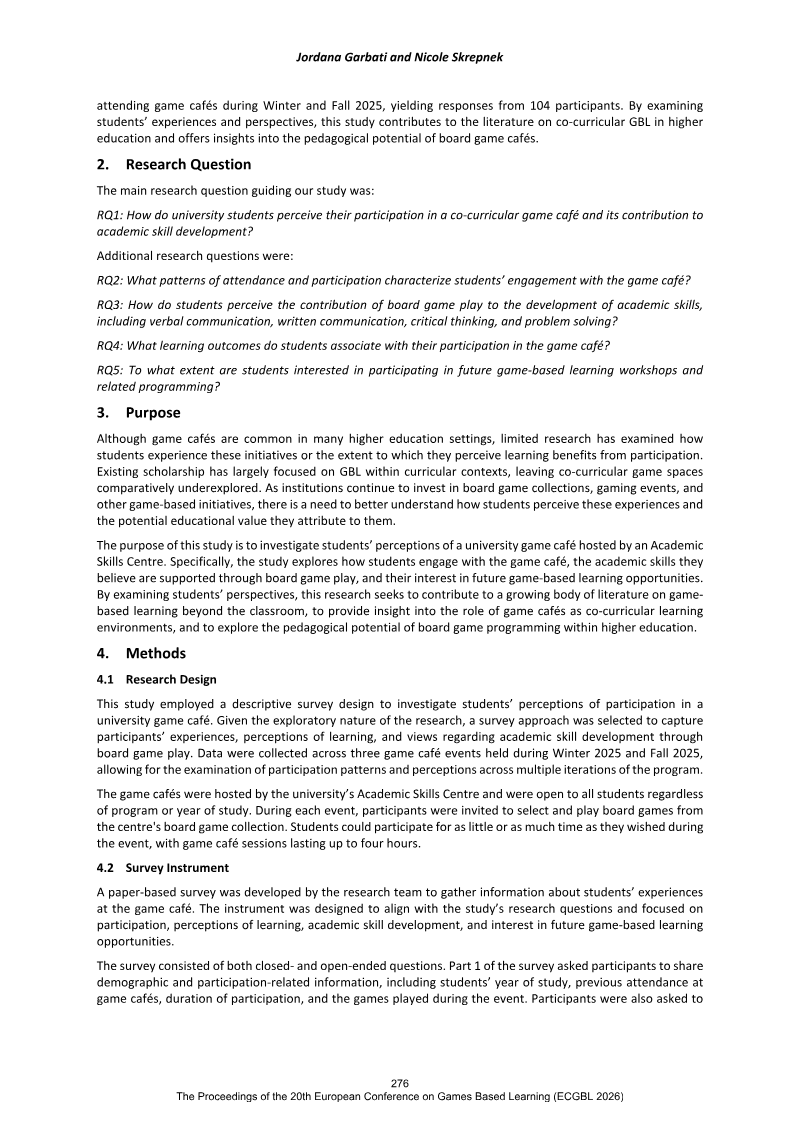
University of Toronto · 2026



European Conference on Games Based Learning (ECGBL) · 2026



European Conference on Games Based Learning (ECGBL) · 2026



European Conference on Games Based Learning (ECGBL) · 2026



European Conference on Games Based Learning (ECGBL) · 2026
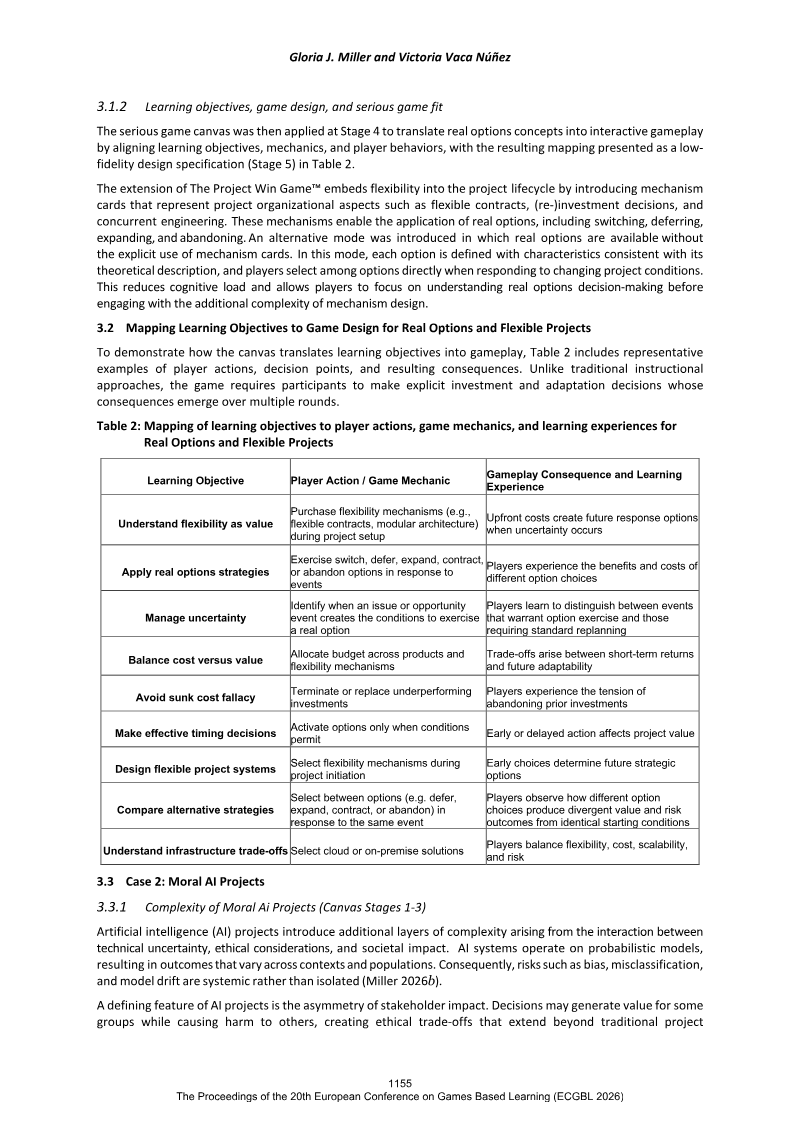
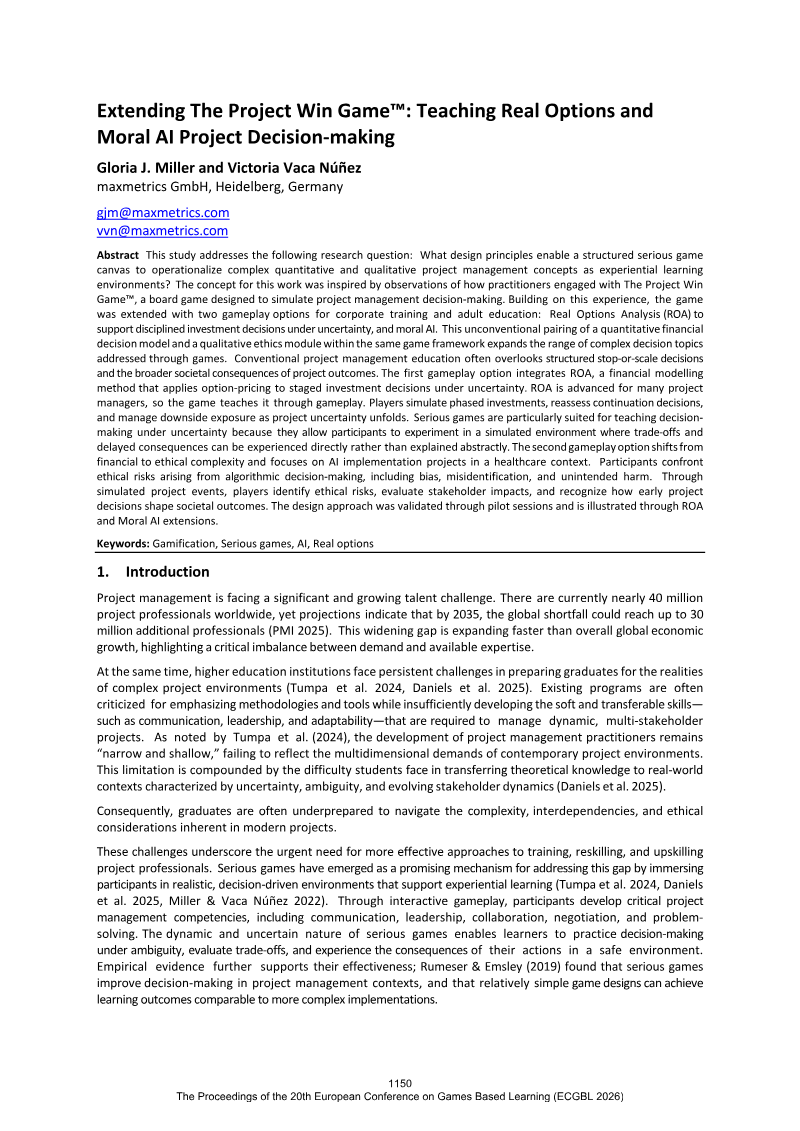
maxmetrics · 2026



European Conference on Games Based Learning (ECGBL) · 2026
PocketGamer.biz · 2025