1 free read left. Create a free account for unlimited reading + AI research.
Create free account
Oceanhorn's success was a product of "clear focus", says Heikki Repo
Key insights
6 takeaways- 01Cornfox & Bros. recouped the entire development cost of Oceanhorn within the first week of its 2013 launch, validating the viability of a premium pricing model for small-team mobile games.
- 02Development efficiency was driven by a custom 3D tile engine that enabled rapid level design and testing, alongside a strategy of reusing art assets across diverse environments.
- 03The three-person studio achieved a 15-hour gameplay experience by pivoting from an unsuccessful open-world design to a linear progression model, which allowed for better resource management and narrative control.
- 04The project prioritized high-impact production values, resulting in 35 minutes of cinematics and 40 minutes of original music despite the team's limited size.
- 05A marketing strategy centered on visual clarity—using a single, evocative screenshot—drove 100,000 visitors to the development blog following the initial announcement.
- 06The game earned an 85 Metacritic score and an Apple Editor’s Choice award by successfully filling a market gap for console-style adventure games on mobile platforms.
Ask AI about this video
Transcript
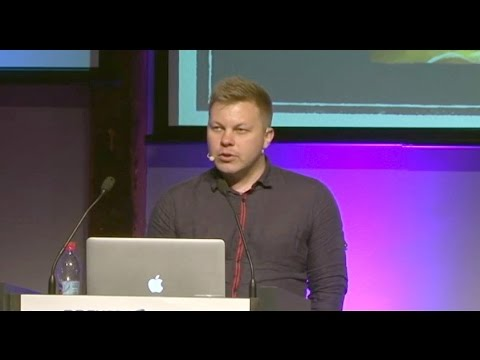
I want to tell you about how to make uh ambitious games with very small video game studios. So uh our company corn folks and brothers uh are a threeman team. Uh I'm the creative director in our team uh I'm behind the art and story and game design. And then we have a uh two lead programmers. Uh Auntie and Yuka William are their brothers. So and they're back in there in the audience. So uh there's been a lot of talk about publishing and all the approaches with uh premium and and uh premium marketplace. Well uh my presentation will be about a kind of a personal experience with uh this particular project which was uh very dear for all of us. So, um, in the beginning, uh, we wanted to make a game that was missing from the
marketplace and I'm talking about the app store and and the beginning for, uh, our project was in 2010 uh, when I got my first uh, iPhone 3GS and I I was searching for uh, console style adventure RPGs like Sega Densetsu or uh, Secret of Mana or Zelda games and they were missing from the marketplace. So, uh I'm a big fan of old JRPGs. So, I really wanted uh people to have that kind of experience. And uh even though I we had been working with the industry for several years, we never had the chance to show what is the like the best thing we could do. So, this was a project where we could uh realize our childhood dreams and go for the big adventure game. uh game that could be maybe compared to some of the classics or at least it would be an alternative for people in app
store. Yeah. So the plans were to make a colorful action RPG. Uh we had plans to because we're a small team, we need to maximize our effort somehow. So we designed this uh 3D tile engine uh inspired by Minecraft. Uh we call it rock. And we made all the levels for Ocean Horn with this editor. Uh it runs on uh iPad and uh all the levels are done with iPad and we can immediately test them and it's easy to share them via iTunes and all all that. But it's it was fun to work with. You could make levels on your sofa or or uh in an airplane or in a bus while going to work or anything like that. So there's a one thing to make uh your uh project efficient is uh the right tools. And I think our editor enabled us to create a much bigger game
that we would have done with uh uh some 3D software or I don't know well we don't have any experience on Unity. So Oceanon runs on our own engine. Uh we share with Mountain Sheep. Yeah. So um about the game development, let's get in there. So there were a lot of new things for us. Uh one was of course the 3D tile editor. It it needed to be designed uh perfectly because all the content for the game would be done done uh on the fly while while the production was going. Of course uh we had done previously Death Rally for iOS and later it was uh ported to PC. So we didn't have a a game engine that would support bone animations and uh advanced shade shaders. So those were the new things. And um about experimenting uh we had the core gameplay working immediately
because uh there's some really good examples of amazing adventure games out there. So we had that part working immediately. But um when we started to explore the idea that how would the game progress uh we tried to do something uh more experimental with uh open-ended exploration that player could visit all the island in any any order he wished and he would pick up the uh fragments of the massive backstory from from objects around the world like from books or stone tables or some poor fellow's diary who um fell into a cliff down the cliff or something like that. And uh the open world concept failed miserably for us. The test players weren't drawn into the world. We thought there was a lot of uh interesting things inside the game, but
the they never found it. Uh, one of the reasons was also the camera angle, top down camera angle. Uh, in open world games, you see a goal and you try to approach it and game designers can uh, put all those important pieces uh, on the on the way there. But it didn't work for us. We needed to be in from the game needed to be from this camera angle because of the restrictions of the platform. And uh back in the day when Osen Horn started uh Osen Horn development started in 2011 uh the iOS platform was quite modest in sense of uh processing power. Yeah. So that's uh about the fail concepts because next we were quite successful and uh we made this decision to go all in with the development. We wanted the cinematics to inspire player to uh roam through the world. Uh linear
progression uh enabled us to control the information player gets and of course difficulty levels and all that. Uh but we we could keep some of the uh open world elements inside the levels. I I'm not quite sure if that was the right idea, but we we have received kind of a positive and negative feedback on that. Maybe it it gave Oceanhorn a little bit of retro feel because of the difficulty levels because of openness in in some some of the islands. So with these uh decisions, we got a strong bonding with the world through the story in in test players and we could reward them with uh cinematics and all all that things. And uh there was just a perfect sense of progress when you when you get into new places and beat the big bosses. And uh this was a very uh big budget video game
way of doing these things. And it was a little bit scary at that time that we're threeman team. Can we make all the cinematics and boss battles for this game because uh it expanded from the original idea. Yeah. So this is ruining the ending of Ocean Horn for some. That's the final final moments there in the in the game. But uh so yeah so we had limited resources and we had this huge thing to tackle. Uh I want to give some tips. Johannes had some great tips on his presentation about Badland. So these are more from the development side. So uh when we were unsure can we make this game like we want wanted to make uh we started to focus on the features that had the biggest impact on the complete experience of Ocean Horn and features
that take it leaps towards the goal rather than uh small steps. So it it was really uh we needed to we could go back later and fine-tune assets or uh let's say boss battles. We did uh all the boss battles and then be before the launch we we did really uh good testing on each of them and try tried to get the difficulty level perfect. But it was uh at that point when we knew that we have all we we want wanted the game to have. So yeah, and uh one of the things I I'm artist in in this game, so I wanted uh art assets that I could use all over the world like uh even uh from from grave to ice dungeon, I could use those art assets all over the place. Uh because um it was still a huge uh um task to do all the work for that. There's some
numbers later on. So um we are making games for audience that is accustomed to playing blockbuster games like new new Final Fantasy or new Zelda games or new call call of duty games. So we can never achieve that with three people. So there need always has to be some compromises and if you can get past that you that uh you cannot make everything perfect uh then you might not end up with the finished game but uh if you're willing to sacrifice some of the details and some of the fine-tuning then you will end up with a finished game which is of course our goal. Yeah. So there there were a lot of different people other than us three working in the project and I I feel like all all of them brought something very uh they all of gave their creative input into the game and it wouldn't be the same game without without the right team we had.
So uh many of the individuals working on a on a small team needs to be doing many things. So, uh, and it you need to be very self-confident sometimes that you can you can take care of the art and you can take care of the game design and you can take care of the story. And when when the when it gets to the crunching phase, of course, those those people who who have uh stuck their fingers into many places are going to be very busy, but it's worth it. Yeah, it's so you can give your creative uh input into the game. So, but we had perfect network of people we we were able to gather during our uh during the our studio was um after our studio was founded. One was Tapioon who is a very well-known audio
designer uh in Finland. He has done some big PC games lately, but we knew him from uh mountain ships, miniigore games. And Kalo is old friend of mine from my hometown. We I've known him since we were 14 years old. And uh he's a musician and he wanted uh to get into u movies and uh game development. So uh he made his debut soundtrack for Ocean Horn and uh many people doesn't recognize which songs are from Nouatsu and which from Kala is really talented and I have I'm happy to have him on our team and uh we got some help from mountainship we share the same office and have shared that for um many years now. So uh that's u uh an another asset a small studio can have is a strong friends. So ocean horn
numbers there's 500 environment assets many characters with unique animations. Story is quite big. I I have a Final Fantasy 6 uh script uh word count there for reference. Um, we have 35 minutes of cinematic, 40 minutes of music, 15 plus hours of play time. So, it's quite a big game actually. And I'm surprised so many people finish it when they start start playing the game because I've had some positive feedback here today that people uh played it until the end. It makes game designer very happy, man. So, yeah. Uh, here's something. There's a lot of text. I'm going to go through this quickly. So from publishing a marketing side uh we used the same tricks and as frogmind did with badlands uh when we announced ocean horn we had a single screenshot and we got a tremendous uh
welcoming from from uh video game public. Uh it was uh the article was featured in touch arcade and Kotaku and we had 100,000 people visiting our development blog in a single day when we only had there this screenshot and and small text that says we're we're starting to make this game. So there was basically nothing else than the screenshot at that point. Yeah. So marketing material this is I I took this uh here because uh what uh was very beneficial from u financial side for ocean horn was that uh it is e very easy to see what the game is about from a single screenshot. So this actually will affect on all of our future games that we will try to make games where people know from a single screenshot what kind of experiences they will have. And that's uh also goes into the creative
discussion because when you're making something that's completely different, it it might have u difficult times uh resonating with the audience if they don't recognize that is this something I want from a screenshot then it relies more on the on the peers experiences. Yeah. Yeah. So we have a great relationship with Apple. It's uh it it started with Osen Horn but we previously knew the people from there with Death Rally project. Yeah. So price point gives a sense of value of your of your uh game. So we have a high price point. We got a great uh reviews from the fans of the series. So uh so app store ratings were good when we launched. And here's some some uh numbers about Ocean Horn. So uh from the launch week we got the editor's choice for the first first uh week of launch around the world. So it
was a really big thing for us and we made our development costs in a week. Uh Apple later awarded us with number one best indie game of 2013 and we have had many numero uh featuring from Apple afterwards that we have a nice thing going on with there the for some reason they like very much what we're doing with this premium title and Metacritic score is 85 and I'm really happy about that. um and to speed up a little bit. So, what's next for us? Uh we're going to bring out um game of the year edition of Ocean Horn. This is something we want to do for all of our fans who are asking for more more of this world and more of this game. Uh in the meanwhile, we're doing some other plans for the future. So this is a big um uh content update
for all the customers who have bought it with a quite high price and we're working on our next game and the production should start next autumn. So that's about it. Thank you. S.
Summary
The development of the action RPG Oceanhorn by Cornfox & Bros. serves as a case study for how small, three-person studios can produce ambitious, high-quality titles by maintaining a clear creative focus and leveraging efficient production workflows. Initiated in 2010 to address a perceived gap in the mobile marketplace for console-style adventure games, the project aimed to capture the essence of classic JRPGs. Despite early comparisons to The Legend of Zelda, the team prioritized a distinct, original vision that relied on a custom 3D tile engine, which allowed for rapid level design and testing on mobile hardware.
The development process involved significant iteration, particularly regarding the game's structure. An initial attempt at an open-world design failed to engage test players, leading the team to pivot toward a more linear progression model that better controlled the narrative flow and difficulty. This shift enabled the team to effectively manage their limited resources, focusing on high-impact features such as cinematic storytelling and boss battles. By reusing art assets across diverse environments and prioritizing core gameplay loops, the studio successfully delivered a substantial experience featuring over 15 hours of gameplay, 35 minutes of cinematics, and 40 minutes of original music.
Marketing success was driven by a strategy of visual clarity, where a single, evocative screenshot was sufficient to communicate the game's value proposition to potential players. This approach generated significant early interest, with 100,000 visitors to the development blog following an initial announcement. Upon its 2013 launch, the game achieved critical acclaim, including an 85 Metacritic score and an Apple Editor’s Choice award. The title recouped its development costs within the first week, validating the studio's commitment to a premium pricing model and demonstrating that small teams can compete in the blockbuster-dominated mobile market through disciplined scope management and strong creative partnerships.
















Comments