Key insights
7 slides
Market Share
Apple holds the largest share of active mobile devices in China.
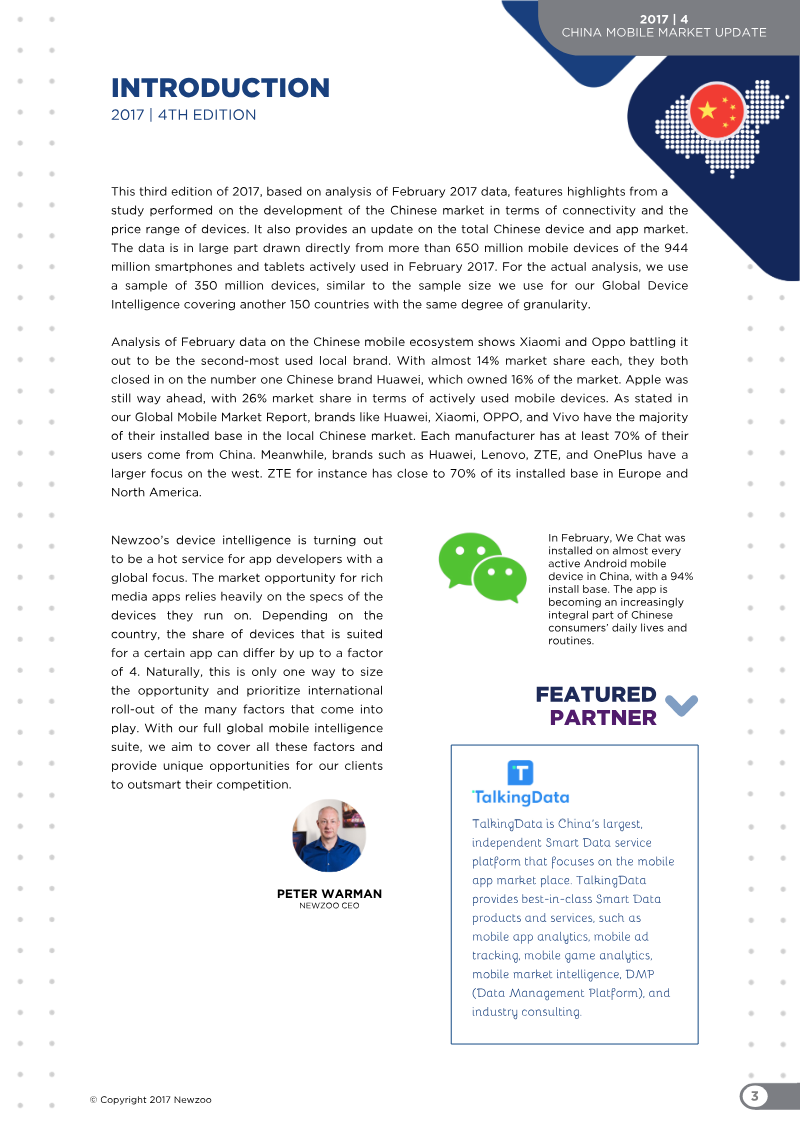
Apple leads the Chinese mobile market with 26.3% of active devices. Huawei follows with 15.6% of the market.
Competitive Landscape
Xiaomi and Oppo each capture a significant share of the active device market.
Xiaomi and Oppo are highly competitive in the Chinese mobile market.
Page 3 of the report13.8%
Xiaomi's share of active devices in China.
- Oppo
- 13.8%
Connectivity Shift
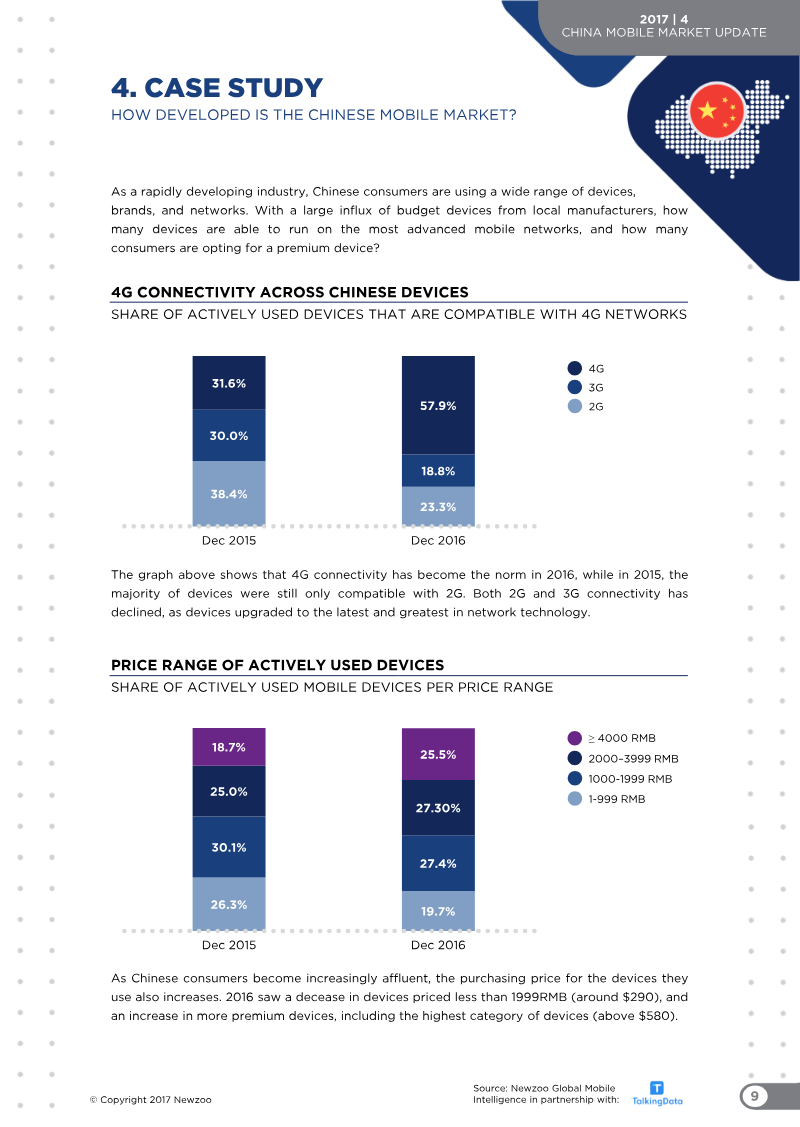
4G connectivity has become the standard for active devices in China.
In February 2017, 57.9% of active devices used 4G connectivity.
Page 9 of the report57.9%
Active devices using 4G connectivity in February 2017.
- in 2015
- 31.6%
Premiumization Trend
The Chinese market shows a clear trend towards premium mobile devices.
There is an increase in devices priced above 2,000 RMB. Concurrently, there is a decline in budget devices priced under 1,999 RMB.
Like trading up from a basic car to a luxury model, consumers are opting for higher-priced phones.
App Store Leader
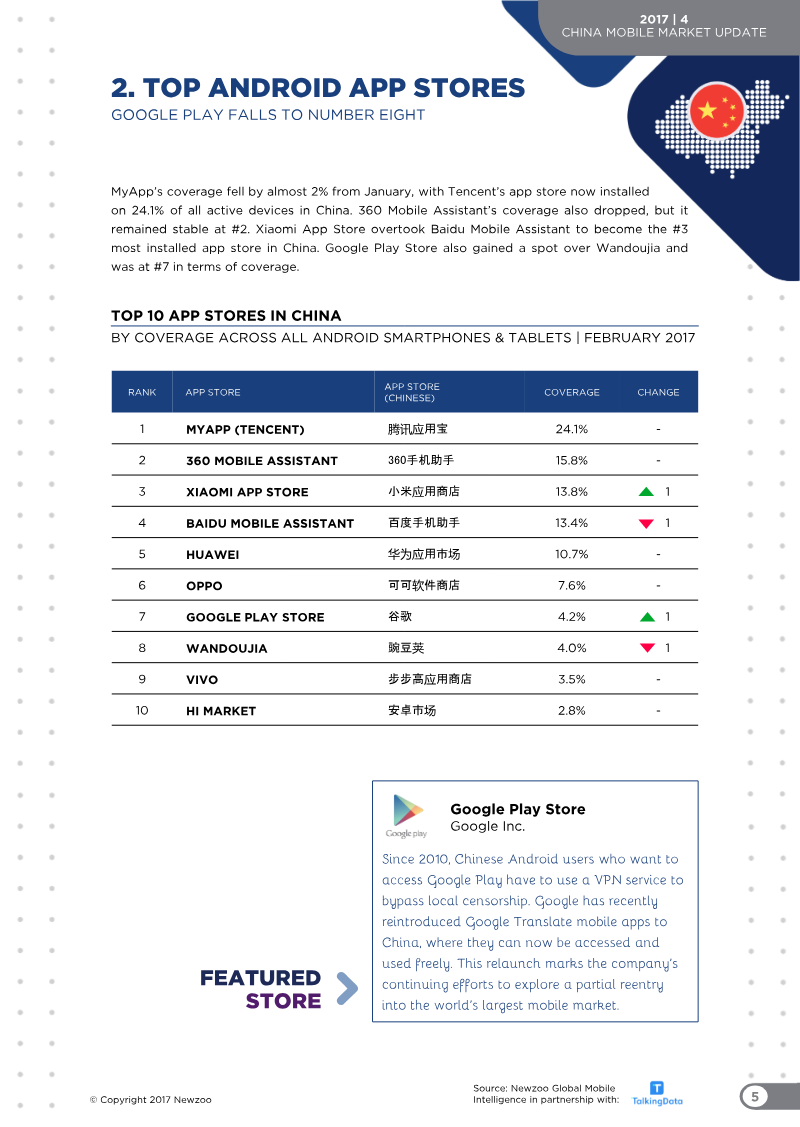
Tencent’s MyApp is the leading app store in the Chinese market.
MyApp holds 24.1% market coverage.
Ubiquitous Application
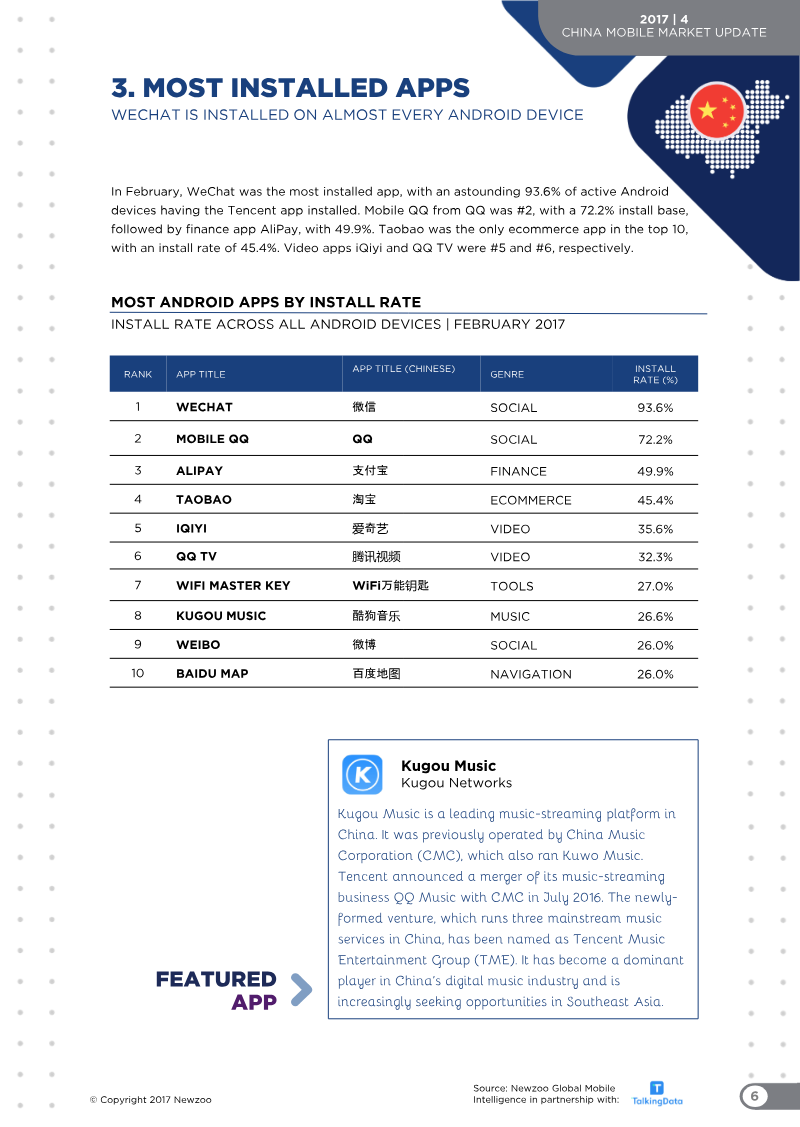
WeChat maintains near-universal dominance on active Android devices.
WeChat is installed on 93.6% of active Android devices.
Gaming Leaders
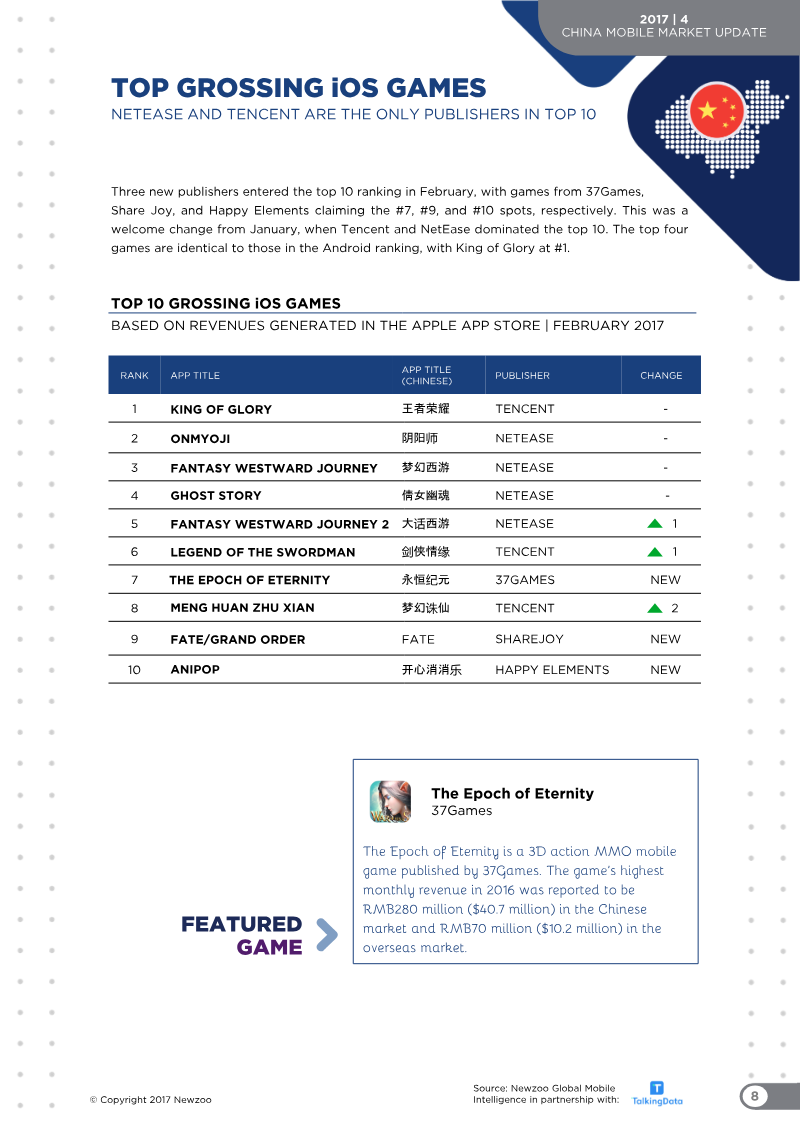
Tencent and NetEase dominate the gaming sector in China.
Titles like King of Glory and Onmyoji lead both Android and iOS revenue charts. These companies maintain a stronghold on gaming revenue.
1 / 7
Ask AI about this report