ReportNewzoo
Global Monetization of Games: Emerging Markets as Drivers of Growth
34 pages~9 min full read
Key insights
5 slides
Market Size
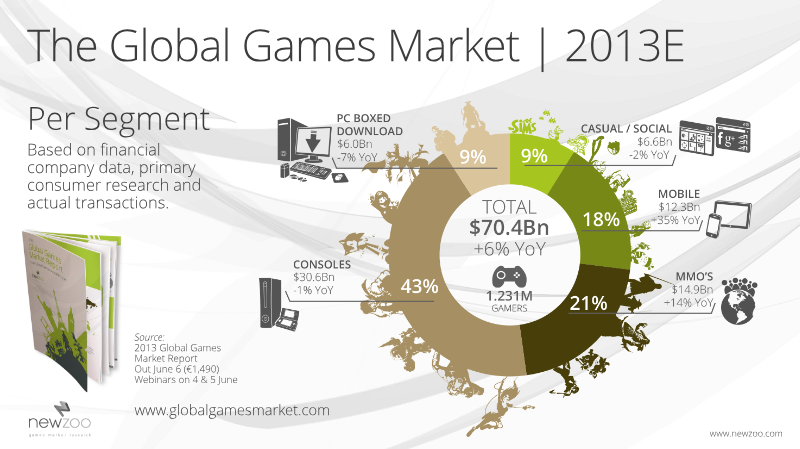
The global gaming market is projected to reach $70.4 billion.
Mobile gaming is the primary catalyst for this expansion. It currently experiences a 35% year-over-year growth rate.
New Metrics
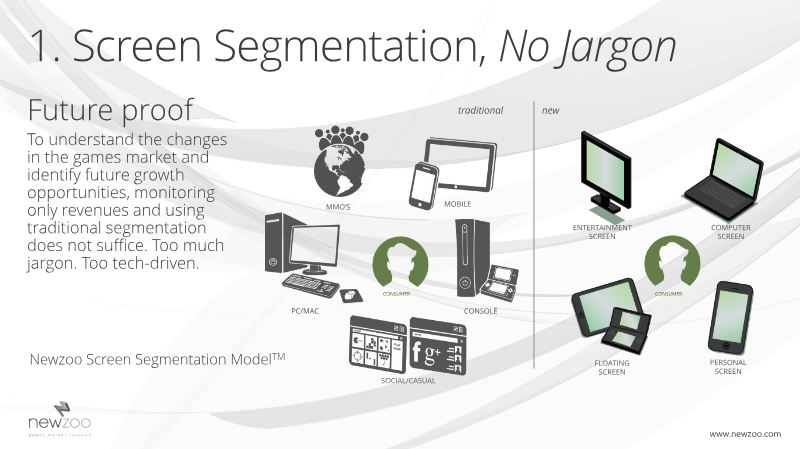
Companies must shift to a screen segmentation model.
This model tracks player behavior, time investment, and conversion rates across devices. It replaces traditional platform-centric metrics.
Growth Drivers
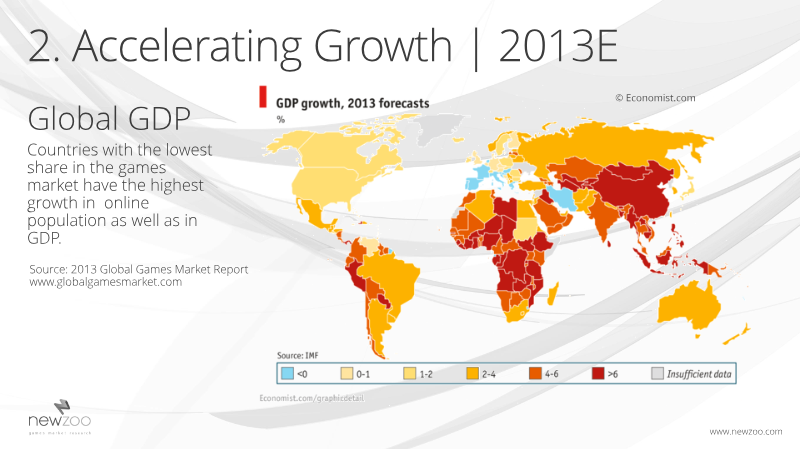
Emerging markets are primary engines for industry-wide growth.
Specifically, Russia is identified as a critical region for this growth in the 2013 landscape.
Operational Shift
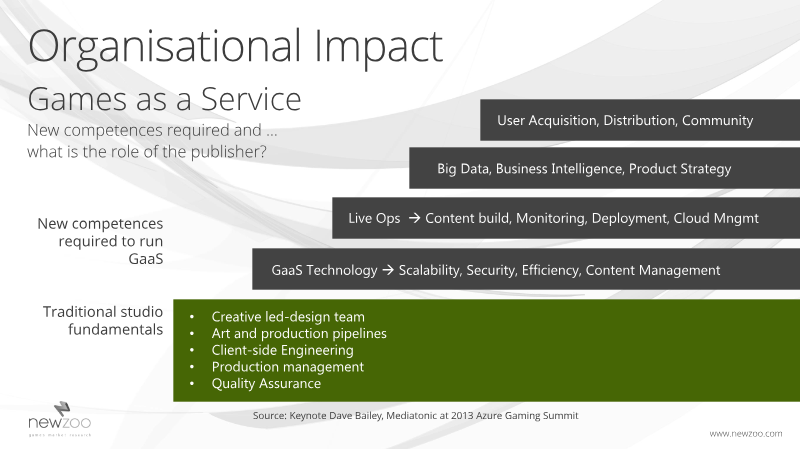
Organizations must transition to a 'Games as a Service' framework.
This framework centers on live operations, data analytics, and community management. It aims to maximize lifetime value and retention.
Data Integration
Sustainable growth depends on synthesizing consumer data and localized insights.
It combines granular consumer data with localized demographic insights.
1 / 5
Ask AI about this report