1 free read left. Create a free account for unlimited reading + AI research.
Create free accountArticle G|A|M|E – The Italian Journal of Game Studies
1 free read left. Create a free account for unlimited reading + AI research.
Create free accountArticleG|A|M|E – The Italian Journal of Game Studies
The paper argues video game narrative time cannot be analyzed with film tools, because the player's actions help shape the story itself.
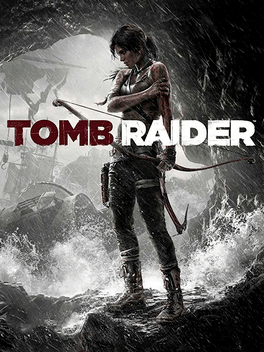
This paper argues that narrative time in video games cannot be analyzed with the same tools used for film, because the player's actions help shape the story itself. To address this gap, it introduces "participation time" as a third temporal layer alongside story time and discourse time. Participation time captures the duration a player spends in a given event, which may diverge sharply from the story's implied duration; a climbing sequence in Tomb Raider, for instance, may last ten minutes or several times that depending on the player's skill. The analysis draws on Genette, Juul, Eskelinen, and Maietti to distinguish player-controlled from system-controlled durations, and it identifies a distinctive problem: flashbacks and flashforwards, which film handles routinely, produce temporal paradoxes in games, since a player-controlled avatar cannot easily return to an earlier moment or act on future knowledge without contradiction.
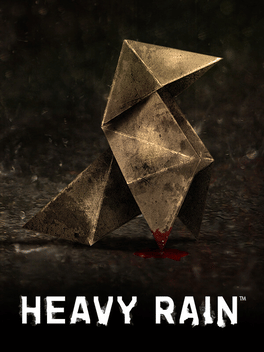
The paper's central claim is that the loop is the characteristic temporal convention of video games. Most games are linear in narrative order, with some titles employing fuzzier, spatially anchored temporality. Story time and participation time generally share the same duration, and apparent anomalies such as pauses or time-accelerating devices, as in Majora's Mask or the clock mechanism of Heavy Rain, are explained through participation time rather than dismissed as narrative incoherence. The loop itself works differently across media. In games, story time remains singular while the player's participation time repeats events extradiegetically, with the repetition driven by the player's own choices. In films such as Groundhog Day or Rashomon, loops appear intradiegetically, as anaphoric repetition or as multiple versions of the same events.
The concluding analysis treats the loop as a device that generates tension between discourse time, which corresponds to participation time, and story time. While flashbacks have a long tradition in cinema, loop-based temporal manipulation is comparatively rare in film and mostly appears in works inspired by games. Even when adapted, it lacks the interactive participation that defines the video game loop. The paper concludes that the loop has become a key feature of video games and, although it has migrated to film, remains narratologically distinct because film is not an interactive medium.
Each row is a game or company this document names, each column a document, oldest first. A mark means that document names it. Select a row to see those documents.
G|A|M|E – The Italian Journal of Game Studies · 2026
G|A|M|E – The Italian Journal of Game Studies · 2026
G|A|M|E – The Italian Journal of Game Studies · 2026
G|A|M|E – The Italian Journal of Game Studies · 2026
G|A|M|E – The Italian Journal of Game Studies · 2026
G|A|M|E – The Italian Journal of Game Studies · 2026
G|A|M|E – The Italian Journal of Game Studies · 2026
G|A|M|E – The Italian Journal of Game Studies · 2026
G|A|M|E – The Italian Journal of Game Studies · 2026
G|A|M|E – The Italian Journal of Game Studies · 2026
G|A|M|E – The Italian Journal of Game Studies · 2026
G|A|M|E – The Italian Journal of Game Studies · 2026
DiGRA · 2026