
Microsoft’s financial performance for the second quarter of fiscal year 2024 reflects a period of robust growth and significant structural expansion. Total revenue reached $62.0 billion, representing an 18% increase, while operating income rose 33% to $27.0 billion. This growth was underpinned by a 24% increase in cloud revenue and a substantial surge in gaming revenue, the latter primarily driven by the $75.4 billion acquisition of Activision Blizzard. This acquisition fundamentally altered the company’s balance sheet, adding $50.9 billion in goodwill and $22.0 billion in intangible assets, while simultaneously impacting the More Personal Computing segment.
Beyond revenue gains, the company maintains a strong liquidity position, returning $8.4 billion to shareholders through dividends and share repurchases during the quarter. However, the financial outlook is balanced against significant legal and regulatory challenges. Most notably, the company is actively contesting a $28.9 billion tax adjustment proposed by the IRS concerning intercompany transfer pricing. Management also continues to navigate complex accounting estimates related to cloud revenue recognition and business combinations, while preparing for the implementation of updated FASB standards regarding segment and income tax disclosures in upcoming fiscal years.
Operational risks remain a central focus, with the company highlighting intense competition in the artificial intelligence and cloud markets. The high cost of maintaining global infrastructure, coupled with potential supply chain disruptions for critical hardware, poses a persistent threat to operating margins. Furthermore, the company faces an evolving threat landscape characterized by sophisticated cyberattacks and nation-state actors, alongside increasing global regulatory scrutiny regarding data privacy and AI development. These factors, combined with potential labor market shifts and geopolitical instability, necessitate continuous investment in defensive measures and strategic talent management to sustain long-term market competitiveness.
Microsoft · 2026
Microsoft · 2026

Microsoft · 2025

Microsoft · 2025

Microsoft · 2025

Microsoft · 2025
Microsoft · 2024

Microsoft · 2024
Microsoft · 2023

Microsoft · 2023

Microsoft · 2023

Microsoft · 2023
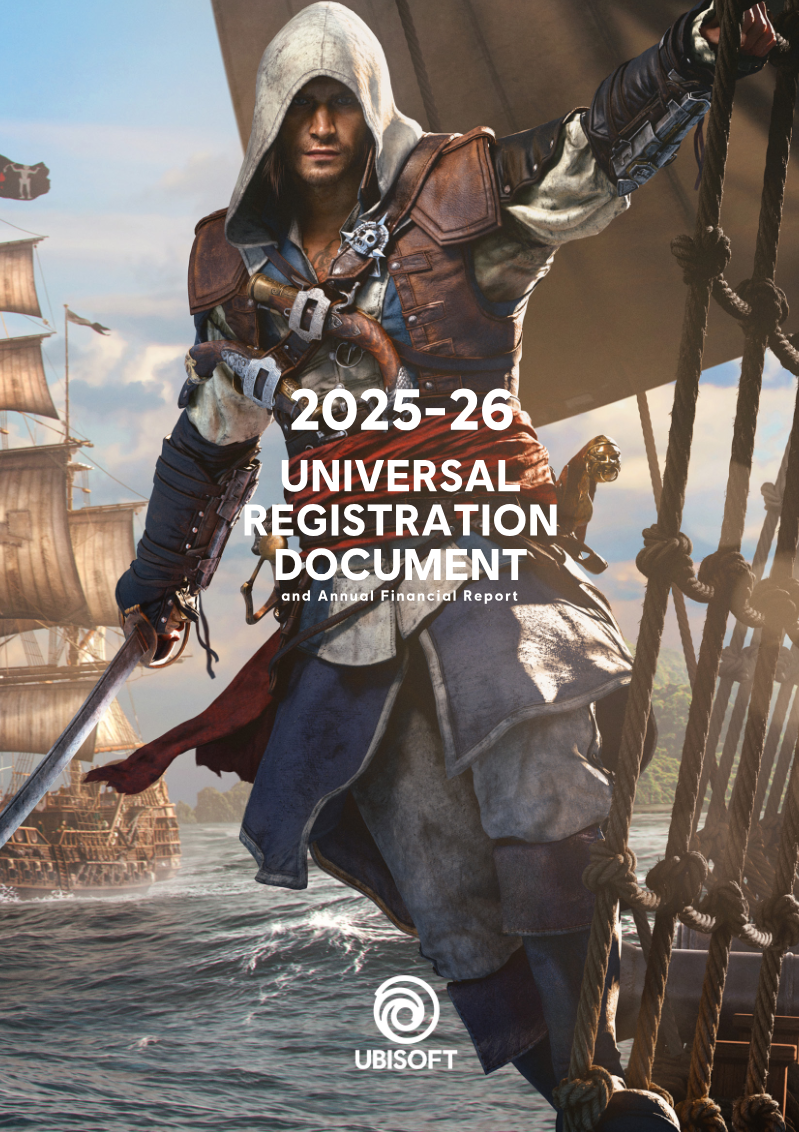
Ubisoft · 2026
Sony Group Corporation · 2026

InvestGame · 2026
Enthusiast Gaming Holdings · 2026
Drake Star Partners · 2026
Aream & Co · 2026

tinyBuild · 2026
Capcom · 2026
Modern Times Group · 2026

AppLovin · 2026
Bandai Namco · 2026
Aream & Co · 2026