1 free read left. Create a free account for unlimited reading + AI research.
Create free accountArticle Eludamos: Journal for Computer Game Culture
1 free read left. Create a free account for unlimited reading + AI research.
Create free accountArticleEludamos: Journal for Computer Game Culture
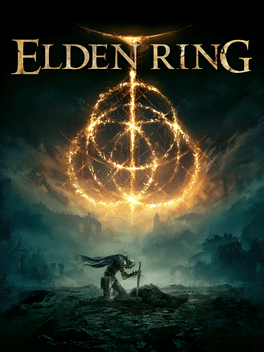
The article positions titles such as Heaven's Vault, Outer Wilds, The Forgotten City and Elden Ring as a step beyond 1990s games like the Tomb Raider series, which largely treated archaeology as a source of treasure hunts.
Caracciolo's article argues that contemporary "archaeogames" such as Heaven's Vault, Outer Wilds, The Forgotten City, and Elden Ring embody core archaeological concepts: the uncertain materiality of artifacts, a nonlinear "percolating" view of history, and open-ended interpretation. Drawing on archaeological theory from Olsen and colleagues and on New Materialist philosophy, the author positions these titles as a step beyond 1990s archaeology-themed games like the Tomb Raider series, which largely treated the discipline as a source of treasure hunts. Rather than merely depicting archaeology, these games embed its theoretical commitments into their mechanics, so that play itself mirrors the partial, contested knowledge that characterizes real archaeological work.
The analysis identifies several mechanisms through which this embedding occurs. Heaven's Vault leaves some inscriptions deliberately undecodable and renames locations according to players' guesses, meaning certain interpretations are never ratified by the game. Outer Wilds and The Forgotten City use time loops and adaptive narratives to tie nonlinear structure to a critique of linear, teleological history, requiring players to grasp the layered, interwoven character of the past in order to complete them. FromSoftware titles such as Dark Souls and Elden Ring similarly rely on fragmentary lore, environmental cues, and item descriptions that invite players to reconstruct narratives through speculative "theories," a process the author supports with reference to Miyazaki's remark that Dark Souls is "completed by players" and to active YouTube and Reddit lore communities.
The article's scope is conceptual and qualitative rather than empirical. It offers no quantitative data beyond the games examined and the historical lineage of the genre, and its evidence for collaborative fan interpretation is anecdotal. The author distinguishes this "archaeological fandom" from Mittell's "forensic fandom," arguing that these games both supply answers to find and open narrative space for creating new stories. The accompanying notes acknowledge that historical accuracy in games remains contested and frame such titles as "construction kits" for free play rather than puzzles with single solutions, a framing that underpins the article's central claim about interpretive openness.

Eludamos: Journal for Computer Game Culture · 2026
DiGRA · 2026