The Forgotten City
Game
3 documents in the library are about The Forgotten City, from writers such as DiGRA. Each has a summary and key insights with the page they come from.
Connections
Each row is a game or company named alongside The Forgotten City, each column a document, oldest first. A mark means that document names it. Select a row to see those documents.
Documents about The Forgotten City
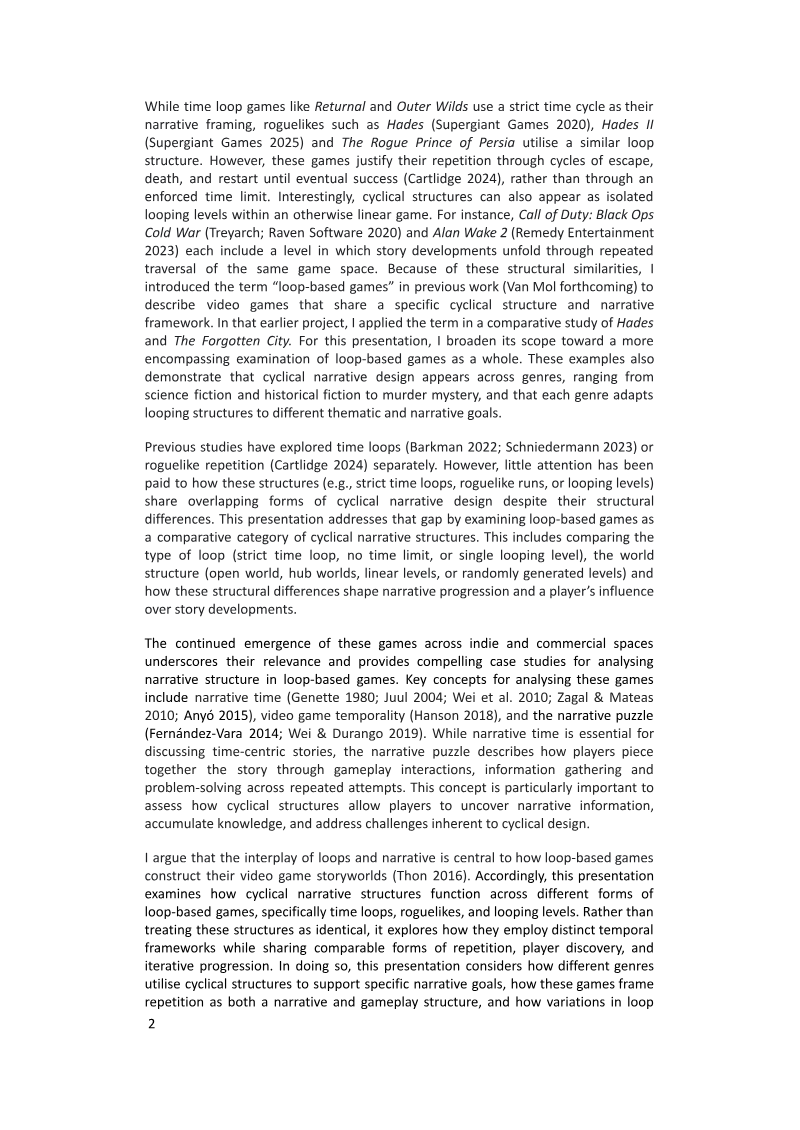
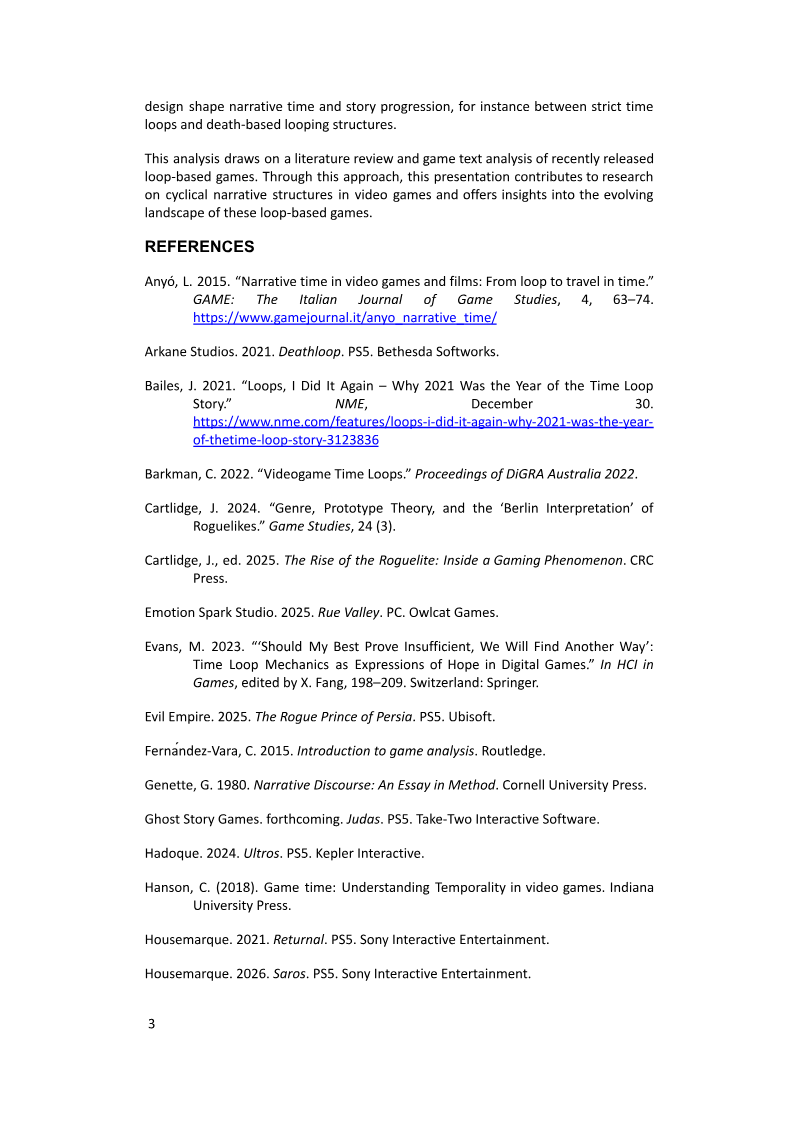
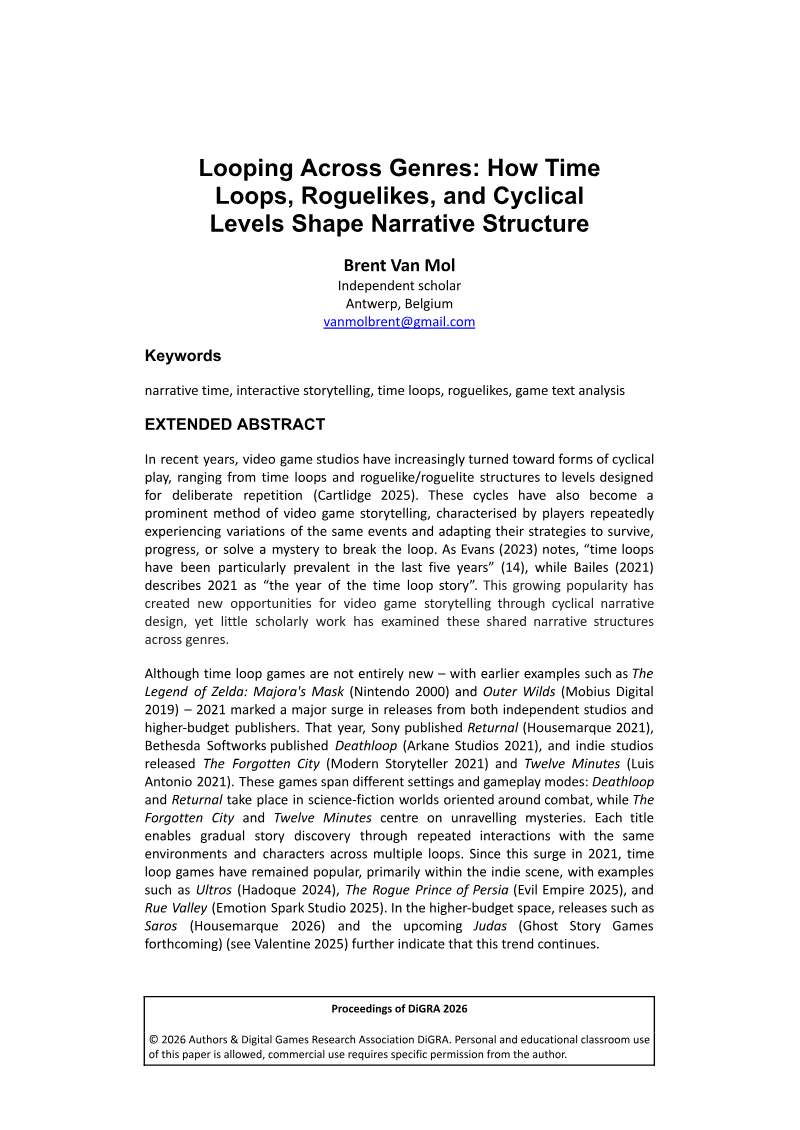
Looping Across Genres: How Time Loops, Roguelikes, and Cyclical Levels Shape Narrative Structure
This paper examines loop-based video games, a category it defines to cover time loop games, roguelikes, and levels built around deliberate repetition, as a shared form of cyclical narrative design.
- The paper defines 'loop-based video games' as a single category covering time loop games, roguelikes, and levels built around deliberate repetition, and argues that the interplay between loops and narrative is fundamental to how these games build their storyworlds.
- The paper's comparative framework assesses loop-based games along three dimensions: loop type (strict time loop, no time limit, or single looping level), world structure (open world, hub worlds, linear, or randomly generated levels), and how these choices shape narrative progression and player influence over story developments.
- The paper identifies the 'narrative puzzle' as a key concept: players assemble story information across repeated attempts, gathering knowledge and solving problems from loop to loop.
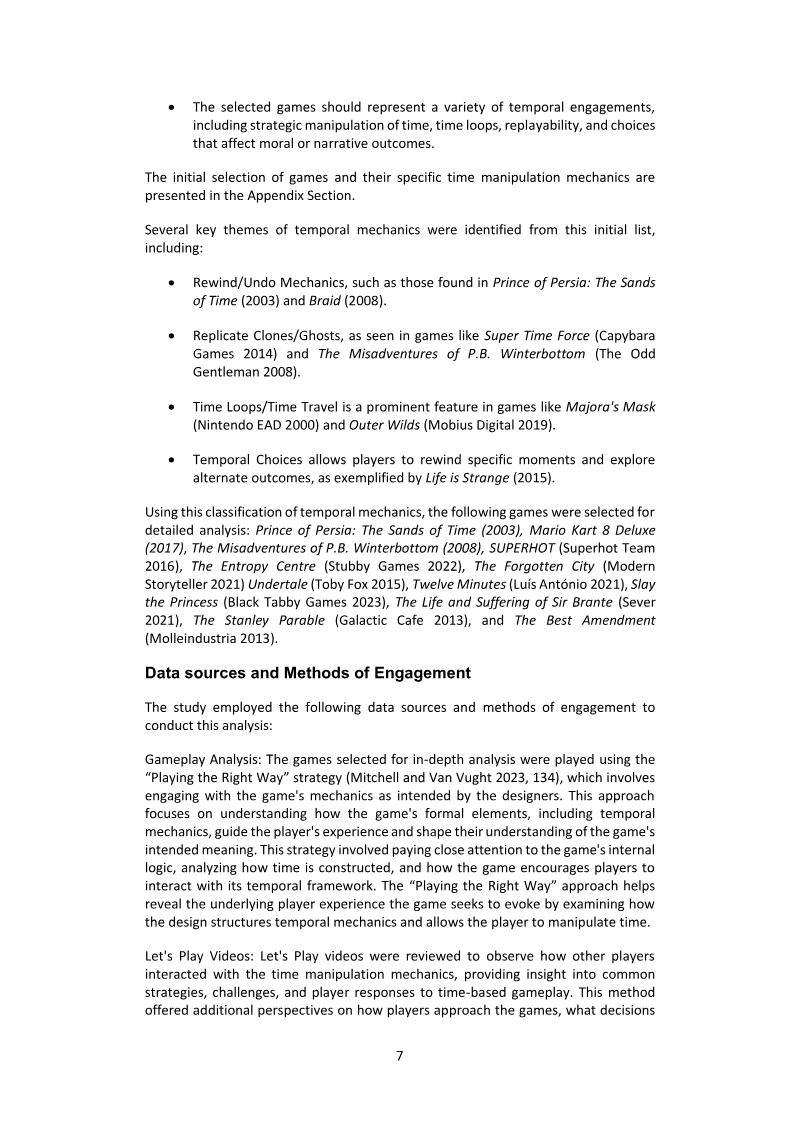
Temporal Agency and Timeplay in Video Games
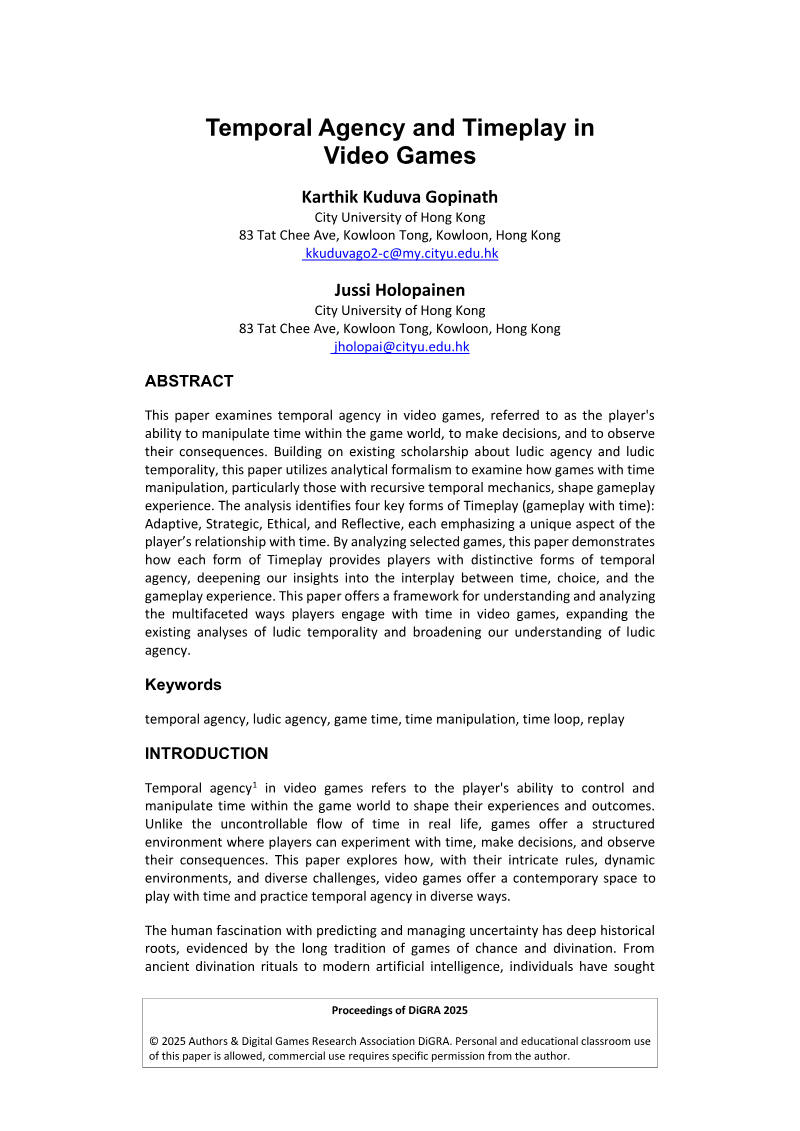
"Temporal Agency and Timeplay in Video Games" argues that the player's capacity to manipulate in-game time, through rewinds, loops, pauses, and branching narratives, constitutes a distinct and underexamined form of ludic agency.
- The paper argues that player control over in-game time (through rewinds, loops, pauses, and branching narratives) is a distinct, underexamined form of ludic agency that existing frameworks such as Zagal and Mateas's four temporal frames and Hanson's account of recursion and save mechanics do not adequately explain.
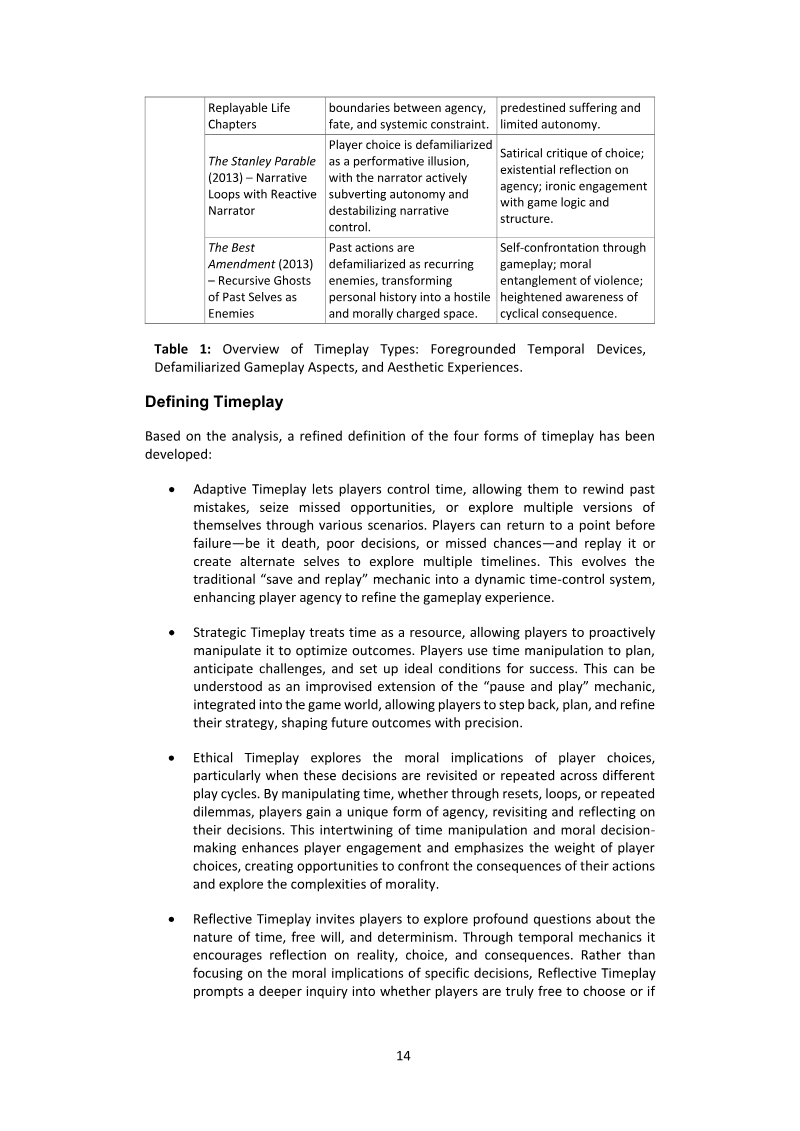
- The authors propose a four-part typology of "Timeplay" (Adaptive, Strategic, Ethical, and Reflective) to describe how time manipulation reshapes a player's sense of control.
- The study analyzes twelve games in which time manipulation is foregrounded, using gameplay analysis, Let's Play videos, and critical reviews, with detailed case studies of Prince of Persia: The Sands of Time, SUPERHOT, The Forgotten City, Undertale, Slay the Princess, The Stanley Parable, and The Life and Suffering of Sir Brante.
'Detective — What Were You Hoping to Accomplish?': Benign Violation as Means of Moral Detection in Disco Elysium
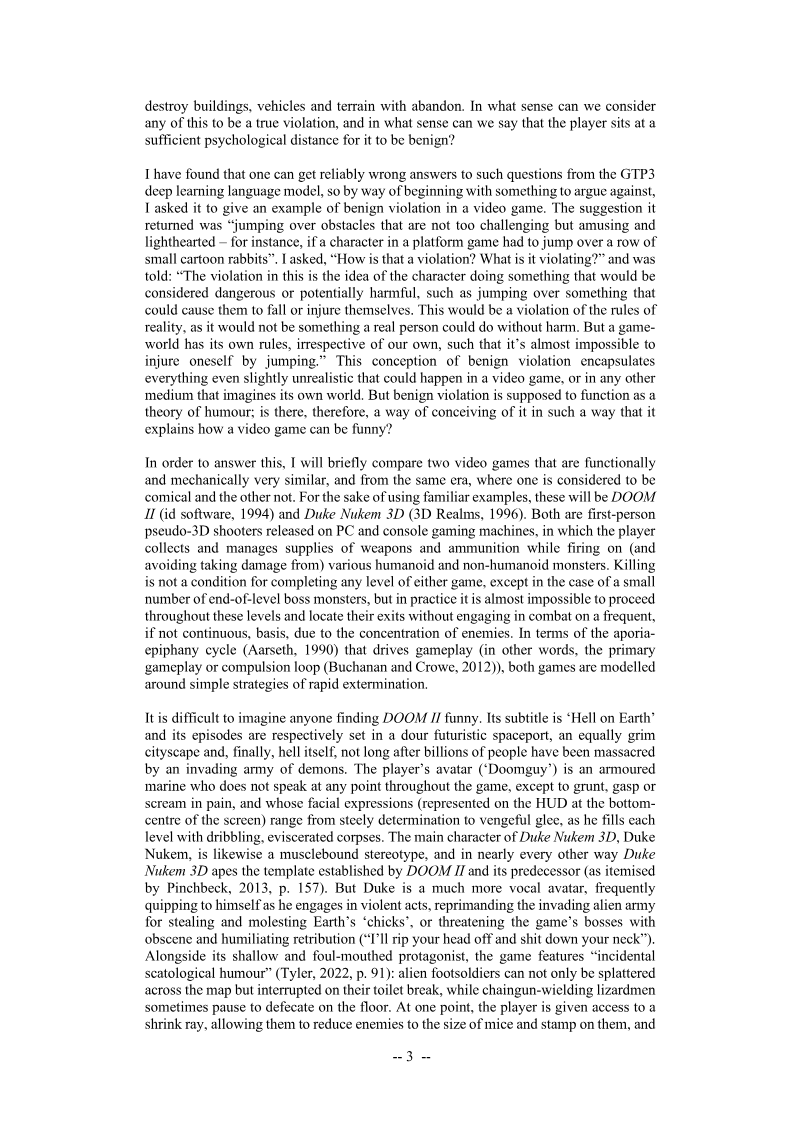
Jon Stone's paper argues that Benign Violation Theory, originally developed to explain humour, offers a productive framework for understanding how video games allow players to experimentally transgress social norms and taboos as a route to moral investigation and reflection.
- Benign Violation Theory, originally developed to explain humour, is applied by Jon Stone as a framework for how video games let players experimentally transgress social norms as a route to moral investigation.
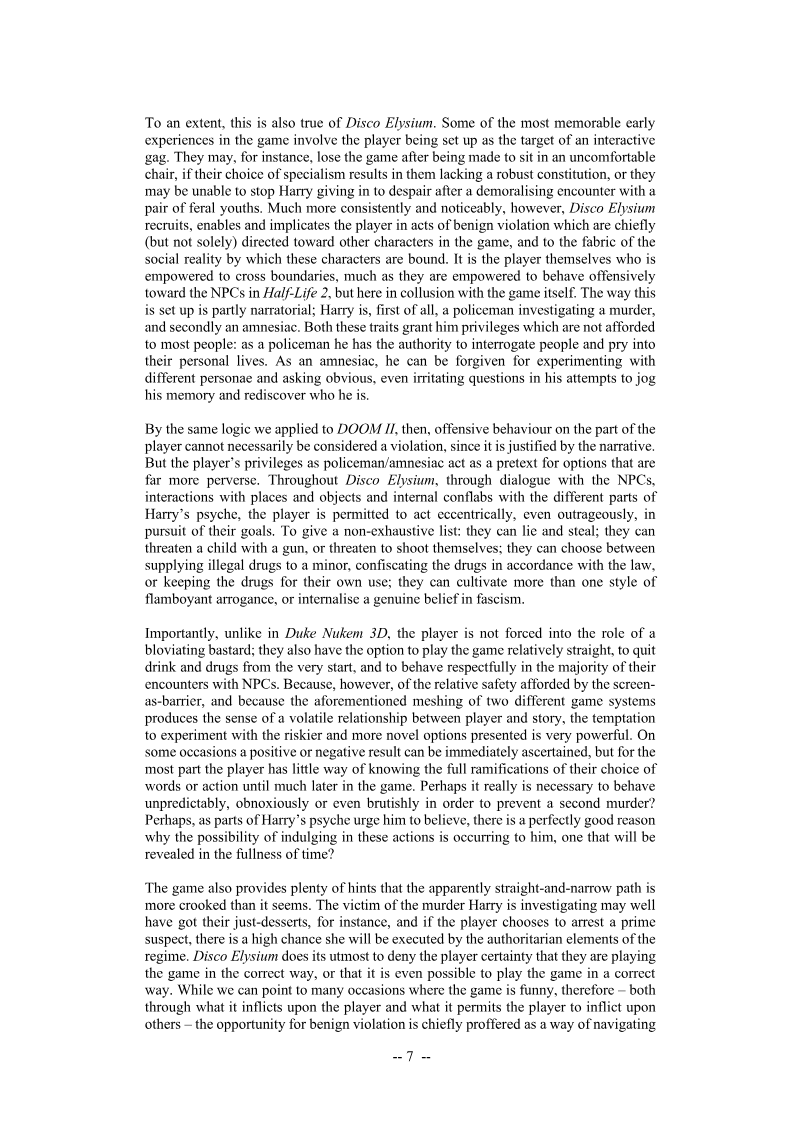
- Whether a transgressive act reads as funny, disturbing, or morally weighty depends on how the game frames it, especially whether a convincing fictive justification supports the violation or the game breaks an implicit contract with the player.
- Disco Elysium deliberately withholds certainty about which moral paths are correct, refusing to reward one stance over another so that moral navigation itself becomes the substance of both its humour and its suffering.