1 free read left. Create a free account for unlimited reading + AI research.
Create free accountWhitepaper Ludic Language Pedagogy
1 free read left. Create a free account for unlimited reading + AI research.
Create free accountWhitepaperLudic Language Pedagogy
The goal was to make the process feel more natural for undergraduate students.
Key Finding. A ludic-centered approach reduced the pressure of language acquisition, making the learning process feel more natural for undergraduate students.
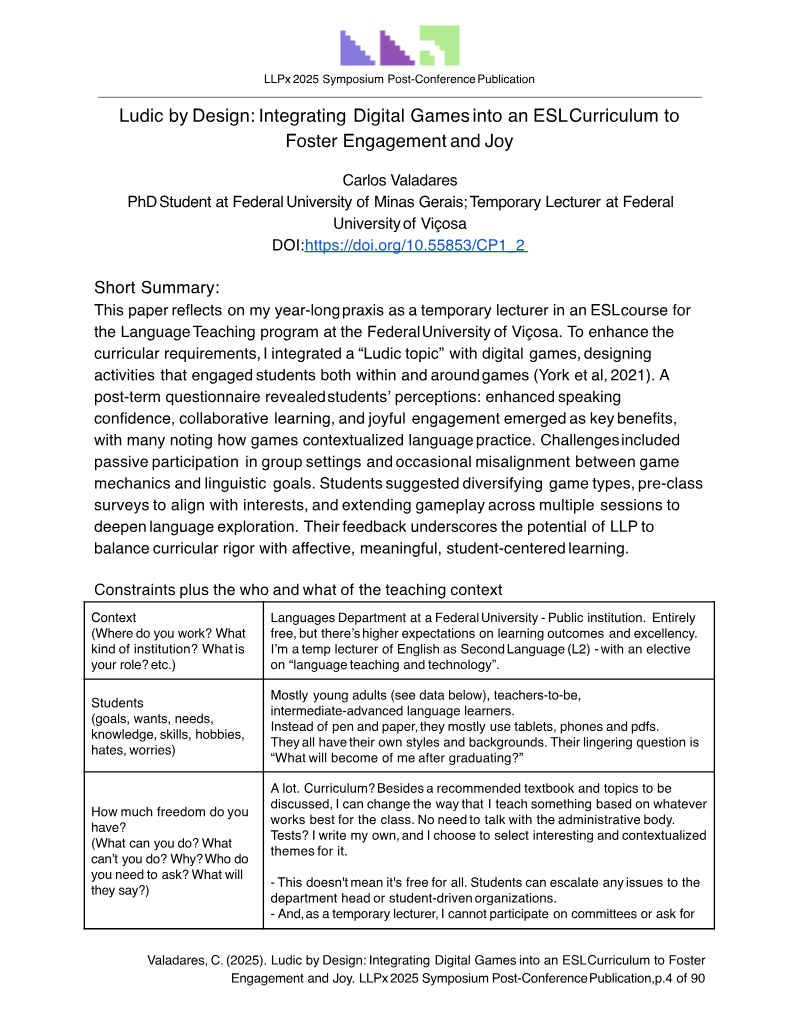
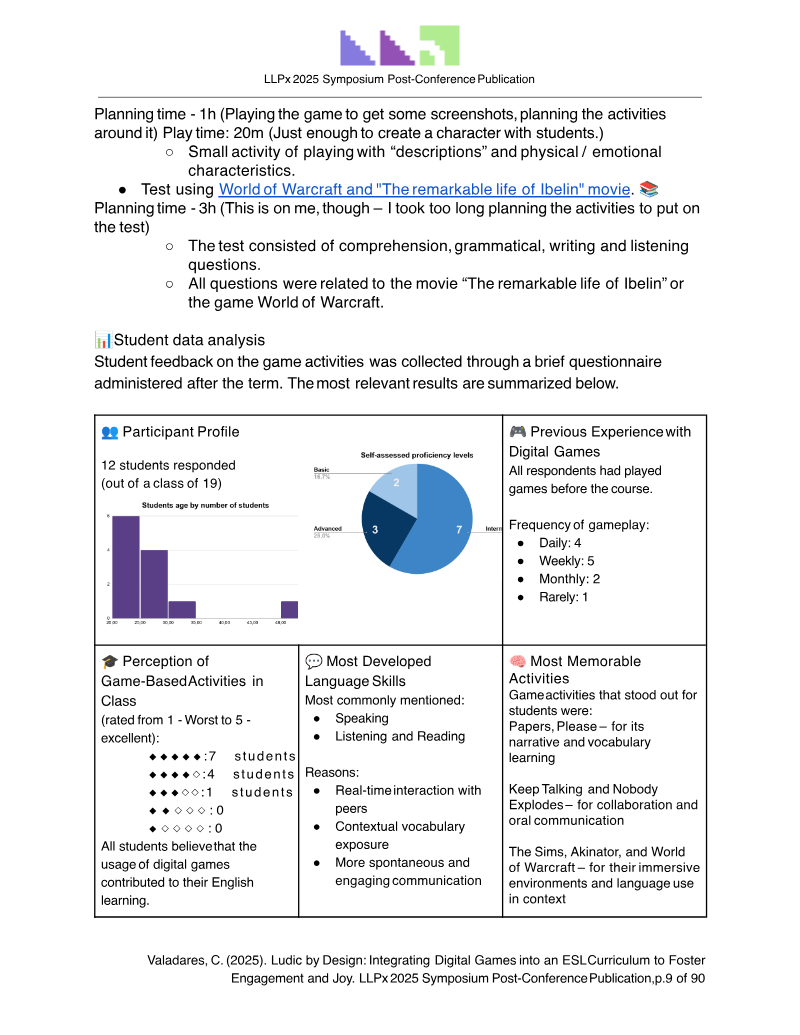
This analysis examines the integration of digital games into an English as a Second Language (ESL) curriculum at a public university in Brazil. The primary objective was to enhance pedagogical practice by incorporating ludic elements—specifically digital games—to foster student engagement, collaboration, and joyful learning. The study focuses on undergraduate students in language teaching programs, utilizing a variety of game genres, such as Papers, Please, Keep Talking and Nobody Explodes, and Bioshock, to contextualize linguistic goals and promote critical thinking.
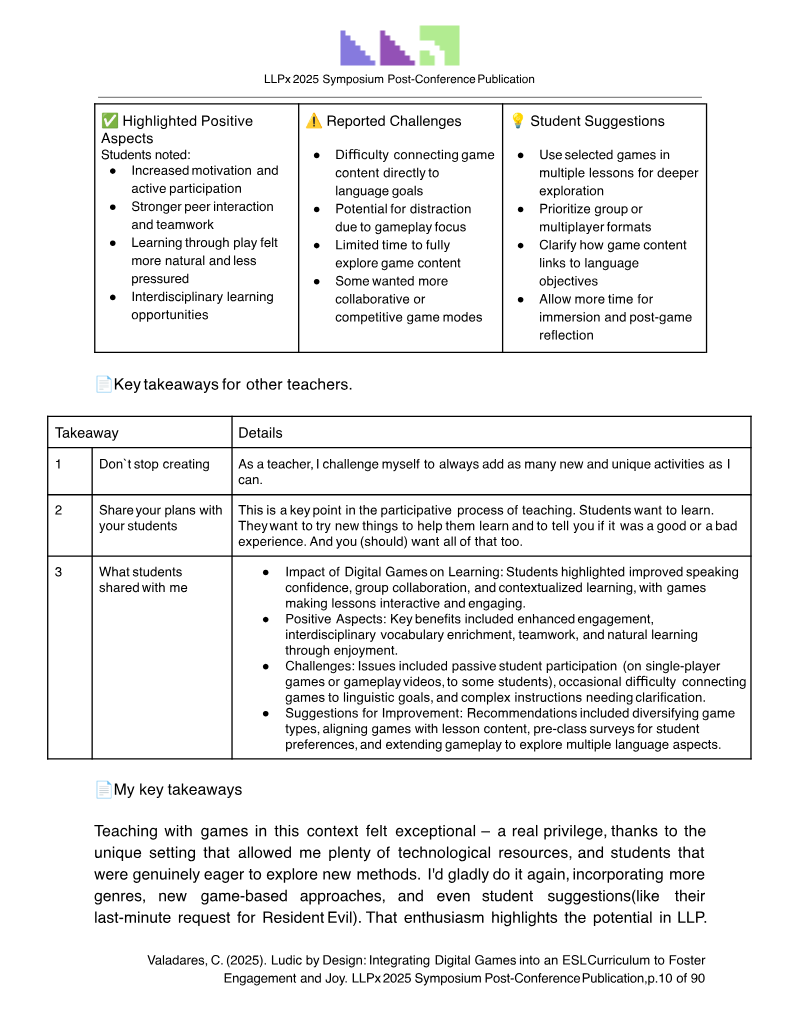
The methodology involved a year-long action research approach where the instructor implemented game-based activities within existing curricular units. Data was gathered through a post-term questionnaire completed by 12 of the 19 enrolled students. The findings indicate that the integration of games significantly improved speaking confidence, peer collaboration, and the contextualization of vocabulary. Students reported that the ludic approach made language acquisition feel more natural and less pressured. High-rated activities included those that required real-time interaction and immersive storytelling, which helped bridge the gap between theoretical language study and practical application.
Despite the positive reception, the study identified several challenges, including instances of passive participation during single-player demonstrations and occasional difficulties in aligning specific game mechanics with broader linguistic objectives. Students suggested that future iterations should prioritize multiplayer or collaborative formats, extend gameplay across multiple sessions to allow for deeper immersion, and utilize pre-class surveys to better align game choices with student interests. Ultimately, the findings suggest that a ludic-centered curriculum can successfully balance academic rigor with student-centered, affective learning, provided that instructors remain flexible and responsive to student feedback.
Each row is a game or company this document names, each column a document, oldest first. A mark means that document names it. Select a row to see those documents.
Ludic Language Pedagogy · 2026
Ludic Language Pedagogy · 2026
Ludic Language Pedagogy · 2026
Ludic Language Pedagogy · 2026

Ludic Language Pedagogy · 2026
Ludic Language Pedagogy · 2026
Ludic Language Pedagogy · 2026
Ludic Language Pedagogy · 2026
Ludic Language Pedagogy · 2026
Ludic Language Pedagogy · 2026
Ludic Language Pedagogy · 2026
Ludic Language Pedagogy · 2026
DiGRA · 2026
G|A|M|E – The Italian Journal of Game Studies · 2026
Ludic Language Pedagogy · 2025