1 free read left. Create a free account for unlimited reading + AI research.
Create free accountWhitepaper International Journal of Serious Games
1 free read left. Create a free account for unlimited reading + AI research.
Create free accountWhitepaperInternational Journal of Serious Games
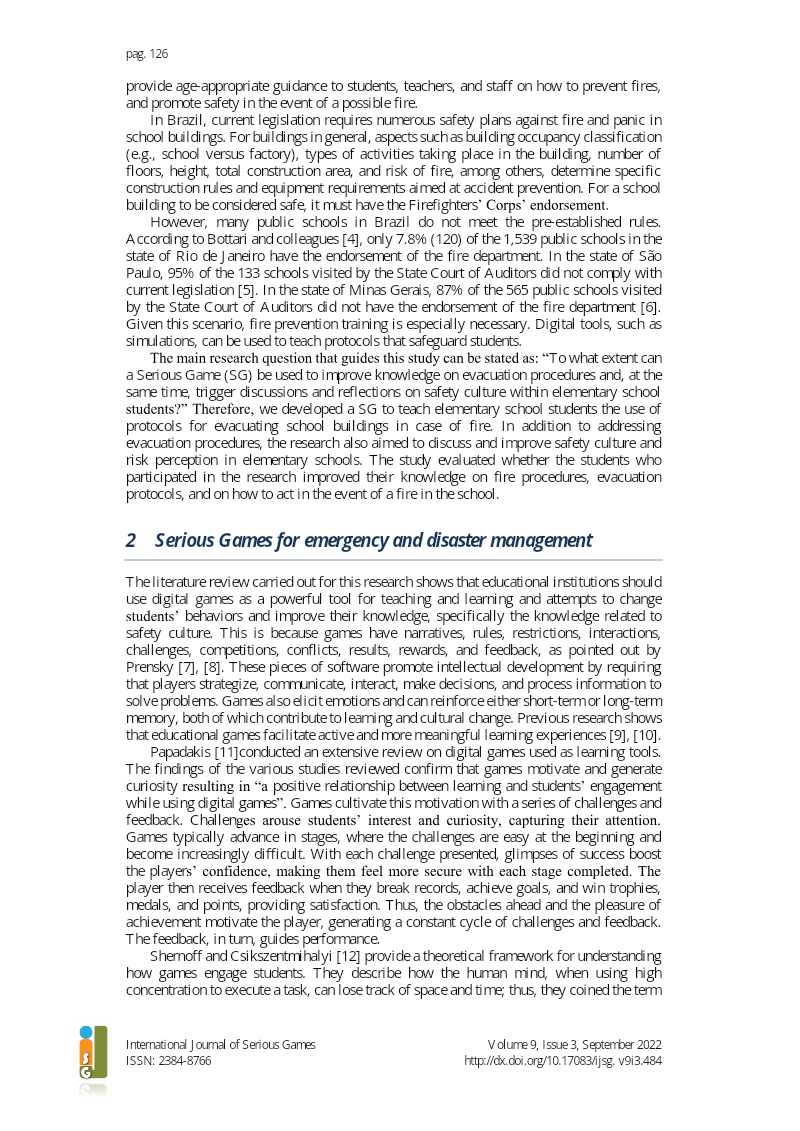
There are critical gaps in safety training within public educational institutions.
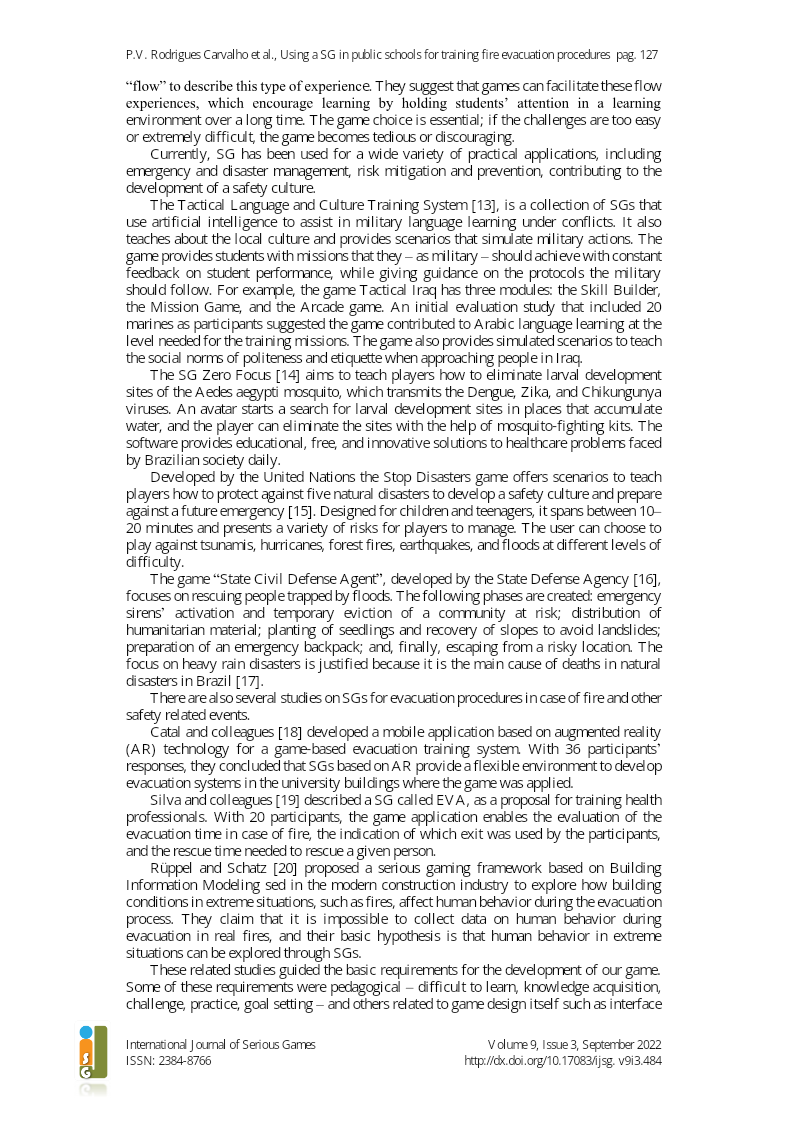
Serious games serve as a highly effective, scalable solution for addressing critical gaps in emergency preparedness within public educational institutions. By utilizing interactive simulations to teach fire evacuation protocols, schools can overcome systemic deficiencies in safety training and foster a more proactive culture of disaster awareness. This approach proves particularly valuable in environments where formal safety education is currently lacking, providing students with the necessary knowledge to respond correctly during life-threatening situations.
Empirical testing conducted with students aged 12 to 16 in Brazil confirms the efficacy of this pedagogical method. Participants demonstrated a dramatic improvement in their understanding of emergency procedures, with comprehension scores rising from 45.7% to 94.3% following the intervention. Beyond simple knowledge retention, the game successfully corrected dangerous behavioral misconceptions and received high marks for user experience, motivation, and educational utility. These findings indicate that gamified training is not only an efficient method for information delivery but also a highly engaging tool that resonates with the student population.
While the current prototype successfully meets its primary objectives, the long-term viability of such tools depends on continuous refinement. Future iterations should prioritize technical enhancements, including improved graphical fidelity, the integration of multiplayer functionality, and the expansion of content stages to maintain engagement across diverse age groups. By evolving these platforms, educational institutions can ensure that safety training remains both relevant and effective, ultimately establishing a robust foundation for student safety and disaster readiness.

International Journal of Serious Games · 2026
International Journal of Serious Games · 2026
International Journal of Serious Games · 2026
International Journal of Serious Games · 2026
International Journal of Serious Games · 2026
International Journal of Serious Games · 2026
International Journal of Serious Games · 2026
International Journal of Serious Games · 2025
International Journal of Serious Games · 2025
International Journal of Serious Games · 2025
Serious Games Society · 2025
International Journal of Serious Games · 2025
European Conference on Games Based Learning (ECGBL) · 2026