ReportInvestGame
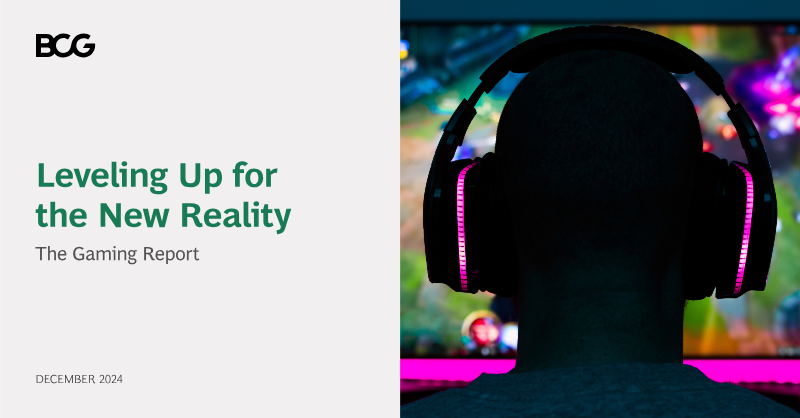
Leveling Up for the New Reality: The Gaming Report
14 Dec 202518 pages~12 min full read
The report examines the global gaming market’s evolution from 2017 to 2028, highlighting a post‑pandemic correction that has shifted growth expectations from double‑digit rates to modest expansion. Global revenue by type rose 1 % CAGR (2017–2023), with mobile, PC, and console segments contributing $1.2 trillion in 2023; cloud/VR sales remain niche but are projected to grow at 5 % CAGR (2023–2028). Emerging platforms such as cloud AR/VR and user‑generated content show market sizes of $939 million (2024) to $1.75 billion (2028), yet infrastructure constraints limit mass adoption.
Development economics reveal a widening gap: AAA development budgets increased 360 % (2012–2023 average) while sales and marketing costs rose 220 %, yet the number of AAA titles released fell by 73 %. Mobile publishers mirror this trend, with development costs up 54–92 % and releases declining. Console revenues are projected to outpace AAA budgets, with a 5 % CAGR in development spending versus 8 % in console revenue growth (2017–2028). Survey data indicate that most publishers expect to maintain or modestly increase budgets, with only 5–10 % planning reductions.
Monetization shifts are pronounced in consoles: subscription services and premium digital sales will dominate, while mobile revenue increasingly relies on in‑app advertising (up to 31 % of mobile share). Consumer willingness to accept ads varies by platform, with over half of core PC/console gamers open to advertising in premium titles. Geographic analysis shows Chinese players exhibit the highest willingness to pay, and emerging‑economy gamers spend more time playing than their developed‑economy counterparts. Age segmentation reveals younger cohorts favor action/adventure, whereas older players gravitate toward puzzles and casual games. The report concludes that technological advances, particularly generative AI, may enable cost efficiencies but will likely be leveraged to fund larger, higher‑quality titles rather than reduce overall budgets.

InvestGame · 2026
InvestGame · 2026

InvestGame · 2026
InvestGame · 2026
InvestGame · 2026

InvestGame · 2026

InvestGame · 2026
InvestGame · 2026
InvestGame · 2026

InvestGame · 2025
InvestGame · 2025
InvestGame · 2025

Modern Times Group · 2026

G5 Entertainment AB · 2024

Bandai Namco · 2021
King · 2021
HPvX Partners
Modern Times Group

Almedia · 2026
Sensor Tower · 2026

Sensor Tower · 2026

AppLovin · 2026

Sensor Tower · 2026

AppLovin · 2026