1 free read left. Create a free account for unlimited reading + AI research.
Create free accountReport DiGRA
1 free read left. Create a free account for unlimited reading + AI research.
Create free accountReportDiGRA
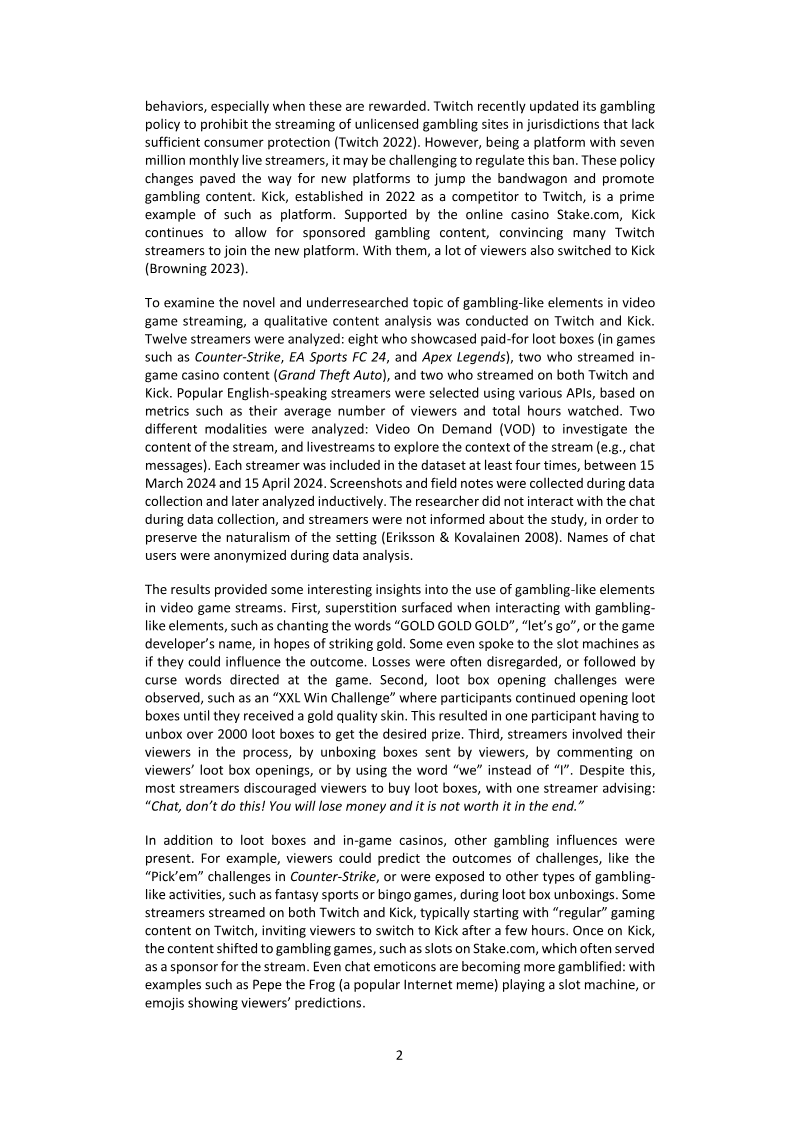
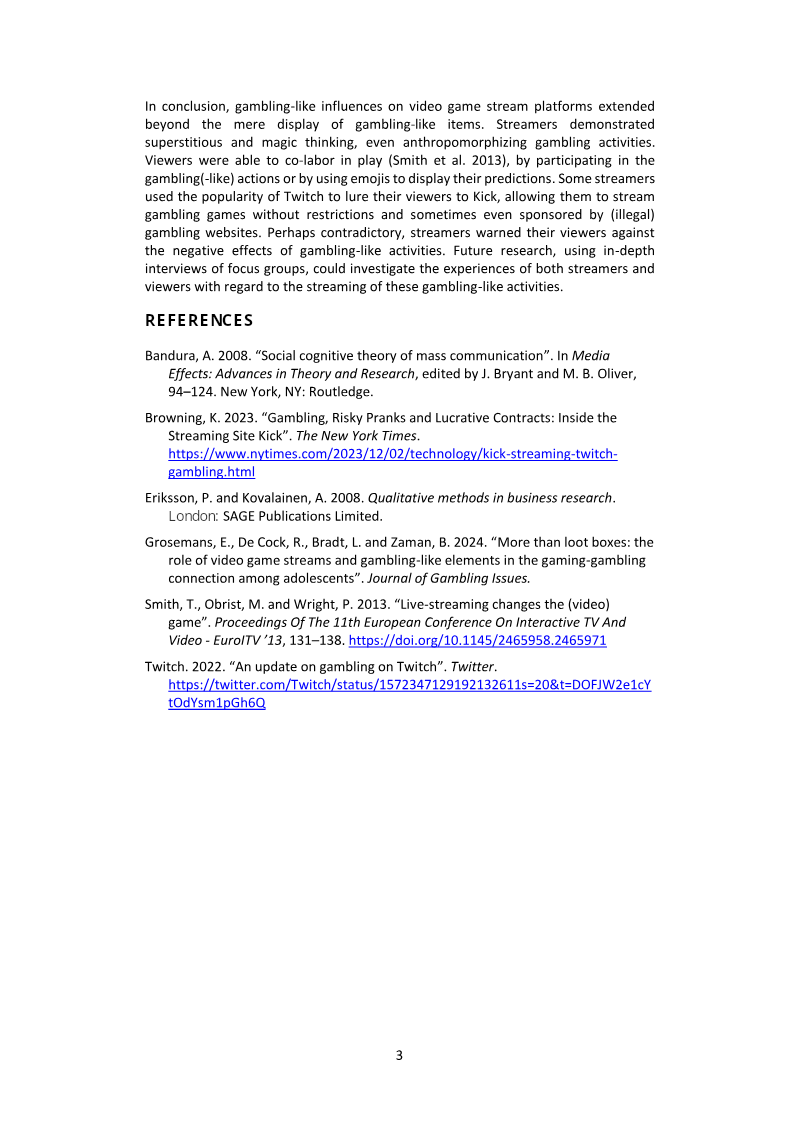
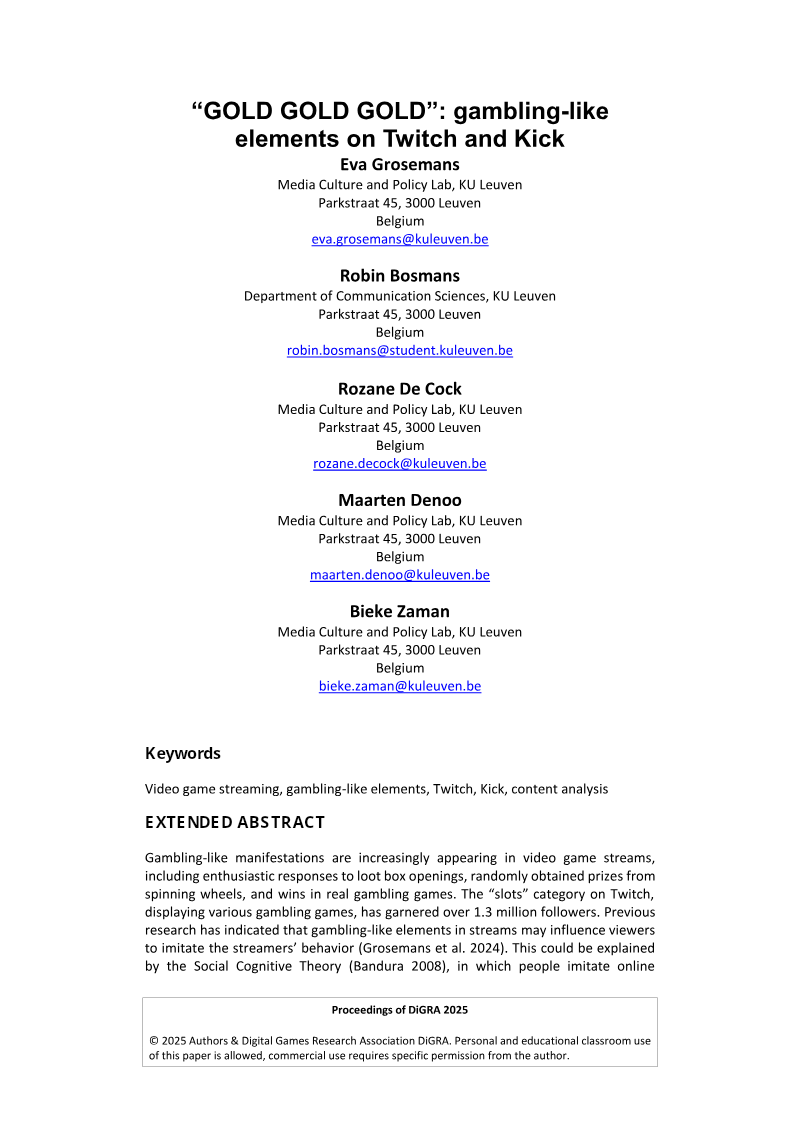
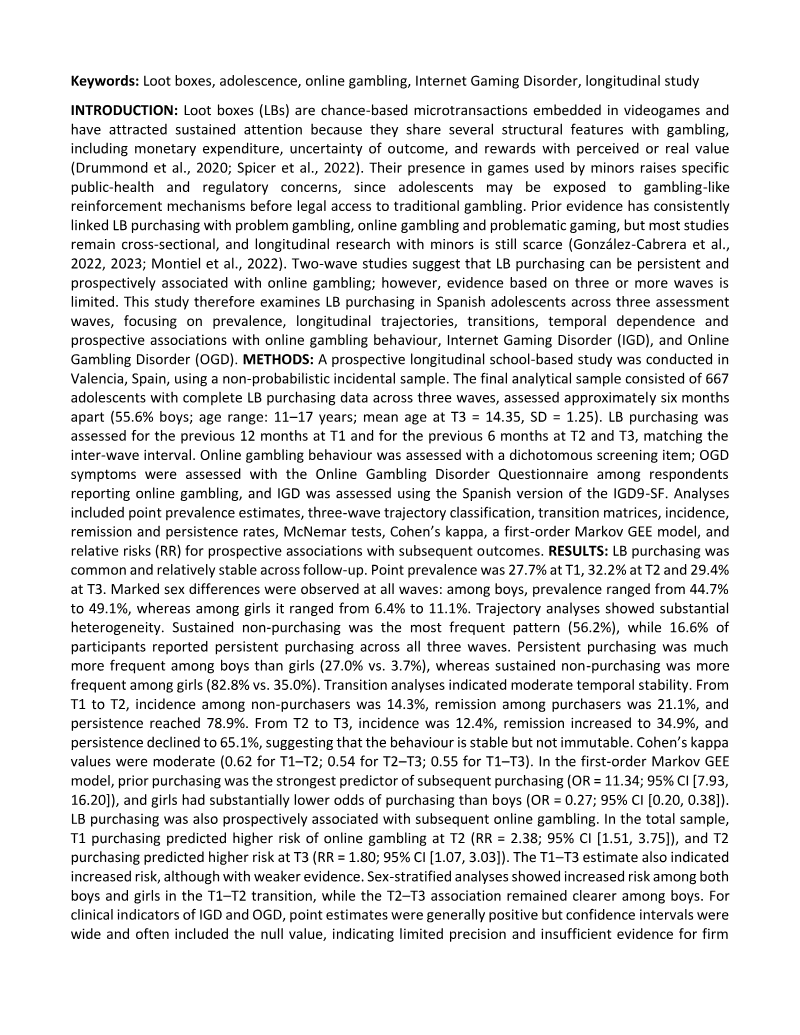
The study says research on gambling elements in streams is scarce.
This study examines how exposure to gambling-like content on Twitch relates to simulated and monetary gambling among young people in Flanders, Belgium. Motivated by the rapid growth of video game streaming and the presence of chance-based mechanics such as loot box openings and betting on in-game outcomes, the authors argue that research on gambling elements in streams is scarce and needs empirical grounding. Their central thesis is that viewing such content may normalize gambling and encourage teenagers to try it themselves.
The research draws on a large-scale survey of 2,280 Dutch-speaking Flemish teenagers, collected between November 2021 and February 2022, with a mean age of 14.1 years and a sample that was 46% male. Among respondents, 43.1% reported watching loot box openings in the past year, and 22.3% reported watching videos of people gambling, with boys significantly more likely than girls to watch both. Viewers of these streams spent more time gaming, were more inclined to open free and paid loot boxes, and were markedly more likely to have tried online monetary gambling (41.4% versus 12.9%). Gambling video viewers also reported a higher intention to gamble later in life, with a mean of 3.70 on a 1-to-10 scale compared with 2.02 for non-viewers.
The authors conclude that exposure to gambling-like elements in streams may foster positive attitudes toward monetary gambling and contribute to its normalization among young audiences. Because early exposure to gambling is associated with later addiction risk, they argue for regulatory action to limit minors' access to such content. The design is cross-sectional, so the associations reported cannot establish causation, and the authors explicitly call for longitudinal studies to track the rapidly evolving online streaming landscape.
Each row is a game or company this document names, each column a document, oldest first. A mark means that document names it. Select a row to see those documents.

DiGRA · 2026

DiGRA · 2026



DiGRA · 2026



DiGRA · 2026



DiGRA · 2026



DiGRA · 2026



DiGRA · 2026



DiGRA · 2026

DiGRA · 2026



DiGRA · 2026



DiGRA · 2026

DiGRA · 2026
DiGRA · 2026