1 free read left. Create a free account for unlimited reading + AI research.
Create free accountWhitepaper DiGRA
1 free read left. Create a free account for unlimited reading + AI research.
Create free accountWhitepaperDiGRA
The paper follows play from knucklebone fortune-telling and religious ritual through dice, card games, lotteries, horse race betting, and casinos.
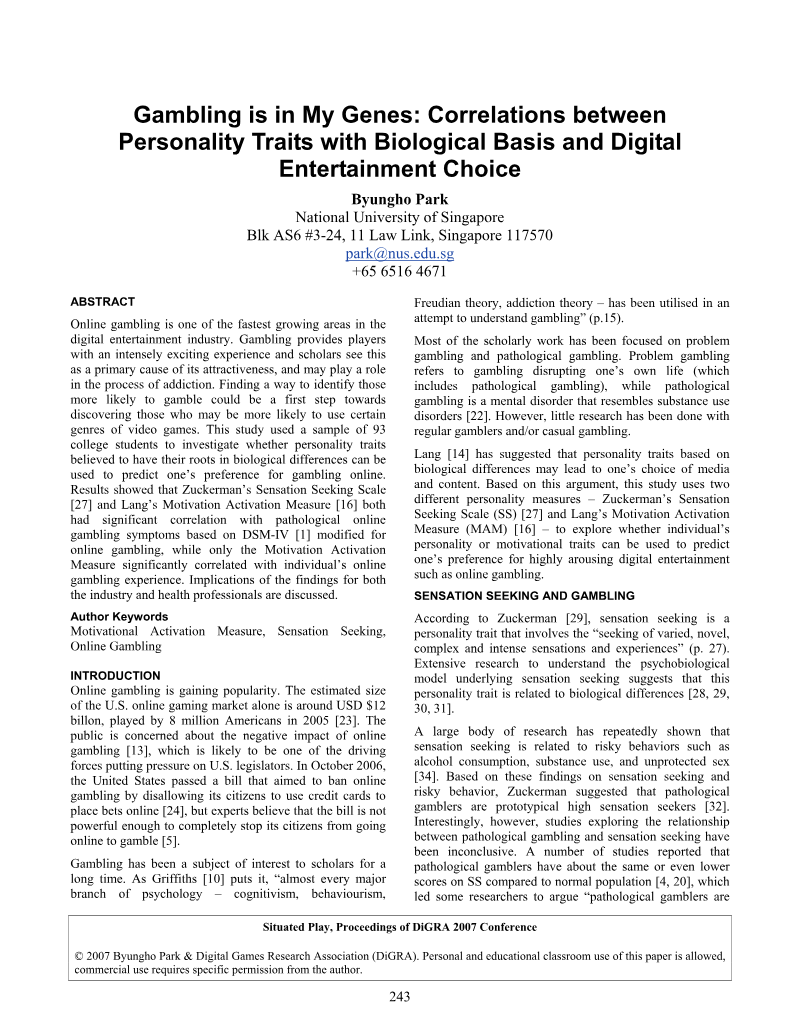
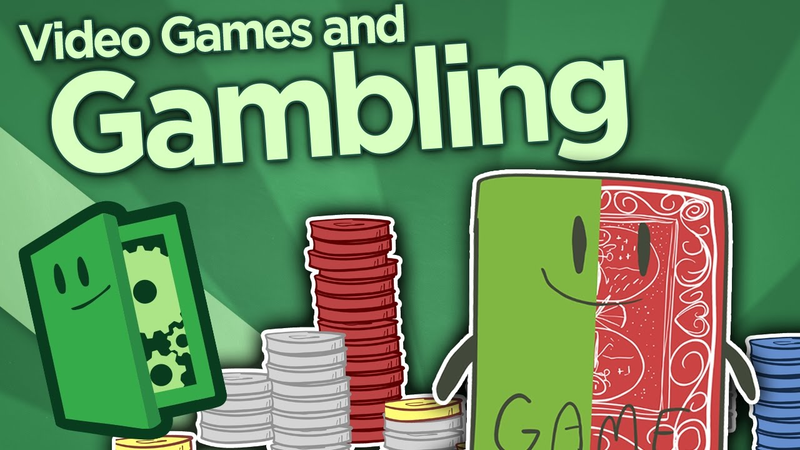
This extended abstract, presented at the DiGRA 2024 proceedings, examines whether gambling environments can be understood as metaphorical playgrounds for adults, and more broadly how analog and digital games relate to games of chance. The author, a researcher at Hochschule Fresenius in Cologne, traces the lineage of play from early practices such as knucklebone fortune-telling through religious ritual, structured game forms, and the later development of dice games, card games, lotteries, horse race betting, and casinos. The central inquiry concerns why religious ritual, gaming, and gambling became distinct activities, which groups drove that separation, and how contemporary society views the two fields, with contrasting attitudes captured in claims that games support learning while gambling leads to addiction.
The paper's main argument is that connections between games and gambling persist and deserve serious attention. It identifies gambling-like mechanisms now present in digital games, including randomizers, loot boxes, free-to-play reward systems, and betting-style mechanics, and considers how players and the public respond to them. The work also compares how the gaming and gambling industries are structured and regulated differently, and it seeks to identify where overlaps remain. The stated outcome is a set of recommendations for game designers and gambling specialists on when and how such elements might be incorporated.
The methodology combines historical discourse analysis with a comparative ethnographic approach. It draws on narrative interviews with experts in Germany, Austria, and the Netherlands, spanning the gaming and gambling industries and regulatory bodies. Keywords signal the study's focus on regulation, cultural discourse, and religious and historical origins of play, with loot boxes as a principal case of contemporary convergence. The scope is therefore historical in breadth but regionally concentrated in its primary fieldwork.

DiGRA · 2026

DiGRA · 2026



DiGRA · 2026



DiGRA · 2026



DiGRA · 2026



DiGRA · 2026



DiGRA · 2026



DiGRA · 2026

DiGRA · 2026



DiGRA · 2026



DiGRA · 2026

DiGRA · 2026
DiGRA · 2007