Transcript
[Music] welcome to the navic gaming podcast where it is our mission to explore the business and future of video games we bring together the industry's brightest Builders investors and thinkers to keep a pulse on current events dissect emerging Trends and games share Lessons Learned and have a great time this podcast is also part of novic growing ecosystem which ranges from free and premium research to Consulting and advice services for more information visit [Music] www.nic.edu Creator programs driving
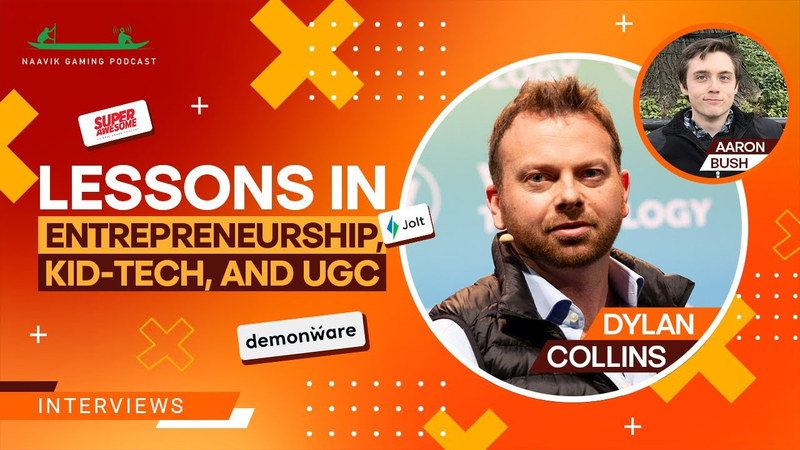
significant growth in conversion arpo retention and LTV Nexus has partnered with Incredible live service Publishers like Capcom grinding gear games hres ninjak kiwi and more and would love to help you our novic gaming podcast listeners do the same if interested in learning more simply head to nexus. g/ novic there you can learn more about the efficacy of support of Creator programs and how to easily build your own again that's nexus. g/ novic or check out the link in the show notes and with that let's jump into the episode hi everyone I'm your host Aaron Bush and I am delighted to be joined today by Dylan Collins Dylan is a Serial entrepreneur in the games industry having founded companies like demonware jolt and super awesome all of which had successful exits today he's an investor writer reader and someone one I've enjoyed
learning from so I'm thrilled to have him on the show today we'll focus the conversation mostly on entrepreneurship kid Tech and Dylan's budding interest in user generated content so with all of that said Dylan welcome to the novic gaming podcast hey Aon it's h great to be here uh longtime listener uh huge fan of what you guys do so it's it's cool to be able to chat well this is going to be a lot of fun and I appreciate you saying that so we have a lot to get to uh but probably the best place to start is just for you to catch us up to speed on what all you have done in the games industry over the past 20 or so years so I mentioned three of your companies in that intro but can you tell us a little bit more about your entrepreneurial Journey until now uh I shall do my best to try to to answer that in as few a set of words as I can so I co-founded uh demonware uh back in University um with
sea blanchfield uh that was when we were spending um more time playing Counter Strike than we were going to lectures um it was like in the early 2000s it was just sort of at the dawn of multiplayer gaming um we sort of thought we felt that this was going to be a thing that would be more popular rather than less it seems kind of very obvious Now sort of 20 years later um so we uh built a company producing developing a suppose um what was then called middleware which was essentially a set of tools to make it easier for game studios to produce multiplayer games um so it was it was all around the matchmaking Community Lobby uh eventually into the state propagation uh side of things um and that company was ultimately acquired by Activision became part of the Call of Duty stack and I believe in fact I I know demonware celebrated its 20th birthday um I think this year this year year or last year because I got they
sent me a lovely poster which was very nice of them um and that's that that's kind of Where it All Began um and um so after that um we co-founded jolt which was at the time sort of looking at the emerging social game space and uh we uh started bringing some IPS we started licensing some IPS to produce um social games um that got acquired by GameStop so I spent a little bit of time in what was then the biggest games retailer in the world um as they discovered the internet which was around about 2010 um and worked with their team to buy up a few other digital companies um and then co-founded super awesome with a collection of amazing co-founders um in 2013 which was focused on building digital tools to help um content owners and brands with young audiences uh it was acquired by epic games a couple years ago oh by the way notable shout out out to um an amazing marketing
Services Agency called Pato which I was chairman of somewhere in between all of that uh which got acquired by wpp so I I think the short version is I have never had a proper job and I am utterly unemployable um and uh building companies and helping people build companies is sort of what I do and love I love that and in a moment I want to ask you just some lessons you've learned from each of those companies but first I just kind of want to ask why have all of your companies been so successful like you don't miss is kind of what what it looks like is there any like pattern to like what you've done as a Founder how you've started these companies that has made them all when um I mean I suppose like there's there's lots of iterations behind the scenes you know when we've built all of these companies I mean My Philosophy My Philosophy is broadly too TW fold which is try to
understand what is going to be obviously true about the future and try to avoid doing anything stupid um related to getting there and that tends to filter out a lot of different things which leaves you with a very short list of what you might do about a trend that you believe to be true in the future so like with demonware you know we were very very very convinced that the future was going to be multiplayer rather than sort of singleplayer experiences um you know and and what super awesome The View was that hey there are going to be more kids online rather than less kids online um and I think it's trying to be fairly ruthless about that intellectually when you sort of go at these things and and not let ego get in the way and not let confirmation bias get in the way and and really try and find lots of people to tell you that you are wrong or you are an idiot or some combination of those things um
it's it's it's easy to say and hard to do but that's that's kind of the approach yeah and maybe what are a couple examples of what you mean by just like avoid being stupid like what does that meant for you as an entrepreneur I think it's it's sort of looking you know very closely or as close as you can at like business models at like you know when you see a new space emerging you know trying to understand like you know what are the components of that new space which are going to maintain value which are what are the components which might very very easily be commoditized you know you can I mean to sort of generalize an example I mean you can build something that will be completely free and that will be very very popular but is that really going to be sustainable like you know obviously on the consumer side of things maybe it is if you plug some ads in on the Enterprise thing you know maybe less so and I suppose it's it it is just sort of trying to
you know think through what could be potentially robust as an opportunity to build sometimes that a lot of the time that kind of proxies out to trying to build the hardest thing rather than the easiest thing um usually because you sort of get an interesting sort of selection bias that that that sort of happens there um but I think you know you look at at sort of everything we've seen over the last couple of years as the world and particularly Venture back companies kind of res set to oh there's this thing called IA and you know people realizing Oh you mean like we do actually have to be profitable at some point and I I sort of track that back to sort of first principles along the lines of like okay you can build a thing to solve for an opportunity but like ultimately you do have to make it a viable business and even if you don't necessarily have to get to that stage for when you're potentially acquired or go public or something like that you do have to have a path there um and I think
it's kind of easy to get very excited by an opportunity without sort of thinking through that stuff so I I guess those are those are the kinds of things that kind of Define avoiding stupidity or or you know trying either stupid stuff or stuff that's just way way way too hard to figure out yeah you know I I just I don't know I I I like to win and thus I like high probability which people say it makes very boring but I don't know I guess it also makes us historically right most of the time so I think that's a good way to look at it and there are certainly a lot of ways to be stupid um so many of which I've I've probably learned the hard way at this point and maybe you have too which kind of brings me to my next question um which is um could you just share one memorable lesson that you learned as a Founder from each of the call it like those three main companies that that you founded what did you learn
along the way I mean to be clear you know I I think I have compounded stupidity over the years with all the companies like it's it's this is not like my aspiration to avoid it is is is from experience in living through it um you know so I think that's where that that kind of wisdom comes from I I think like I thought this was this was an interesting question I mean and I would say like I picked like some quite specific lessons from each of the companies but like you know with demonware like you know we got acquired by Activision very very early on and I think most people would agree certainly Sean and I looking looking way back now like you know we we we sold way too early and I think with a lot of firsttime Founders which we were like you kind of you see an acquisition inbound and you know you you sort of think right great we have arrived when really like you know a conversation
about an acquisition is just simply a signal that you're doing the right thing and you should probably keep doing it you know it is like the earliest signal of long-term success and a lot of people sort of react to that as being sort of you know a signal to immediately leave what you're doing right so you know we we that company was acquired really at the at the very beginning of its Journey um I think with Jolt like one of the most interesting lessons there was was was when we had been acquired by GameStop you know which was at the time this was like 2010 11 theab um you know at the time GameStop biggest video games retailer in the world you know heavily shorted company there was probably about a quarter of the free float shorted at any one point you know so they were always under tremendous pressure and they sort of acquired us and a few of the companies to roll out a digital strategy and I think we realized that like my learning from it was like unless sort of you know the the the compensation structure the incentive
model at executive level is actually based on the thing you're trying to change it's probably not going to change you know so we rolled out some really cool stuff in in GameStop and integrated like user acquisition system with their point of sale and the whole thing kind of got closed down after a quarter you know which was which was kind of nuts and but again looking back you can you can sort of understand like the motivations back in there and then I think in super awesome like you know it was we knew we had we had we had the power of mathematics on our side you know to what I said earlier right like we built that company on the basis that there were going to be more kids spending more time online which was you know one of the greatest one-way bets I think in living history and you know we real we got to a point where we kind of realized we were right and that in that situation like all you have to do is just not die right which is every startups remit and every founder teams remit but like it is
still sort of a thing that we actually realized that like that we had done the hard part by identifying the opportunity and being there now we just had to make sure we could survive long enough to do it I I would say that like the other lesson particularly from super awesome is that like just how much in general investors undervalue amazing sales teams you know I think that's you know when you look at sort of the general kind of startup ecosystem of writing people talk about 10x engineers and people talk about product managers and everything else there's not enough people talking about like sales teams like you know Le v um was was one of our co-founders is one of our co-founders and and you know he he really sort of built and led the sales DNA in there there and I super awesome would not have been successful you know without him and without that team and I I think we built a bunch of very interesting technology around that as well but that was really at the core of it and um you know I I I do feel having been in some organizations that
value Engineers significantly more than salespeople I I do think that is still one of the the greatest sort of uh you know disservices to a profession that that the uh the technology world has has has had over the last few years those are really great answers I'm glad that you you spent some time um thinking of them those were those are really thoughtful um um and I kind of want to to follow that up and some of that was reflective of like the exit events um in in some cases and obviously you've spent time as a Founder like on your own in your company but you also did spend time inside of these larger organizations and so I'm curious to maybe learn even more about what that experience was like for you who as you said you're kind of unemployable you know in that kind of structure um but then two just like what have you learned
besides uh aligning incentives about how to better embed um startup teams into larger companies better set them up for success I mean I think there's a general rule with big companies that they all think they want to have Founders in their midst until they realize what they have actually done it's kind of one of those things where you know you think you're being locked in a room with me whereas actually it's the other way around um and I mean it's it's it's interesting when you look back at the three companies right because you know when when you look at at sort of Joel super awesome like you know one is still going today one was closed down pretty shortly after um and one is sort of partially being spun out of the moment so we've kind of been through the full spectrum of kind of outcomes on this um like I think there's a few lessons in there I mean these are probably very very obvious things you know but I guess for anyone listening who who sort of hasn't been through Acquisitions before I mean I I think fun Fally you need to absolutely make sure that you have a
champion in the acquiring company you know and that and to the acquiring company make sure you have a champion like someone who is actually accountable for this as opposed to a Corp Dev team that's just running it like if there is not a single identifiable person who is the champion of this deal I think there's a very high probability you know it will fall apart after the deal is done if it doesn't fall apart before the deal gets done um I think like you know agreeing again very very obvious stuff like agreeing an integration plan you know and make and actually making sure that's transparent to everyone on both sides you know like it's amazing in in big companies you know where Acquisitions can happen and you're walking into meetings and and like everyone has no idea who you are or worse why you're there you know and I think just sort of the the the transmission of all of that is is kind of critical I think the thing that you know anyone who's been acquired will relate to this that like will will realize that you should assume
as a Founder like that your average unit of productivity will massively decrease right so like if you think like your average unit of getting things done is like a day or a week or something like that it will change to like probably at least a month and maybe more likely a quarter like especially if the company's public that will be your like your your sort of your average unit of productivity in terms of getting anything done right um I so I think those are those are kind of General General points to Founders I I think for for like if I was on the acquiring side like I think there's probably a couple of things you know one is I mean this is a little bit subtle but like I I've seen companies through our experiences but also elsewhere like they try and kind of redeploy these sort of generalist leaders on the executive team and maybe it's the founders or maybe it's part of the the leadership team and they try and deploy these sort of generalists into like domain specialist roles based on what the company did and you sort of you know you take people who've been running teams of like 10 or 20 or 30 or 50 people and you're kind of trying to
redeploy them into hey do this really really specific thing and they're used to operating with the team and and an apparatus and they're almost kind of being told hey go and build some spreadsheets or go and build some power some slides right and I think that's a like that's a little bit of a of a a um uh that is a challenge I think for everyone involved and people get quite confused and I think it's it's it's it's back to sort of you know the point about having an integration plan I also think like when it comes to the founders themselves I mean there's different skills of thoughts on it's like hey you must keep the founders to know you should TR probably try an offb them as quickly as you can I think like however you think about that you should definitely spend the time to really understand like the motivations and probably most importantly the energy of the founders like you know if if you're acquiring a company like who've been going for like 15 years like I can probably tell you what the energy of the founders is like right whereas if they've been going like five years or six years like it might be in a good and interesting place and I think it's like
again it's it's a very subjective thing about trying to understand People's Energy but it really really really really matters like usually people who build things want to continue building things and they don't like impediments being put in their way and they can be huge like they can be really value additive even to big companies if you give them the right circumstances and the right tools and the right Frameworks to go and operate but you need to spend the time to go and understand what they want and how they're feeling and I think sometimes people either don't know how to have that conversation or maybe kind of afraid to have it um but I I I think one day I will probably write a very long blog post about this please do um it could even be a book but it won't be a book to be clear it will just be a blog post um are there any companies in or around the games industry that you've observed or you think do like a particularly good job at acquiring uh that have like the infrastructure the the right motivations incentives to be
good at it or do you think that it's just a kind of a struggle uh no matter where you are I think it's always hard for for some reason whether it's on the fer side or the buyer side I mean if if I look across the industry and I I sort of think about conversations people have had I mean I I think there is there is an interesting distinction at least between acquirers that are still founder Le versus acquirers that are like what I would call kind of Professional Management Le you know so like um you know in Epic for example like it's still led by Tim Sweeney you know the the DNA around hey let people kind of get on with what they're doing like keep it pretty flat don't impose a whole bunch of of of sort of you know admin and infrastructure on them like is is pretty clear I mean you've got companies like Microsoft you know that are also very practical about acquiring you know in terms of being able to onboard people
and really having amazing sort of onboarding sort of systems and structures for that so I think it's like you know it is I would probably look around at at who does the high who has the highest frequency of acquisition um because at least then you've got them there's there's clearly you know they're seeing enough volume to generate lessons and learn them um so I I I think those two would probably come to mind I mean you know I got to say like full credit to Activision for for for making the success of demonware that they did like for any like in any sector video games anywhere like for something to still be going 20 years after its AC well not well not after its acquisition probably like what 15 you know 12 14 years after its acquisition like that's that's pretty remarkable um and I think I think companies are probably getting better at it and I think particularly now that you've got like you know more big company um that are being run by serial
entrepreneurs serial Founders you know I I I think that is is starting to give a lot more empathy to Acquisitions um you know in terms of like how to onboard them I mean I I think it's probably too early to call whether what embracer is going to look like in terms of a good or bad acquir I mean they certainly don't have by volume but I think we have an answer to that the share price the share price perhaps suggests um but but but but we it's it it's it is a very very interesting topic and I I still don't think that I don't think investors talk about it enough actually and I think that typically in corporates the people who are involved with it aren't able to talk about it much publicly because they're comms teams prevent yeah there's a lot of that and companies with different motivations too and you know as we see more consolidation in the industry whether it's around like big platform ecosystems forming or yeah those growth by acquisition companies Etc um yeah I
don't know how I guess you could see more Acquisitions but probably fewer great ones unless they truly are in like a more decentralized kind of way which even that I guess can not always work out the best and you see companies like embracer kind of change from being as decentralized to needing to step in and that kind of changes their identity and just the what Acquisitions even look like and if they make sense anymore I I think like there is generally not enough thought given to Acquisitions and I do mean that on both sides um you know and because again like the the the all the role up plays are fundamentally doing it for an industrial logic which which is kind of coming down to IA right and and to some degree like even though those are probably the least personal acquisition machines at least you sort
of know what you're getting and everyone can be pretty clear on metrics and and what success does and doesn't look like you know if you're being acquired by mean like a who's an acquisition machine I mean wpp on the on the advertising side is is still an acquisition machine and just buying and buying and buying lots and lots of agencies and they've got a very very you know straightforward model for that you know whereas I I I think that like if when you're buying for sort of strategy you know whether it's Market expansion or product or something like that I really think you have to get into like the Deep Humanity of the thing to make sure people are aligned like people you know people talk about values alignment and everyone kind of virals but like the more I see of this stuff like the more I kind of bring it back to that like you know what I mean if if you're not genuinely thinking about the same thing it doesn't really matter how much money you throw at people like you know you will see Discord emerge you know at some point
down the line people people will get they will get frustrated or annoyed or they won't understand why a strategy is being followed um so yeah I I think look I think I think you I mean this is kind of an obvious thing to say but I think you will continue to see both good and bad Acquisitions over time that would be my my very easy prediction yeah that's fair well let's go ahead and and switch gears and talk about kid teac which is the latest industry that um your entrepreneurial path took you down with super awesome um and I think I think a good place to start for this conversation would just be for you to describe what you perceive the current state of kid Tech to be especially around online games like what's your what's your view of of that market and reality right now my view and the reality yes and that's an interesting contrast I mean I would say like look over the course of the last decade um I there's you know when you look at
specifically around sort of gaming I guess but you can probably call it consumer services there's probably been I don't know maybe like three or four phases that everyone has gone through like phase one was like everyone put up an ageg gate and then kind of ignored everything um phase two was everyone then added parental consent to be compliant with laws like Coppa and then also kind of ignored everything else and then sort of phase three which is which I would argue is probably only started in the last two to three years was like everyone sort of did all of that but then has started to think like much more deeply like about young audiences and young audience engagement and and like you know you've seen things emerge like um you know age verification locked features cabin mode um I can talk go into a bit more detail on those if if people are interested and I think phase four which is somewhere in the future is
where you you somehow and there is some magic included in this description for now like that young audiences of like total feature parity right with older audiences and and I think like you know so we have moved we have we have moved from tick boox to actual thought being given but there are still lots of interesting challenges remaining here um for interesting Technical and psychological reasons yeah the checkbox era was a funny one I think that's that's I remember that just like even at myself as a kid I'm like well this doesn't do anything because you just say your birthday is a different time or just hit no and and you're good it wasn't really uh kid Tech as as you've pioneered it as we'll see into the future I mean when we when we when we started super awesome and and like like you know super awesome was a result of like many many failures
um you know and one of which was the utter failure to to raise external investment you know we we went we went out relatively early 2013 14 to the valley to pitch everyone with what we thought was an extremely straightforward pitch it's like hey there are more kids on the internet there are these laws coming down the line you are going to need more tools and absolutely everyone went no it's fine they take a were good and and and that was like I cannot tell you how many meetings I got politely escorted from you know where investors just didn't think this was going to need any Capital um so yeah it's it is it is fascinating and and I think generally good about like how how things have evolved since then yeah I don't totally understand that so maybe you can unpack that a bit more um I guess surely there's more reason to investors not being interested the market not being larger it being kind of difficult to
raise money than um just the fact that there's like you can type in your age like are there other structural reasons or motivations to why this Market has not been able to become larger or raise as much money as maybe it should have I mean I think there have been sort of a handful of um challenges that the the the this the space has gone through like I mean I think like you know first of all you know it is it is a pretty sizable market so I mean to say that it's kind of broken from an investor point of view is is probably not not super super accurate right I mean I think like we've seen now in the last two three years you know a range of sort of multi hundred million dollar and billion dollar outcomes right whether it's super awesome or Moon bug or Roblox
or or or um epic reading epic learning sorry um but I think that like the big challenge for investors has always been and I'm gonna just sort of skip around advertising for a second because I I will come back to that the big challenge for investors has always been like okay how do you build a revenue model around this investment right because nobody wants to utter the line how do kids make money for us right and it's it's that awkwardness I think that has sort of deflected a lot of investor interest from the space you know whereas the reality is that like kids and teens I mean this is true for everything up to under 16 in terms of where um you know where where uh where where the definition sort of Lies here like you know they are are fully fledged internet citizens with their own
independent um payment cards and and they will go and spend money and like so the notion that that sort of people wouldn't treat them seriously is always kind of struck me as short-sighted um so I and I think like you know you you sort of because you you kind of had that disconnect between um you know the the the the clear uh ident ification of the audience but that lack of sort of forthrightness about the economics I just think it it it became a struggle for investors and I I think that was somewhat Amplified certainly in the early days I go back to 2013 2014 by the fact that like none of the big platforms seem to be taking this seriously right so that was all um you know sort of became a little bit of a like an echo chamber you know I think um and but but I but I do think like that has changed quite a bit um you know I
mean you now have like when you look at sort of the total amount of investment dollars going into the kid Tech space and by that I mean like tools to help engagement or to provide engagement with young audiences but also what's called Safety Tech which sort of is what it sounds like which is you know tools for moderation and Community toxicity and things like that you've got somewhere like about $200 million a year being invested there and that's normalized so was actually more over the last couple of years um you know versus again you go back 10 years and it was approximately zero um you know so I think you are you are you are gradually starting to see um more investor interest in the space you know nothing drives it like um successful outcomes as you know so I mean undoubtedly in fact I know for a fact like when you look at sort of the big outcomes just like Moon bug super awesome Roblox like there are lots of people going around right now pitching you know the Next Generation version of
moon bug super awesome in Roblox right which is which is good it's great yeah um you know it's it sort of spawns more optimism yeah that is good so I'm curious then um what would you say are the big problems left to solve in kid Tech or are the big problems left to solve in this like in this like upcoming era that you foresee kind of you know being shuffled in obviously it could be a long answer but uh but well well let me let me let me actually be helpful because I did actually write a blog post about this um which also ended up being quite a Long blog post it's a good one but um thank you um I would say like the top three problems broadly for sort of young audiences and and digital engagement so it's very applicable to to to the game uh ecosystem is um probably one one like sustainable like commercially
sustainable kids app stores like you know you still have a situation today where like developers building titles for young audiences are still highly incentivized to not be in the kids in family category you know because again there's commercial restrictions there and and again it's it's this there's a distinction here between sort of being commercial and you know exploiting and you know you need to have like V viable kids developer um industry you know very very simply and I still don't think you know people running various app stores around the world quite gotten their heads around that um I think one of the other things that still hasn't been solved is is like the the challenge for um parental involvement with with with kids whether they're playing games or or using any sort of service and like you know we've now seen huge amounts of investment into parent tool tools you see it at the console level you say see it at the game
level but like parents are still confused don't have time don't care don't know where to go like there there isn't really like a trusted digital brand for parents that seems to really exist yet um I mean maybe it's Netflix or Disney or something but no one is really like you know the whole sort of making it easier for parents to do this stuff which again is part technology part psychology that's still isn't solved really meaningfully and then I would say the third one and my favorite one to talk for hours about um is the need for like some sort of universal age API like the the the biggest issue we have is today around around this whole challenge of of kids using Services designed for adults is that like age Gates um are probably the most powerful incentive
to lie that our civilization has developed like I mean to to your example right like it's it's I still lie on those yeah like hey here's the thing tell us something about yourself and here's what you can't get if you tell us the truth it's it's it's remarkable and and it's I mean this sort of Wades very quickly into Notions of like privacy and safety and and and like lots of very serious internet people get angry about this topic but like I do think the only way to sort of you know make this easier for developers and platforms everywhere is where you have some sort of source of Truth for date of birth you know which I don't know whether it comes ultimately from from sort of operating systems or or phone activate or device activation or something like that this is a technically solvable thing like quite easily um and but I do think um I think
the challenge is probably the economics of it like go going back to your point on investors like well can you really build this into a into a venture sized business no you probably can't maybe you can but it's still definitely a thing that needs to be solved and every and everyone wants this to be solved um I think that's that's yeah clearly I would talk about this for a long time so out of what you just said what are you most optimistic about um improving over the next few years um I think like when you look back at what has changed like because again I I I like I get cornered by various people like around the world you know and they sort of say okay like billions of dollars have been invested in things you know game platforms you know streaming Why is the internet still more or less a dumpster fire for kids and it's like
well actually behind the scenes mean this and this and this and this and they're kind of looking at you going yeah but we don't care it's still like a bit of a mess but so I like I think you know I am reasonably optimistic about the future like you know when you look at the amount as I said of of capital that's going into the space like you know you've got $200 million a year that is being invested into things like kid Tech and safety Tech like you know you have when you look at sort of what the average consumer digital consumer service whether it's game or streaming or anything like that looks like for a kid today versus what it looked like five or six or seven years ago it's it's night and day right in terms of support and features and everything else like you know you you look at sort of the success of Roblox you look at what like fortnite is doing you look at sort of the commitments Lego are making into the space you know I mean I I think you know when you when you sort of look at things like um you know I talked about sort of age verification based features when I
looked at sort of like I think what epic I mean I'm slightly biased here but like what epic did with cabin accounts right which was like Hey okay if if if a if a child age ages sort of under 13 or under whatever the ages you're not blocking them from absolutely everything you're giving them access to some functionality to get them involved in the ecosystem that's the kind of thoughtful thinking you know that that I feel we need a bit more of and and you are seeing more of and I think you will see that get rolled out um more and more by by a lot of I mean I know a lot of the big game developers who haven't announce things are going to be announcing things over the next for year or so like around support for young audiences so um it is definitely getting better and somehow someone will solve the universal age API thing I I it might take more than five years but it definitely won't take more than 10 years that is my that is my bet with you Erin great that's that's great if that happens I definitely I've definitely root for it um final question
on this topic before we move on uh and tying it back more directly into just uh the games industry and and all the the leaders and people from those companies who are listening um what should more games teams be doing regarding kid Tech that maybe most teams are not doing today or um that they just need to keep an eye on over the next couple years for like these new um improvements to come that they should start embeding soon I mean I think like I think everyone probably underestimates just how disruptive the audience you're talking about is going to be for absolutely everyone like game developers across the board like you know the the you know when you look at sort of genz which is everyone under under 24 and and and sort of gen Alpha which is everyone under 13 like they are going to have a bigger generational disruption than anyone I
think even a bigger generational disruption than like Millennials who sort of essentially grew up with the internet because they're like you know gen Alpha gen Z like you know they are they are native users of Tik Tok of ugc of generative AI like as I said they've got the financial Firepower like in terms of their own their ability to pay like they are default Creator not default consumer like which is a huge huge shift like and I really think people are almost everyone is is is under thinking this my my I have a general bias around like so for anyone listening to this on the game development side like anyone who is working on product that is going to interface with you know people under the age of 24 like I I don't think this is legal to be clear but I feel that everyone should have kids like it it's it's it's a remarkable I mean this has changed a bit in the valley like with and and with sort of
General Tech but like it's amazing how many like tools and services for parents or for kids for that matter are built by people who are not parents or do not have kids right and and that's that to me seems kind of nuts so that would be a thing I I think people should spend a lot of time looking at what everyone else is doing I mean I talked about what epic is done with cabin accounts which which again my my Association aside like I really think was a benchmark in terms of like how do you support young audiences in a way that doesn't block them out like that was very very cool and I think the other like the third point is is you everyone has to move away from you know assuming that young audiences don't equate to revenue and you know I am I'm blunt enough to be able to say that you know in those terms but I think like the organizational politics that that I've seen developers run into when they're trying to have conversations like this they often just get shut down with with with some version of that sentence you know and it's like hey these these are like these
are real consumers they want to be considered consumers they want to interact you know they value your content they want to be able to pay for things like you know treat them as like you know treat them with that level of respect um you know so I think those are are you know sort of off the top of my head and somewhat flippantly um some things I would think about but definitely like make sure your product teams of of actual parents on them that's that's that's the real thing sounds like good advice um well I want to switch gears again this time to the realm of user generated content and first question I want to ask is just Why has this corner of the industry caught your attention lately and what are you most enamored by when I like just as you spend more time looking at it I mean I I spend time looking at lots of things as well but like I don't I mean I I don't think it's caught my attention recently like I mean for me at least my definition ugc probably goes back to
like PC mods back in the mid late 90s you know like I so like to me that's all that's all kind EC I mean I think the the the fascination I have with with ugc platforms at the moment is is sort of like the combination of that with like the the the uniqueness of this audience that we're seeing right the sort of the Gen Z gen Alpha audience like everyone under 2 for um like so it isn't really just about creation because we can content creation because we had that before it's not just about distribution because that was kind of there before like it it's about the fact that like you you actually now also have like real um monetization opportunities for creators combined with all of these things like it's it's it's kind of breaking down um like the the sort of the historical barriers with professional kind of content creation I mean we've seen that with video obviously for for a
long time um but the fact that we're now seeing it across games like at a moment where like you know hours spent gaming are now roughly the same as sort of you know online video streaming video um and you know postco you're sort of seeing the the um the displacement of all the social activity moving into gaming like I think you know Charlie Munger if he was still alive like would call this sort of the laapoa effect like where you've just got all of these things happening at the same time like in this massively sort of overlapping phenomena um and it's all sort of being localized within Roblox and within fortnite and within a couple of other places so I just think it's it's a fascinating Confluence of factors both demographic and Technical in distribution that I don't think we've seen before and it makes me intrigued and excited um about about a lot of
different things and I suppose also having been in Epic for the last three years and had a ringside seat to it it's it's it's um it's you know it's hard not to be yeah well let's talk about that uh specifically ufn um we've covered this across a few episodes and novic digest and obviously it's only about 9 months after launch so still very early days for the platform but you know it appears to be off to somewhat a slow start um but I'm curious you know kind of even just like early performance aside like what are your early impressions of this platform and so youfan yeah look I mean my my very honest assessment of it is that it's it's still I mean as you say it's still early I mean the the the more accurate technical term is is probably very early right like I mean I I think
you know a lot of people sort of can't help but compare it to Roblox but like I just think that's kind of totally the wrong thing I mean Roblox has had like what 16 18 years of development yeah like you know and and I think what the the the team in Epic have pulled together in ufn like is is remarkable given sort of the relatively short gestation period um I think it to me I mean again this is absolutely my opinion and and and and not epics but like you know ufn is is is really about building titles for the fortnite community like so I I feel and I mean I guess a bunch of people do this but I do think it's it's it's it makes more sense to compare it to steam in that respect rather than Roblox right like I I think you know Roblox obviously didn't doesn't have its Origins as a game like it is a much much more kind of casual game platform like I I suspect
everyone is probably going to like undervalue ufn for probably quite a while until a smash emerges right like and I I you know and I and I think the interesting like the the Lego fortnite game which is coming out like is in many respects I think is is kind of a preview of what's going to be possible for ufn right um and uh again yeah hopefully by the time this airs that sentence will have totally made sense um but I but but I think that like you know the the um uh it is very much a an audience play and the power of the fortnite audience which we've kind of seen like with with the recent resurgence from from from OG like is is very very real and I think
the the same was sort of true with with sort of steam and the early days um but I feel it it will just take time you know I mean I you know you if it's been out like what did you say nine months like yeah it's you know developers are still only just be able be getting their their their hands around it like there's still a lot of features to be rolled out I think you've got to look at it probably over at least a two time frame um you know before you can really sort of give it give it an assessment um but I I um I wouldn't like I definitely wouldn't underestimate them I think everyone will but I wouldn't yeah I mean to me it just seems like the typical hype cycle that you see with you know many new technologies many new products people get um very enamored by the idea of what something can be faster then it can actually become that thing that people are excited about and then there's a building period and then
it gets there eventually and I think I'm with you that that'll probably be the case here and it's really exciting what they're doing I also wanted to ask um when you look long term at what this platform can be uh especially since you spent some time in Epic how do you think it will be unique or different um and kind of like Mark its own stamp compared to a roox in order to kind of chart its own path be its own way like you mention being for the fortnite community like you know that's one difference but what are maybe a couple other differences that kind of shape how you think about it longer term I mean I think this is probably going to depend on um other things which have not yet been decided I mean I think and and I mean this is very much me speaking with my advertising hat and you know I think I think if Tim was here he would definitely not agree with this statement but like there there is I
think when you think about like the distribution um of fortnite like it is so penetrated on consoles like whereas Roblox you know is about roughly 75% mobile like if I'm an Advertiser like the notion of like being able to appear on sort of big giant screens is many many many times more compelling than appearing like on a small little smartphone screen right and so when you think about whether it's it's sort of like you know how Brands show up um or Integrations or things like that like as a as a sort of a a you know an exhibition stage for Brands I think that's long term going to be very very interesting to see how that plays out versus Roblox um I do think that like you know the nature of the the the nature of the audience will determine I think the nature of the biggest games
you know and and so it's it's it's it's not going to you know and again you know when we look at at at at what's going to be sort of launching on the platform soon and you know the sorts of of things that have been hit like you know I could absolutely believe that there will be some extremely large games that might look like Battle Royale that will come out and that would be good and that would be healthy um I think whether you know the I think people sometimes position the two on a Fidelity level in the sense of like you know it's it's sort of uee versus Roblox right from a from a visual Fidelity I mean um perspective I don't know whether that's going to matter or not right and historically like games have never let like visual Fidelity get in the way of popularity right um but I do think that like the the the the tools are definitely there you know with ufn and the distribution like particularly
onto console I I do think we've gotten to the point where everyone is probably under I saying this again I think everyone's underestimating epic and by extension underestimating ufn with where this can go I mean I would say broadly actually about both like ufn and Roblox like that you know everyone is also underestimating how long these platforms will be around for like I just you know I don't like if if you were to try if you were to consider building a competitor to fortnite or to Roblox today like it's it's not impossible to do but it's getting increasingly impossible to do right no matter how much Capital you were to throw at that like the ability to try to break through all of the noise and you know get to the scale of either of those companies I mean Roblox is is what I about 70 million Dow like fortnite was about what 45 million last weekend like you know
it's it's they were able to do things in their history that are simply not possible today or in the future you know so I do feel that like that there's there's there is a mo that um is that is being created that is actually getting bigger um and again I I I think people are probably underestimating that long term and I think that's going to be a factor for for both of those platforms yeah I think that's totally true um I I saw a few months ago when I was looking at the Roblox numbers their R&D run rate recently tipped1 billion just for just for new R&D not even considering all the things that they've built over the past couple decades and there are basically very few companies very very very few companies that can compete on that level to ever even have a chance of catching up and those that can probably won't so yeah I think that Moe is real it's interesting to hear you say that people are underestimating um kind of the long-term
potential of these platforms and how long they'll be around roox is a $25 billion company and it seems like at least in investor circles there's a lot of sentiment around like it's so expensive you know like um and to me I'm just like yeah but kind of like the the thing that would make roblocks still be like a great investment from here is that longevity piece it's being able to grow faster for longer than everyone else is thinking so I think I'm um pretty maybe aligned with you on just that longevity side and it even just being potentially being underestimated in more more ways than one but I I want to get your thoughts on Roblox too you can comments on that but also just anything else related to Roblox that like has your particular attention right now I'd be curious about I mean I think like you know the sheer time being spent there you know by by by gen Alpha and and and gen Z like and and I mean this is true in fortnite as well
I suppose but but but I guess Roblox talks about it much more they have to their public you know and and the the displacement of of the activity right like you know um and how it's it's sort of managing to sort of aggregate a lot of different habits there like and I think you know we are probably I I think both from from fortnite and from Roblox I mean you know this gets fully into prediction territory like you are going to see the emergence of like if you go 10 years from now and you look at like you know one or two of maybe the top 20 most valuable consumer companies um I would be willing to bet that one or two of those will have emerged from something in either fortnite or Roblox right whether that's like some sort of some some sort of game that's been built or an experience that's been built or a process process that was being enabled there like I I just going back to the LA laoa effect that we're seeing right I
just think like you know these are um these places have like the density of activity and the density of talent and they've got the distribution and you know I I this is where I mean if if I was um I guess Sam Alman doesn't run why combinator anymore but like you know this is where I would be fishing for like the next gener ation of like very very interesting startups and I I think like in the way that sort of Starbucks sort of like was was always seen as the Perpetual home of like Founders getting together and sort of actually figuring out the company they were going to build I could believe that Roblox is going to be that and and fortnite maybe to a slightly lesser degree but like both of those like over over the next few years I mean I I think there there's a whole topic which we should talk about around advertising in both of these platforms but but you maybe want to punt that until later on yeah well I'm I'm just curious you mentioned uh just young people and
something and just like a younger generation of entrepreneurs um I've I'm so curious to see what you know young Jin Z Jin Alpha how they view building and in the games industry and around the games industry just differently um from what we have seen so far um and I think we're starting we're we're starting to get like the tip of the Spear of of what that could look like with these platforms but you are an investor you're looking at these spaces you've obviously spent a lot of time around kid Tech and such that kind of relates to to this to some degree um what are you looking for you know in terms of like differentiated Founders differentiated ideas like just like what is different from the past that is like extra interesting potentially being built on these platforms or in this space I mean I don't know if it's I I I think what's different to the past or at least
different to the recent past as I've said is is is the nature of the audience right like you know the fact that you now have this is a general point but it's generally true like you know almost everyone under the age of 24 is is a default creator of some type right it is not just you know if you go at Le probably like 30 plus 35 Plus people's kind of default pattern with content is just to consume you know and I think that's that that is absolutely a you know a huge a huge difference I mean I I think that like um you are also seeing for everyone sort of under the age of probably mostly kind of gen Z right as they are as they are growing up and hitting 18 and being able to sort of you know do more commercial things they are growing up in an envir environment where interest rates are are five five and a half percent right whereas all the
Millennials mostly kind of grew up or came of age like in in in sort of Zer right in zero zero interest um environment so I I think that's that's a point that will probably take some time to emerge you know in terms of the differing sort of um Financial environments and what that means for building business I think because like a lot of people you know a lot of sort of let's say 20-some Founders that I talk to like today they are very comfortable hacking on different things and trying and trying and trying and trying and realizing they don't need much Capital to do it I mean I think that like the amount of capital to start a company has been decreasing pretty consistently maybe almost exponentially um over the last few years but like it really doesn't take much and again that is sort of coincided with a bit of an anti-c rhetoric that you're hearing like you know as a lot of stuff kind of goes sideways and sort of you know people blame VCS for giving them too much money
and which I think is a little bit disingenuous but however um you know so I I think you're you know you're you're seeing like the emergence of of sort of a a new class of company Builder that is like a curious mix of like both extremely ethical and extremely capitalist at the same time um and I'm not sure where that goes um um but it's it is it is sort of fascinating to look for I mean my my like I as I said I spend a lot of time sort of trying to look for things that are obviously true and then also trying to avoid doing stupid things so as a result I invest in very very few opportunities but like it it is kind of and this sort of comes back to the acquisition conversation as well it's it it is about looking at founder values like and and you know how do they think about incentives you know how is their determination and energy how are they about kind of costs and and
like responsibility to money um and then you unit economics and and sort of cash flow models and things like that um and I would then also say I mean I guess I sort of implied this all the way through but but the one big big big difference that I'm seeing with all the conversations is that everyone realizes that they have to build profitable things now um it is not you know and even three years ago and I'm sure you've seen this through lots of your conversations too like everyone was sort of default okay I'm going to raise you know preed and then I'm going to do seed and then I'm going to do series a and like half the presentation is their schedule of when they're going to raise external capital and whereas now it's you know um everyone everyone knows what ebit stands for um which is which is cool so I I that's about as much as I can say about what I'm seeing or what I think I'm seeing I think in terms of the new generation of Founders um it's it's it's very very cool I learn a lot from them yeah I'm really excited to to see um what this new generation looks like I
do think it there are going to be quite a few differences just in terms of like where they come from from the platforms that they use both like devicewise but also that like the games are built on how socialization Works how the Creator mindset works just there's so many things that like add up to just being different in terms of how your world view or your industry view would Shape Up um as I think I think there's also like I'm seeing in a few other spaces like a lot of hybrid business models like people people are not afraid to sort of you know for example people are building sort of um uh you know product companies and they are you know thinking very very early on almost about about like what what would be sort of a merchant media strategy is in like they're spinning up sort of an ad or a brand business around the product like almost like very very early on as in hey we have we have customers who are coming in to buy this
we should also be able to deliver them some kind of brand engagement or ads you know it's it's sort of Eric suer sline right everything is an ad Network I was literally sing that yeah yeah yeah great minds um shout out to Eric by the Way's he's great um but it's but it's it's interesting that people are completely comfortable running these kind of Hybrid models um or you see it elsewhere like in music where sort of you know you might get creative agencies that then also are spinning up music lat and signing artists and all sort of doing this within sort of like one kind of entity it's it's fascinating yeah well we got to start wrapping up now so I have three final rapid fire questions for you um one is just what else in the games industry are are you excited about could be a game could be a company could be a trend what else is is peing your interest today um what else is peing my interest uh I am looking forward to seeing the reaction to everything that Lego is doing with epic um uh uh because I think that represents a lot of work a but b a lot of very sort of longterm
thinking um you know by by a company that is has not historically done much um in well has done a lot in the game Space but not not quite as strategically as it is here um so I think that's kind of cool um I am looking forward to seeing like what um a lot of the startup new apparel brands do with g so like you see all the big sort of like you know Gucci and various sort of big luxury Brands doing things there but like I'm fascinated to look at like what you know hoodrich and trapstar and Cortez and and all these sort of like interesting new sort of you know Urban labels start to do about gaming because they have built all of their businesses mostly around Tik Tok and influencer and video and like you know so much of that world music as well has kind of not ignored gaming but just hasn't quite figured out what to do um and I think that's um that's kind of cool I am kind of very
interested still by like you know how the world of Brands and advertising finally cracks um ugc platforms like for for roughly 15 years everyone has been talking about sort of some version of in-game ads right and no one has really made that work and you know I've had hundreds possibly literally thousands of inter of meetings with agencies who are like Hey how do we reach the gaming audience and no one's really been able to solve that and I think where like looking at where Roblox is going with a lot of that I think they are starting to put like the rails in in in place to maybe you know make that a little bit scalable I think it's still very very early um but that is that is a thing that I feel has some degree of inevitability to it um it's it's hard to call the time in on that and and if I look at presentations on in-game Advertising from like 2007 they look
exactly like the ones I see today um which is kind of funny so uh I think that's um pretty fascinating um I am sort of kind of intrigued by by VR just because like I I've had I'm sure you've had lots of versions of these conversations where everyone sort of says yeah it's definitely going to be a thing in 10 years definitely definitely definitely and nobody knows how we get there nobody um and and I just don't know what that means um but it it still sort of sits there as a thing I scratch my head about um every so often um and then I think finally um I'm still like challenged by how I find more time I need I need a more compressed way of playing games that isn't just watching them at like you know more greater than 1X speed that's just not not fun um that's that's
that's still like there's I have a problem that sort of looks like that kind of shape um so that's that's probably my my immediate list oh those are great um I think I'm aligned on on a lot of those as being exciting um next what are a couple book recommendations you'd have for for our audience uh you're a big reader I know you read a lot about business is business history that type of thing any any favorites you want to shout out oh I mean I have so many um I think uh let's see what should people read I think if people haven't read the Intel Trinity um which is sort of the original the the history of Intel um which everyone's probably ey rolling and going semiconductors really but like it it really is the foundation of so much of um Silicon Valley like it it really really is um worth reading I think the other thing that's very good is the power law which is sort of it's actually they're quite good to read side
by side because it's it's sort of the history of of VC and it kind of goes back to the investment um behind Intel actually uh and everything that came after uh through the 70s and 80s and it also gives it's it's a great book for Founders to read so that they can kind of truly understand um how like the business of investing Works um and I I've always sort of like gotten quite a lot from that um and then I would also say just as a general like piece of advice given the week that's in it like any there's there's a couple of very famous speeches that Charlie Munger gave um they're all sitting around YouTube one was a com I don't think it was a commencement speech but there's what it's on YouTube um go and listen to that and bookmark it and set a reminder to listen to it once a year like it's basically about his colle like he he he was a collect ctor of human biases and he goes He lists them and like just you know examples in history and in business
of where these showed up and it's just you can you know that guy is was just one of the wisest human beings um like that to to to to to that we've had exposure to so he really is worth spending time so those would be my my um my rapid fire but I mean I'm I'm on good reads in public so people should hit me up if they want yeah I'll have to check out those books um I also feel like the games industry is kind of insular sometimes and more people should study other Industries because you just learn so much um so yeah oh it's it's it's it's it's a really good point I I I complain about that a lot like there there is um there's a lot of other places out there that have figured out a lot of these things before and uh you know not every wheel needs to be reinvented yeah well final question for you Dylan is is for people who want to follow along with your writing your reading your your ongoing thoughts where should they
go um if you don't mind some fairly raw unvarnished thoughts I mean I write stuff on on on uh on Dylan collins.com I'm on Twitter X threads um link all the obvious places just search for me and you'll you'll kind of find me um but I I sort of i i i Veer around in terms of topics I don't stick specifically to like youth or digital or gaming um it is pretty broad so if you're into eclectic stuff there I am well I've enjoyed it Dylan collins.com uh but let's go ahead and wrap up there Dylan I really enjoyed um getting to learn more about what you've achieved and what you're thinking about so thanks for hopping on and best wishes and everything you dream up next if you enjoyed today's episode whether on YouTube or your favorite podcast app make sure to like subscribe comment comment or give a fstar review and if you want to reach out or provide feedback shoot us a note at
podcast.co or find us on Twitter and Linkedin plus if you want to learn more about what navic has to offer make sure to check out our website www.nic.edu and advisory Services again that is www.nic.edu thanks for listening and we'll catch you in the next episode
Auto-generated captions from YouTube — names and numbers may be misheard.

















Comments