Transcript
[Music] Welcome to the Navit Gaming Podcast, where it is our mission to explore the business and future of video games. We bring together the industry's brightest builders, investors, and thinkers to keep a pulse on current events, dissect emerging trends and games, share lessons learned, and have a great time. This podcast is also part of Navik's growing ecosystem which ranges from free and premium research to consulting and advisory services. For more information, visit www.navic.co. [Music] This episode is brought to you by Leveler, the Discord community intelligence platform helping game studios cut through the noise with powerful social listening and sentiment analysis. Leveler tracks millions of Discord messages to tell you exactly what your players care about. No more guesswork, just real-time insights into what's working, what's not, and what
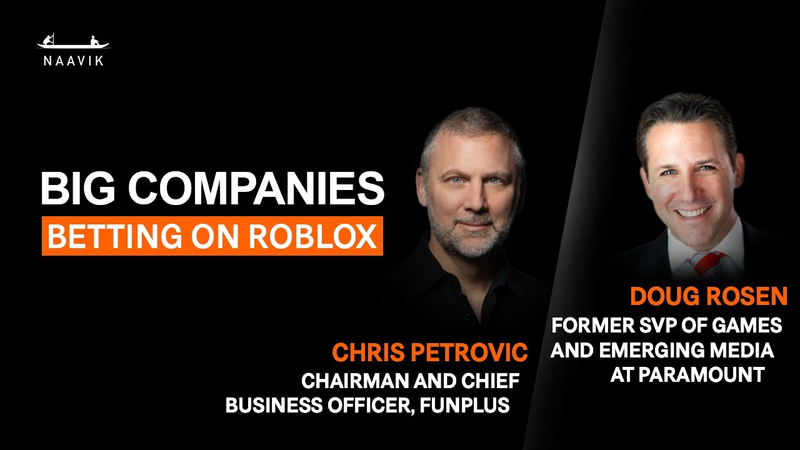
your community wants next. To learn more about how Leveler can help your team unlock immense value from Discord, simply visit leveler.com or check out the link in the show notes. And with that, let's jump into the episode. Welcome to the Noviet Gaming Podcast. I'm your host, David Taylor, and today we're diving into how major entertainment companies are approaching Roblox. Joining me are two fantastic guests. Chris Petravich is the chairman and chief business officer of Fun Plus, one of the largest privately held companies in the gaming sector, and a veteran executive in digital entertainment and gaming. He has leadership roles across major mobile game companies like Zinga, Kabam, and GameStop. And Chris has spent his career at the intersection of gaming, media, and strategy, helping companies navigate platform shifts and new business models. Joining him is Doug Rosen, the former SVP of games and emerging media at Paramount, who's led game teams across some of the world's biggest brands. Doug brings deep experience in how IP holders evaluate and engage with emerging platforms like Roblox, Minecraft, and Fortnite Creative. Today, we'll explore
why large entertainment companies are increasingly paying attention to Roblox, how they're experimenting on the platform today, and what they'll need to see to fully commit. We'll also dig into the strategic framing of Roblox inside large companies and how success is measured. Finally, we'll look at at the challenges, opportunities, and what role Roblox could play in shaping the next generation of entertainment franchises. So, without further ado, welcome to the podcast, guys.
Thanks, David.
Yeah, thanks for having us.
So, to kick us off, Chris, maybe you could just give us a quick background. I I mean, I gave you a quick intro, but I would love if you could sort of go into a little bit more detail on how you got to where you are today. Yeah, I've just been fortunate enough to spend my entire 20 plus year career at, as you said, in the intersection of gaming, tech, and entertainment. Um, I started as an entrepreneur in the early 90s in LA running a venture funded uh web company. Um, then spent some time in venture uh after the the burst of the the web 1.0 bubble. Um then found my way uh to being a digital leader uh inside
of various analog companies um including companies like American Greetings, Playboy and as you mentioned GameStop and then eventually made it over onto the the content side of things um when I joined Kabam um and and then from there Zinga and now here at Fun Plus been here four and a half years uh based in the Zurich area of Switzerland and really enjoying it and looking forward to this conversation because throughout our career We've seen many as you said platform and business model shifts and I think this is one of the most profound ones as it relates to uh gaming platforms and gaming audiences and so I think this is uh going to be a really good good debate and discussion.
Awesome. And just just for the audience to better understand what what is a chief business officer at at one of the biggest mobile game publishers do exactly?
So that's a great question. Uh wearing many hats uh alongside of our CEO. So I would I would look at it as running uh all of the operations outside of our R&D which is located in China. Um and we
have a footprint throughout the west uh both publishing and and game studios uh on the non-mobile side. Um, also just corporate strategy, uh, our investments, um, our our investor relations, um, our corporate governance, um, and also all of our publishing, um, because our games, while made in China, are are made for the purpose of being distributed primarily in Western markets. And so we have a marketing publishing operation in in Spain in Barcelona um that partners with our colleagues in China to make sure that these games are put in front of users worldwide and and that we market effectively to to be to have those games seen across all the relevant platforms.
Awesome. So basically everything outside of like the the development of new games is like in your
correct with the exception of our studio in Lisbon which I'm really closely involved in but all of our mobile freeto-play games that are uh for the strategy genre which is what we're known for are made in are made by our studios in China.
Awesome. Cool. All right, Doug, love to to bounce it over to you.
Yeah, thanks David. Uh you know, so I've been in media and gaming most of my career. actually started out on the creative side of the industry. Um, wanted to be a writer, producer. So, I was in LA for a lot of years trying to find my way there and I was with a lot of folks. I think found my natural um, proclivity was elsewhere more in the business side. So, post business school, moved back to New York and have been in and out of media and IP owners for a while. I was at HBO for a long time, NBC Universal, and lucky enough to have been at VCOM, now Paramount, now Skyance Paramount for the last eight years. Uh, and the and the biggest chunk of it running what we call the games and emerging media team. And so we were the team that really oversaw the entire games business across the company. Um, think of it as an internal studio. And I can go into more detail as we talk. We were structured a little differently I think from some of the traditional um
lens or I always believed partly because I'd come from the creative side that the team was best formed um from that point of view. So, we have a team that was focused on creative production, marketing, business development, and QA. And we did some of our own development. Primarily, we worked with kind of best-in-class outside developers and publishers. Always through the lens of like what is the best fit for the Paramount IP in gaming. Uh, a lot of fun. Really enjoyed the time. Just left over the summer and um, you know, excited to have this conversation. And I think to Chris's point, there's really no better time to be focused on these creator platforms. I think we were early in from a brand perspective on Roblox. We lucky enough to partner very closely with Epic uh within Fortnite and what they're doing there. And I think there's a lot to be learned from what others have done, mistakes we made, things we did right, and looking now at how brands are approaching it. Really, really, really fascinating time.
That's awesome. And yeah, I I have
framed this conversation sort of to focus on Roblox, but but please like want to make this about UGC gaming in general. So, um you know, Roblox is obviously uh the biggest platform by a long shot, but please uh feel free to include your perspective on Fortnite as well because you know, we're all rooting for that to continue to grow. Um although they've had, you know, some some speed bumps along the way. I think their most recent announcement around um enabling creators to monetize in game is a really exciting one. So I think it's worth talking about here. Um so thanks for the introduction guys. I also want to just frame up Roblox because they've been you know they had a massive quarter last quarter and and I think that's another reason why we're having this conversation is um because you know the broader gaming world and entertainment world is taking notice of of this becoming you know the next major game platform. So, I'm just going to go through some quick stats to to lay the groundwork and then we'll hop into the meat of the conversation. So, um as so in their last quarter, uh
bookings were 1.4 billion, which was up 51% year-over-year. Daily active users was at 112 million, which is up 41% year-over-year. Um APAC was up 76%. So, that was that was a big contributor to that. Uh the hours engaged was at 27.4 4 billion which is 58% uh increase year-over-year. The number of monthly unique payers so monetization uh is up 42% year-over-year. Uh they had 23.4 million users who were were payers during that quarter. And then um most importantly from a creator lens is they paid out 316.4 million to creators which was a 52% increase year-over-year. So, that was their last quarter uh report. And then some other announcements that were exciting or the biggest announcement at RDC a couple weeks ago, which I saw you
at, Doug, um were that they increased the uh uh exchange rate for creators by 8.5%. Which effectively means they're giving 8.5% more uh money to creators as a result of that of that change. And so, you know, when we look at what what the rest of the the year looks like, you know, we're probably going to see, you know, I'm estimating around 1.4 billion in creator payouts um by the end of the year. And so, um it's a very exciting time um to be a creator. And that's why I think a lot of a lot of folks are starting to to take notice. Um, you know, Roblox's goal is to capture 10% of all gaming content revenue. I think right now, you know, they're probably around 2 to 3%. So, they've got a long way to go before they get there. But that's also exciting from a growth perspective. If they feel like they can get there, then that just means that,
you know, the total market for for um IP owners or or or creators on these platforms has has room to grow as well. So with that in mind, let's jump into the meat of the conversation. I a little bit teased it, but my my first question is what is attracting corporates to to enter this space? Um why is it such an exciting time to be to be on Roblox or considering um engaging with the platform?
Yeah, I'm I'm happy to start. Uh look, I think gaming as a category has been a priority for a long time. I think it's really especially the last 5 10 years you've seen brands and I think that includes IP holders, it includes fashion, it includes CPG, it includes anyone who has a quote brand that's looking to reach Gen Z, Gen Alpha, the right audience on those platforms. I think they've crossed the bridge finally that gaming is a great place to be. The strategy to get there varies and we can probably talk a lot about the different ways you can enter and if it's been the
right approach. I think Roblox really for the first time and I think David talking through those numbers it's really apparent like it's gotten to the scale that it is meaningful in a much bigger way now right the audience is there they're engaged I think we've seen games like Grow a Garden now bring in a new audience as much as Roblox has talked about bringing in a quote older audience we're finally seeing I think the growth of some of these casual formats that are truly bringing in a different audience that was there so if you're any IP older brand you have to be there right now just simply from a numbers perspective. The question though really is what is the right approach, right? And I think whether you're trying to raise awareness, whether you're looking for engagement, whether you view it as a monetization opportunity, I'd probably argue if you're a brand, you need to look across all three. It's a place you have to be. And then finding your way into that world is is the hard part, right, David? You live this every day, right? finding creators to work with, figuring out a path in um and what
those metrics are is really the question for these companies right now.
Yeah, 100%. Talent is the scarcest resource on these platforms and it's becoming even more the case as creators are able to make more money and therefore hire the top talent to work on their games. You know, Grow a Garden, Splitting Point Studios, they're they have some of the most talented developers on the platform because they're generating so much money that they can offer the most competitive uh salary. So yeah, definitely something that always needs to be top of- mind for anyone engaging in the space is making sure you have the top talent and and making sure that you're able to to uh compensate them.
Yeah, I think just to extend what David said more onto the the game development side, I think for companies like us, the the primary interest in leaning into the Roblox platform is just out of industry and and and you know, company curiosity. Um, you know, we know that we as u, and I I'll call I'll call us one of many quote unquote traditional gaming
companies are not well suited to have uh organic success building for and on Roblox. Um, I know a lot of companies in our position and in our in our ecosystem have tried with varying degrees of success or not. Uh, but I think at the end of the day, as what Doug said, this is a a a scaled platform with a a huge audience. um it may not necessarily be the audience that we are seeking today. In fact, I know that the the majority of the age group of of who's playing on Roblox right now would never find their way uh into our games anyway. So, you know, I worry less about the near-term cannibalization of that audience against what what it is that my company makes and will be making in the future. I'm super interested in the medium to long term to understand the behavior and the and and the predispositions of those users as they age out of Roblox and or extend their purview beyond Roblox for other gaming and interactive entertainment experiences and and how that compares or contrasts to what we've seen up until now with audience
predispositions and preferences. Um obviously many people say and if I'm using a focus group of my son I would say that Roblox is first a social sandbox for him and his friends and secondly a gaming environment. Gaming is just kind of the tool through which they spend time together uh versus you know being outdoors shooting a shooting a you know shooting a basket or you know kicking the soccer ball around. Um so I think right off the bat you have a different mindset um for those users um than what you would see in more traditional environments. But as digital natives, you know, my son's age, you know, the the early teens, u the teenagers that are ex getting exposed to entertainment content primarily and first through games, uh, you know, for the first time in in media history, whereas prior generations first started maybe with TV or books or comics or music or or or um or movies. um you know gaming first is the place where these folks are coming and I think that's nothing but a harbinger of positive things for our industry in the future because we are building uh a a a certain
kind of preference for what it is that these players are ex are expecting now and then what they may expect in the future. So, you know, that's why David, we partnered with you and happily invested in in your company so that we can use you as a platform and work with you as a platform to learn more and figure out where we can potentially invest our time, money or expertise uh in furthering the the vision of the the Roblox platform or more importantly the creators that are looking to make um a a sustainable business for themselves out of making games.
Awesome. And yeah, uh disclosure for everyone. uh uh Chris's company uh Fund Plus invested in our in our preede round. Uh we're delighted to have him on board. Um and um you know, one of one of the things I want to want to follow up on is you know, you talked you both talked about audience, right? Groward brought in a new audience. I think that was you know, largely a Southeast East
Asian audience, right? And and Chris, you sort of said like we're not concerned about, you know, Roblox cannibalizing our mobile games business. I'm kind of curious to know like both from from an entertainment company perspective, like are there different geographies that are more valuable than others? Like how do you think about your own IP and and reaching audiences on a global scale? Because that is that is what Roblox's audience is. It is a global audience. And and you know what made roarden the biggest game of all time in terms of peak uh concurrent users was the fact that it had gone viral in you know all of these major countries right and so um I'm just curious to understand like how do you guys think about audiences beyond just the you know the typical US North America and in Europe audience. Yeah, I mean I think from an IP owner's perspective, it's a curse and a blessing, right? If you're lucky enough to have IP with global appeal, it's an
amazing platform to activate on. And truthfully, it accomplishes multiple goals at the same time, right? It really does get you in front of every audience you want to be at. And there Roblox does a good job of localization. I think there are challenges around translating IP in certain countries and your ability to really get to the detail you need to do that might resonate with that audience. Right? there's IP that means very different things in different countries. So the the curse to some extent is you have to be comfortable with a truly global approach. Right? If you're a brand and this happens often I think more often with marketing campaigns where they're used to the ability to really segment and target and create very specific campaigns, you're not going to do it right. But at the same time, if you truly view it more as a brand engagement and growth platform, it's amazing because if you have the right IP and you can figure out and you know how to build a game that translates to good mechanics that actually work with the IP and you can get it to scale, it allows you to now reach audiences you
weren't reaching before and to expose your IP to them in places before. And so I think it's an amazing thing, but I think then it comes down to do you have the right approach to take advantage of what Roblox actually affords you, which is that ability to reach audiences you were never going to reach through a TV screen or a film screen or through consumer products.
Yeah.
Yeah. I think from a gaming company Oh, sorry. Go ahead, David. And just one one follow-up question for for you, Doug, because I'm curious about the sort of the like linear entertainment perspective on this is, you know, if I were like a if I were just advertising for, you know, I don't know, some consumer product and it's not sold in the Philippines, right? It then it's not really useful for me to be putting that brand in grow a garden, right? But but for for linear entertainment, you know, you could potentially reach those users, you know, as streamers or or as uh movie goers. So, I'm curious whether that is a
priority for you guys to to be able to introduce the IP to, you know, Southeast Asian markets or markets that you're that you may not typically have or that you already do have. I actually don't know. Um but but how do you think about just sort of growing the global consumption of different IP?
I it's not to sort of hedge the answer. It's so specific to the IP, right? You obviously have things like Marvel on one hand which reach everyone and then just thinking back to my old friends at Paramet, you have something like Garfield. Garfield does incredibly well in China and Asian countries and actually overindexes than it does in Western Europe and the US. And so there's a good example of you may actually want to go in a different direction creatively because your audience in those countries where the IP is resonating is very different. And so what I think it takes though is an IP holder who is willing to take a very specific approach to it
and look at the ROI against your spend on the platform if you're spending from either an integration standpoint or a marketing perspective or if you're looking to launch a standalone experience creatively. How are you developing it to both cater to your existing audience because you want to engage them on the platform and then use it as an opportunity to reach new? So the science then becomes like how do you then go back from an IP level perspective and really start to customize it. If you can do it, I think it's incredibly powerful. I don't know right now that every media company is looking at that way because a lot of them are more focused on it as a licensing business which I don't think is the right approach for this platform.
Yeah. But if you if you are able to take the right approach and I'd love to hear from Chris too because I think it comes down to probably more how a traditional game developer would approach launching a title and Roblox truthfully is some ways the free-to-play platform right in multiple countries and being able to optimize your metrics against the audience you're going after in that country.
Yeah, Doug, I couldn't agree more. I think uh to your question, David, about how gaming companies would look at this audience uh dispersion on on Roblox, you know, I think it's an interesting data point to see what may be playing and spending habits that are emerging for these audiences in these markets and how that could look in the future. Again, going back to my point about, you know, whether and when they age out or age up or expand their purview of what they want to play games, where they want to play games and where they want to spend their time and money. But if I were to look at, you know, Southeast Asia from my core business, I would say it's probably not in the top quartortile of my most important markets from a from a ROI perspective. Uh there are great uh you know figures that get uh that get thrown around or get researched around you know high install numbers or you know download uh rate growth year-over-year in places like Southeast Asia, India and the African continent. But ultimately for companies like mine that have finite amount of of uh access to resources and marketing dollars, it's
you know what is ultimately the return on that install, right? Or the revenue per install that is generated whether it's a mobile game, whether it's it's a you know a PC or console game. And you know given that four countries still command you know somewhere in the neighborhood of 50 plus percent of the global gaming revenue you know with a with a quick dispersion after that by country um you know those emerging markets are still emerging for a reason. And I think again it's an interesting data point to feed our curiosity and and our desire to understand what are the habits that may be played forward from these users in these markets and on this platform that we could benefit from in the future as they get older. Makes sense. So it sounds like, you know, what what you're sort of describing is the the market size of these, you know, of these emerging markets, Southeast Asia, India, it it hasn't quite gotten to the the size where it becomes suddenly appealing, even if the the number of players there is, you know, quite
significant.
Correct. Correct.
That's that's interesting. I mean, one of the things that I think I always look at when I'm looking at Roblox is earnings is, you know, they're they talk about DAU growth, right? But then if the majority of that is coming from some of these these um larger companies with with lower, you know, ARPO users, average revenue per per user players um you know, can they sustain the rate of monetization? And what's been really impressive to see is that yeah, I mean revenue is growing at the same rate or faster than the the player growth rate, which signals that either those emerging markets are spending more or they're able to just get more money out of their their core US and and uh Europe markets. Um it's probably
my bet would be the latter. My bet would be the latter.
Okay. if if history is any guide on on you know how these metrics evolve and I know that you know having worked at publicly traded mobile gaming companies that used to have to talk about DAU and
MAU on a regular basis like at Zinga it was always the unspoken balance between leaning into the the audience growth versus acknowledging where the the revenue per that audience was coming from and really was still optimizing in the the more mature markets while while you were you know while you were touting the MAU growth and emerging markets. interesting. I will I will just caveat that with like I know mobile games although I'm not I'm I know very little about mobile games uh ironically given that Roblox is majority uh mobile platform but um you know people talk about mobile games as being whale largely whales driven right and it's all about can you get these these players who are going to spend 10,000 plus on your game um and so I can understand that and why it kind feels like, you know, these players are only going to come from from these from these more wealthy countries, right? Um, on the
flip side, Roblox does have some sort some some amount of a power law curve in terms of where the spend comes from, but it's not nearly as intense as as it is in mobile. And so I wonder if there is maybe additional opportunity in these in these emerging countries because you know there isn't really a way to monetize those whales to the degree that they are in in mobile games.
Yeah, I would agree with you on the perspective if you're looking at it from a core game side. I think you know casual mobile games are maybe a better proxy for what we're seeing trend-wise with Roblox and and the monetization of the audience because those games are more accessible. They're smaller file sizes. the monetization is is more balanced perhaps or less aggressive. And so yeah, I think if you look at hyper casual and casual as a subset of mobile and compare that to Roblox, you probably see much more much closer trends than you would comparing Roblox behavior to maybe midcore hardcore mobile gaming behavior.
Awesome. So that's super helpful. And
and I guess where I want to want to go from here is I'm curious what are the current um ways in which IP owners are engaging in roadblocks? What are some of the the tactics we've seen that have been successful or or even not successful in and are sort of learning opportunities?
Yeah, I I can start. I mean, I think there are three basic approaches they're taking right now. And again, I would argue that if you're an IP owner, you need to step back and think about is one right or frankly should you be looking across all three based on the life cycle of the IP, what your goals are, what your audience is. But right now, I think you're seeing general marketing and that's been around for a while. And we see a lot of brands go, you know, movies launching, let me integrate into an existing game, let me launch a popup experience for a couple of weeks because their goal is very specific. Most of that is driven either directly by Roblox or by the agencies. So I think there's a conversation to be had also around agenda at that point and sort of what the goals are. But if you're a movie studio and you're spending $50 million
on a marketing campaign, truthfully, Roblox is always going to be a small piece. And so the agency's really looking at how do I reach Gen Alpha and this, you know, boys 5 to 11. Roblox needs to be a core part of the media mix. Here's a best the best way to do it. And so I don't know that there's a great degree of thought given beyond it. Not in a bad way, but truthfully that is part of the media mix and you want to do it. I think then there's the question of I think more immersive integrations and you're seeing longer term integrations happening into some of these games. Um virtual goods are being sold, some deeper immersion. That's really a a stepping stone to launching a standalone experience which brands have done and certainly at Paramount. We did it successfully with Spongebob Tower Defense and others. I think you need to be prepared as a brand for a couple of things. One, do you have the right IP that's going to work for a game genre that works in Roblox? To Chris's point, and I a thousand% agree, this is hyper
casual or casual mobile gaming. Not every IP works there. It also requires a certain gameplay loop and a an openness to monetization that not every brand is okay with. But if you want to be successful on the platform from a long-term perspective, you have to open yourself up to doing it. And then the last thing I would say, and David, we've talked about this, you need to be um set up the right way to work with developers on the platform because these are not traditional mobile or console developers. your pace is drastically um accelerated. You need to break your your approval process. You need to figure out a way to do it or else you will not be successful. And Chris would smile and probably argue every IP owner should do it for every games. Uh I happy to talk about that, but certainly on Roblox you need you need to break it. And so that's what's happening right now. I mean there are subsets of that. Obviously there are folks looking at commerce on the platform. It's really small right now.
There are folks looking at some other integrations, but truthfully, I think it comes down to like awareness, engagement, and then your real interest in monetizing and then what what model you go through. And I would just say my advice to any brand or IP owner would be if you break it down and say, what's your audience? What's your goal? Do you have the right IP? If you do have one that will work from a long-term perspective, great. Because truthfully, make a game. if you can get to be successful, it will serve both purposes. You're going to make money off it. And then when you have a a moment where there's a movie coming out, drive a audience to it and light it up. And so, I don't know, that's my view on the way in.
Yeah. I think maybe not so much speaking from a from an entertainment or IP perspective, but just speaking from a a game company perspective, you know, we have a a very specific thesis uh that drives the the the focus of our company going forward. um I think which has a lot of potential applicability within the within the the Roblox ecosystem and
and you know David you and I have talked about this before um which is you know we we personally feel that there is a great chance that the next Marvel or Star Wars level IP universe will come from a gaming company uh uh as just as much as it could come from a traditional entertainment company because of this evolving uh predisposition of digital natives to interact with with entertainment content through gaming platform. And so for us, you know, we're doing that on our own. We're starting to invest more in building IPcentric crossplatform game projects. And one of the the the interests that we have is figuring out whether and when Roblox can be that platform for testing or vetting um you know an IP idea um either in the first instance as the primary as the primary product or maybe as an ancillary product once there's been success with a with a first first uh run game somewhere else. Um, and you know, some of the things that we're seeing already, uh, whether it's Roblox's statements about
wanting to be a larger part of the gaming revenue ecosystem, whether it's touting its its expanded age, uh, uh, demographic growth, whether it's talking about its IP licensing program, which means that it's putting more importance on IP, whether it's improving the tool sets um, that developers have access to to build games. And ultimately what it's going to come down to is the consumer preferences about what level of sophistication and fidelity uh and polish do they want from from from the game experience on Roblox. Um, and and then what kind of IP le expression can you build that's authentic and genuine for that and that can give you some comfort that there's a a chance for expanding the success of that IP uh that that first canary in the coal mine so to speak uh which could you know come in the form of a Roblox game and then expanding that out into the broader gaming ecosystem so you have a much larger TAM. So we're that's our interest. Um, it's a little bit of a variant of what Doug talked about in terms of how the the IP and
entertainment companies think about it, but because of our thesis being very IP driven and also wanting to reach audiences as broad as possible, we we definitely are keeping our eyes out for these emerging or or ongoing trends that may lean toward where what what our bias is of where we think our business should go and and how we can uh, you know, mutually benefit from engaging with the Roblox ecosystem with with creators. That makes sense. Yeah. You you I mean when I think about sort of IP development coming emerging from from Roblox, I think about like you said Marvel sort of an example, right? Like Marvel was comic books at first and that and and then the journey to be becoming the absolute, you know, IP behemoth was like a 50-year journey, right?
Right. Uh, and so that that to me is like really exciting to think about cuz cuz a you know comic books are very much a similar sort of medium to to Roblox in the sense of like you a comic book
probably can be consumed in about 15 minutes, right?
It only takes you 15 minutes to to consume it. You probably can read it once a month or once a week as as these comic books are being published. Um, it's these things are created extremely quickly. I I read one of the Marvel books about sort of what the early days of working at Marvel was like and it was like an assembly line of like somebody's, you know, creating the initial wireframe or just drawing the drawing the pictures and then somebody adds the copy on top of it to like put the story behind it. And it was just an absolute uh cluster of a of a of a creative process. But it was like through that chaos that these amazing characters emerged and now this company is worth oh I mean you know who knows what Marvel is worth today as a as a function of Disney but I mean
it's just you know generating hundreds of billions of dollars for them. So
um it's really exciting to think about
just the way in which that development happens over a long period of time and and also um you know the the similarities in terms of the creative process on in both comic books and and now uh UGC game platforms.
Yeah. Yeah, and I think David, the one the one point I'll make there is that um you know and I and I have this as a as a slide deck in my company presentation when I speak to partners and potential investors is that that timeline that you talked about about the the the journey of IP uh becoming uh in the zeitgeist from its first expression and you use Marvel comics as as as the example to when it makes it to digital platforms in the forms of movie, TV and games was a long journey like you said 50 plus years or 80 years whatever the case may be. I was with an executive last week from Nintendo that reminded us that you know Nintendo is you know 139 years old and only the last 40 years of that has been gaming right and so yeah these journeys have been really long but I think with the advent of digital platforms plus the ongoing heightened expectation of
consumers to consume content anytime anywhere any device I think that journey the timeline of that journey is is just constantly and exponentially shrinking. If you just take one small example, which is the time that it took from Last of Us to go from its first expression of a video game to a TV show um was only a couple years, right? Maybe four or five years from the time that they inked the deal to development to and so you know that is where it's going. And I think the the beauty of platforms like Roblox is you can create a first expression of an IP in a much more efficient amount of time than that Marvel comic that you refer to in the past and and get some signal from the market about whether this is something that has some some some staying power and some legs primarily on that platform and then thinking about creative ways about how and whether that can be adapted uh beyond and I think you know my understanding is that there's a lot of creators in the Roblox ecosystem that are getting to be of the mindset where they are trying to figure about how they can scale themselves beyond Roblox
because I think even with all the success that Roblox is primarily enjoying um that you know for the development community there I have not seen very many examples on a proportional basis of repeat success you know from the developer and creator community where they've been able to replicate or exceed the level of success that they've had with their first hit. Um, I know you you probably know all of the exceptions, but I I bet that it's only going to continue to get harder given that the barriers to entry are so low and that, you know, the amount of content uh is just going to be continually saturated beyond the point of the algorithm being able to keep up with consumer demand. So, I think the more enterprising creators are going to think about how we're thinking about it, which is what what can I do beyond this initial success that I've had? How can I extend my game or perhaps a burgeoning IP into other forms of media and entertainment? Whether it could be another game, it could be a, you know, an anime series. Um, you know, just because consumers want a 360 relationship with something that they are fans of and and through digital platforms and and and great tooling
that, you know, this is now more evident than ever. And by the way, they can also contribute as creators and as as consumers to the development and and expansion of that IP, which I think is unmatched in any other media uh media sector.
I'm Chris, I think that's a really really important point. And I I might be biased having spent I don't know most of my career sitting in companies where we were evaluating things and saying like is this something that can become IP and but the amount of time and investment it takes within a company like that to to develop an idea go to pilot go to series can can be five years it can be north of $50 million the world doesn't work that way anymore and so the beauty of this platforms is you're right it gives you an ability to test I think the challenge today with most of these things are coming out of it is they were built specifically to work on Roblox, right? And so how do you really extend it out? Like I love the comic book analogy. The one nuance I would say is what Marvel did is they built a universe before it
became anything else. They had story, they had characters, they had things that fans would love that allow you to really immerse yourself in the world. Very few of these games on Roblox have it for a good reason, right? Y
Chris, you know this. That doesn't always work when you're developing a game. That's right.
So how do you do both? And how do you take that approach from the beginning? And this is an area I'm fascinated by on building IP out in a way and using these platforms as a way to begin, but not just focusing on a pure monetization opportunity. And I think it's a different skill set. It's also starting to look at I think the larger creative community and how you potentially bring them into it, which is a fascinating place to spend some time. But I right, we're at like as successful as Last of Us have been, that's kind of a unicorn and again a very isolated thing. I think we're almost at like day one of where these platforms can go as the as a test bed for it.
Yep. Agreed.
Yeah. And I think I think this notion of of you know the the creation of an IP
for and on Roblox you know we have a for example we have an IP development/worldbuilding team within our organization that works across all of our studios to level them up on thinking about how to create an IP framework or bible or universe as a first step and then extracting from that from that that bible so to speak a kernel of that which can then become a game. And our plan is to work with Roblox creators in the much the same way, which is providing that skill set as I alluded to at the beginning of our of our conversation about encouraging them and and helping them think about how they can create that story, that narrative, that world, and then extracting the kernel from that that is appropriate for the Roblox audience, but having that as a foundational asset that can then be reused or exploited or or taken advantage of in success. um you know once you have those signals from the market um that that there is something there even if it's a single character or a single story strand that starts on Roblox it could hearken back to something bigger that you can then
introduce either there or elsewhere but ultimately the the the the goal is to have a a holistic 360 degree uh uh you know kind of dome of content for that consumer that becomes a fan of that one kernel to be able to consume more any anywhere they may want or at any time.
Makes sense. I mean, I'm going to I guess I'm going to agree with you in one sense, which is which is that um when building a game on Roblox, you absolutely have to think about it from the lens of what is a what is a piece of content that the Roblox audience is going to want to engage with. If you don't do that, it's doomed to fail because to to your point, it's extremely competitive. If you aren't completely focused on what is going to be the most engaging piece of content, period, then you're you're not going to succeed. And so I would I sort of like I would sort of take that to to to build off of sort of your your suggestion that you could build an IP for the Roblox audience. I might say, you know, do it after you
prove that initial that initial traction, right? You need to get PE players into the game, start to get that scale, and then once people are bought in, you can start to layer in more of the narrative part. And I think agree challenge,
the challenge of Roblox is because you can jump from one game to the next in 5 seconds. Like it's very hard to keep players in your game. And so you have to build that trust, build that commitment to your to your game before you start to um ask players for the time it takes to uh world build. Yeah. Yeah. That's why I made reference to pulling a little kernel out, which could be a single character or just a single story thread. It doesn't have to be as wide and broad as it would be in the traditional gaming side, but just some some frame of reference or some carrot to throw out there just to see if there's receptivity to it in some kind of fandom way.
Um, and you know, I think that
if if you if you lean into the belief that Roblox has that they're going to invest more in in retaining people as
they get older,
I think is if history is any guide in our media, games, and entertainment respective backgrounds that tastes evolve and change and preferences evolve and change as you age, right? either either because you have more money or you have more time or just you're you've evolved past playing with the G.I. Joe figures or you know playing with you know playing with Legos and you kind of want to move on to the next thing that your peer group is doing. And so you know part of the thesis has to assume that that Roblox is at least partially successful in retaining users for longer and then you can ride that wave of of evolutionary preferences as they age to be able to deliver them something that's more in line with what their what their evolving expectations are. But I agree with you. If it was a game that you were to do today to the core Roblox audience, you wouldn't spend a ton of time bringing them into an immersive world on day one. You may just dangle a carrot of of something that may resonate and maybe differentiate from all the obby type games or all of the other kind of metos. I think that's what's going to happen is people are going to find innovative ways
to stand out in an increasingly dense crowded storefront, if you will, um, of Roblox that has a lot of just lookalike games. Um and and this is all just you know we have to just take history as our guide of this is how gaming and entertainment platforms and have evolved from from you know as long as we've been around and seen that and and there are certain consumer behaviors that you can pretty much predict because it's just human nature.
Yeah. One of I mean one of the things you you talk about is can they retain players for the long term and we all know you know age verification is extremely difficult to do. I think Roblox announced recently that they're going to have another layer of like AI assessment of a of a player's age based on not just like the, you know, the um image that they upload and the driver's license that you that you upload with it, but also like the players behavior. Um so you know it's something that they're they're trying to do but it's it's very hard to prove but the but the numbers say you know the numbers say
that it is aging up um and every quarter you see that number going up. So either people are getting increasingly uh ambitious about their the difference between their their age their actual age and what they report or there is some sort of of aging up function going on. Um,
I would today on where that is. I think if my son and his group are any focused that they just, you know, do what they need to do to get past the age gate, right, without
exactly
parents or or you know, so it's just it's a a pick of a random date that gets you past the the front door.
How many how many accounts have your face on them, Chris?
Thank Thankfully none. Thankfully, none.
Um, awesome. Well, so let's I want to I want to talk about sort of what what it would require for IP owners to really commit more to this space. What are they looking for? Because, you know, you guys are both sort of on the on the forefront of um engaging with the Roblox audience
as IP owners um from the IP owner perspective. So what are those things that you think would be required for there to be more commitment from the broader um entertainment uh sort of corporate world?
I think it's good to have both conversations because I think we've touched on both the idea of IP in and out and I think to some extent they're both really important regardless of where you sit whether you're a traditional game developer or you're an IP owner. I think if you're not looking at it both ways you're missing a huge part of the equation. I from an from an IP owner's perspective, I think well there's a few things. One, you need to get over some of the concerns about trust and safety. And I I would argue you need to because there's yes, there are things happening there, but Roblox is doing I think what they can and truthfully every large platform at scale has issues. Not to minimize a lot of the things that have happened like they're deeply horrific things but
truthfully it is a large platform and if you are a brand that's trying to reach that audience you you have to find a way in. So that requires some internal culture change sometimes and there's a whole conversation we can have around internal organization structure at some of these companies and how they're approaching it. But I think you you need to make sure you're looking at through the lens of this is a gaming platform with an audience I'm going after and I need to look at my IP critically and then plan a strategy to approach it and then build a structure around it to support it. Some common things I think we see right we see this in any company you have competing agendas you have a marketing team who is activating on one hand and then you have a gaming team who's activating another way and those don't always work together I think we spent a lot of time at Paramount fixing that in a good way and so you need a really coordinated effort and they're they work together right there's IP and there are events where it makes sense to promote in a twoe window and there's
others where you need a really holistic approach Right. So I'd say from a senior level perspective, I have this conversation a lot at the CMO level or at the CRO level or at this whatever they need to structure the organization to make sure they're approaching it. And then you need to be willing to take some risk because I would say truthfully, you need to have the the ability to you don't have to build your own studio. Some have, but partner with the right folks. You're not always going to be able to license because David, you know, not every developer is willing to take their risk. So, can you are you willing to put some capital up to build on these platforms to test to learn to figure out what works and then like I said break your process apart and think about a way to redo approvals to not get bogged down in all the pieces of of franchise approval that can cause months of delay when it comes to things like community management. You have to be comfortable being on Discord, finding an appropriate way to manage a community there and really lean into this truthfully like a
you know a very active community managed free-to-play game. If you can do it, I think there's a clear path to success, right? But it's going to require these companies to step back and I think again change their approach to it. And I think that does go hand inhand with the IP out. Like if you're not there right now thinking about either looking for IP or how you start to build IP or partner with folks who are doing it, I think you're you're missing a huge piece of the equation right now.
Yeah. I mean, so so Doug, you you guys have done a couple Spongebob games on on Roblox that have been super successful. I mean, I guess let me so at the core of my question is like what are the things that that are the proof points that every IP owner should be um you know doing something on Roblox and and so when I look at at the work that Paramount has done with Spongebob uh you've got Spongebob Tower Defense I'm I'm looking at Creator Exchange right now like yeah we have Spongebob Tower Defense which has 441 million um visits
according to our estimates it's you know generating about three million uh it's generating about 300,000 a month, uh, which is really strong for a for a Roblox game. You don't have to confirm or deny that, but we have pretty accurate estimates. Um, you've got, uh, Steal a Spongebob, uh, which was released, I think, a month ago or maybe a little bit over a month ago. Um, which has, you know, is making around $50,000 a month right now. um and has uh 65 million visits which is you know really strong as well. Then you have Spongebob Simulator which is one of the older games um that's you know was making around 150,000 a month or sorry 15,000 a month um uh over the last year and has 70 million visits. So, so like here's an example of a of an IP that you guys have that Paramount brought to to Roblox, right?
And has been very successful financially as well as from a engagement perspective. So I I guess what my at the core of my question is like what is that what are those metrics that allow you to double down on this and continue to do IP extensions across the platform? Yeah. No, I I get it. I mean, without addressing the specific numbers, I would say it's uh here's the truth. It requires a focus on this is a commercial effort and that is not an easy thing to say and not every company is focused there. I think partly because the way we had structured it and the way my team was structured our goal as a team right we run a P&L we run this as an internal game studio and there's it's a multiaceted approach which includes console includes mobile it includes a whole different approach to creator platforms along with a whole bunch of other things and so that's a full plan built out but the goal in getting to
these creative platforms Roblox we could talk about Fortnite but primarily Roblox was was building a business there, right? And so if that ultimately is what we're looking at, which is for the investment we're putting in, what's the return? What's the audience we're reaching? Is this a successful game? And is it built to sustain for the long term? Because what I wasn't interested in is launching something that was going to live for a few weeks and go away. And look, truthfully, if you look back in time, our first effort on the platform 5 years ago was Nick First, which was built to support the Kids Choice Awards. That was done for a reason, which was to promote an event. But we did it. We learned from it and we realized if you focus on the right IP, you can prove successful. Um, Spongebob Simulator when it launched did well and you know these things have life cycles and so Tower Defense came along and again the Zach and the Wonder Works team what we loved about them was they understood how to build a game that worked for the IP. They had the same goals we did, which was making it successful. Requires you
to be comfortable with monetization. And if you look at the game, it's monetized, but I think it has to be in order to really be a game that players also are going to enjoy because it taps into a lot of the core gameplay loop and monetization loop that works elsewhere. But ultimately, our goal at the end of the day was successful business. And I think if you're starting from there, it kind of gives you a razor's edge on which you need to evaluate everything. But that's what I believe fundamentally is the best way to approach this platform.
Yeah. And and I mean I the one thing I'll add is why you need monetization is it also increases distribution through Roblox's algorithm, which is effectively the only real way to get players to play your game in the first place. So you have to have monetization. It's not an it's not an option if you want to if you want to get engagement on on Roblox.
Agreed. You know, David, that's we say that and you know that's easy to say. I think a lot of these companies have a resistance to it because they view it as
they're not comfortable. Does it meet the brand guidelines? I would just argue if you're going to be on this platform and you any IP can ext I mean Chris will tell you from mobile right IP can extend there and you can do it in a way which doesn't feel predatory which feels like it's supportive to the gameplay loop but you're right if you want to be there I think you need to make sure you're set up for success and that's a key piece of it. Yeah. And and I think one of the reasons why, you know, au IP may not be interested in monetiz monetization, and this is sort of to to to throw it over to you, Chris, is, you know, at the end of the day, Spongebob Tower Defense was extremely successful, but being on sort of a 2 million, 2 to three million annual run rate isn't like, you know, isn't going to raise isn't going to get too many people excited when you're making a billion dollars off off of a movie or, you know, 500 million off of a breakout hit mobile game. Um, and
so I guess I'll throw it over to you for us to to ask the same question of like what are the what are the things that that you are looking for before you can really commit resources to Roblox. Yeah, look, I was going to I was chopping at the bit to to jump in and and put my my media person hat on on top of the gaming hat and say those statistics that you cited are the the people that that should and probably were the most excited in Doug's world where the marketing groups because they heard that the visits numbers which are absolutely through the roof. Uh and then the other end of the spectrum is perhaps you know a gaming person saying okay what is that on a revenue per visit basis? It's probably pretty anemic,
right? And to your point, only a fraction of what
uh any going concerned company would be excited about in terms of their their game generating that amount of revenue in mobile or PC or console, right? So,
it goes to what we were saying earlier. It's just a it's a it's a huge platform with a huge audience that's spending not an insignificant amount of money. But when you when you look at it from an ROI perspective, you know, uh traditional
companies like mine only have limited resources to make bets on platforms where they think they can get the greatest return and they're not worried so much about branding. It's more, you know, financial performance. And so this is why from a from a Roblox perspective, not only do we not have the capabilities to compete with the with the native creators, but the unit economics uh uh you know that Roblox gives out is not really um generally conducive to more traditional companies uh business models and also with statistics like that u you know that that is kind of more the rule rather than the exception. the grow a garden and the Brook Haven and those are truly the exception and I don't think anybody yet can tell us including the creators about what what created their success out of the gate. I know they've ci engineered the sustenance of that success through best practices, but if if we're looking at these kinds of numbers, you know, as the standard on Roblox, which which I'm presuming it will be, um then for traditional companies, it's just not there yet. and layering on top of the lack of competency on the platform and
the unit economics on the rev share. It just makes it difficult to aortion anything other than experimental budget to start learning either directly or in our case indirectly um on what is the the current uh uh and future trending of the platform that may be more resonant for our core business.
Yeah, that makes sense. And to answer that our our revenue per visit uh question, it's around 3,000th of a cent. Yeah. No,
I know visits and installs are not the same thing. So, it's apples and oranges, but that is the metric. Those are the two data points that you provide. So, hopefully that gets better over time on on average. Yeah, I I would just say without commentating on the accuracy of the numbers, there's definitely a gap there and the ROI was certainly much higher, especially when you start to layer in things like ad campaigns and sponsors and then overall a lift that something like that brings to the brand overall. So, I would it was certainly while not the biggest part of our
business, I think something we saw a meaningful enough of return to invest in. But I would also argue if you look at brand brands on the platform right now, it's a little bit of an exception, right? I mean, there's a handful that are doing well, but it's really really hard. And you're right, Chris, like it certainly can't be something you do in isolation. It certainly can't be the only thing you're focused on.
Yeah. The key in in your world, Doug, as you know, is is to to to agree on what are the metrics of success going in.
Yeah.
So then nobody is surprised or disappointed when it when it shows up in a different way.
Yes. Exactly. because that that's how that that alignment is how you get further support or not depending on the performance
versus you know versus leaning into and say this is going to be our next billion dollar business
uh from direct monetization um which which is is is not the case with very many brands because it's you know with the exception of the great work you guys did I think a lot of the efforts have been really marketing driven right um and and which is fine I think you know people want to reallocate marketing budget to get in front of that younger audience I think it's a perfectly
acceptable tactic Because media companies have done that in since time in memoriam, right? You go where the audience is and you you spread out your risk and you know you you you get that that those impression based uh you know brand lifts and and everybody on the marketing side is happy, right? And then when you have to monetize that's where that's where it gets a little more a little more amorphous.
Yeah. And they don't have that core expertise, right? Which is the other thing. Have you guys been able to track some of that uplift or is there any way to to sort of um estimate how much value you're generating through all of those visits?
Yeah, I mean we've certainly done I did quite a bit of work with our insights team to start to track that. I think Chris is right. I mean the value of those visits alone from a marketing perspective is is immeasurable. I think the other thing we look at is your investment in building something on that platform that's persistent. So you have an engaged audience. So when there is a tent pole, there's a Spongebob movie coming out Q4 this year, right? What
better audience to start to engage? And by the way, if you look at the audience profile and the profile in Discord, it's older than you would typically see and a different type of audience that you would normally find. So, those are all really good points that we can look at and say, does it help reduce overall marketing spend? You know, what are the impressions you're delivering? That's all additive and I think allows the marketing teams then in those moments to spend their money elsewhere, but also frankly reach an audience they weren't going to be able to get by building an integration into an existing game for two weeks, right? So, that's all I think measurable. Uh, attribution is a big piece of it, but certainly to Chris's point, I think when you're when you're making the case internally for your strategy, if you're clear about those results and then you're showing what you actually delivered at the end of it, then there's nobody's under any illusion that you're not doing any more than you said you were, right? And that's an important piece of it. Mhm. So just ballpark would love to understand sort
of what that like do you have a number that you can sort of like float as to this is how much value we generated through marketing savings or you know conversions is there just some some round number that we sort of point to that how much that was worth
I don't think I can give you any anywhere near an exact number right now at all. um that wouldn't be fair to the people still there working on it. But I would just say this. I mean for the investment we put into that brand on that platform, it was a a much more than significant return on time and resources and then greater than we expected. But it required a lot of work to get there. But once we do, I think we saw it certainly with Wonder Works the second game and then other things that will come to the platform. um it delivers results that uh are well worth the time.
Doug, I'm curious to get your perspective on whether a a loose proxy for how to how to uh answer what David
is talking about is, you know, our respective um PR teams or the world of PR and comms, right? They always like to back into like an earned media equivalent for the number of impressions that a story got across different media outlets, right? And I think this is probably something that the marketing teams in your world do when they talk about the visits and what the the value is of those visits, you know, compared to if they had to pay for traditional, you know, uh digital advertising um uh you know, inventory for that across similar similar age demographic sites and platforms. So, I'm sure David that, you know, there there are formulas out there and if you just take the 441 million visits and divide that by some, you know, CPM or, you know, eCPM number on on what it is for that advertising kids products usually is. I'm sure that the PR and marketing teams kind of use that as some kind of guideline for for quote unquote value.
Yeah. No, I mean look, there's a slide in one of these decks that talks about the amount of impressions which includes that. It includes obviously the Discord
community engagement on there. I think also the PR campaign. I think everything that was happening around it, the Halo effect, um the marketing you get on the front page of Roblox when they decide to promote your game and the audience that puts you in front of, I think you can start to triangulate and that 440 million quickly becomes billions, which is great. So that's a great number. I think the question then is like how much does that translate into results? And I think that's where I always come, you know, it's a little bit of a slippery slope, but you're right. Yes, it is. If you can do it the right way and you have the right approach and you can reach an audience with a successful game, I think the it's multiples of what you're going to see from a direct view perspective on that platform.
Awesome. Well, you guys just gave me an amazing new feature that we're going to be uh adding to Creator Exchange, which will be the marketing uh value calculation. Uh so, I appreciate appreciate both of you helping me brainstorm that. Um
I'll give you the uh I'll give you the secret formula.
Thank you. Yeah. Yeah. Please Discord Discord DM me that after after the interview. Um well, guys, we had, you know, a list of 12 questions that we never got to. Um, but it's been amazing to have you guys on the on the show. Um, just as we wrap up, what's the best way for for people to to follow you if they want to stay in touch and and keep up to date on what you're working on?
Um, yeah, I mean, I would say, you know, always on LinkedIn, on on Discord, you know, um, always available to chat, um, right now, especially for anyone interested in approaching the space. Uh, excited to talk more as companies figure out their approach here. Yeah, I would say in your world, David, LinkedIn or they can contact you.
Yeah, you you can you can connect us.
All right, everyone reach out to me if you have any questions. Uh
as if you need to know where to do. Yeah.
Yeah. Yeah. If you subscribe to Creator Exchange, we will uh make free connections to both Doug and Chris.
There you go.
At your will.
Awesome, guys. Well, thanks so much for being on the podcast and uh I'll talk to you soon. [Music] If you enjoyed today's episode, whether on YouTube or your favorite podcast app, make sure to like, subscribe, comment, or give a five-star review. And if you want to reach out or provide feedback, shoot us a note at [email protected] or find us on Twitter and LinkedIn. Plus, if you want to learn more about what Navic has to offer, make sure to check out our website, www.navic.co. There you can sign up for the number one games industry newsletter, Navic Digest, or contact us to learn about our wide-ranging consulting and advisory services. Again, that is www.navic.co. [Music] Thanks for listening and we'll catch you in the next episode.
Auto-generated captions from YouTube — names and numbers may be misheard.
















Comments