1 free read left. Create a free account for unlimited reading + AI research.
Create free accountArticle Board Game Studies Journal
1 free read left. Create a free account for unlimited reading + AI research.
Create free accountArticleBoard Game Studies Journal
Emblem literature of the sixteenth and seventeenth centuries depicts games only rarely. The article attributes this to the genre's serious, quasi-sacred character.
Jean-Marie Lhôte's article in the Board Game Studies Journal examines how seventeenth-century emblem literature treated games, focusing on Filippo Picinelli (1604–1678), an Augustinian canon whose encyclopedic work Mundus symbolicus (1653, expanded in 1669) read the world as a book of symbols. The central thesis is that games appear in this tradition almost exclusively as vehicles for moral and spiritual instruction rather than as objects of play in their own right. Lhôte observes that games are depicted only rarely across the broader emblem literature of the sixteenth and seventeenth centuries, and attributes this scarcity to the serious, quasi-sacred character of the genre, which largely excluded recreational subjects.
Within Picinelli's work, Book XVIII, titled "Instrumenta lusoria," offers a substantial treatment of nine game-related chapters, including dice, latrunculi, balls, the hoop, and the spinning top, with chess included in the 1653 Italian edition. Dice serve as the central emblem, read through Stoic and Christian sources as images of Fortune and the need for prudence and steady purpose. Other games, such as the kite, the ball with bracelet, and the top, are interpreted as lessons in divine love, humility, corporal discipline, and ecclesiastical advancement. The analysis also traces the expansion of the games chapter from the 1653 to the 1669 edition and the reorganization of the posthumous Latin editions of 1681 and 1715, noting the translator Augustin Erath's editorial errors and the notable absence of playing cards.
The scope of the study is confined to early modern European emblem literature, centered on a single Italian-language encyclopedia and its Latin translations, and its conclusions are interpretive rather than quantitative.
Board Game Studies Journal · 2025
Board Game Studies Journal · 2025
Board Game Studies Journal · 2025
Board Game Studies Journal · 2025
Board Game Studies Journal · 2025
Board Game Studies Journal · 2025
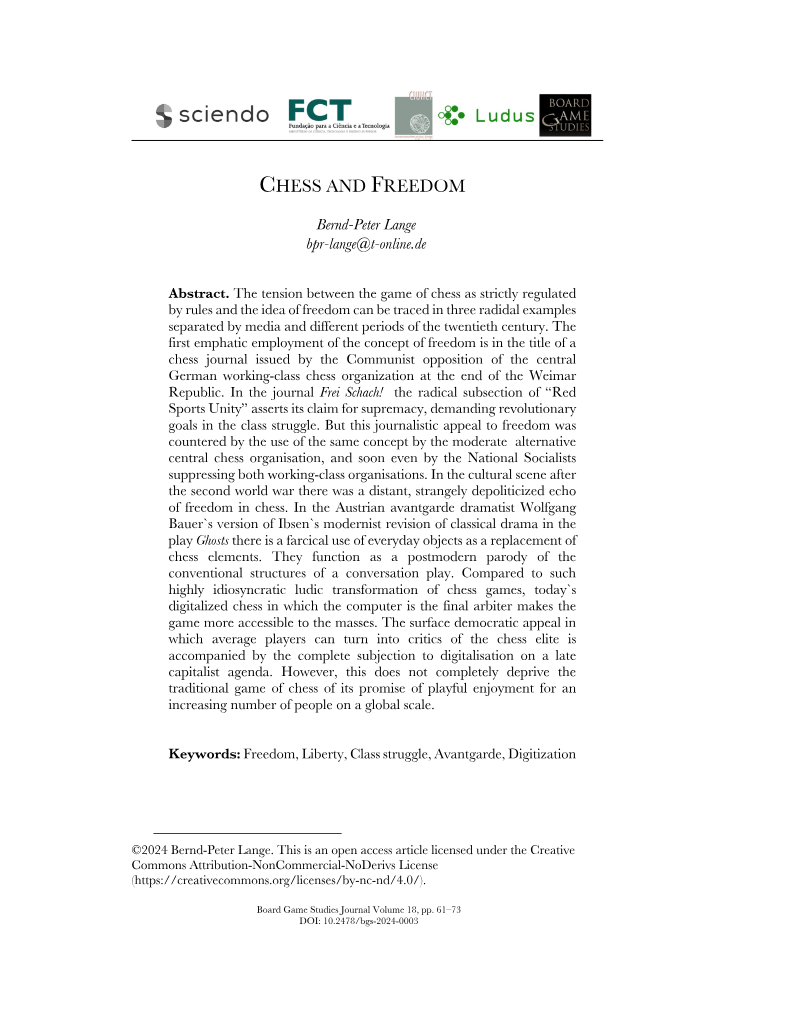
Board Game Studies Journal · 2024
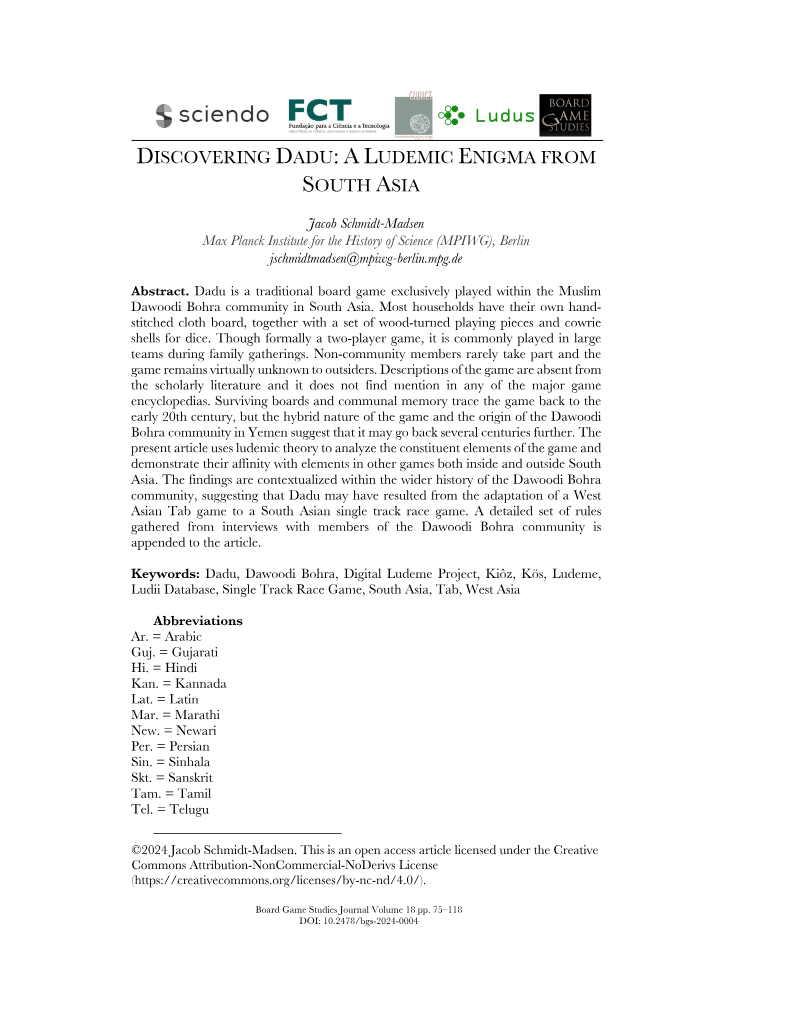
Board Game Studies Journal · 2024
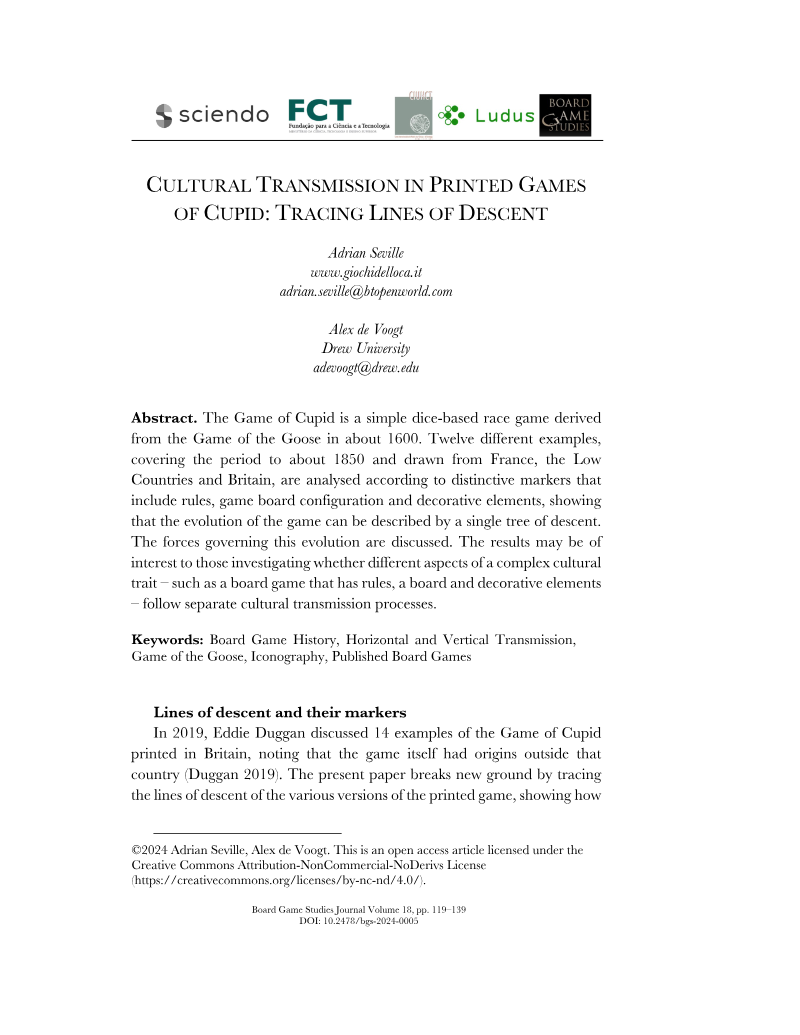
Board Game Studies Journal · 2024
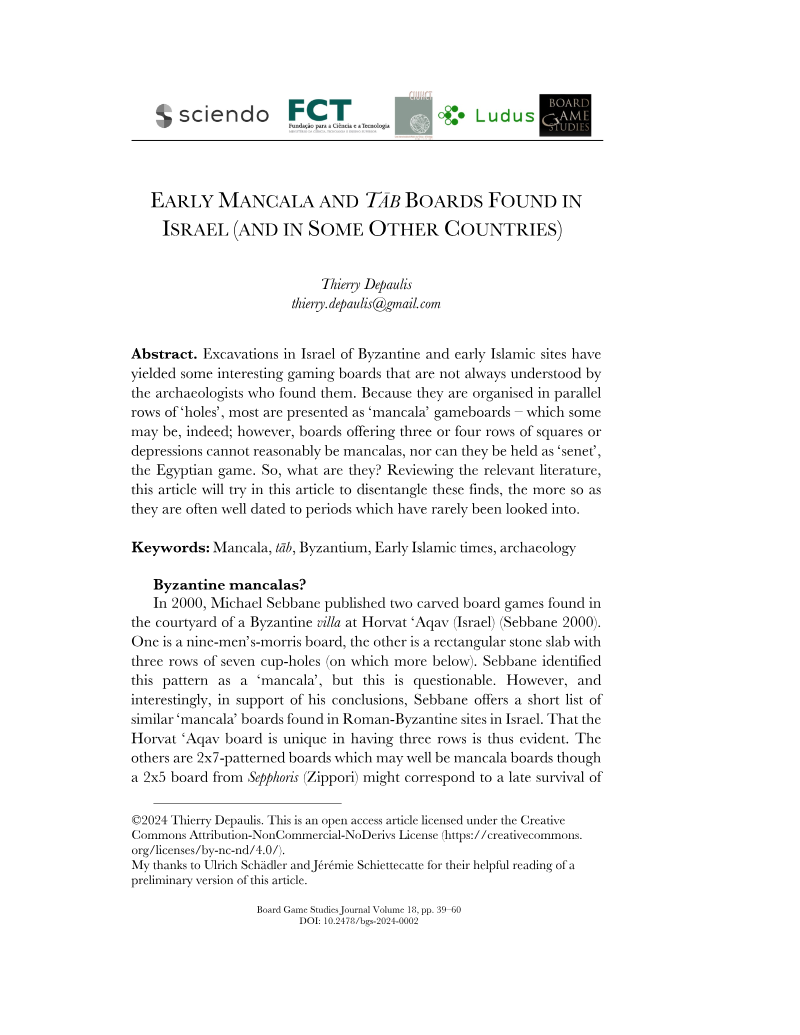
Board Game Studies Journal · 2024
Board Game Studies Journal · 2024
Board Game Studies Journal · 2023



European Conference on Games Based Learning (ECGBL) · 2026



European Conference on Games Based Learning (ECGBL) · 2026



European Conference on Games Based Learning (ECGBL) · 2026