1 free read left. Create a free account for unlimited reading + AI research.
Create free accountWhitepaperKinephanos
Artists integrate French, English, and various creoles to define identity.
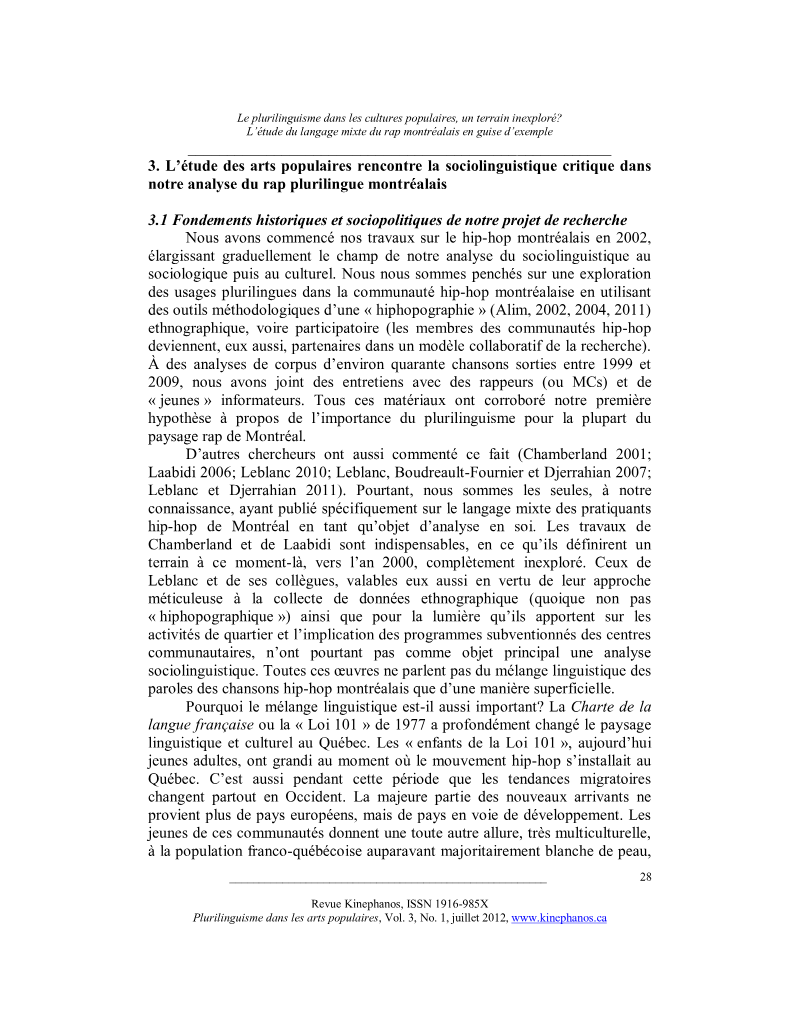
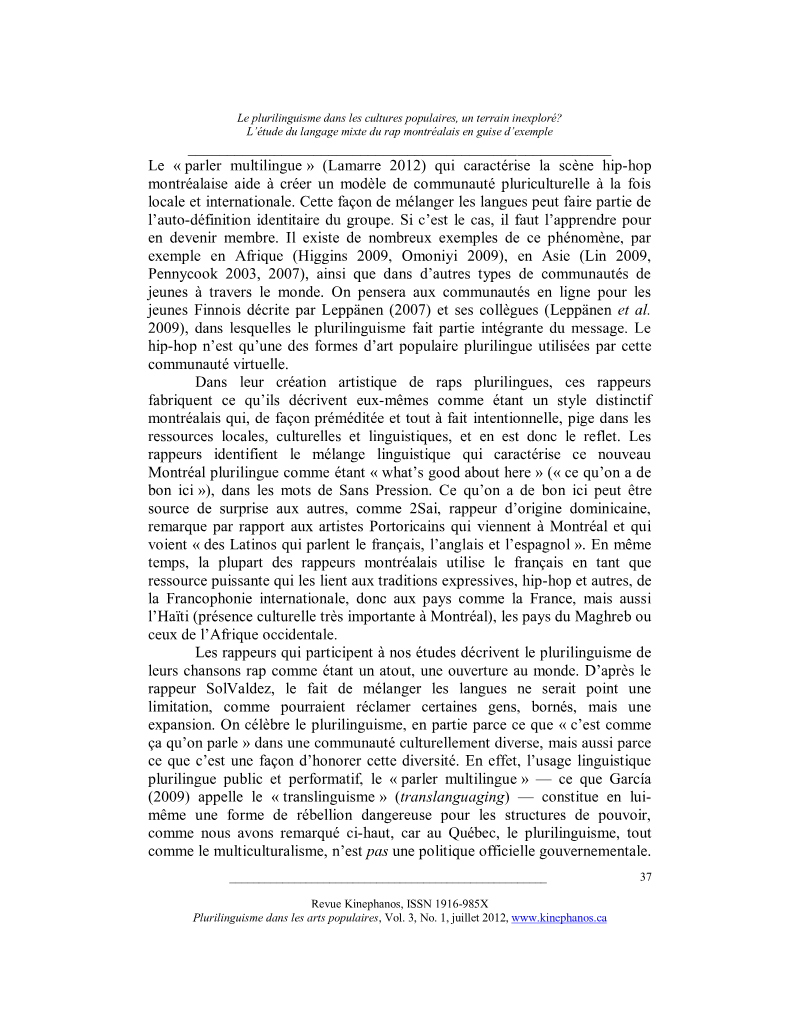
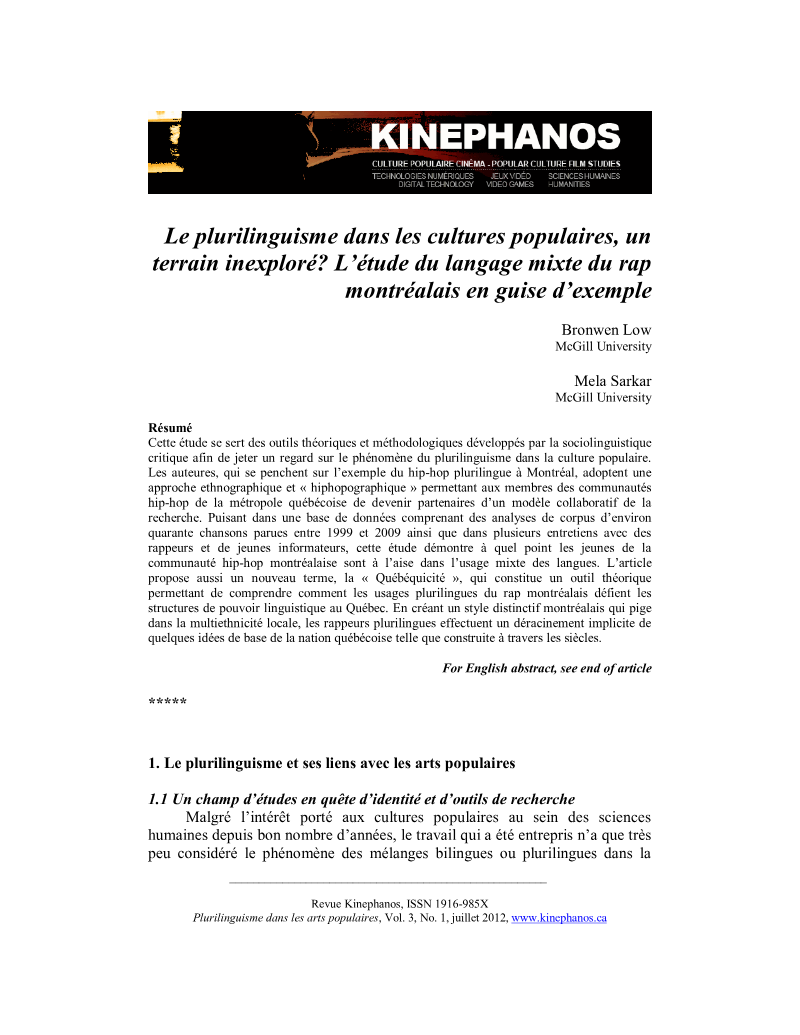
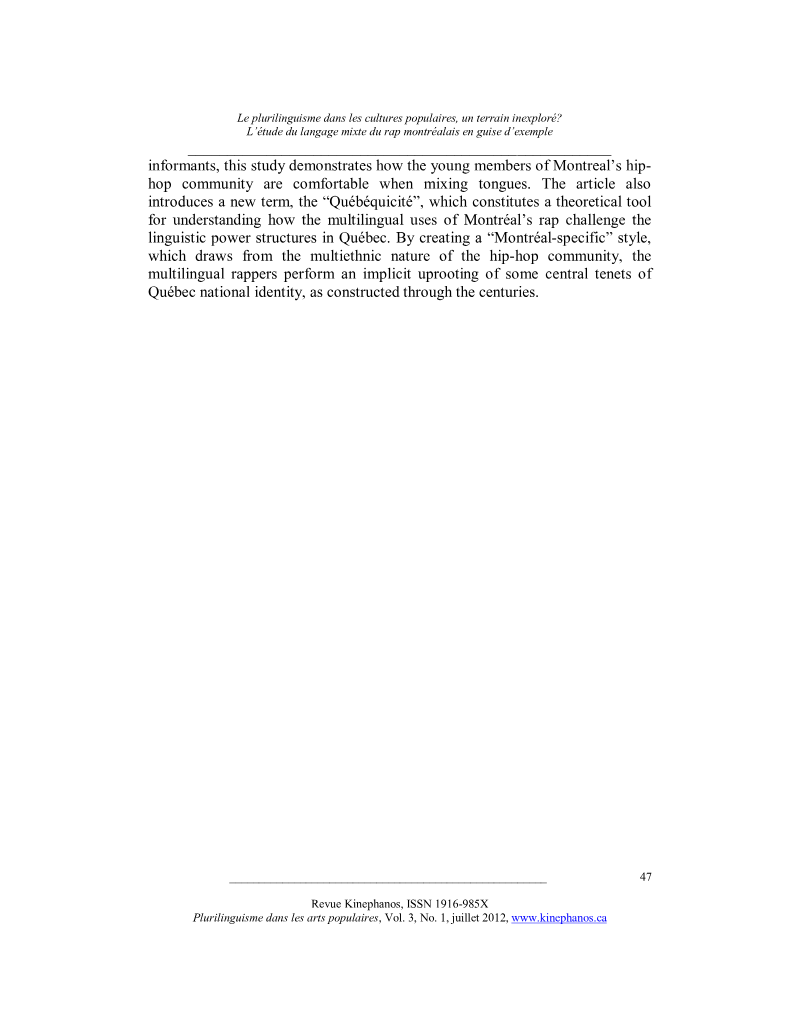
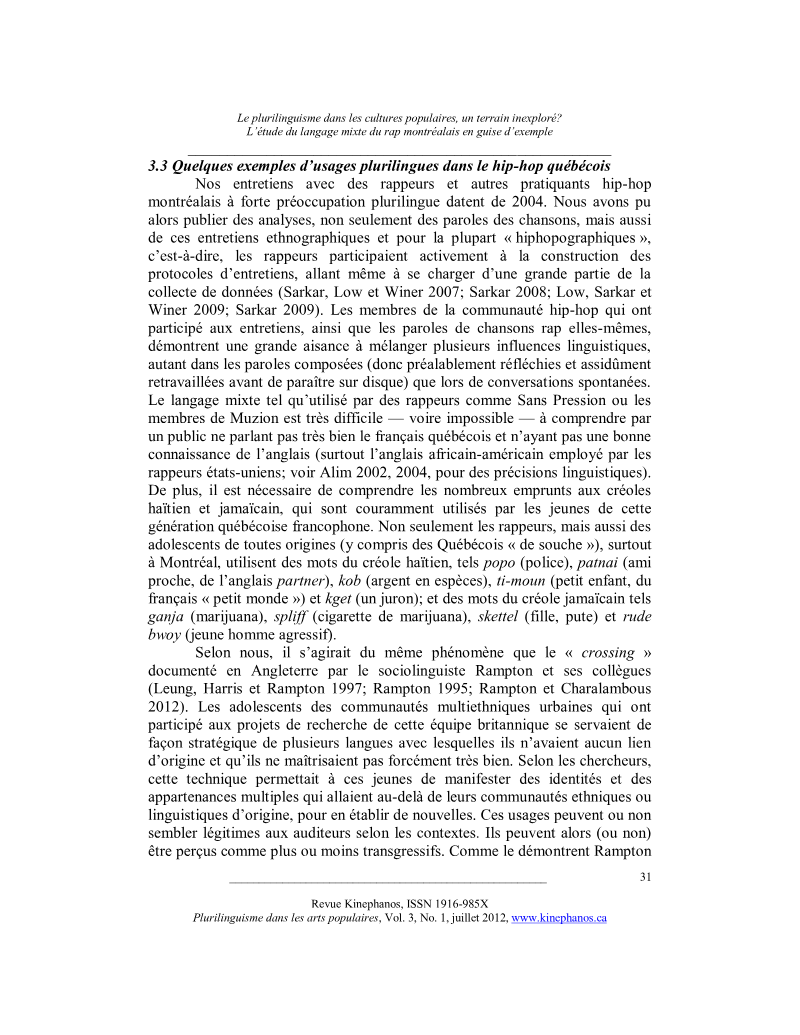
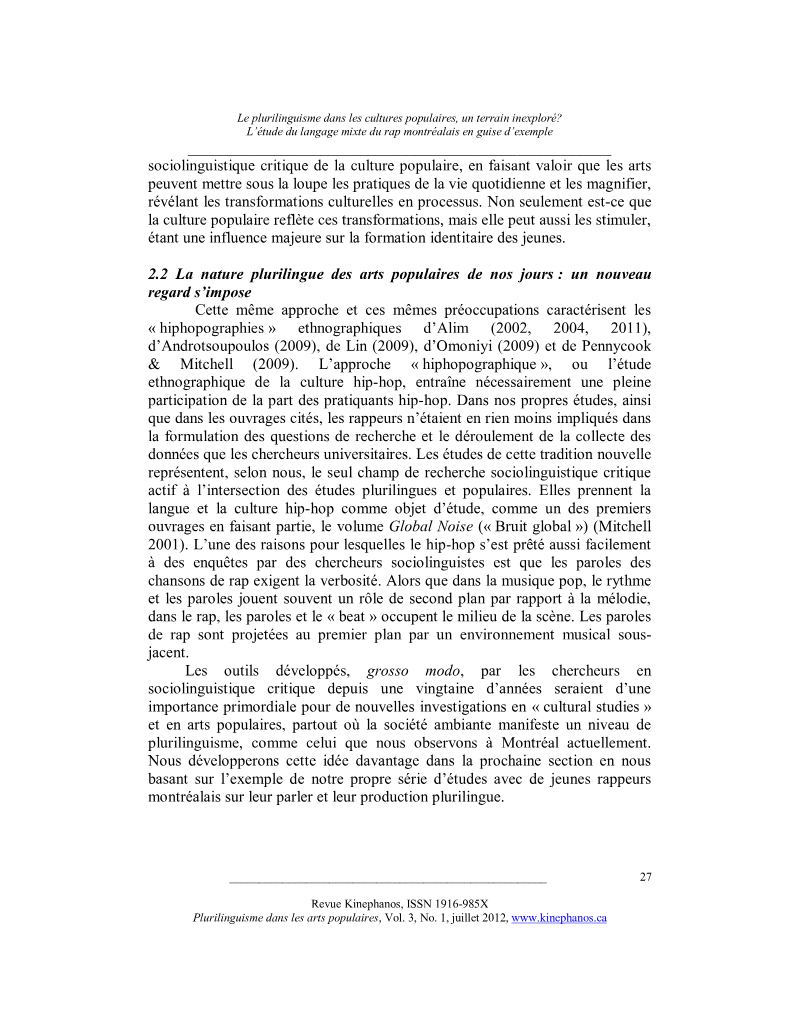
The Montreal hip-hop scene serves as a critical site for examining the intersection of plurilingualism and popular culture, challenging long-standing academic biases that favor unilingual frameworks. By analyzing a corpus of forty songs alongside ethnographic interviews, this research demonstrates that the integration of French, English, and various creoles is not merely an aesthetic choice but a structural, identity-defining practice. This linguistic hybridity functions as both an instinctive mode of communication and a deliberate political act, effectively disrupting traditional, homogenous narratives of Quebecois identity.
Central to this analysis is the concept of Québéquicité, which captures how young artists navigate the post-Loi 101 sociolinguistic landscape. Through a methodology described as hiphopography, the study reveals that these artists utilize translanguaging to reflect the complex, multicultural realities of contemporary urban life. By blending diverse vernaculars, rappers create a new community norm that transcends established linguistic boundaries, positioning their work as a barometer for broader social transformations within the province.
Ultimately, the findings suggest that the multilingual practices inherent in Montreal rap are essential for understanding modern identity formation in diverse urban environments. By moving beyond traditional power structures, these artists redefine what it means to belong to a local culture while simultaneously engaging with transnational influences. This research advocates for a shift toward collaborative, ethnographic approaches in sociolinguistics, arguing that such methods are necessary to fully grasp how marginalized or hybrid linguistic expressions actively shape and challenge national identity in the twenty-first century.



Kinephanos · 2026
Kinephanos · 2026
Kinephanos · 2026
Kinephanos · 2025
Kinephanos · 2025
Kinephanos · 2025
Kinephanos · 2025
Kinephanos · 2025
Kinephanos · 2025
Kinephanos · 2025
Kinephanos · 2025
Kinephanos · 2025
American Journal of Play · 2009















Comments