1 free read left. Create a free account for unlimited reading + AI research.
Create free account
Keynote: Miniclip The Importance of Having Relevant Values to Ensure a Happy & Productive Workplace
Key insights
5 takeaways- 01The mobile gaming industry reaches approximately 2.4 billion people and accounts for 74 percent of total global app spending, necessitating a focus on ethical organizational structures.
- 02Integrating human-centric values into organizational frameworks is essential for ensuring long-term industry sustainability and reflecting the diversity of the global communities served by mobile games.
- 03Corporate culture should be aligned with the three pillars of self-determination theory—autonomy, competence, and relatedness—to drive both employee engagement and player retention.
- 04As gaming companies scale beyond the startup phase, they must transition from informal, founder-led cultures to formalized, consultative processes to maintain purpose and prevent workplace toxicity.
- 05Fostering psychological safety requires leaders to actively model desired behaviors and establish transparent channels for employees to challenge actions that deviate from core values.
Ask AI about this video
Transcript
[Music] hello everyone hi thanks so much for coming really appreciate you taking the time out of your busy day you could obviously be elsewhere in this impenetrable building drinking too much coffee and not having enough food and talking about stuff with other people so it's a real honor for me to be here representing miniclip and giving this keynote on the industry values track which as Daniel mentioned I think is a is a really important topic for us in this moment in our sector of this of
this industry so I'm Jamie I've worked at Miniclip for nearly nine years so I was seven or eight years old when I started there and now I've seen it go through quite a few quite a few changes it's it's it's quite a big company now and I'm privileged to to serve there as the head of external developer relations so it's very interesting meeting people sort of across the the breadth of the industry or working in all different kinds of contexts welcome please I just wonder whether whether you would indulge me just to get a sense of where you guys are at in your in your organisations and the situations that you're working in if you're if you're working in a team that say less than ten people could you could you raise your hands like real small teams there's a few guys because that will see you know a lot of Miniclip itself was was literally like a couple
of people in a room like one time up to about fifty people in the organisation yeah probably about a third there what about 50 to 100 it's a good size because I think over 100 anyone working in a super evil Megacorp like literally quite literally people might actually be doing that they will work at Miniclip so the challenge changes I think as the as the as the organization grows and I think what's going to be interesting I hopefully you can stay for a few more of the sessions maybe some of you will be presenting or participating in those later they're going to address various aspects of the idea of values in the industry and hopefully they'll touch on things relating to team relationships relationship to the organization and the individual and the team and then the impact that we can have in the
communities and societies in which we work so yeah as I said aminika we've grown quite significantly when I joined it was probably just about a hundred people I think in sociological studies village human villages those communities tend to be about hundred to one hundred and sort of 15 people and in that situation you can kind of have some kind of relationship with everyone else who's there you could at least know their name and they all know you and they'll know something about you but yeah we're we're a bigger organization now and just a bit about who miniclip ography if you don't know that is part of the sponsorship privilege we can impress upon you our enormous girth we we develop and publish we distribute highly engaging mobile games and we're reaching now up to about 275 million monthly active users worldwide so you know culturally we touch a lot of
different people in a lot of different contexts to do that we we've grown since 2001 highlights of some of our some of our titles there and you'll see that we are now actually owned as most of the rest of the gaming industry is by 10 cent which is a great honor for us and and it's really lifted our heads up in terms of the possibilities of certainly corporate life in the gaming industry historically we our business was built on the web and we pivoted to to mobile which was a very wise thing to do as it turned out but we we continued operations on on all those platforms we have now 300 employees in four locations in the Miniclip organization there is a small corporate HQ in an oyster shell I work in a kind of pseudo HQ in London we have a very
large development facility in Porto salvo Lisbon in Portugal where most of our first party developed games are operated and in general in Italy we have a smaller team specializing more in kind of unity3d from our point of view we've we've really found success in sports and we've definitely double down on that over the years we were claimed to be the number one sports publisher worldwide we're now reaching as you can see there 36 million daily active users 275 monthly active users and we have a really nice business now and we're able to address those audiences with content for existing titles and new as they come as I said the increase increase in size has led us
well firstly to develop a human resources function in the company I think that tends to come around that 100 percent mark and you need it it's a gearing thing like you know you need one HR person for at least every 100 employees I would say and some of you may have been through that experience of that now becoming you know part of your organization I think when we when we think about those sorts of numbers that we've been very very fortunate to achieve it indicates you know news that we see from around the industry the games games are a huge part of people's lifestyles in that everyone it seems as a phone certainly in western markets that the market is fairly saturated with with ownership of smartphones and in terms of spend according to a penny recently seventy five percent of money spent on ferrous fencing games and not only that from an
earlier report reported in TechCrunch certain 3% of all app downloads 74 percent of spend then and ten percent of all time spent is in games an amazing 2.4 billion people one third of the population of people are engaged in products which we make and operate so that's not just you know that's not just people using all the various other apps you know it's it's such a significant chunk of time devoted to games is absolutely mind-blowing and in as new zoo reports within games itself mobile is by far the biggest sector and the fastest growing sixty eight point two billion dollars so the point I would like to make as a result of understanding our position wherever we are you know in our careers or in the
working context that we have we are all part of a massively impactful industry that touches at some level billions of people around the world and inevitably this great power comes great responsibility so question for you guys why do we the mobile games industry exists thoughts what do you think cash money to make money that's why we exist anything else it's good it's part of it right we wouldn't do it if not what sir entertainment right what else anything Cash Money Entertainment what does entertainment mean social ID
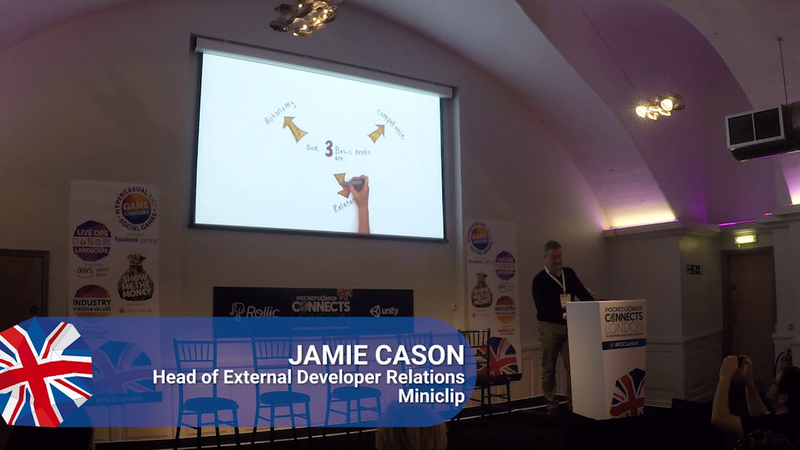
socializing goods yeah I think that's right and it's perhaps a unique part of the entertainment that people get well let me propose to you breaking down what does entertainment mean here we're really about addressing three basic human psychological needs relatedness socializing autonomy and a sense of mastery and competence now some of you may recognize if you studied this stuff this is related to something called self-determination theory you may know something about it if the slide will move to the next slide the next slide we can hear something about it
I needs our autonomy competence and relatedness we've heard some things about them today but I'm just gonna briefly say what they are for us relatedness is feeling cared for and connected to others it has to do with a sense of belonging a feeling that you matter to rerun it with the relatedness is in here not just by your hearing the voice of Richard Ryan who's one of the psychologists who developed this theory conference in 2000 our three basic needs are autonomy competence and relatedness we've heard some things about them today but I'm just gonna briefly say what they are for us relatedness is feeling cared for and connected to others it has to do with a sense of belonging a feeling that you matter to the other people that are there and relatedness is enhanced not just by people treating you warmly and including you but it's also enhanced by your giving to them and your being able to matter in their lives that's part of what helps us feel connected so it's not
a one-way street into relatedness it has to do with both and again we'll show evidence to that effect confidence is really commonly studied in psychology most theories of psychology would probably agree with us on this one point which is competence is essential to wellness to feel effective in your environment to have some sense of mastery of the things that are important to you very very important in environments can have a big impact on that experience and then finally relatedness I'm finally autonomy which has been probably the most controversial but also the most central of our psychological needs in the sense of research and our integrative mission so to speak autonomy refers to behavior that is self endorsed that you agree with and find congruent within yourself and so autonomy here means that you feel choice for self initiating and when you're fully autonomous you're wholeheartedly behind the thing that you're doing and again because that will that wholeheartedness that's why performance tends to be better when you're acting out of autonomous motives
so this leads me to ask you really can we in terms of developing a vision have a more positive impact on the lives of our players and colleagues I think that we we in organizations tend to go through this sort of human organization process of developing missions and vision statements and values and I think that there is a connection here between what we do for our players our customers by creating this sense of relatedness autonomy mastery or competence I'm changing it to an end because it makes sense if you also add purpose and you can remember as RAM creating this this this this feeling which which makes our game so engaging and retaining it is based on these psychological concepts and this afternoon you're gonna hear how how this may apply in the workplace Kate Edwards is going to speak about mental health in the context of work and how
important it is to manage one's health in that aspect Sabrina Kamara is going to speak about motivation and this is a this intrinsic motivational model is I think essential to really getting the most out of people into making them feel happy and engaged at work she's going to be talking about her experience of doing that with leaders of King I think you know you can also apply some of these principles about how we show up in our our communities and society you're here a panel later on talking about games for good also something from the UN about gaming can influence policy in the field of environmental change so can I suggest to you that we collectively have a responsibility now and a mission particularly in what we've chosen to call pocket gaming also known as mobile gaming do we dare to be the
most democratic diverse inclusive and fair sector in the games industry we hear a lot of stories about toxicity in the workplace certainly public policy issues which we're not completely innocent of but can we can we do something positively to address that and in how we how we show up later on you hear about sustainable diversity with Leeanne and Marion who will speak about society's values and how that could could need more attention even than our workplace behaviors also and you know I'm sure all right people right thinking people will agree work should be a place of psychological safety for that we really need to guarantee that our workplaces are free of harassment of any kind and there'll be a panel to discuss that later so again our organizations may develop
values and they do that because as we become larger we become more diverse we need a set of guidelines and standards which are going to inform our behavior enable us to work together productively and rationally and I think you know with a with a degree of shared humanity which can very quickly leave the room usually as a result of miscommunication but certainly at Miniclip the idea of always assuming good intent of really trying to see things from each other's point of view this is so super important and we're in the process now of defining our values for our organization it's a it's a work in progress but that is something that now our our our size and scale is absolutely essential for us to have sustained growth in the future [Applause] so to finish off this afternoon you'll
you'll hear how this might apply creatively and future play will talk to us about how in their company they translate these kinds of behaviors into creativity to develop their business and to address the needs of their place that's my time thank you so much for listening thanks thanks very much so that was a great talk I really enjoyed that okay guys do you have any questions question no everything is crystal right there how are you addressing the choosing your values once you have a company this big and how do you make sure everyone fits
within those or there everyone agrees with them everyone wants to live by them once you you're starting with a company this big already it's a process of consultation so the values come from the people who work at miniclip I guess the guys who started the company back in 2001 a couple of friends you know in a bedroom they always had an ethos which was summarized in their mantra work hard and play harder and so there's always been a sense of sort of playful that there should be a sense of playfulness at work the company certainly become more serious and lots of other people who have joined for you create a process it's may be mediated by someone external or in our case we're lucky to have so many great people working in people organization who have some skills in this people express themselves and this can be you know distilled into distilled into a set of values which you know they're guidelines right you know I
don't think anyone anyone expects us to be perfect we're not constructing a sort of police state where every sort of statement and and behavior is is examined or you know subject to under scrutiny but it's like you know guys you know this is what we want this place to be collectively right so can we all can we all live up to that and it's a it's a process it's a challenge especially to leaders I suppose that's that that's the point to get to you know in the end there are senior people in the company people with a designated leadership function and those so that you're really looking to those guys to step up and behave in this way and they don't always and again you know you need a you need a way of saying look calling them out or you know a safe way to do it if it feels like that personality is too big to challenge but everyone you know everyone needs to live by it and everyone needs to feel that they can challenge it when things aren't right there should always be that way I think
you [Music]
Summary
The mobile gaming industry holds significant global influence, reaching approximately 2.4 billion people and accounting for 74 percent of total app spending. Given this scale, industry leaders must prioritize the development of organizational values that foster productive, healthy, and ethical workplaces. The primary thesis is that by aligning corporate culture with fundamental human psychological needs—specifically autonomy, competence, and relatedness—companies can improve employee engagement while simultaneously addressing broader societal responsibilities.
Drawing on self-determination theory, the analysis posits that these three psychological pillars are essential for both player retention and employee well-being. Autonomy refers to self-endorsed, wholehearted action; competence involves the sense of mastery and effectiveness; and relatedness centers on feeling cared for and connected to others. When organizations integrate these principles into their core values, they create environments that support psychological safety, diversity, and inclusion. As companies grow beyond the initial startup phase, formalizing these values through consultative processes becomes critical to maintaining a shared sense of purpose and mitigating the risks of workplace toxicity.
The mobile gaming sector, characterized by rapid growth and high user engagement, faces a unique challenge in balancing commercial success with ethical leadership. As organizations scale, they must transition from informal, founder-led cultures to structured environments that emphasize transparency and mutual respect. This shift requires leaders to model desired behaviors and establish safe channels for employees to challenge actions that deviate from established values. Ultimately, the industry’s long-term sustainability depends on its ability to foster inclusive, human-centric workplaces that reflect the diverse global communities it serves.














Comments