1 free read left. Create a free account for unlimited reading + AI research.
Create free account
Keynote: Hypercasual & Casual Success Factors
Key insights
7 takeaways- 01The mobile gaming industry is projected to reach nearly 200 billion dollars in combined in-app purchase and advertising revenue by 2023.
- 02Sustainable game economies in the current market rely on the effective implementation of 'taps and sinks' to manage resources and player progression.
- 03Hyper-casual games have seen significant market expansion, evidenced by a year-over-year increase in install rates of over 60 percent.
- 04Successful monetization requires a balanced strategy that combines in-app advertising with in-app purchases, specifically leveraging rewarded video to maintain engagement while minimizing the impact of interstitial ads.
- 05A/B testing is a mandatory practice for optimizing ad frequency and entry points to ensure the value exchange between free content and advertising remains attractive to the player base.
- 06Hybrid-casual games are emerging as a dominant trend by integrating mid-core mechanics, such as progression systems and collectibles, into simpler titles to improve long-term retention.
- 07Developers should structure in-app purchase offerings around four core pillars: content, cosmetics, competitive advantage, and convenience.
Ask AI about this video
Transcript
[Music] [Music] we are living in a digital world so now we're gonna have a really interesting test at least it's my first time doing this this is gonna be fun our next speaker is actually not here but he is on zoom but it's live so it's gonna work like we i have this hope it's gonna work internet's gonna work it's gonna be there and oh god that's me okay uh so our next speaker is thomas colon from and i think i butchered his name i'm sorry thomas from meta audience network and he's going to be talking about hyper
casual and casual aesthetics so it's really interesting hanging there so are we ready hello everyone so hopefully uh everyone can see uh the presentation all right can't really see you guys uh but good afternoon it's really great uh to be here my name is thomas um i've been a strategic partner manager with facebook for about two and a half years and i help out european game publishers to successfully monetize their in-game uh advertising inventory i hope you're enjoying the conference so far today whether you digitally or here in person myself i'm based in london but unfortunately at company policy um limits in person attendance so you'll have to do with a digital uh image of myself so today i'd like to touch up a little bit on the hyper-casual and casual games two genres where we've seen a massive disruption in the past few years we all know it's been a very challenging um a few years in the space it's very
crowded and there's loads of of of games that are very similar i use acquisition costs are going through the roof but we've challenged these common opportunities and we're really starting to see a big shift in the industry into a new jar we're calling hybrid casual and so we'll touch up a little bit on that throughout this presentation so without further ado let's get started so to start we're going to take a macro view of the mobile gaming industry highlighting some key trends as well as some some key challenges that we've been facing uh in the past few years then zooming in more closely we'll look at some best practices uh for monetization but some of the hyper casual and casual game developers have been following in in recently um we'll also take a look at the key elements that are making the hybrid casual genre so popular in the past few months and finally we'll finish up with a simple checklist of steps you can take to get started today
so let's begin with a look at the current state of the mobile gaming uh industry as i said we all know there's been so many challenges in the past few years right whether it's privacy directives from governments or countries uh like california or europe with gdpr or whether it's new rules are imposed by the likes of apples with the new atd framework under ios 14.5 all of these are severely restricting access to user identifiers so that all of that is challenging the way we're currently looking at monetization user acquisition and uh measurement right it's it's disrupting all our businesses all your businesses and you've had to spend so much time in the in the past few months and years to adapt to these right to ensure your business is compliant with these new rules uh to ensure that you you be you're building something sustainable on top of it uh and and all of that is just taking so much time away from from what you do
best right which is creating great games on amazing games but looking at it from the glass house full point of view it's important to to also consider that it also means it's now a level playing field for everyone and and a solid privacy first uh framework on which you can build an even more sustainable business uh moving forward setting yourself for growth again and what a growth analyst forecasting for the next couple of years actually almost 200 billion dollars uh worth of in-app purchases and in-app ads revenue forecasted for 2023 and that's what next year right that's 24 more than in 2021 which was just a few months ago it's really encouraging to see that revenue growth and it hasn't stopped us pandemic as well and in fact download levels have remained strong ever since march 2020 they've grown massively and they remained at that
level ever since in the first half of 2021 consumers spent 1.7 billion dollars per week on in-app purchases on mobile games and that's up 40 percent from pre-pandemic levels so as you can see it the the industry and and players are really growing and people are spending more and more into mobile games it's becoming something much more popular than it was before and we're seeing this across all genres right all genres are growing but one that's growing the most in terms of installs he's hyper casual with installs of over 60 percent year-on-year which is absolutely massive other uh growing genres include simulation and lifestyle with 57 and 52 respectively so these again are really encouraging so let's take a closer look at how the the hyper casual and gauss real games uh can
successfully leverage this growth uh with with the right techniques moving forward so the first thing to consider here is how are the ads going to fit within your game and that's extremely important and you should be considering this you should consider this as early as possible within the development don't worry because once this is figured out and you found the optimal frequency on entry points for your ads then these technologies like header bidding which can pretty much automate um and maximize the ecpm and the yields you get from displacements for display ads try and limit any negative experiences from from users we all know that too well right too many ads it's just not a great experience and so this mostly happens with interstitial ads on the other hand we try and leverage formats like rewarded video that really boost engagement and
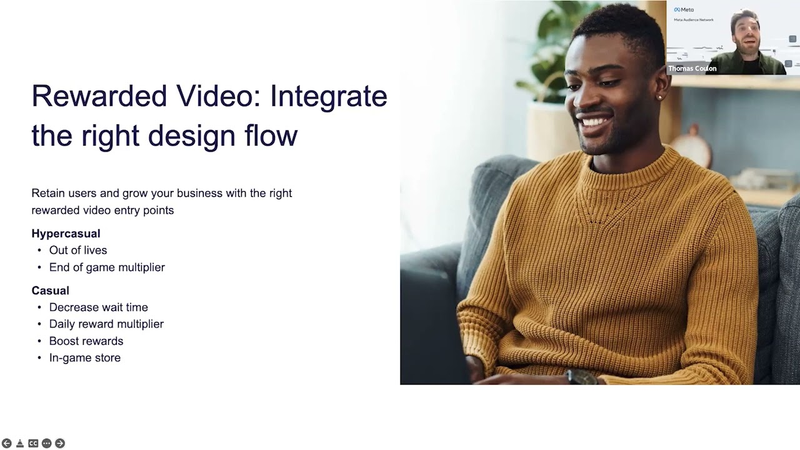
retention within the game these two formats are really the bread and butter of in-app ads and they bring the greatest tcpms but they also need to be approached carefully so when considering rewarded video it's important to think about test a b testing everything that you're doing including the integration points a few elements to consider are value exchange design innovation and the entry points as well and those entry points can be very different depending on the genre of the games that you're running right for hyper casuals sometimes user turn when the level is too difficult or when they don't want to make a purchase or to unlock new gameplay and that's exactly when you be you should be leveraging those rewarded videos to provide the users with what they want to progress and to continue playing your game with casual you've got many other exciting options where you can blend the reward mechanism straight within the
gameplay like having a play button to boost the output of a new farm or to speed up the creation of a new army so in addition to finding the right entry points it's essential to consider the frequency at which you're showing ads and again here a b testing is absolutely mandatory for display ads you need to find the right balance between user experience retention and revenue think about average session length how long does it take to do a level if your levels are 15 seconds or less you're not going to show an interstitial at the end of each otherwise it would create a very negative user experience on the other hand if your levels or you can place 45 seconds or a minute then the users might understand very well the trade-off between getting content for free and being shown some some ads and they understand that that's actually sponsoring the gameplay and there's also something
about about that is fewer ad sometimes means the traffic is actually higher quality because users interact much more with the ads when there's less of them because they do understand that trade-off and so you might yield better ecpms and better revenue from showing fewer ads than if you are showing more ads so carefully think about that for rewarded video ads consider the value exchange a user gets from watching an ad versus making a purchase and there's loads of examples out there but you don't have to use the same currency for your rewarded video ads than you do for your iep and in fact the two can work together sometimes the um the rewarded video can unlock a booster but the iep cannot but yet you're not giving away valuable currency yeah to reward the video but paying users would then complain about and the great thing about the ads on the iaps two monetization techniques is that you can actually make them complementary
hybrid models means you're you're monetizing both you're paying and non-paying users and diversifying your revenue stream you're not you're not leaving any money on the pay on the table here we all know a great full version of players just never spend within a game and having that is really essential having ads is really essential to um sponsor the content of that game and and to keep the user engaged on the other hand you need to consider very carefully what experience you want your few paying users to have and whether you want to show them any ads at all and i've seen instances where paying users are complaining about not getting ads right i hear that from client all the time and so if you've got an online community do watch out for that sort of feedback because paying users sometimes do lack those rewarded videos because it unlocks things that they don't really necessarily have access to for purchases so be very careful about that and more devs are considering adding
ieps to the revenue mix but and that's great right it's really great but it needs to be complemented with the introduction of new uh innovative content or new game play things that the users can engage with that would justify making a purchase and the trend we're seeing in that space is the rise of meta gaming elements traditionally casual games hyper casual games they're monetizing the core gameplay and modernitizing the core game but in recent months we're seeing them integrate a lot of meta gaming elements but traditionally we'd see in more mid core games and that's creating an experience that users love they can be things like collectibles stickers styling elements thing to to make your characters unique or upgrading mechanics like special powers and they can actually provide additional depth to the game and keep those players engaged for longer and more motivated which takes us to the next part
what is uh the hybrid casual genre right i keep talking about it so most hybrid casuals have a number of things in common usually found in in more mid-core um types of genre and it starts with the game design itself a well-balanced economy to start with right they call that the jargon is balancing sinks and taps um ensuring that the right balance of scarcity are for you for your currency ensuring there's the right amount of supply and demand that pinch point where players are concerned about the currency but it's too not too scarce but it's not too much in supply either another element is progression right ensuring that there's enough progression perspective for the users to to play and invest long term are they innovative ways to to to boost uh to to get special boosters or running promotions uh in order to to
get users to engage with new content on new levels new gameplay consider all of that and lastly we'd recommend approaching your in-app purchases monetization points around what we call the four c's and these are content convenient competitive advantage and cosmetics so let's deep dive into each of these right now the core idea here is really to understand the player motivations what keeps the players coming back to the game and spending right so the forces are monetization points that increase the long-term retention and revenue from the players starts with content you want to provide additional game play such as quests maps characters things that users get excited about right that they want that like creates uh this new uh concept the second is cosmetics you want to sell items that allow users
to distinguish themselves to differentiate themselves within the gameplay and that's extremely popular these days it's a lot of players are really keen to spend and to have a unique character with unique clothes or unique powers right the third one is competitive advantage you you can be selling something that would i give the spender a distinct advantage within the game but be very careful because if you're not paying users suddenly you realize that paying users have so much of an advantage that it's not worth continuing to play the game then it would pretty much mean that you you're losing a big user base from there so again balancing it out is very important and a b testing is is again the key here and lastly convenience and the iot beyond convenience is is to be able to assist your users into getting what they want and here the word assist is very uh is very interesting it's very important because
you don't want to give your users what they want right now because else they might lose interest what's important is to helping them reach their goals faster like getting access getting them to buy something that them gets to get to them to reach their goal faster and that just means they're going to play for longer they're going to keep engaged and they might be spending more on the way as well so that's creating a lot more engagement and excitement from the user base right so let's do a quick recap here hyper casual and casual games are showing incredible growth publishers are adding new features to the games and that's creating this new hybrid casual genre that we're starting to see really exciting and and to monetize that that genre you really need to consider that bounce monetization mix right how are you going to juggle between in-app purchases and you're paying users and in-app revenue uh in-app ads
for for your non-paying users and potentially you're paying users as well whether you've got rewarded in their rewards and that's providing opportunity to monetize your entire user base third is primordial to consider the right ad frequency and the right design flow for you ads and remember a b testing is the key here and lastly if you're considering to launch a hybrid casual building an advanced economy um having the right progression vectors and more importantly understand what motivates the players is really really key to build your iep monetization strategy here so how can you get started today well to get started today i want to find more resources and case studies you'll find some very useful useful links on here we've got guides about those monetization best practices
for casual and hyper casual games they're available at fb dot me slash game dash for monetization uh we've also got a great supercharger game hub here built up by our marketing team it's available at fb dot me slash supercharger game all lowercase all attached so guys that's it from me today i really hope it was useful and um yeah i wish you all a great rest of the conference thank you so much for your time [Music] [Music] you
Summary
The mobile gaming industry is currently undergoing a significant transformation, characterized by the rise of the hybrid-casual genre. Despite challenges such as privacy regulations and restricted access to user identifiers, the sector remains robust, with global in-app purchase and advertising revenue projected to reach nearly 200 billion dollars by 2023. Hyper-casual games, in particular, have experienced massive growth, with install rates increasing by over 60 percent year-over-year.
To succeed in this evolving landscape, developers must prioritize a balanced monetization strategy that integrates both in-app advertising and in-app purchases. Effective ad implementation requires careful consideration of frequency and entry points, utilizing rewarded video to boost engagement while limiting the negative impact of interstitial ads. A/B testing is identified as a mandatory practice for optimizing these ad experiences, ensuring that the value exchange between free content and advertising remains attractive to players.
The emergence of hybrid-casual games reflects a shift toward incorporating mid-core mechanics into simpler titles. This approach focuses on building a sustainable game economy through "taps and sinks" and enhancing player retention via meta-gaming elements like collectibles, character customization, and progression systems. Developers are encouraged to structure their in-app purchase strategies around four key pillars: content, cosmetics, competitive advantage, and convenience. By understanding player motivations and providing meaningful ways to progress, developers can effectively monetize both paying and non-paying users. Ultimately, the goal is to create a sustainable, privacy-first framework that fosters long-term engagement and revenue growth across all player segments.




















Comments